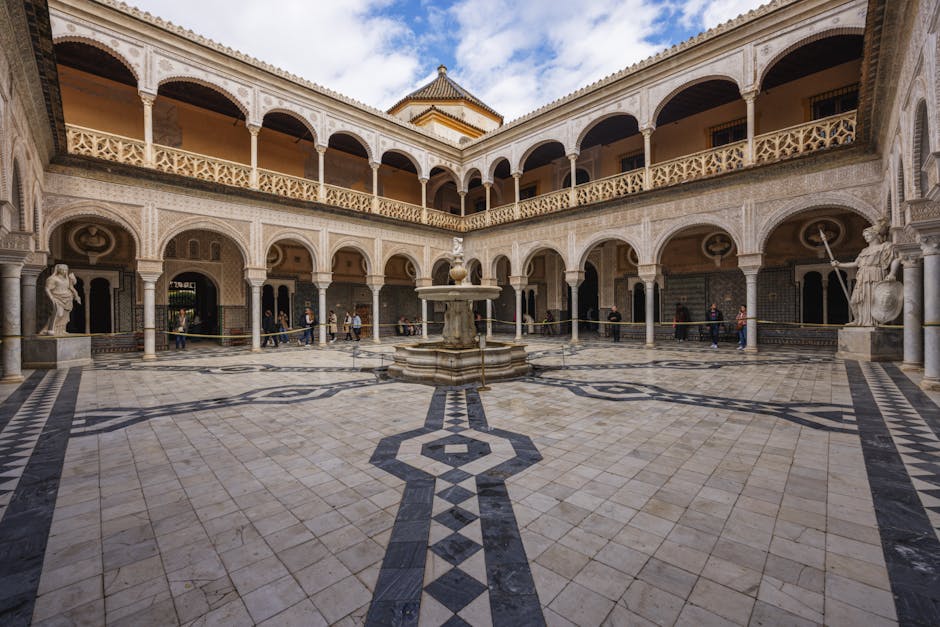
Self-guided audio tour in Mostar
Start Free on iPhone
Start free on iPhone to unlock this self-guided walking tour in Mostar. Hear all the stories that make it amazing, walk at your own pace, and begin whenever you want.
Your Private Tour Guide
Beyond the iconic curve of the Stari Most (Old Bridge) lies a labyrinth of cobblestone streets that whisper the secrets of Mostar’s Ottoman past. This self-guided walk invites you to step away from the crowded riverfront and into the serene, walled worlds of the city's elite families. During the Ottoman era, domestic life was a private affair, shielded from the public eye by high stone walls and intricate wooden latticework. This walking route explores the architectural evolution of the 'konak' (mansion), where the sound of the Neretva River is replaced by the gentle trickle of courtyard fountains. Your neighborhood stroll begins in the vibrant Tepa Market, the historic commercial heart of the city, before weaving through the residential quarters of the Kujundžiluk. You will encounter the Bišćević House, famous for its overhanging room perched precariously over the river, and the Muslibegović House, widely considered one of the finest examples of Ottoman residential architecture in the Balkans. These sites offer a rare glimpse into the 'selamlik' and 'haremlik'—the public and private spheres of the household. As you follow this walking route, you will also discover the functional side of Ottoman life. The Sahat Kula (Clock Tower) once synchronized the city's pulse, while the Hamam Museum preserves the ritual of the public bath. This architecture-focused journey concludes at the Kajtaz House, a hidden gem that remains in the hands of the original family, offering an authentic atmosphere untouched by modern commercialism. This experience is designed for those who wish to explore independently, moving at their own pace through centuries of Balkan history. Whether you are an architecture enthusiast or a curious traveler, this self-guided walk reveals a side of Mostar that many visitors overlook, focusing on the preservation of heritage and the quiet beauty of domestic life under the Sultan's reign. It is a perfect way to experience a walking tour Mostar style—slow, contemplative, and rich in detail.
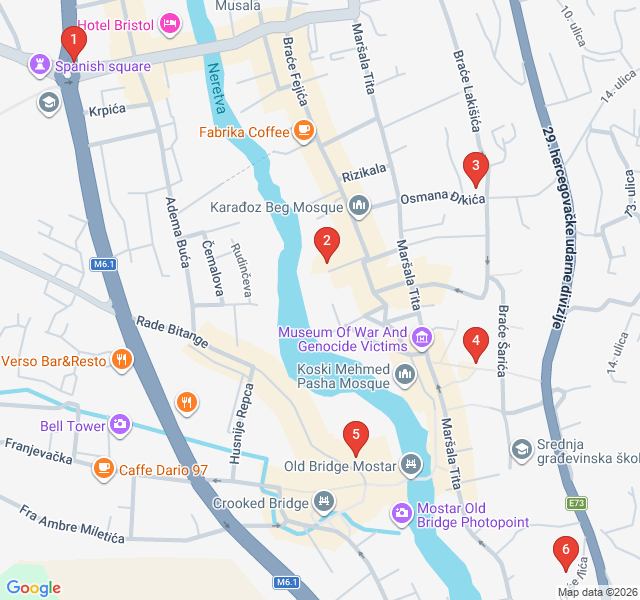
Numbers indicate the order of stops on the tour.
Welcome to Tepa Market, the traditional gateway to Mostar's Old Town. Since the 16th century, this space has served as the city's primary marketplace. Unlike the souvenir-heavy stalls closer to the bridge, Tepa retains its local flavor. Look for vendors selling seasonal Herzegovinian treasures: sun-dried figs, pomegranate juice, and local honey. Historically, this was where the rural hinterland met the urban elite. The architecture here is functional, designed for the rapid exchange of goods. As you begin your self-guided walk, notice how the bustle of the market contrasts with the quiet residential streets we are about to enter. The market served as a social filter, where news was traded as frequently as produce, keeping the private homes further in the neighborhood peaceful.
Known locally as the 'Turkish House,' the Bišćević House is one of Mostar's most photographed landmarks for a good reason. Built in 1635, it features a striking room supported by high wooden pillars that extends over the banks of the Neretva River. Step into the courtyard to see the characteristic 'kaldrma' pebble mosaics. Inside, the house is a masterclass in Ottoman spatial design. Notice the 'musandera'—built-in wooden cupboards that served as both storage and room dividers. The upper floor was designed to catch the river breeze, providing a cool sanctuary during the intense Mostar summers. It represents the 'konak' style, where life was lived on the floor on low sofas called 'sećija,' emphasizing comfort and communal living.
Often cited as the most beautiful Ottoman house in the Balkans, the Muslibegović House is more than a museum; it is a monument to the city's golden age. Built in the late 18th century, it consists of two distinct parts: the 'selamlik' for business and male guests, and the 'haremlik' for family life. The central courtyard, or 'hayat,' is a lush garden oasis that feels miles away from the city streets. Look up to see the intricately carved wooden ceilings and the floral motifs on the walls. The house has survived wars and earthquakes, remaining a testament to the wealth and sophisticated taste of the Muslibegović noble family. It provides a profound look at how the Ottoman elite balanced public duty with private tranquility.
Rising 15 meters above the stone streets, the Sahat Kula was a vital piece of urban infrastructure. In an era before personal watches, this tower regulated the city's rhythm, signaling the times for prayer and the opening and closing of the market. Built around 1630 by Fatima-kadun Šarić, it is one of the few surviving clock towers in the region with a square base. Legend says the bell could be heard for miles around. Its simple, sturdy stone construction is typical of the Ottoman military-influenced style, prioritizing function and durability. It stands as a landmark of the 'Čaršija,' the commercial heart, marking the transition between the world of trade and the world of the home.
The Cejvan Cehaja Hamam is the only preserved public bath in Mostar. In Ottoman society, cleanliness was not just a personal habit but a religious and social requirement. The hamam was a democratic space where people of different social standings would gather to bathe, massage, and socialize. The building features characteristic lead-covered domes with small glass openings called 'eyes' that allowed natural light to filter through the steam. Inside, you can see the ingenious hypocaust system used to heat the floors and water. The museum explains the complex ritual of the bath, from the cold room to the hot steam chamber, revealing a sensory side of Ottoman history often missed in political narratives.
Our final stop, the Kajtaz House, offers perhaps the most authentic experience on this neighborhood stroll. Tucked away in a quiet alley, this 16th-century home was once the residence of a judge. Unlike the more polished museums, the Kajtaz House feels lived-in; it has been owned by the same family for centuries. The house is divided into male and female quarters and retains its original layout and many artifacts. Pay attention to the high stone walls and the heavy wooden gates, designed to protect the privacy of the 'haremlik.' The atmosphere here is one of preserved silence, offering a perfect conclusion to our exploration of the hidden domestic worlds of Ottoman Mostar.
Start Free on iPhone
Explore “Ottoman Mansions and Hidden Courtyards” with your very own Private Tour Guide with Zigway. Start free on iPhone, skip the large group and the fixed routes, and hear the city come alive as you go.
Your Private Tour Guide
Don't miss the good stuff
Explore Freely
 Easy
EasyMostar, Bosnia and Herzegovina
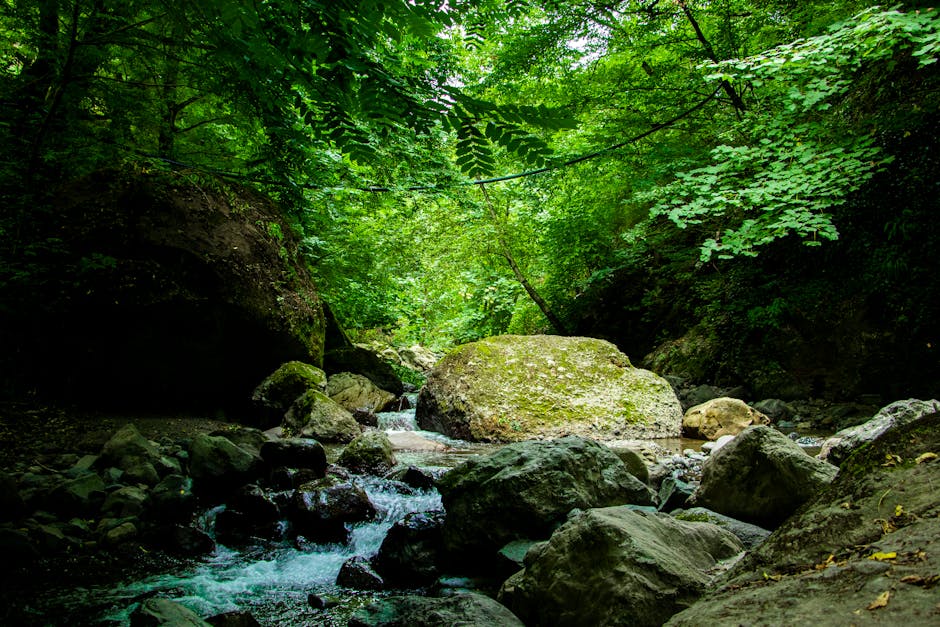
Explore Mostar's emerald secret on this self-guided walk along the Radobolja stream, featuring Ottoman mills, hidden beaches, and lush parks.
 Challenging
Mostar, Bosnia and Herzegovina
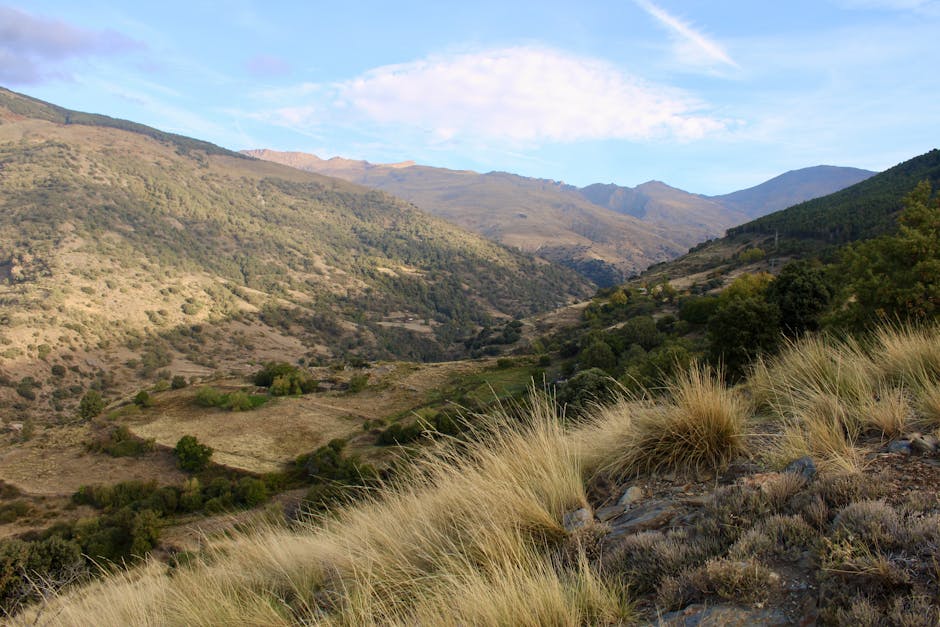
Ascend from the iconic Old Bridge to the breathtaking glass skywalk at Fortica. A challenging self-guided hike through Mostar’s history and nature.
 Moderate
Mostar, Bosnia and Herzegovina
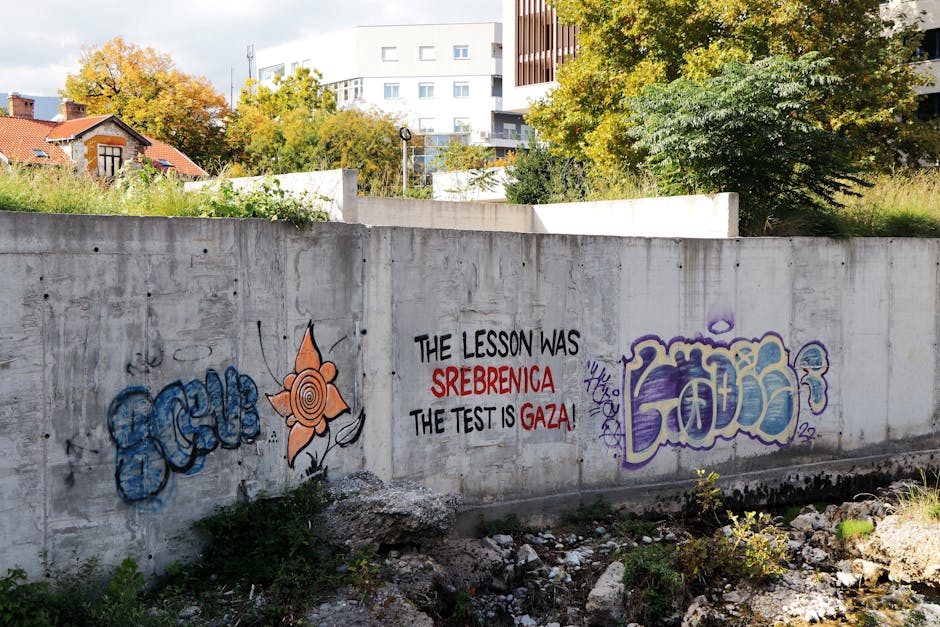
Discover Mostar’s soul through its vibrant street art, historic Ottoman architecture, and resilient urban culture on this self-guided walk.
 Easy
EasyMostar, Bosnia and Herzegovina
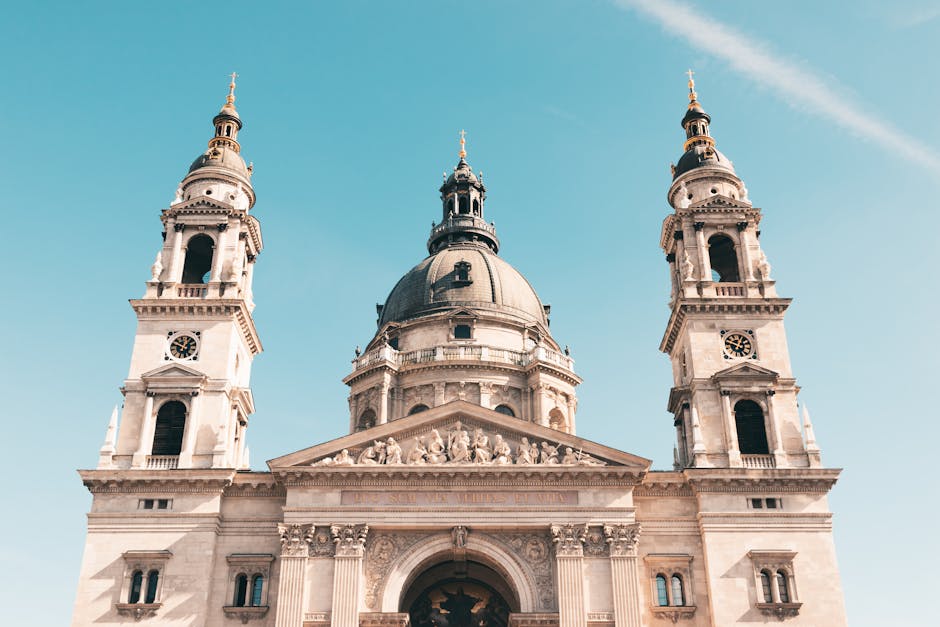
Discover Mostar's grand Austro-Hungarian boulevards, Moorish Revival architecture, and 20th-century history on this self-guided neighborhood stroll.
 Easy
EasyWarsaw, Poland
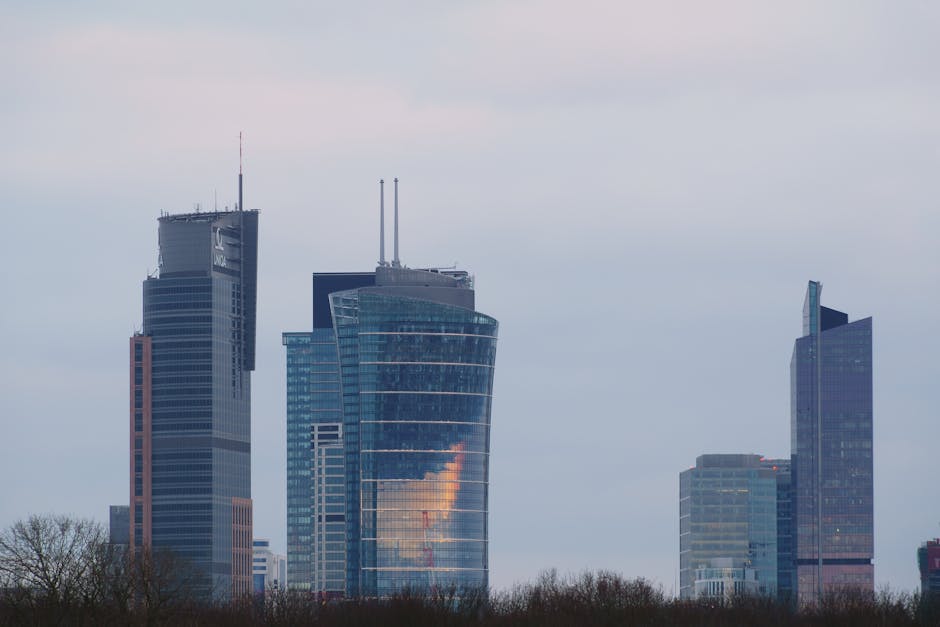
Discover the hidden courtyards and grand pre-war architecture of Warsaw's most atmospheric neighborhood on this self-guided stroll.
 Easy
EasySalzburg, Austria
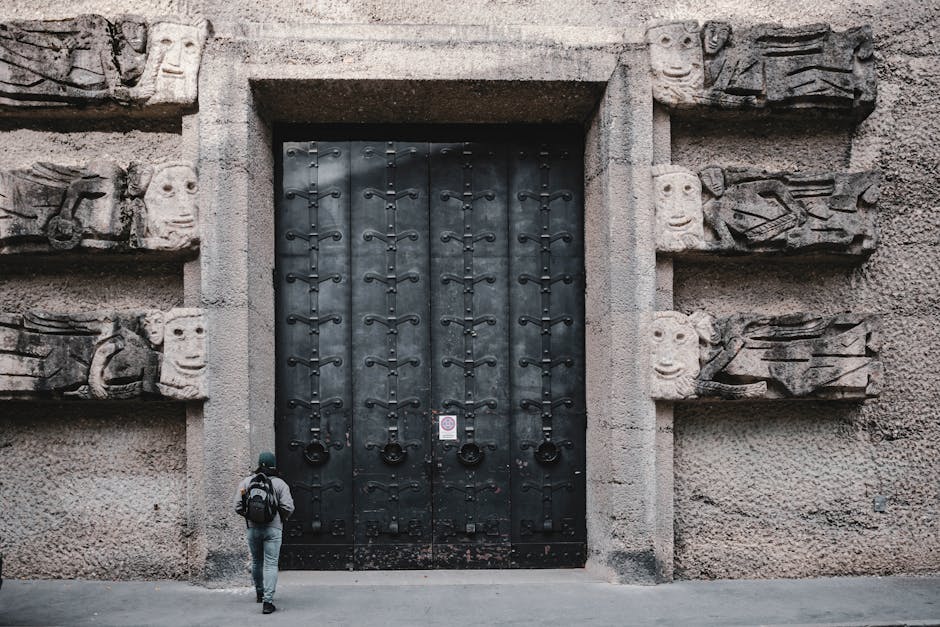
Discover Salzburg's oldest medieval alley, the birthplace of the 'Silent Night' author, and breathtaking views on this quiet self-guided walk.
 Easy
EasyNairobi, Kenya
Discover Nairobi's iconic skyline on this self-guided architecture walk through the CBD’s most famous modernist and Brutalist landmarks.
 Easy
EasyKrakow, Poland
Explore the prestigious Jagiellonian University district, featuring Neo-Gothic architecture, Baroque churches, and Krakow's hidden scholarly gems.
 Easy
EasySarajevo, Bosnia and Herzegovina
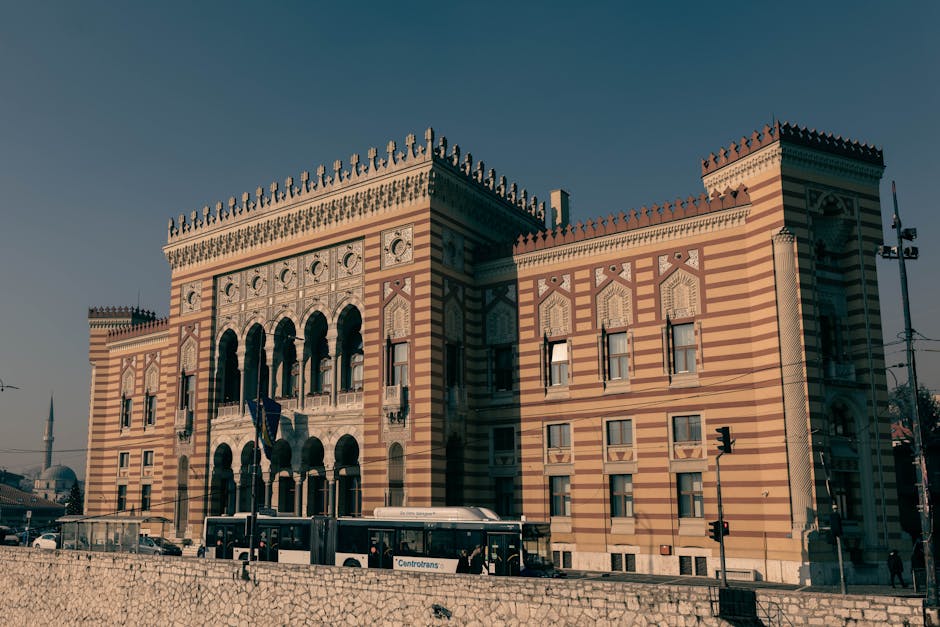
Discover Sarajevo’s history and architecture on this scenic self-guided walk across the iconic bridges of the Miljacka River.
 Moderate
Sarajevo, Bosnia and Herzegovina
Discover Sarajevo’s soul through street art, brutalist landmarks, and poignant history on this self-guided urban walking route.
 Easy
EasySarajevo, Bosnia and Herzegovina
Explore Sarajevo’s soulful nightlife on this self-guided walking route through historic pubs, hidden rakija bars, and legendary local haunts.
 Easy
EasySarajevo, Bosnia and Herzegovina
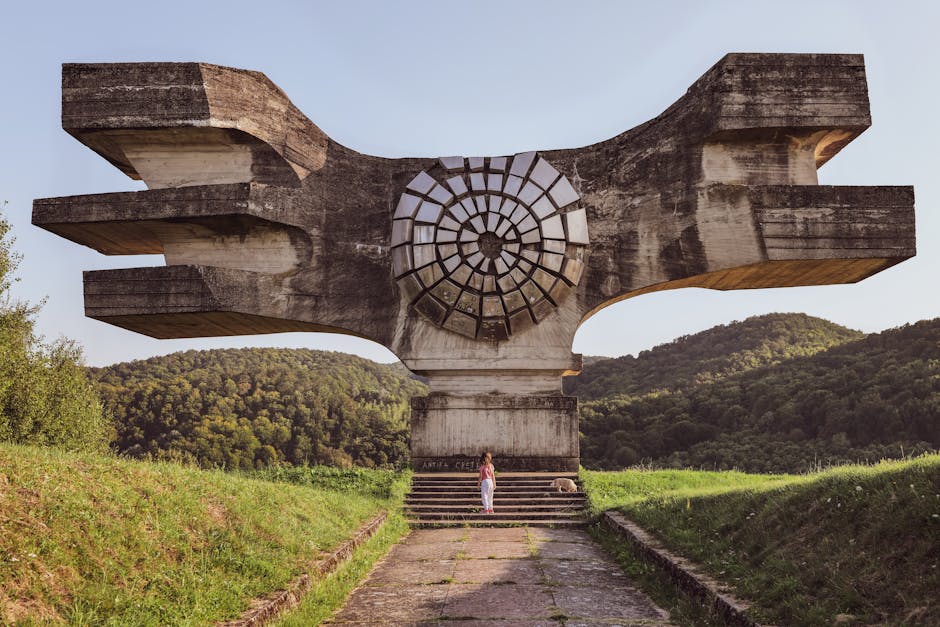
Explore Yugoslav Modernism and lush riverfront paths in Grbavica. A self-guided walk through Sarajevo's resilient 20th-century neighborhoods.