Self-guided audio tour in Sarajevo
Start Free on iPhone
Start free on iPhone to unlock this self-guided walking tour in Sarajevo. Hear all the stories that make it amazing, walk at your own pace, and begin whenever you want.
Your Private Tour Guide
Step away from the Ottoman-era alleys of Baščaršija and discover the architectural soul of Sarajevo's 20th-century expansion. This self-guided walk through the Grbavica neighborhood offers a fascinating look at Yugoslav Modernism, where brutalist concrete meets lush riverfront greenery. While many visitors stick to the Old Town, this route takes you into the heart of the city's residential life, revealing the stories of resilience and reconstruction that define modern Sarajevo. This neighborhood stroll begins at the Historical Museum of BiH, a masterpiece of modernist design known as 'The Cube.' From there, you will follow the cooling shade of Wilson's Promenade, a favorite local escape lined with hundreds of linden trees. You will encounter the Hotel Bristol, a symbol of Sarajevo’s mid-century hospitality, and the Loris building, a massive residential complex that stood on the front lines of the 1990s conflict and now serves as a testament to the city's rebirth. The walking route continues through the heart of Grbavica, exploring how socialist-era urban planning created intimate 'green alleys' and functional community spaces. You will also see the Church of St. Ignatius, a contemporary architectural addition, before concluding at the iconic Grbavica Stadium. As the home of the FK Željezničar football club, this stadium is more than just a sports venue; it is a sacred site for locals and a symbol of community identity. This audio walk is perfect for travelers who want to understand the layers of Sarajevo’s history beyond the medieval center, focusing on the socialist era, the impact of the Siege, and the vibrant local culture of today. Whether you are an architecture enthusiast or simply looking for a peaceful walk away from the crowds, this independent travel experience provides a deep dive into the authentic Sarajevo way of life.
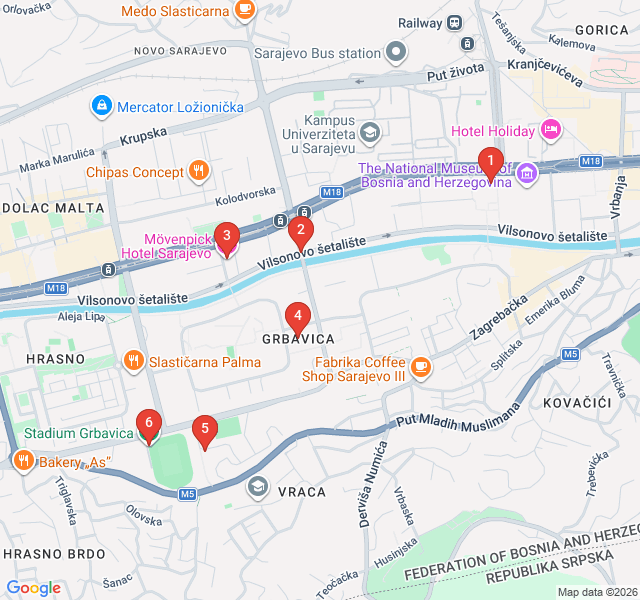
Numbers indicate the order of stops on the tour.
Start your self-guided adventure at the Historical Museum of Bosnia and Herzegovina. Known locally as 'The Cube,' this building is a premier example of Yugoslav Modernism, designed by architects Boris Magaš, Edo Šmidihen, and Radovan Horvat. Completed in 1963, its elevated glass and steel structure was intended to represent transparency and progress. Despite suffering significant damage during the 1990s, the museum remains an essential cultural hub. Take a moment to admire the geometric simplicity and the way the building seems to float above the ground. It houses vital records of the country's history, from the medieval period to the recent conflict, and serves as a poignant starting point for understanding the city's modern identity.
Step onto Vilsonovo Šetalište, or Wilson's Promenade. Named after U.S. President Woodrow Wilson, this two-kilometer stretch along the Miljacka River is the green lung of Sarajevo. While it originated in the Austro-Hungarian era, it became the social spine of the city during the Yugoslav period. Lined with nearly 500 linden trees, the promenade offers a sensory experience of rustling leaves and river sounds. On weekdays after 5:00 PM and all day on weekends, the road is closed to cars, transforming into a vibrant space for runners, families, and cyclists. It perfectly illustrates the Yugoslav urban planning ideal of integrating nature into the urban fabric.
As you walk, look for the tall, sleek silhouette of Hotel Bristol. Originally built in the 1970s, it was one of the most prestigious hotels in Yugoslavia, hosting dignitaries and celebrities. Its design reflects the international style of modernism that was popular in the late socialist era—functional, grand, and optimistic. During the Siege of Sarajevo, the hotel was located near the 'Sniper Alley' and sustained heavy damage. Its full reconstruction in 2011 signaled a new era for the neighborhood. Today, it stands as a gleaming landmark of Sarajevo’s recovery and its continued role as a crossroads of East and West.
You are now standing near the Loris Building, one of the most recognizable residential blocks in Grbavica. This massive structure is a textbook example of the large-scale housing projects typical of the mid-20th century. However, its significance goes beyond architecture. During the war, this building sat directly on the front line, marking the boundary between controlled territories. The scars of the conflict were once visible across its facade, but today, its colorful renovation symbolizes the resilience of the residents who returned to rebuild their lives. It is a living monument to the neighborhood's endurance and the strength of the local community.
In the heart of the residential blocks, you will find the Church of Saint Ignatius. This Jesuit church is a relatively recent addition to the skyline, but its design was carefully chosen to harmonize with the surrounding modernist buildings. Unlike the ornate cathedrals of the Old Town, this church uses clean lines and contemporary materials. It serves the local Catholic community and stands as a reminder of Sarajevo's enduring multi-confessional character. The way it sits tucked between apartment blocks reflects the intimate, neighborhood-focused nature of Grbavica, where sacred and secular spaces exist side-by-side.
The final stop on our walking route is the Grbavica Stadium, the home of FK Željezničar. Founded by railway workers in 1921, 'Željo' is more than just a football club; it is a symbol of the working-class identity of this neighborhood. The stadium was famously burned down during the war and later rebuilt by the fans and the community. If you look at the murals around the stadium, you will see the 'Manijaci' (the Maniacs), the club's passionate supporters. Even on non-match days, the energy here is palpable. This stadium represents the heart of Grbavica—a place of loyalty, history, and unyielding local pride.
Start Free on iPhone
Explore “Yugoslav Modernism & Green Alleys” with your very own Private Tour Guide with Zigway. Start free on iPhone, skip the large group and the fixed routes, and hear the city come alive as you go.
Your Private Tour Guide
Don't miss the good stuff
Explore Freely
 Easy
EasySarajevo, Bosnia and Herzegovina
Discover Sarajevo’s history and architecture on this scenic self-guided walk across the iconic bridges of the Miljacka River.
 Moderate
Sarajevo, Bosnia and Herzegovina
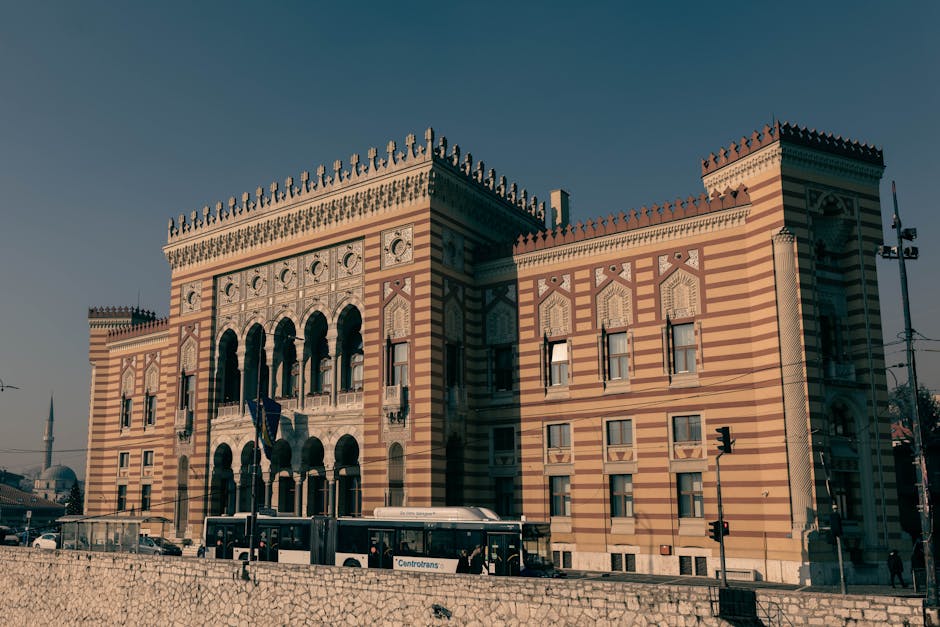
Discover Sarajevo’s soul through street art, brutalist landmarks, and poignant history on this self-guided urban walking route.
 Easy
EasySarajevo, Bosnia and Herzegovina
Explore Sarajevo’s soulful nightlife on this self-guided walking route through historic pubs, hidden rakija bars, and legendary local haunts.
 Easy
EasySarajevo, Bosnia and Herzegovina
Discover Sarajevo’s literary soul on this self-guided walk from Nobel-winning archives to the iconic National Library.
 Easy
EasyWarsaw, Poland
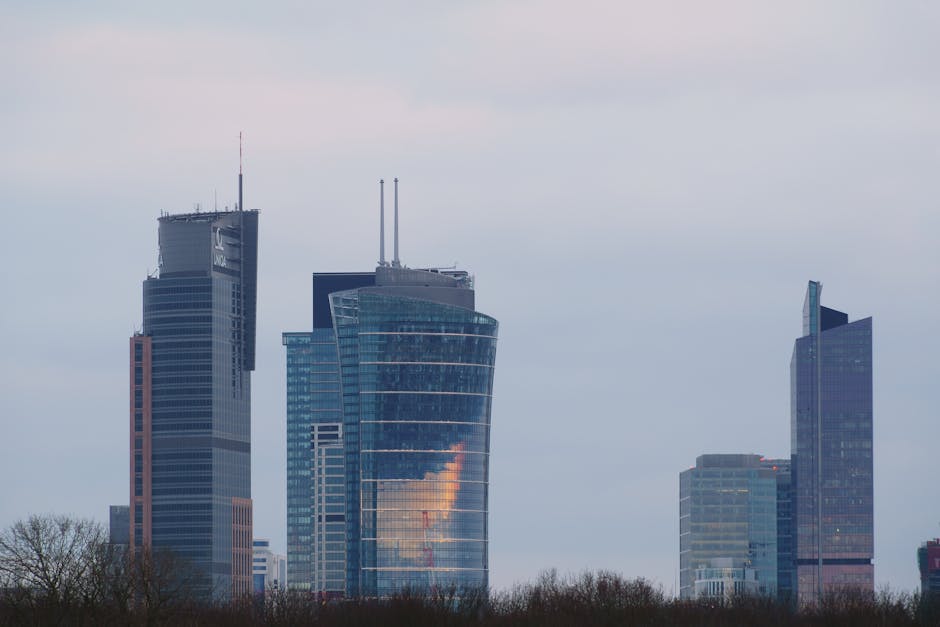
Discover the hidden courtyards and grand pre-war architecture of Warsaw's most atmospheric neighborhood on this self-guided stroll.
 Easy
EasyNairobi, Kenya
Discover Nairobi’s literary soul on this self-guided walk through historic libraries, iconic bookshops, and cultural centers in the heart of the CBD.
 Easy
EasyKrakow, Poland
Explore the prestigious Jagiellonian University district, featuring Neo-Gothic architecture, Baroque churches, and Krakow's hidden scholarly gems.
 Easy
EasyKrakow, Poland
Explore the historic heart of Kazimierz on this self-guided walk through synagogues, ancient cemeteries, and vibrant squares.
 Easy
EasyMostar, Bosnia and Herzegovina
Explore Mostar's emerald secret on this self-guided walk along the Radobolja stream, featuring Ottoman mills, hidden beaches, and lush parks.
 Challenging
Mostar, Bosnia and Herzegovina
Ascend from the iconic Old Bridge to the breathtaking glass skywalk at Fortica. A challenging self-guided hike through Mostar’s history and nature.
 Moderate
Mostar, Bosnia and Herzegovina
Discover Mostar’s soul through its vibrant street art, historic Ottoman architecture, and resilient urban culture on this self-guided walk.
 Easy
EasyMostar, Bosnia and Herzegovina
Discover Mostar's grand Austro-Hungarian boulevards, Moorish Revival architecture, and 20th-century history on this self-guided neighborhood stroll.