Self-guided audio tour in Nairobi
Start Free on iPhone
Start free on iPhone to unlock this self-guided walking tour in Nairobi. Hear all the stories that make it amazing, walk at your own pace, and begin whenever you want.
Your Private Tour Guide
Nairobi’s skyline is more than just a collection of office spaces; it is a concrete diary of a nation’s post-independence ambition and its rapid evolution into a global financial hub. This self-guided walk through the Central Business District (CBD) and the fringes of Upper Hill invites you to explore the 'Concrete Giants' that define the city's identity. From the terracotta hues of the iconic KICC to the imposing Brutalist slabs of the NSSF building, you will witness how architectural styles shifted from functional colonial legacies to bold, modernist expressions of Kenyan identity. This neighborhood stroll offers a unique lens on the city, focusing on the structural engineering and aesthetic choices that have shaped East Africa's most prominent metropolis. As you navigate the bustling streets at your own pace, you will encounter landmarks that were once the tallest in the region, reflecting the economic booms of the late 20th century. The route highlights the interplay between local materials and international Modernism, particularly the Brutalist movement which found a fertile home in Nairobi’s high-altitude sun. This walking route is perfect for photography enthusiasts and history buffs alike, providing ample opportunities to capture the sharp angles and massive forms of these skyscrapers. Beyond the steel and glass, this travel experience connects you to the stories of the architects and the political climate that allowed these structures to rise. Whether you are a first-time visitor or a resident looking to see the city from a new perspective, this architecture-focused walk reveals the hidden details of the buildings we often pass without a second glance. Discover how Nairobi earned its reputation as the 'Green City in the Sun' while simultaneously building a forest of stone and glass that rivals any major global capital. This walking tour Nairobi provides the historical context necessary to appreciate the city's growth from a swampy rail depot to a modern architectural marvel.
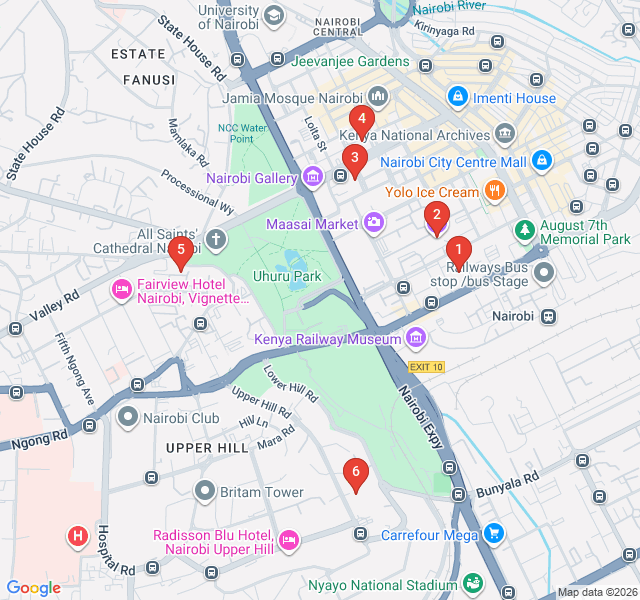
Numbers indicate the order of stops on the tour.
Standing at 200 meters, the Times Tower (also known as the New Central Bank Tower) was the tallest building in East and Central Africa for over two decades. Completed in 2000, it serves as the headquarters for the Kenya Revenue Authority. Its design is a prime example of late-modernist functionalism, featuring a sleek, rectangular profile that dominates the southern end of the CBD. Built to withstand seismic activity, the tower represents the economic consolidation of Kenya at the turn of the millennium. Take a moment to appreciate how its glass and concrete exterior reflects the changing light of the Nairobi sky, a symbol of the city's transition into a modern financial powerhouse.
The KICC is perhaps the most recognizable silhouette in Kenya. Designed by David Mutiso and Karl Henrik Nøstvik, it was completed in 1973 and reflects a unique blend of international Modernism and African aesthetics. The terracotta-colored tower and the conical amphitheater were inspired by traditional Kenyan architecture, specifically the shape of a hut. For years, it was the tallest building in the city and remains a centerpiece for international diplomacy and exhibitions. Its textured facade was designed to handle the equatorial sun, using deep-set windows to provide natural cooling, a hallmark of sustainable modernist design in the tropics.
Completed in 1999, Telposta Towers is a striking example of how Nairobi's architecture began to embrace more complex geometric forms. Standing at 120 meters, it was built to house the defunct Kenya Post and Telecommunications Corporation. The building's vertical emphasis and the use of heavy concrete pillars at its base are nods to Brutalist influences, yet its overall profile is distinctly modern. It serves as a reminder of the era when telecommunications were the backbone of national development. Notice the intricate window patterns which were designed to maximize natural light while minimizing the heat gain typical of high-altitude cities.
The I&M Bank Tower, completed in 2001, represents the shift toward the 'Glass Curtain' style that defines 21st-century Nairobi. Unlike the heavy concrete of the earlier stops, this building uses blue-tinted glass to create a reflective, shimmering surface. This style reflects a globalized architectural language, moving away from the localized terracotta and stone of the 70s. It stands on the site of the former 'Thorn Tree' cafe, a legendary meeting spot for explorers. The tower's clean lines and transparent aesthetic symbolize the transparency and modernization of Kenya’s banking and corporate sectors during the early 2000s.
The NSSF building is one of Nairobi's most formidable examples of Brutalist architecture. Located on the edge of the CBD, this massive concrete structure was completed in stages, with the main tower finished in the early 90s. Brutalism, derived from the French 'béton brut' (raw concrete), is characterized by its heavy, monolithic appearance and the honest expression of structural materials. The NSSF building serves as a fortress of social administration. Its repetitive, grid-like facade and imposing scale were intended to project a sense of permanence and strength, reflecting the state's role in the lives of its citizens during the late 20th century.
As we move toward the Upper Hill district, we encounter the Old Mutual Tower (formerly UAP Tower). Completed in 2016, it briefly held the title of the tallest building in Nairobi. This structure marks the 'Upper Hill' boom, where businesses moved away from the crowded CBD to higher ground. Its design is decidedly contemporary, featuring a spire that reaches 163 meters. The building's location on a hill makes it appear even taller, dominating the skyline from almost any vantage point in the city. It represents the current era of Nairobi’s growth: high-tech, high-altitude, and increasingly focused on the Upper Hill financial district.
Start Free on iPhone
Explore “Concrete Giants: Modernist Architecture Tour” with your very own Private Tour Guide with Zigway. Start free on iPhone, skip the large group and the fixed routes, and hear the city come alive as you go.
Your Private Tour Guide
Don't miss the good stuff
Explore Freely
 Easy
EasyNairobi, Kenya
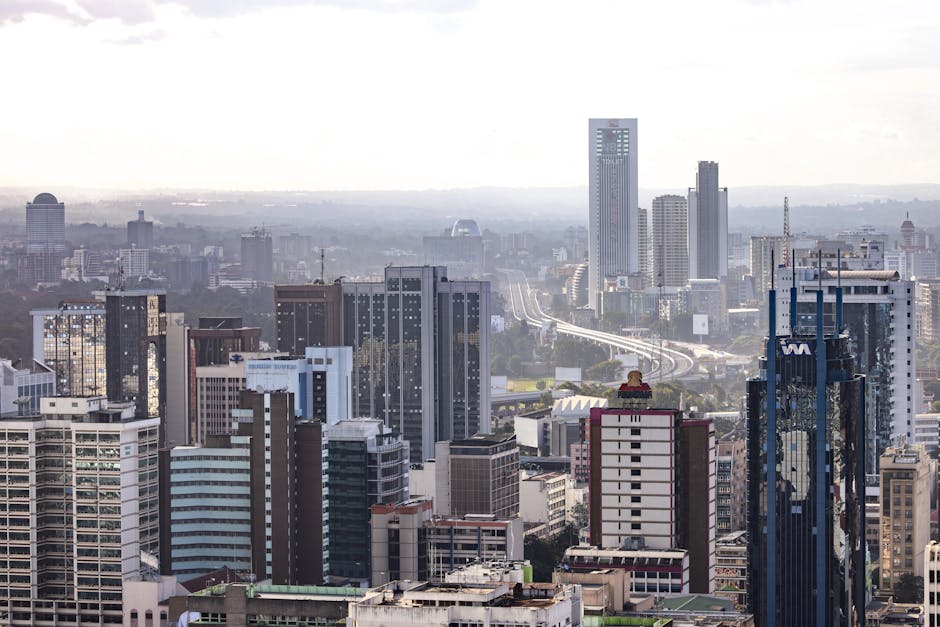
Explore Nairobi's architectural evolution from colonial-era landmarks to iconic Brutalist skyscrapers on this historic self-guided walking route.
 Moderate
Nairobi, Kenya
Discover the creative soul of Nairobi on this self-guided walk through the city's premier art galleries, markets, and artisan workshops.
 Moderate
Nairobi, Kenya
Taste your way through Nairobi's Westlands on this self-guided walk featuring street snacks, cultural landmarks, and hidden foodie gems.
 Easy
EasyNairobi, Kenya
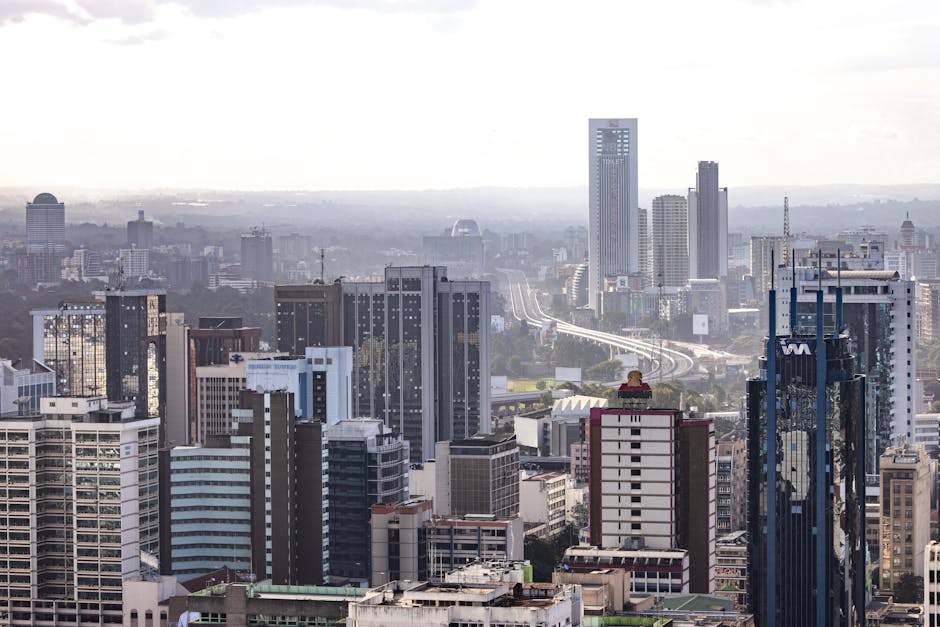
Explore the history of Kenya’s independence through the statues, monuments, and parks that define Nairobi’s political heart on this self-guided walk.
 Easy
EasyGdansk, Poland
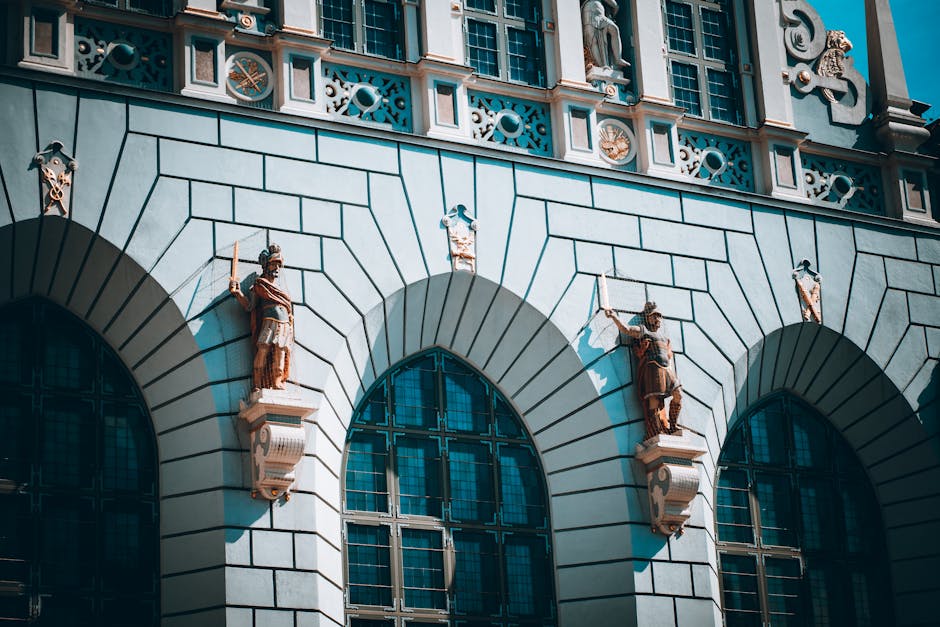
Discover the opulent Royal Way of Gdansk at your own pace. Explore Hanseatic history, gilded architecture, and the iconic Neptune's Fountain.
 Easy
EasySalzburg, Austria
Discover the 'Rome of the North' on this self-guided walk through the Baroque squares and monumental legacy of Salzburg’s Prince-Archbishops.
 Easy
EasySalzburg, Austria
Discover Salzburg's oldest medieval alley, the birthplace of the 'Silent Night' author, and breathtaking views on this quiet self-guided walk.
 Easy
EasyWarsaw, Poland
Explore the miracle of Warsaw's reconstructed Old Town on this self-guided walk through royal squares, medieval walls, and heroic monuments.

