Self-guided audio tour in Mostar
Start Free on iPhone
Start free on iPhone to unlock this self-guided walking tour in Mostar. Hear all the stories that make it amazing, walk at your own pace, and begin whenever you want.
Your Private Tour Guide
Discover the soul of Mostar on this self-guided walk through a city where the echoes of the Ottoman Empire meet the stark lines of socialist modernism. Mostar is far more than just its famous bridge; it is a living museum of resilience and cultural synthesis. This walking route invites you to explore the layers of history that define the capital of Herzegovina, from the poignant memorials of the 20th century to the bustling cobblestone alleys of the 16th-century bazaar. Your journey begins in the modern heart of the city, at Spanish Square, before leading you through the hauntingly beautiful Partisan Memorial Cemetery, a masterpiece of Brutalist architecture that offers a different perspective on the city's complex past. As you transition from the academic district into the historic core, the atmosphere shifts. The scent of roasted coffee and the rhythmic hammering of copper smiths signal your arrival in the Kujundžiluk Old Bazaar. Here, the architecture tells a story of centuries of trade and tradition. The highlight of any walking tour Mostar offers is undoubtedly the Stari Most, or Old Bridge. This UNESCO World Heritage site is a symbol of reconciliation, rebuilt stone by stone using original Ottoman techniques after its destruction in the 1990s. Beyond the bridge, you will find hidden gems like the Crooked Bridge, a smaller prototype of its famous sibling, and the Kajtaz House, which provides a rare glimpse into Ottoman-era domestic life. Whether you are capturing the perfect photograph of the Koski Mehmed Pasha Mosque or reflecting at the Millennium Cross overlooking the valley, this route ensures you experience the full spectrum of Mostar's identity. This neighborhood stroll is designed for those who wish to explore independently, allowing you to linger over a Turkish coffee or watch the famous bridge divers at your own pace. By following this walking route, you gain a deeper understanding of how Mostar bridges the gap between East and West, and between its turbulent history and its vibrant present.
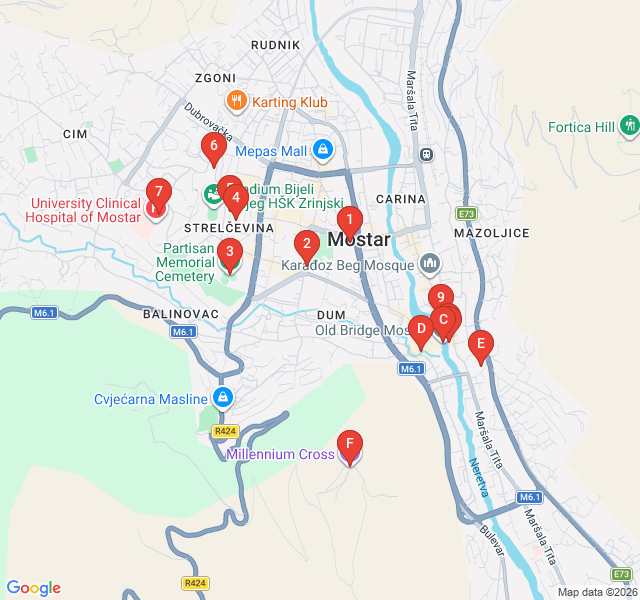
Numbers indicate the order of stops on the tour.
Welcome to Spanish Square, the largest square in Mostar and a significant symbol of the city's modern history. Named in honor of the 21 Spanish soldiers who lost their lives while serving in the UN peacekeeping forces during the Bosnian War, this space serves as a neutral meeting point for the city's divided communities. Notice the striking Gymnasium building nearby, with its Moorish Revival architecture and vibrant orange facade. This square is where the Austro-Hungarian influence meets the contemporary pulse of the city, marking the boundary between the newer sections of Mostar and the path toward the historic center.
Just a short stroll from the square is Park Zrinjevac, the city's main green lung. Renovated in 2007, it offers a peaceful respite from the urban bustle. As you walk through, look for the statue of Bruce Lee—an unexpected landmark erected in 2005 as a symbol of justice and a figure that all ethnic groups could admire. The park is a favorite local spot for families and students, providing a glimpse into the everyday life of Mostar residents away from the primary tourist path.
Prepare to enter one of Mostar's most powerful sites. Designed by the renowned architect Bogdan Bogdanović and completed in 1965, the Partisan Memorial Cemetery is a masterpiece of Socialist Realist and Brutalist design. Built to honor the Yugoslav Partisans of Mostar who died during World War II, the cemetery is laid out like an organic 'city of the dead' with winding stone paths and 810 symbolic tombstones shaped like fallen flowers. Its surrealist aesthetic and sweeping views of the city make it a profound place for reflection on the cycles of history and memory.
As you move back toward the city center, you pass through the academic heart of Mostar. This faculty is part of the University of Mostar, reflecting the city's role as a regional educational hub. The surrounding area is often buzzing with student activity, contributing to the youthful energy that balances Mostar's ancient history. The architecture here is functional, typical of the late 20th-century expansion of the city's infrastructure.
The University of Mostar is the only university in Bosnia and Herzegovina where Croatian is the primary language of instruction. Its presence here is a reminder of the complex cultural and linguistic tapestry of the region. The campus buildings represent the post-war reconstruction and the city's commitment to fostering a new generation of professionals. This area serves as a bridge between the residential neighborhoods and the historical core you are about to enter.
The Student Center is the hub of campus life, providing housing and services to those studying in the city. In a city that has seen much division, the university areas are often the places where the future of Mostar is being written. Notice the mix of renovated buildings and those still bearing the scars of the 1990s conflict, a common sight as you move through this part of the city.
The Faculty of Medicine is another pillar of the local university system. Education has always been a point of pride for Mostar, and the medical school represents the city's modern aspirations. From here, the route begins to transition away from the institutional buildings toward the more atmospheric, older districts of the city that lead to the Neretva River.
Named after the Yugoslav Prime Minister who died in a plane crash in 1977, this university is primarily located in the northern part of the city in former military barracks. It was established following the division of the original university during the war. Its existence highlights the dual nature of Mostar's institutions, yet it remains a vital center for research and learning, particularly for the Bosniak community.
Completed in 1618, this is one of the most beautiful mosques in the region. It is famous for its location right on the edge of the Neretva riverbank. While the interior is decorated with stunning botanical motifs, the real draw is the minaret. For those who choose to climb its narrow spiral staircase, it offers the most iconic panoramic view of the Old Bridge. The courtyard, with its decorative fountain or 'šadrvan,' provides a serene moment before you enter the busy bazaar.
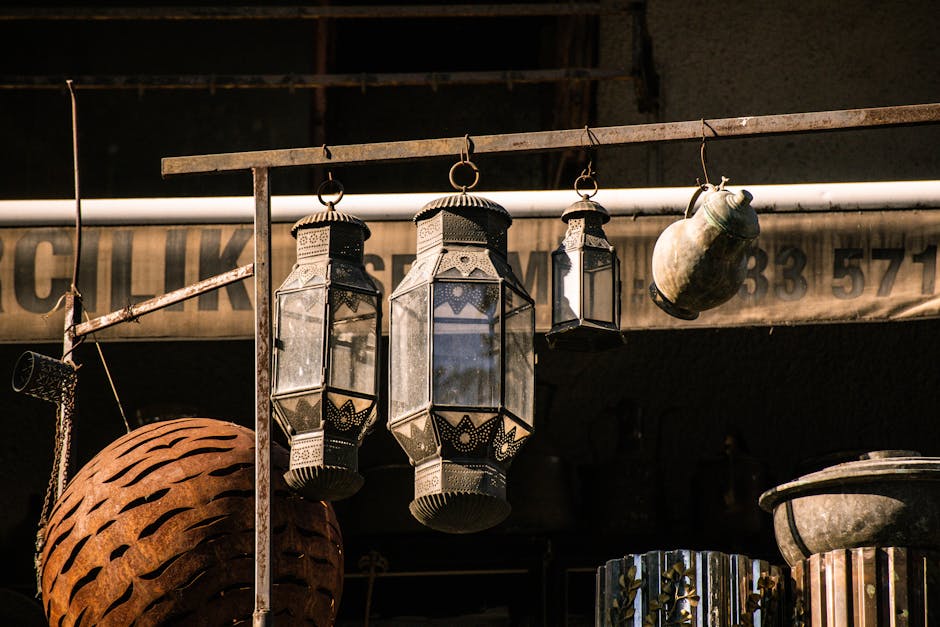
Step into the 16th century as you walk through Kujundžiluk, the oldest part of Mostar. This was once the heart of the city's trade, with over 500 workshops during the Ottoman era. Today, the name—which refers to the gold and silversmiths—reminds us of its wealthy past. As you navigate the narrow cobblestone streets, you will see traditional copper work, colorful lanterns, and pashminas. The architecture here has remained remarkably consistent for centuries, despite the city's many changes.
Located in the Tara Tower on the east side of the bridge, this museum is essential for understanding the engineering marvel of Stari Most. It houses archaeological finds from the bridge's history and offers a detailed look at the 1993 destruction and the massive international effort to rebuild it. You can even see the original foundations of the bridge from the lower level. It is a testament to the bridge's role as the literal and figurative backbone of Mostar.
Standing atop the Stari Most, you are on one of the world's most famous bridges. Originally commissioned by Suleiman the Magnificent and built by Mimar Hayruddin in 1566, it was the widest man-made arch in the world at the time. The bridge you see today was reconstructed in 2004 using the same Tenelija stone and Ottoman techniques as the original. If you are lucky, you might see the local divers, a tradition dating back centuries, preparing to leap 24 meters into the cold emerald waters of the Neretva.
Often overlooked in favor of its larger neighbor, the Crooked Bridge is a miniature version of Stari Most. It is believed to have been built as a test run or prototype for the main bridge eight years earlier. Spanning the Radobolja creek just before it joins the Neretva, this bridge is nestled in a particularly charming and quiet corner of the Old Town. It captures the essence of Ottoman stone masonry on a more intimate, human scale.
To truly understand Ottoman-era life, visit the Kajtaz House. This late 16th-century residence was once the home of a Turkish judge and remains in the same family today. It is a perfect example of traditional Balkan-Ottoman architecture, with separate sections for men and women, beautiful wooden ceilings, and original carpets. The lush, high-walled garden provided privacy and coolness during the hot Herzegovinian summers, offering a glimpse into a world of quiet elegance.
Our walk concludes with a look toward the summit of Hum Hill, where the 33-meter tall Millennium Cross stands. Erected in 2000 to mark two millennia of Christianity, it is visible from almost everywhere in the city. While it is a climb to reach the base, the cross serves as a significant landmark in Mostar's modern skyline. From this vantage point, looking back at the minarets and church spires, you can see the true complexity of Mostar's 'Heart of the Ottoman' history meeting its modern reality.
Start Free on iPhone
Explore “Ottoman Heart: The Old Bridge and Bazaar” with your very own Private Tour Guide with Zigway. Start free on iPhone, skip the large group and the fixed routes, and hear the city come alive as you go.
Your Private Tour Guide
Don't miss the good stuff
Explore Freely
 Easy
EasyMostar, Bosnia and Herzegovina
Explore Mostar's emerald secret on this self-guided walk along the Radobolja stream, featuring Ottoman mills, hidden beaches, and lush parks.
 Challenging
Mostar, Bosnia and Herzegovina
Ascend from the iconic Old Bridge to the breathtaking glass skywalk at Fortica. A challenging self-guided hike through Mostar’s history and nature.
 Moderate
Mostar, Bosnia and Herzegovina
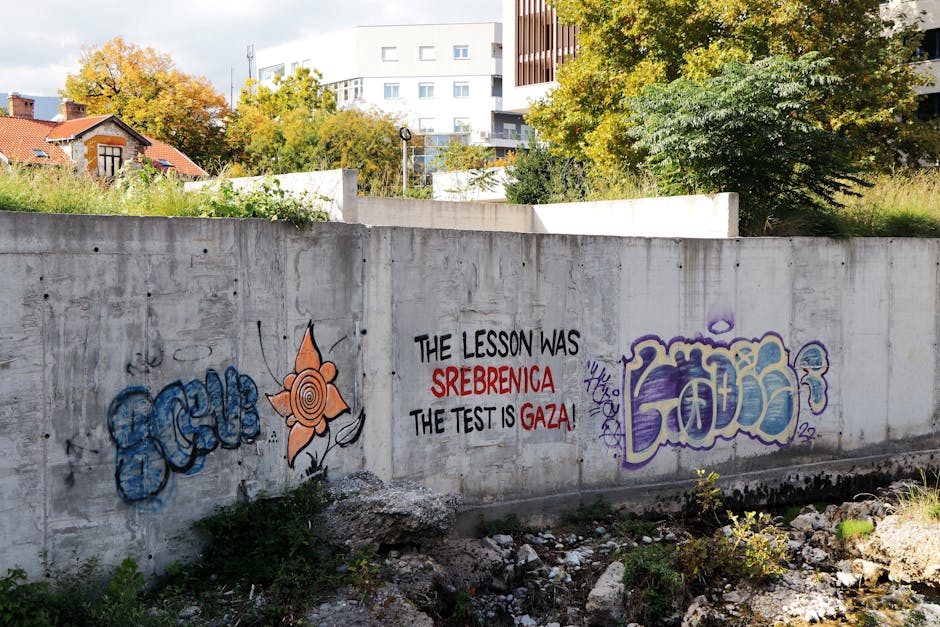
Discover Mostar’s soul through its vibrant street art, historic Ottoman architecture, and resilient urban culture on this self-guided walk.
 Easy
EasyMostar, Bosnia and Herzegovina
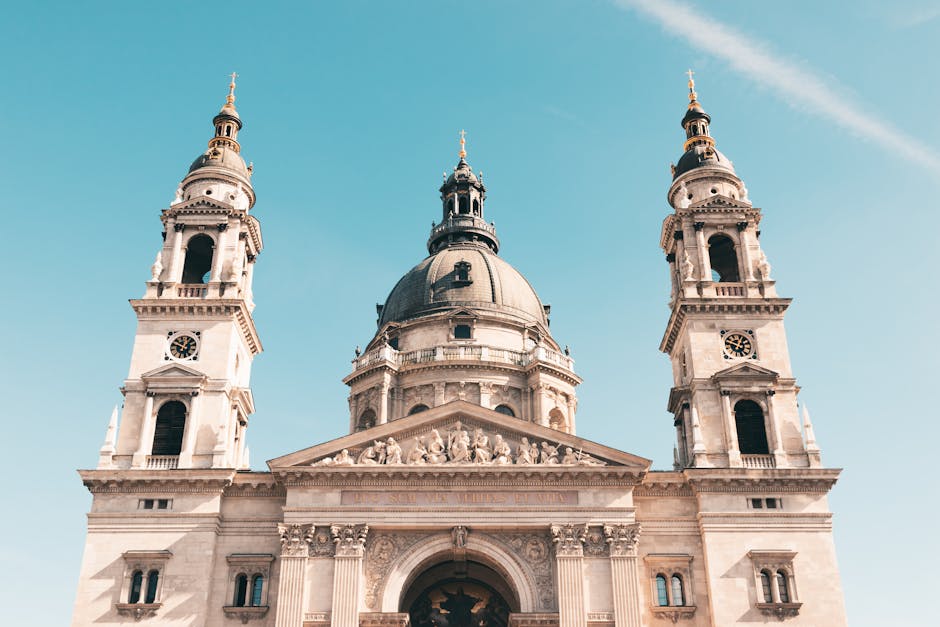
Discover Mostar's grand Austro-Hungarian boulevards, Moorish Revival architecture, and 20th-century history on this self-guided neighborhood stroll.
 Easy
EasyNairobi, Kenya
Discover Nairobi's iconic skyline on this self-guided architecture walk through the CBD’s most famous modernist and Brutalist landmarks.
 Easy
EasyGdansk, Poland
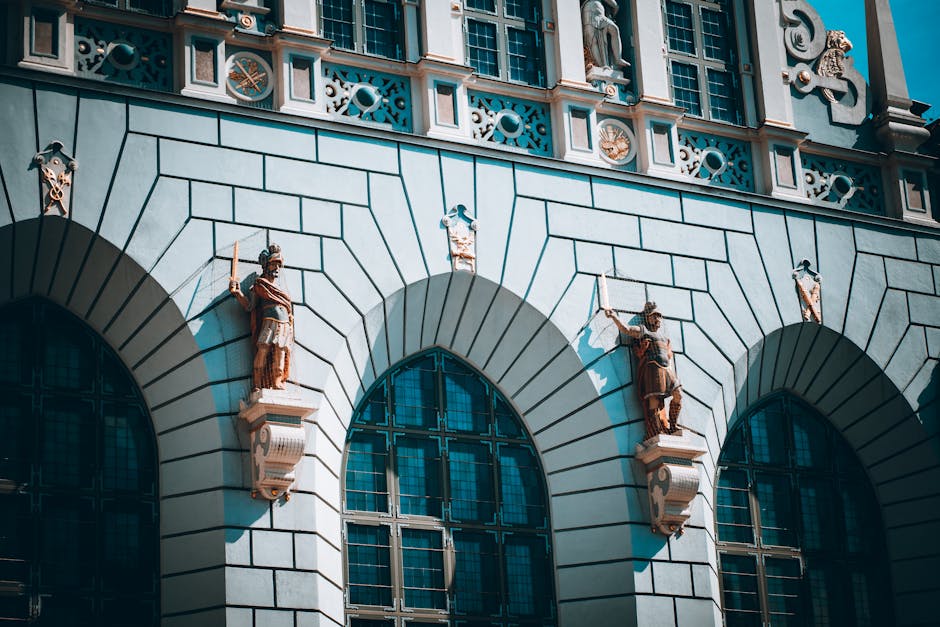
Discover the opulent Royal Way of Gdansk at your own pace. Explore Hanseatic history, gilded architecture, and the iconic Neptune's Fountain.
 Easy
EasySalzburg, Austria
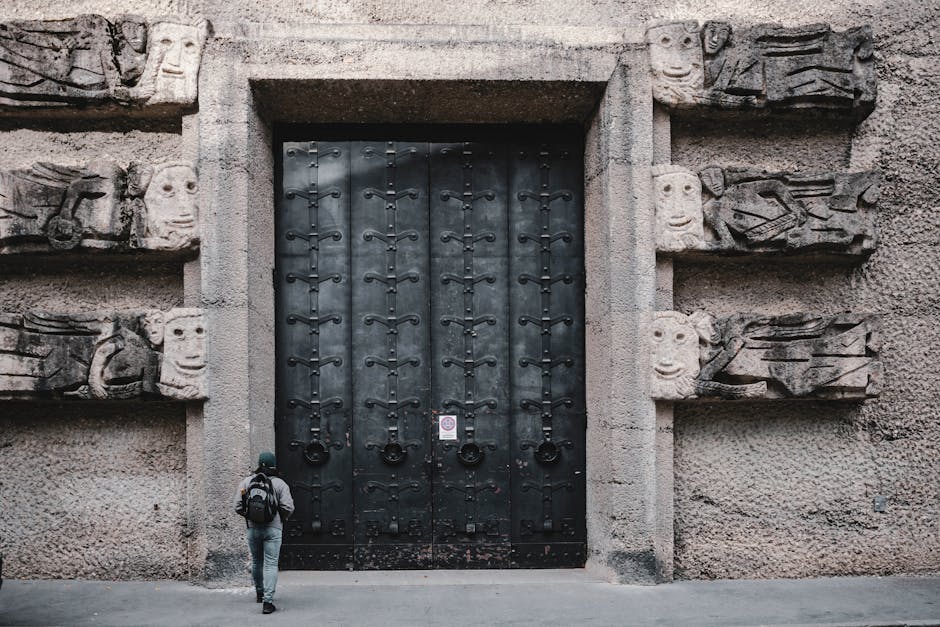
Discover the 'Rome of the North' on this self-guided walk through the Baroque squares and monumental legacy of Salzburg’s Prince-Archbishops.
 Easy
EasyWarsaw, Poland
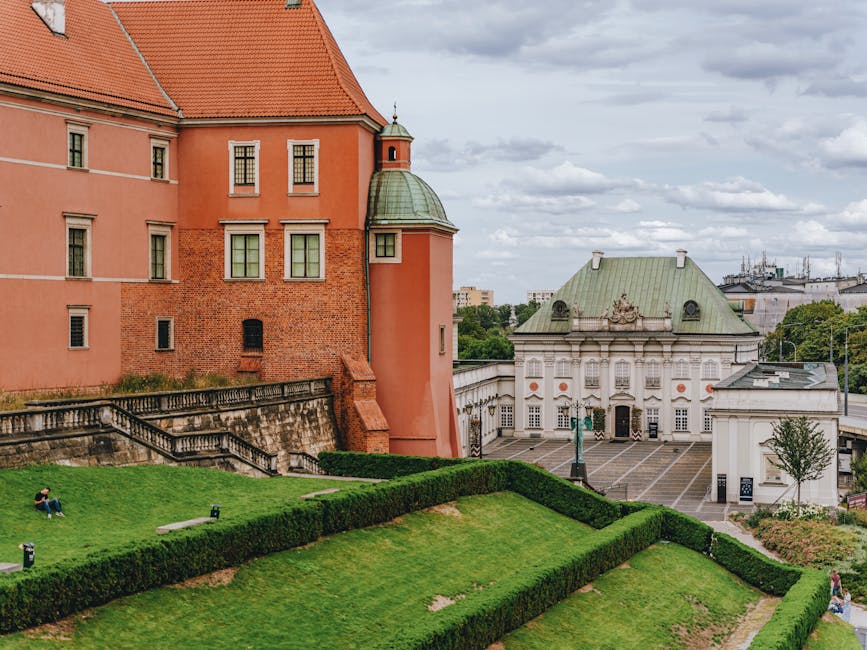
Explore the miracle of Warsaw's reconstructed Old Town on this self-guided walk through royal squares, medieval walls, and heroic monuments.
 Easy
EasySarajevo, Bosnia and Herzegovina
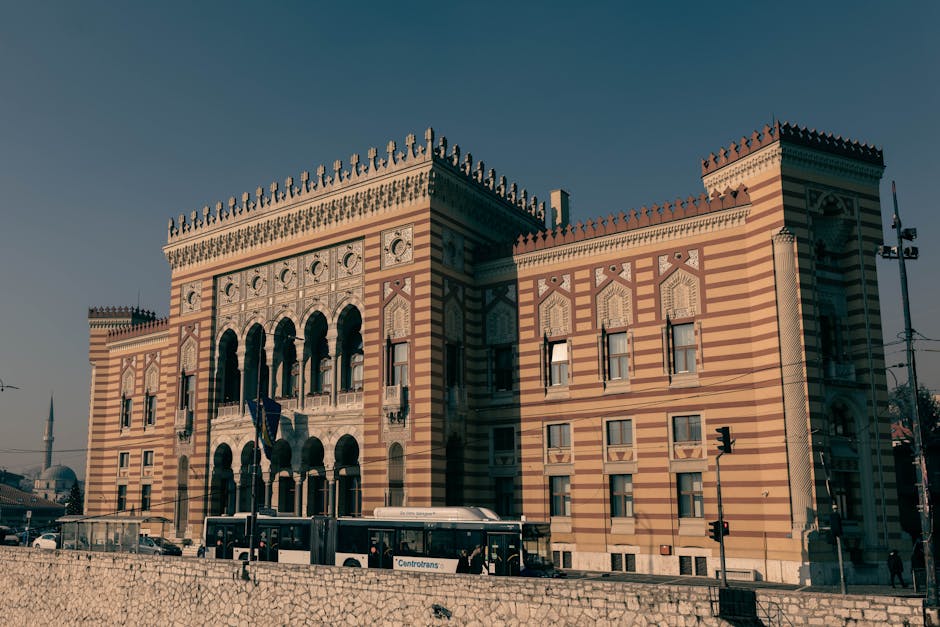
Discover Sarajevo’s history and architecture on this scenic self-guided walk across the iconic bridges of the Miljacka River.
 Moderate
Sarajevo, Bosnia and Herzegovina
Discover Sarajevo’s soul through street art, brutalist landmarks, and poignant history on this self-guided urban walking route.
 Easy
EasySarajevo, Bosnia and Herzegovina
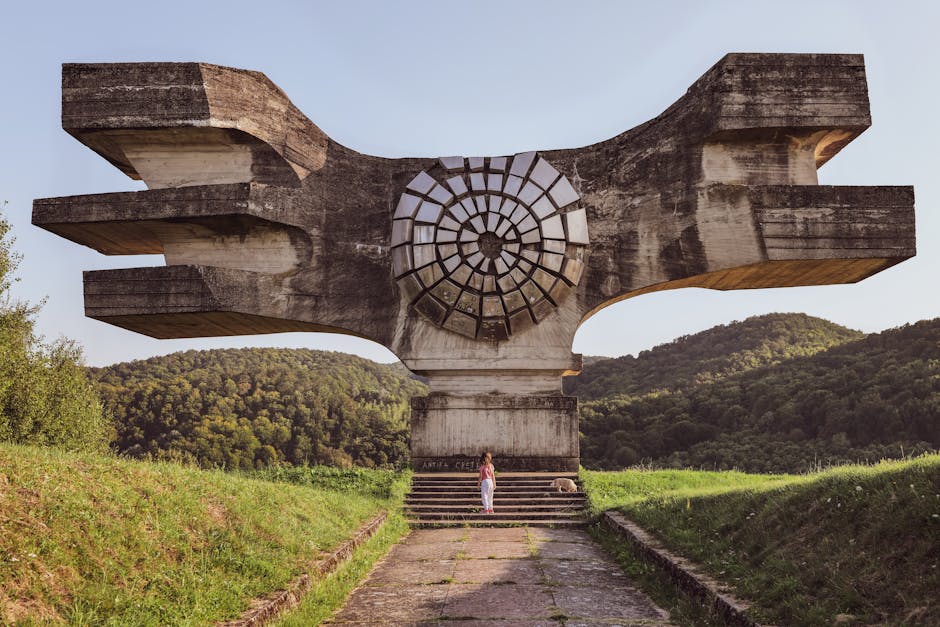
Explore Sarajevo’s soulful nightlife on this self-guided walking route through historic pubs, hidden rakija bars, and legendary local haunts.
 Easy
EasySarajevo, Bosnia and Herzegovina
Explore Yugoslav Modernism and lush riverfront paths in Grbavica. A self-guided walk through Sarajevo's resilient 20th-century neighborhoods.