Self-guided audio tour in Mostar
Start Free on iPhone
Start free on iPhone to unlock this self-guided walking tour in Mostar. Hear all the stories that make it amazing, walk at your own pace, and begin whenever you want.
Your Private Tour Guide
Mostar is a city where the echoes of the adhan from slender minarets mingle with the tolling of church bells, creating a unique soundscape that tells the story of centuries of coexistence. This self-guided walk invites you to explore the complex tapestry of faith and history that defines this Herzegovinian gem. From the iconic Stari Most to hidden courtyards of Ottoman-era homes, you will discover how diverse cultures have left an indelible mark on the city's architecture and soul. This neighborhood stroll takes you beyond the typical tourist paths, leading you through the historic core and into the Bjelušine district, where the resilience of Mostar's multi-confessional identity is most visible. As you begin your self-guided adventure, you will encounter symbols of the city's past and present. The route highlights the architectural brilliance of the Ottoman period, seen in the Karagöz Bey Mosque and the remarkably preserved residential houses like the Muslibegovic and Biscevic estates. These stops offer a glimpse into a lifestyle defined by privacy, hospitality, and a deep connection to nature. This walking tour Mostar experience also addresses the darker chapters of the 20th century, visiting memorials and museums that ensure the lessons of the past are never forgotten. Crossing the Neretva River, the trail explores the Catholic and Orthodox heritage of the city. You will see the towering bell tower of the Church of St. Peter and Paul and the historic Old Orthodox Church, which was built partially underground during Ottoman rule to respect local building height restrictions. This walking tour Mostar route is more than just a sightseeing trip; it is a journey through the spiritual heart of the Balkans. Whether you are admiring the 16th-century engineering of the Old Bridge or reflecting at the Millennium Cross, you will gain a deeper understanding of why Mostar remains a symbol of reconciliation and hope. Explore independently and at your own pace, allowing the stories of these sacred sites to unfold as you navigate the charming, sun-soaked streets of this historic city.
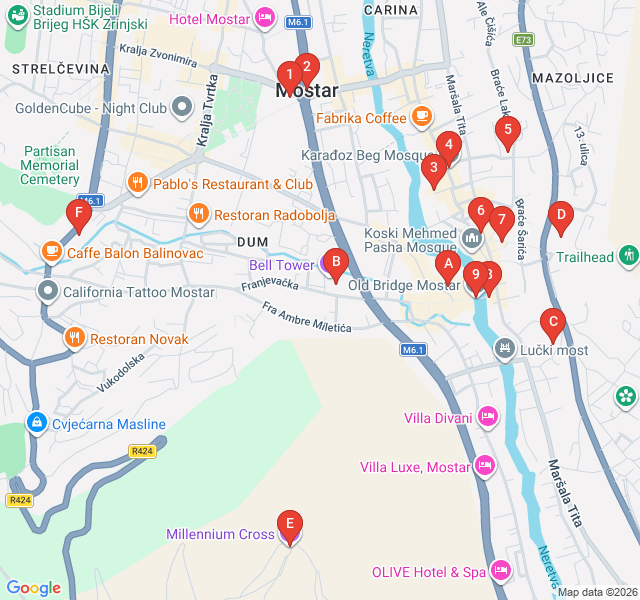
Numbers indicate the order of stops on the tour.
Start exploring with Zigway at Spanish Square, the largest square in Mostar and a central meeting point that bridges the eastern and western parts of the city. Named in honor of the 21 Spanish soldiers who lost their lives while serving in the UN peacekeeping forces during the conflict in the 1990s, this space is a symbol of international solidarity. Dominating the square is the vibrant orange-and-yellow facade of the Gymnasium Mostar, one of the most prestigious schools in the country, built during the Austro-Hungarian period in the Pseudo-Moorish style. This square serves as a perfect introduction to Mostar's layered history, where imperial architecture meets modern memorialization.
Just a short walk from the square, you will find the site of the Mostar Synagogue. Although the Jewish community in Mostar was never as large as those in Sarajevo, it played a vital role in the city's commercial and cultural life. The original synagogue was built in the early 20th century but was tragically damaged during World War II. Today, the site stands as a poignant reminder of a once-thriving Sephardic and Ashkenazi presence. The building was later converted for use as a puppet theater, but plans and memorials continue to honor its sacred origins. It represents a vital, though often overlooked, piece of the city's multi-faith puzzle.
Step back into the 17th century at the Biscevic House, also known as the 'Turkish House.' This is one of the most authentic Ottoman residential structures in Mostar. As you enter the courtyard, notice the high walls designed to provide privacy for the family, particularly the women. The house is famous for its 'divan'—a reception room that extends over the Neretva River, supported by long wooden pillars. Inside, you can see original carpets, household items, and intricate woodwork. The layout reflects the Ottoman philosophy of living, emphasizing comfort, hospitality, and a seamless connection between the indoor living space and the natural beauty of the river outside.
The Karagöz Bey Mosque is widely considered the most beautiful and largest mosque in Herzegovina. Completed in 1557, it was designed by the famous Ottoman architect Mimar Sinan, or at least by his students following his distinct style. The mosque features a large dome and a slender minaret that dominates the local skyline. Inside, the walls are decorated with intricate botanical motifs and Arabic calligraphy. Despite suffering heavy damage during the 1990s war, the mosque has been meticulously restored. The surrounding courtyard contains a traditional fountain for ritual washing and an old madrasa, or religious school, further highlighting the site's historical importance as a center of learning.
The Muslibegovic House is not just a museum but a national monument that offers an even more grand look at Ottoman noble life. Built in the 18th century, it remains in the hands of the original family. The complex is divided into the 'selamluk' for guests and business, and the 'haremluk' for private family life. The architecture is characterized by its stone construction and beautiful arched windows. Inside, you'll find a collection of family heirlooms, including calligraphic manuscripts and traditional costumes. The lush garden, filled with roses and pomegranate trees, provides a peaceful escape from the bustling streets and showcases the refined aesthetics of the era.
This stop offers a somber but necessary look at Mostar's recent history. The Museum of War and Genocide Victims 1992-1995 provides a deeply personal perspective on the Bosnian War through the belongings, photos, and stories of those who lived through it. Unlike larger state museums, this space focuses on individual narratives—a child's sweater, a handwritten letter, or a simple household object that survived the shelling. It serves as a powerful testament to human resilience and a reminder of the importance of peace. The exhibits are curated to educate visitors on the realities of the conflict without political bias, focusing instead on the shared human experience of loss and survival.
Located in the former home of Džemal Bijedić, a prominent Yugoslav politician, the Herzegovina Museum chronicles the region's history from ancient times to the modern era. The exhibits cover archaeological finds, ethnographic treasures, and the city's development under various empires. One of the highlights is the collection of photographs showing Mostar in the 19th and early 20th centuries, allowing you to see how the cityscape has evolved. The museum provides the cultural context needed to understand how Illyrian, Roman, Slavic, Ottoman, and Austro-Hungarian influences merged to create the specific Herzegovinian identity you see today.
Situated within the Tara Tower on the east side of the bridge, the Old Bridge Museum (Muzej Stari Most) is dedicated to the history of the city's most famous landmark. The museum is divided into three sections: the historic tower itself, an archaeological area featuring the remains of previous wooden bridges, and a gallery documenting the bridge's destruction in 1993 and its subsequent reconstruction. You can climb to the top of the tower for a breathtaking view of the bridge and the Old Town. The museum detail-oriented approach explains the sophisticated 16th-century masonry techniques used by the architect Mimar Hayruddin to create the original stone arch.
The Stari Most, or Old Bridge, is the undisputed heart of the city. Originally commissioned by Suleiman the Magnificent in 1566, it stood for 427 years until it was destroyed during the Croat-Bosniak War in 1993. Its reconstruction, completed in 2004 using original stones recovered from the river, became a global symbol of reconciliation. As you walk across its steep, slippery marble arch, you might see local divers preparing to jump into the cold Neretva River below—a tradition that dates back centuries. The bridge connects the two sides of the city and remains one of the most significant examples of Islamic architecture in the Balkans.
Located near the bridge, the Hamam Museum is housed in the only surviving Ottoman bathhouse in Mostar, dating back to the late 16th century. This small but fascinating site explains the social and religious importance of public baths in Ottoman society. You can see the various rooms—from the cold room used for changing to the hot room where the bathing took place. The architecture features characteristic small domes with glass 'eyes' that let in natural light while maintaining privacy. It is a rare opportunity to see the functional side of Ottoman urban planning and the importance placed on hygiene and communal gathering.
Dominating the skyline on the west bank of the Neretva is the Franciscan Church of St. Peter and Paul. The original church was built in 1866 but was completely destroyed during the war in 1992. The modern replacement is notable for its incredibly tall bell tower, which stands at 107 meters, making it one of the tallest in the region. This height was intended as a symbol of the Catholic community's presence and resilience. Inside, the church is spacious and modern, featuring beautiful contemporary art and stained glass. The adjacent Franciscan monastery houses a valuable library and a collection of art that survived the conflict.
Continuing your self-guided adventure, visit the Kajtaz House, often cited as the most authentic Turkish house in Mostar. Hidden behind high walls in a quiet alley, this 16th-century home has remained largely unchanged for hundreds of years. The current owners often greet visitors and share stories of their ancestors. The house is unique because it retains its original separate sections for men and women and features a beautiful internal courtyard with a stone fountain. The interior is filled with original artifacts, providing a visceral sense of what daily life was like during the height of the Ottoman Empire in Herzegovina.
Located on the slopes of the Bjelušine neighborhood, the Old Orthodox Church (Church of the Nativity of the Virgin) is a testament to the survival of the Serbian Orthodox community. Built in 1834, the church was partially sunk into the ground because Ottoman law at the time prohibited non-Muslim places of worship from being taller than mosques. This gave it a unique, low-profile appearance. Although the much larger Cathedral of the Holy Trinity nearby was destroyed in the 1990s and is currently being rebuilt, this smaller, older church remains a spiritual anchor for the community, housing beautiful icons and a peaceful atmosphere.
Looking up from almost anywhere in the city, you will see the Millennium Cross standing atop Hum Hill. Erected in 2000 to mark the new millennium, the 33-meter-tall cross is a significant landmark for the city's Catholic population. While it is a point of religious pride for some, it remains a controversial symbol for others due to its placement on a hill used as a firing position during the war. From the base of the cross, the view of Mostar is unparalleled, offering a bird's-eye view of the river, the bridges, and the patchwork of minarets and steeples that define the city's multi-faith trail.
The final stop on our neighborhood stroll is the Cathedral of Mary, Mother of the Church. This modern Catholic cathedral features a striking, unconventional design with a large, sloping roof and a separate, modern bell tower. Completed in 1980, it serves as the seat of the Diocese of Mostar-Duvno. The interior is bright and minimalist, focusing on light and space. Its modern aesthetic contrasts sharply with the Ottoman and Austro-Hungarian styles seen earlier on the route, representing the contemporary face of Mostar's religious life and the ongoing evolution of the city's spiritual landscape.
Start Free on iPhone
Explore “Sacred Mostar: The Multi-Faith Trail” with your very own Private Tour Guide with Zigway. Start free on iPhone, skip the large group and the fixed routes, and hear the city come alive as you go.
Your Private Tour Guide
Don't miss the good stuff
Explore Freely
 Easy
EasyMostar, Bosnia and Herzegovina
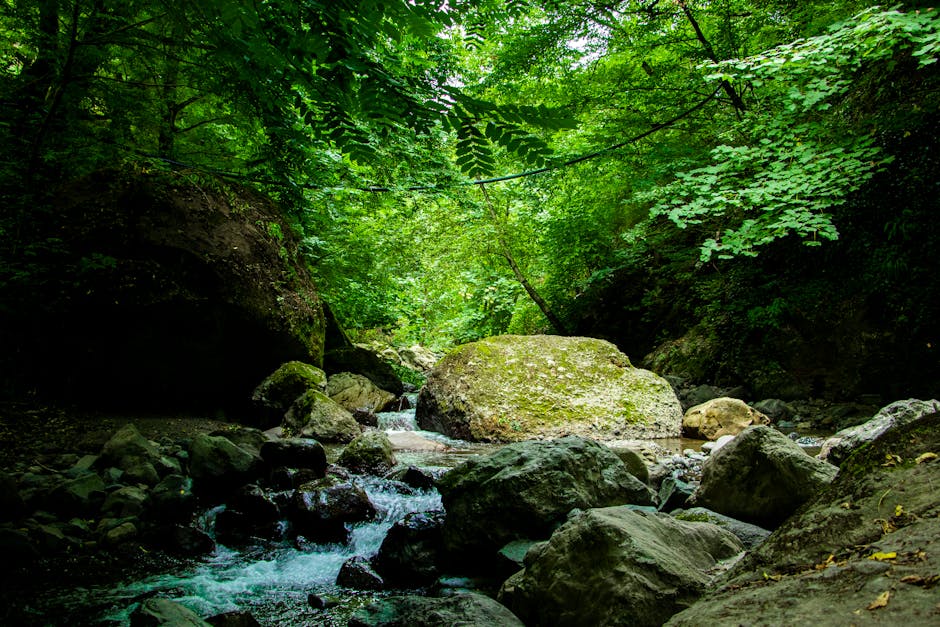
Explore Mostar's emerald secret on this self-guided walk along the Radobolja stream, featuring Ottoman mills, hidden beaches, and lush parks.
 Challenging
Mostar, Bosnia and Herzegovina
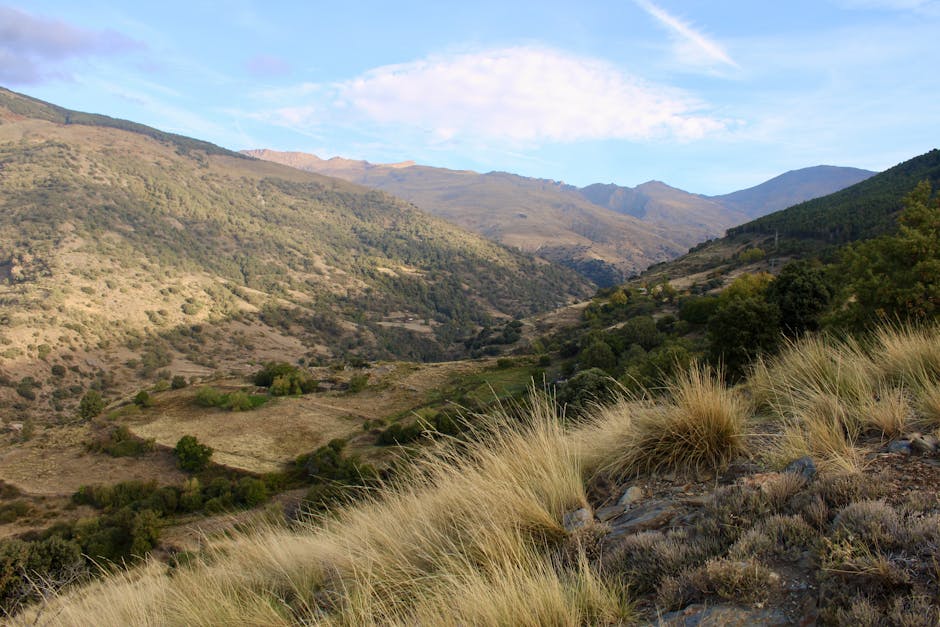
Ascend from the iconic Old Bridge to the breathtaking glass skywalk at Fortica. A challenging self-guided hike through Mostar’s history and nature.
 Moderate
Mostar, Bosnia and Herzegovina
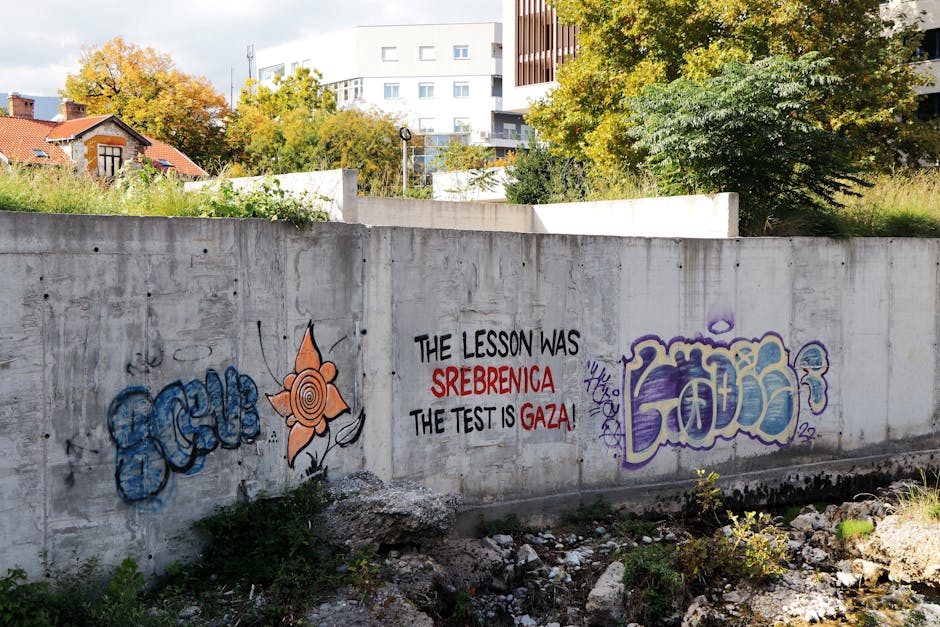
Discover Mostar’s soul through its vibrant street art, historic Ottoman architecture, and resilient urban culture on this self-guided walk.
 Easy
EasyMostar, Bosnia and Herzegovina
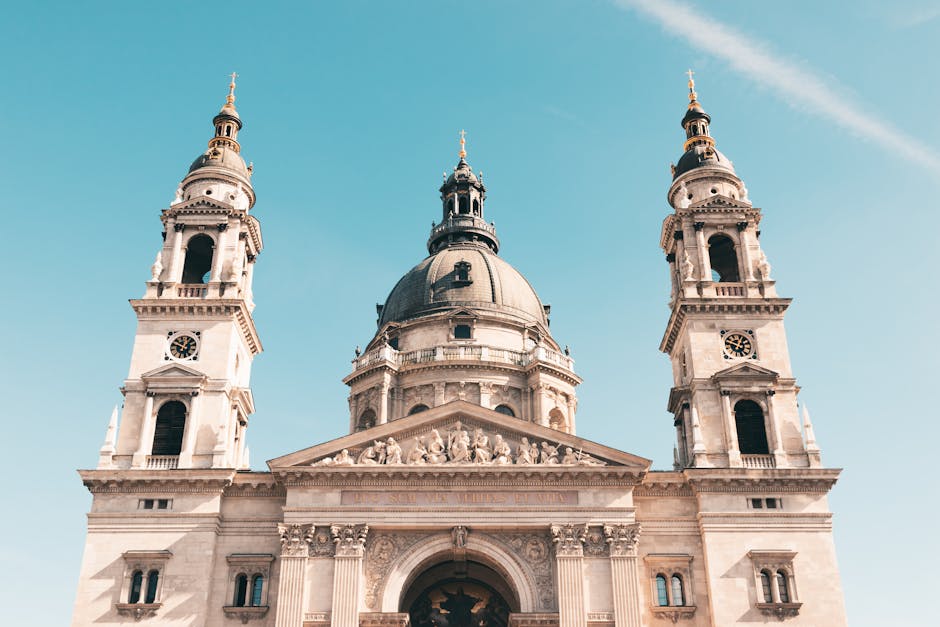
Discover Mostar's grand Austro-Hungarian boulevards, Moorish Revival architecture, and 20th-century history on this self-guided neighborhood stroll.
 Moderate
Warsaw, Poland
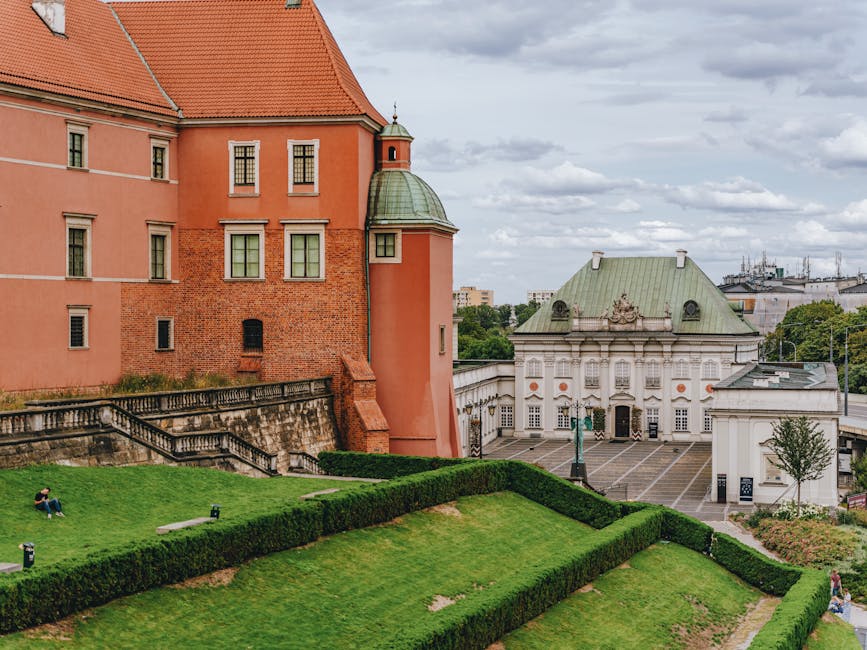
Explore the resilient spirit of Warsaw's Muranów district on this self-guided walk through the history and landmarks of the former Jewish Ghetto.
 Moderate
Vienna, Austria
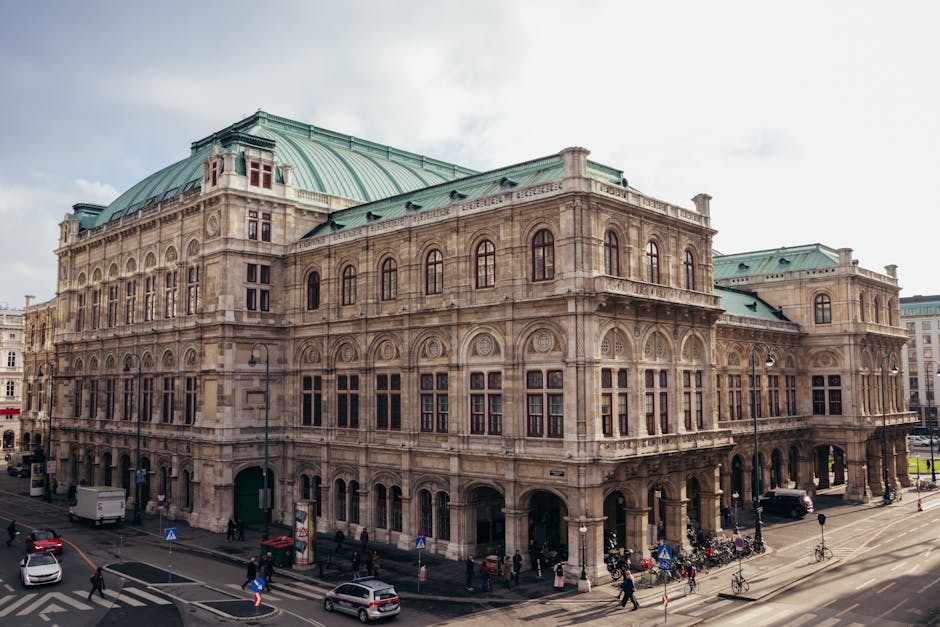
Follow the footsteps of Mozart and Strauss through Vienna’s historic center on this self-guided walk through the city's rich musical history.
 Easy
EasySalzburg, Austria
Discover the 'Rome of the North' on this self-guided walk through the Baroque squares and monumental legacy of Salzburg’s Prince-Archbishops.
 Moderate
Warsaw, Poland
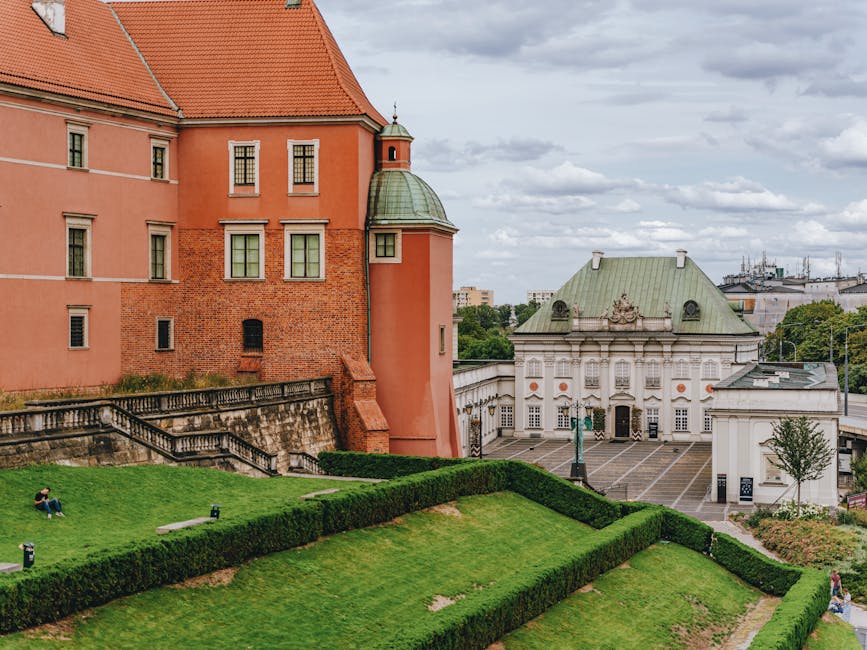
A powerful self-guided walk through Warsaw's WWII history, tracking the 1944 Uprising from ruined skyscrapers to solemn memorials.
 Easy
EasySarajevo, Bosnia and Herzegovina
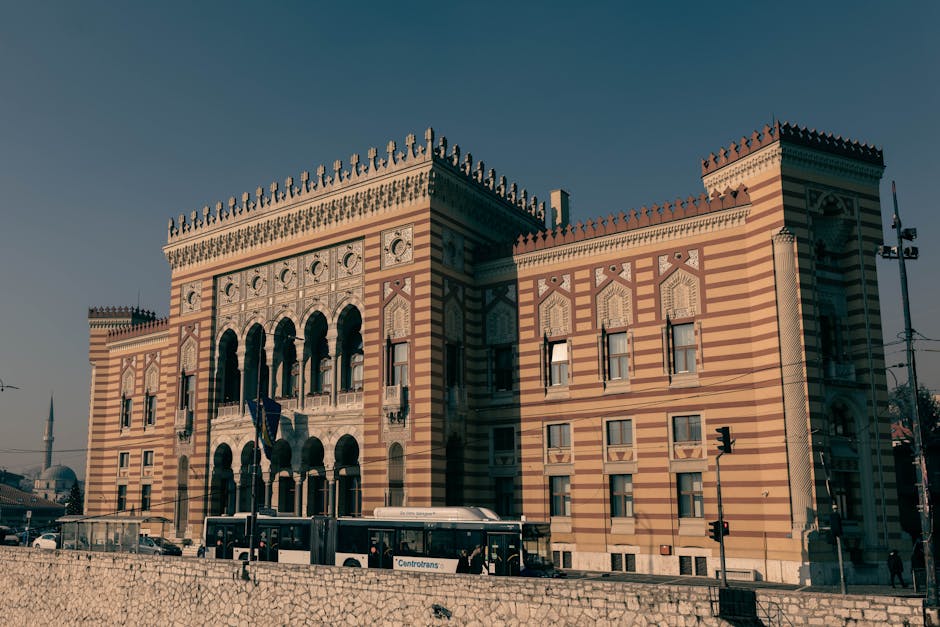
Discover Sarajevo’s history and architecture on this scenic self-guided walk across the iconic bridges of the Miljacka River.
 Moderate
Sarajevo, Bosnia and Herzegovina
Discover Sarajevo’s soul through street art, brutalist landmarks, and poignant history on this self-guided urban walking route.
 Easy
EasySarajevo, Bosnia and Herzegovina
Explore Sarajevo’s soulful nightlife on this self-guided walking route through historic pubs, hidden rakija bars, and legendary local haunts.
 Easy
EasySarajevo, Bosnia and Herzegovina
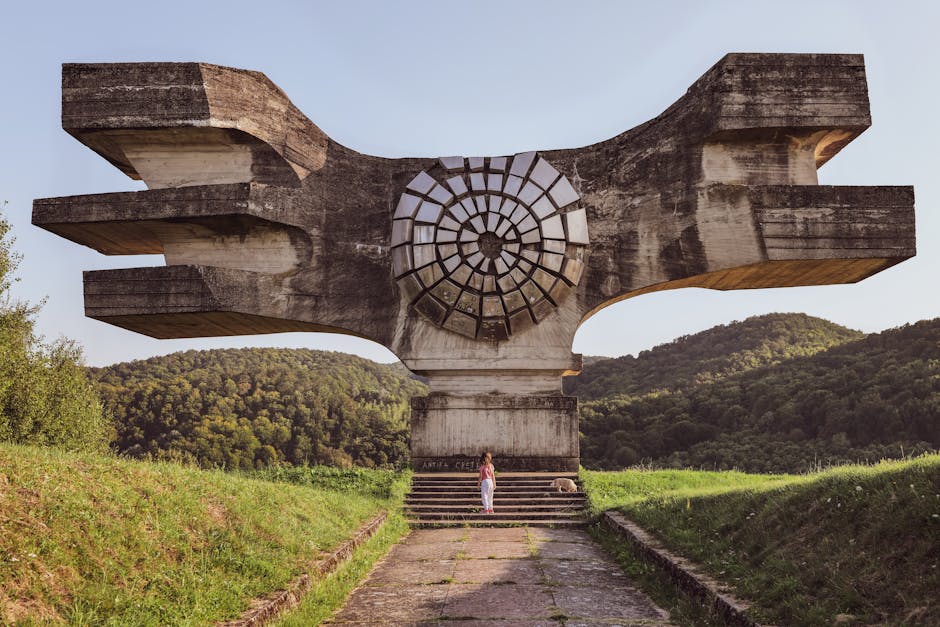
Explore Yugoslav Modernism and lush riverfront paths in Grbavica. A self-guided walk through Sarajevo's resilient 20th-century neighborhoods.