Self-guided audio tour in Vienna
Start Free on iPhone
Start free on iPhone to unlock this self-guided walking tour in Vienna. Hear all the stories that make it amazing, walk at your own pace, and begin whenever you want.
Your Private Tour Guide
Vienna is widely recognized as the world capital of classical music, a city where the echoes of legendary composers still resonate through its cobblestone streets and grand plazas. This self-guided walk invites you to explore the legacy of the musical masterminds who shaped the history of sound, from the prolific genius of Wolfgang Amadeus Mozart to the 'Waltz King' Johann Strauss II. As you navigate the historic Innere Stadt, you will discover how the city’s architecture and cultural identity are inextricably linked to its musical heritage. This walking route is designed for those who wish to explore at their own pace, offering the flexibility to linger at a historic apartment or admire a cathedral's spire without the constraints of a rigid schedule. Your journey begins at the Mozarthaus, the only one of Mozart’s many Viennese residences that remains today. It was here that he composed some of his most famous works during his most successful years. The path then leads to the majestic St. Stephen's Cathedral, a landmark that witnessed both the joyous and somber milestones of Mozart’s life. As you continue your neighborhood stroll, you will encounter the House of Music, an interactive space that bridges the gap between historic tradition and modern acoustic science. No musical exploration of Vienna would be complete without visiting the iconic Vienna State Opera and the world-renowned Musikverein. These institutions represent the pinnacle of operatic and orchestral performance, hosting events that are broadcast to millions worldwide. The route concludes in the serene Stadtpark, where the golden monument of Johann Strauss II stands as a testament to the city's enduring love for the waltz. This walking tour Vienna provides a comprehensive look at the lives, struggles, and triumphs of the men who turned Vienna into a global stage. Whether you are a classical music aficionado or a curious traveler, this self-guided adventure offers a deep dive into the soul of the city, allowing you to experience the harmony of Vienna's past and present.
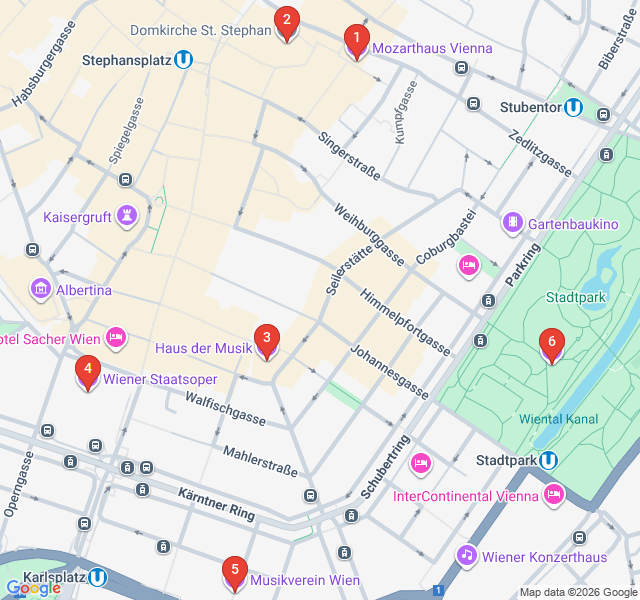
Numbers indicate the order of stops on the tour.
Welcome to the Mozarthaus, located at Domgasse 5. This is the only one of Mozart's many Viennese apartments that has been preserved. Mozart lived here during his most prolific and prosperous years, from 1784 to 1787. It was in these very rooms that he composed the world-famous opera 'The Marriage of Figaro'. As you stand outside or explore the museum within, imagine the bustling household of a 18th-century superstar. Despite his eventual financial struggles, during his time here, Mozart enjoyed a life of luxury, hosting lavish parties and performing for the elite of Viennese society. This site serves as a poignant reminder of the human behind the legend.
St. Stephen's Cathedral, or Stephansdom, is the spiritual heart of Vienna and a central landmark in its musical history. The cathedral's connection to Mozart is deeply personal; he was married here to Constanze Weber in 1782, and just nine years later, his funeral service was held in one of its side chapels. The building itself is a masterpiece of Gothic architecture, famous for its multi-colored tile roof and the 'Steffl' south tower. Inside, the acoustics have inspired countless composers over the centuries. Take a moment to appreciate the intricate stone carvings and the solemn atmosphere that has hosted centuries of sacred music and royal ceremonies.
The House of Music, or Haus der Musik, is situated in the former palace of Archduke Charles. This site is significant not just for its modern interactive museum, but because it was the residence of Otto Nicolai, the founder of the Vienna Philharmonic. The museum offers a unique blend of history and science, allowing you to 'conduct' the Vienna Philharmonic or see the original scores of great masters. It bridges the gap between the classical tradition of the 18th century and the experimental sounds of today. It is a place where music is not just heard, but experienced through all the senses, emphasizing Vienna's role as a laboratory for sound.
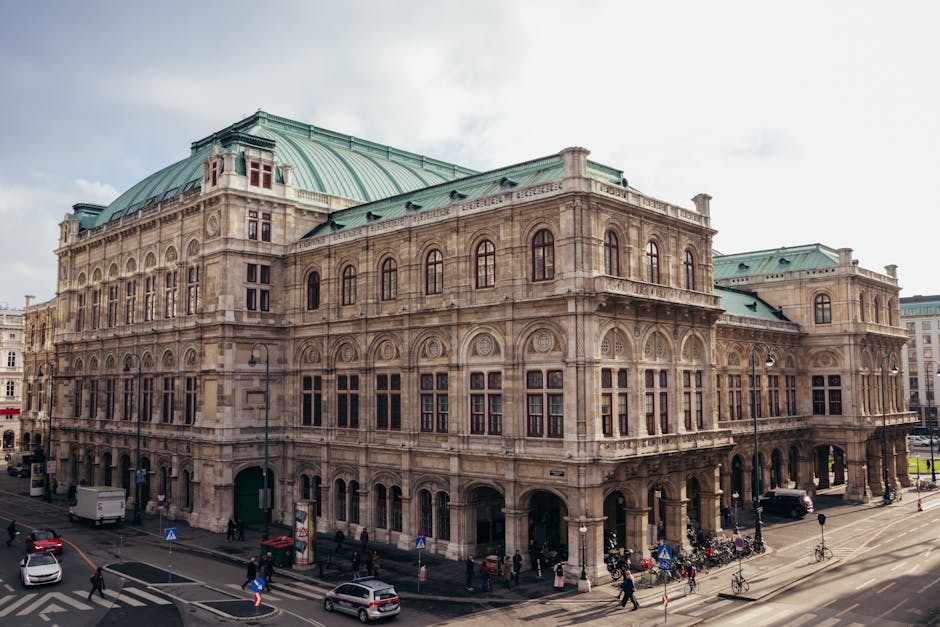
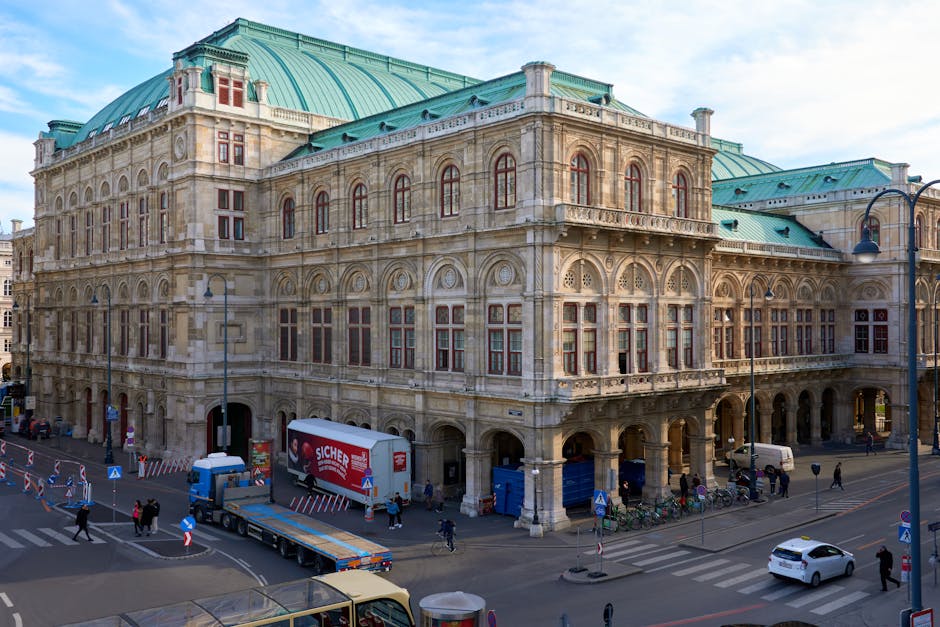
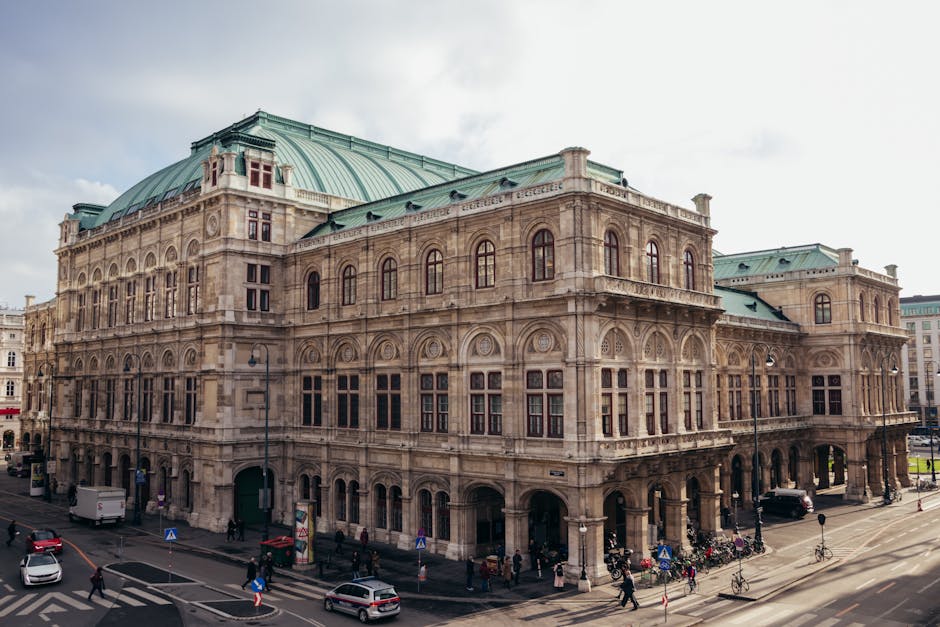
The Vienna State Opera is one of the most prestigious opera houses in the world. Opened in 1869 with a performance of Mozart's 'Don Giovanni', the building is a stunning example of Neo-Renaissance architecture. However, its history is marked by tragedy; it was heavily bombed during World War II and only reopened in 1955. Today, it remains a cornerstone of Viennese culture, hosting over 300 performances a year. Look up at the loggia to see the bronze equestrian statues and the marble statues representing the muses. This institution represents the high standard of excellence that defines the Viennese musical tradition, attracting the world's finest singers and conductors.
Just a short walk from the Opera is the Musikverein, home to the Vienna Philharmonic Orchestra. This building is world-renowned for its 'Golden Hall', which is considered one of the finest concert halls in the world due to its exceptional acoustics. If you have ever watched the New Year's Concert on television, you have seen this hall filled with flowers and music. Designed by Theophil Hansen in the Neoclassical style, the building was gifted to the Society of Friends of Music by Emperor Franz Joseph I. The facade, with its terracotta reliefs and caryatids, reflects the 19th-century fascination with Greek antiquity and the belief that music is a divine art.
Our journey concludes in the Stadtpark at the monument of Johann Strauss II. This gilded bronze statue is one of the most photographed sights in Vienna. Strauss, known as the 'Waltz King', was responsible for making the Viennese waltz a global phenomenon in the 19th century. The monument depicts him playing the violin, surrounded by a marble arch of swirling figures that evoke the movement and joy of his music. It was unveiled in 1921, providing a sense of optimism after the hardships of World War I. This park was Vienna's first public park, and it remains a peaceful place to reflect on the city's rhythmic soul before you head back to the city center.
Start Free on iPhone
Explore “Symphony of the City: Vienna's Musical Masterminds” with your very own Private Tour Guide with Zigway. Start free on iPhone, skip the large group and the fixed routes, and hear the city come alive as you go.
Your Private Tour Guide
Don't miss the good stuff
Explore Freely
 Easy
EasyVienna, Austria
Explore Vienna’s vibrant open-air gallery along the Danube Canal on this self-guided street art and nightlife stroll through Leopoldstadt.
 Moderate
Vienna, Austria
Discover the noir world of The Third Man and Cold War Vienna on this atmospheric self-guided audio walk through the historic Innere Stadt.
 Easy
EasyVienna, Austria
Discover the literary haunts and architectural gems of Vienna's legendary coffee culture on this self-guided stroll through the historic city center.
 Easy
EasyVienna, Austria
Explore the resilient spirit of Vienna's Jewish community on this self-guided audio walk through the historic Second District.
 Moderate
Gothenburg, Sweden
Discover Gothenburg’s maritime soul on this self-guided walk from the historic Central Station to the scenic riverfront at Stenpiren.
 Moderate
Warsaw, Poland
Explore the resilient spirit of Warsaw's Muranów district on this self-guided walk through the history and landmarks of the former Jewish Ghetto.
 Moderate
Helsinki, Finland
Explore the 'Gibraltar of the North' on this independent walking route through the historic bastions and hidden gardens of Suomenlinna Sea Fortress.
 Easy
EasyGdansk, Poland
Discover the opulent Royal Way of Gdansk at your own pace. Explore Hanseatic history, gilded architecture, and the iconic Neptune's Fountain.
 Easy
EasySalzburg, Austria
Discover the 'Rome of the North' on this self-guided walk through the Baroque squares and monumental legacy of Salzburg’s Prince-Archbishops.
 Easy
EasySalzburg, Austria
Discover Salzburg's oldest medieval alley, the birthplace of the 'Silent Night' author, and breathtaking views on this quiet self-guided walk.
 Easy
EasySalzburg, Austria
Walk through the iconic filming locations of The Sound of Music and discover the real history of the von Trapp family in Salzburg.
 Challenging
Salzburg, Austria
Scale the heights of Salzburg on this self-guided walk to the Hohensalzburg Fortress, exploring medieval walls and ancient monastic grounds.