Self-guided audio tour in Mostar
Start Free on iPhone
Start free on iPhone to unlock this self-guided walking tour in Mostar. Hear all the stories that make it amazing, walk at your own pace, and begin whenever you want.
Your Private Tour Guide
Embark on a visual journey through the heart of Herzegovina with this self-guided walk along the Neretva River. Mostar is a city where the emerald waters of the river slice through a landscape of Ottoman stone, Austro-Hungarian elegance, and the stark reminders of recent history. This walking route is designed specifically for those who want to capture the soul of the city through a lens, focusing on the dramatic perspectives of the canyon and the architectural marvels that span it. As you move from the industrial-era bridges in the north toward the iconic Old Bridge, you will witness the changing light of the Balkan sun against the pale limestone walls of the Old Town. This route offers a comprehensive look at Mostar's dualities. You will explore the rugged beauty of the riverbanks and the intricate details of 16th-century mosques before ascending to the heights for a panoramic view of the entire valley. Unlike a standard walking tour Mostar visitors often take, this photography-focused trail prioritizes finding the perfect angle and understanding the historical context that makes each shot meaningful. From the haunting silhouette of the Sniper Tower to the vibrant life of the Kujundžiluk bazaar, your camera will find stories in every corner. The highlight of any visit is the Stari Most, a UNESCO World Heritage site. Rather than just crossing it, this route guides you to several vantage points—including the riverbank beach below and the minaret of the Koski Mehmed Pasha Mosque—to ensure you capture the bridge's perfect arch from every possible perspective. The experience concludes with a breathtaking view from Fortica Hill, where a glass skywalk provides a literal bird's-eye view of the Neretva Canyon winding through the mountains. Whether you are a professional photographer or an enthusiast with a smartphone, this neighborhood stroll provides the time and space to discover Mostar at your own pace.
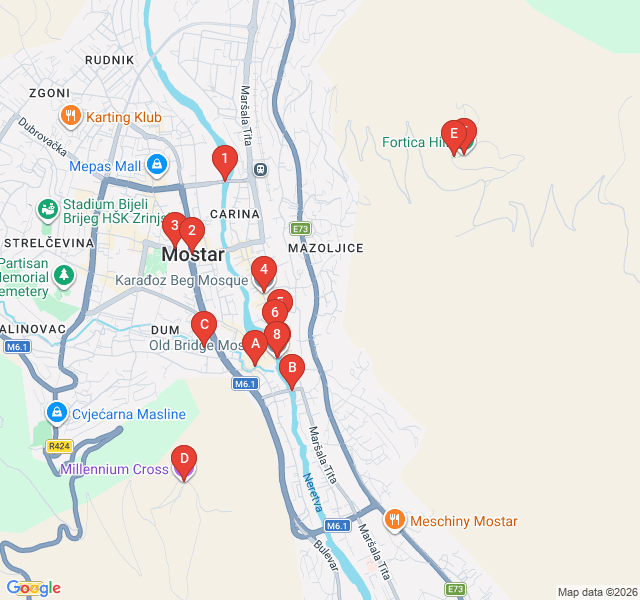
Numbers indicate the order of stops on the tour.
Start your journey at the Customs Bridge, a vital link in Mostar's northern corridor. Originally built during the Austro-Hungarian period, the current structure is a reconstruction following the 1990s conflict. From here, you get your first real sense of the Neretva's power and its distinct emerald hue. Looking south, the river enters the more densely built-up part of the city. This spot is excellent for capturing the long, straight perspective of the river canyon before it narrows into the Old Town. Notice the contrast between the modern apartment blocks and the rugged, rocky banks that characterize the Neretva's path through Herzegovina.
Named after Josip Broz Tito, this bridge serves as a transition point between the different eras of Mostar's history. As you stand here, you are flanked by the remnants of the socialist Yugoslav period and the encroaching Ottoman history further downstream. The bridge offers a wide-angle view of the riverbanks, where you can see how the city has literally been carved out of the karst landscape. It is a quieter spot than the bridges further south, allowing you to appreciate the sound of the rushing water and the local life unfolding along the riverside cafes.
This former bank building, once a symbol of Yugoslav modernity, became one of the most feared locations during the Siege of Mostar. Its height and strategic position made it a base for snipers. Today, it stands as a glassless concrete shell, covered in layers of poignant street art and graffiti. For photographers, the tower provides a stark, brutalist contrast to the ancient stone of the Old Town. The art here serves as a living gallery of the city's resilience and its ongoing process of healing. While the interior is officially closed, the exterior remains one of the most powerful visual statements in Mostar.
Completed in 1557, this is the largest and arguably the most beautiful mosque in Herzegovina. Designed by the famous Ottoman architect Mimar Sinan (or his students), it features a large dome and a soaring minaret. The courtyard, with its traditional fountain and lush greenery, offers a peaceful atmosphere for photography. Look for the intricate stone carvings around the entrance and the mathematical symmetry of the Ottoman design. The mosque was severely damaged during the war but has been meticulously restored, serving as a testament to the city's commitment to preserving its diverse cultural heritage.
While this stop is more about reflection than photography, the exhibits here provide the necessary context for the sights you are seeing. The museum houses personal items, photographs, and testimonies from the conflict in the 1990s. Understanding the timeline of the bridge's destruction and the city's division adds a layer of depth to your visual journey. It serves as a reminder that the beauty of Mostar today is something that was fought for and rebuilt with great care. The somber atmosphere here contrasts sharply with the vibrant life of the nearby bazaar.
This is the 'money shot' of Mostar. The Koski Mehmed Pasha Mosque, built in 1618, sits right on the edge of the river cliffs. For a small fee, you can climb the narrow, winding stairs of the minaret. The view from the top is unparalleled, offering a direct, elevated line of sight to the Old Bridge. This is where those iconic postcard photos are taken. If you prefer to stay on the ground, the mosque's riverside courtyard offers a stunning, slightly lower perspective of the bridge framed by the canyon walls and the blue sky. It is the perfect place to capture the scale of the Stari Most.
Enter the Kujundžiluk, or the Old Bazaar, where the cobblestone streets are lined with shops selling traditional copper work, colorful lanterns, and Balkan textiles. The textures here are a photographer's dream—the smooth, worn stones underfoot, the weathered wood of the shopfronts, and the vibrant colors of the wares. This area dates back to the mid-16th century and has retained its medieval Ottoman character. Try to capture the candid moments of artisans at work or the way the sunlight filters through the narrow alleys, creating dramatic shadows against the pale limestone walls.
The centerpiece of the city, the Stari Most, is a masterpiece of Ottoman engineering. Originally built by Mimar Hayruddin in 1566, it stood for 427 years before being destroyed in 1993. The bridge you see today was rebuilt using traditional methods and local tenelija stone, reopening in 2004. As you walk across, notice the steep incline and the stone ridges designed to provide grip. If you are lucky, you might see the local divers preparing to jump into the cold Neretva below—a tradition that dates back centuries. The bridge is not just a structure; it is a symbol of reconciliation and the literal connection between the two sides of the city.
Follow the narrow steps down to the pebbled bank of the Neretva. This perspective, looking up at the 24-meter arch of the bridge, is essential for any photography enthusiast. From here, you can truly appreciate the elegance of the design and the way the bridge seems to spring naturally from the cliffs. It is also the best place to photograph the divers from below. The water is incredibly cold, even in summer, but the color is most vivid from this close range. The sound of the river is much louder here, providing a momentary escape from the crowds in the bazaar above.
Often overlooked in favor of its larger sibling, the Crooked Bridge is a smaller stone arch that spans the Radobolja River, a tributary of the Neretva. It is believed to have been built as a trial run before the construction of the Stari Most. The setting here is incredibly picturesque, with stone houses and restaurants surrounding the small creek. The bridge's reflection in the water and the surrounding greenery make it one of the most 'Instagrammable' spots in the city. It offers a more intimate, quiet version of the Mostar aesthetic, perfect for detail shots of Ottoman stonework.
Head south to the Lucki Most for a fantastic wide-angle view of the entire Old Town ensemble. From this distance, you can see the Old Bridge, the surrounding towers (Halebija and Tara), and the various minarets piercing the skyline. This is an excellent spot for long-exposure photography, especially during the 'blue hour' just after sunset when the bridge and mosques are illuminated. The bridge itself is a standard modern structure, but its position makes it one of the best balconies in the city for viewing the historic heart of Mostar from a distance.
The Peace Bell Tower of the Franciscan Church of Saints Peter and Paul is the tallest structure in Mostar. Its height was a point of controversy during its construction, but it now serves as a major landmark. An elevator takes you most of the way up, followed by a few stairs to the observation deck. From here, you get a 360-degree view of the city, the surrounding mountains (Velež and Hum), and the winding path of the Neretva. It provides a geographical context that you can't get from the river level, showing how the city is nestled into a narrow valley.
Looking up at Hum Hill, you will see the massive 33-meter Millennium Cross. While reaching it requires a steep drive or a long hike, its presence is a constant visual element in the Mostar skyline. It was erected in 2000 to mark two millennia of Christianity and is visible from almost everywhere in the city. For photographers, it serves as a powerful focal point for shots looking toward the western side of Mostar. The hill itself was a strategic artillery position during the war, and the cross now stands as a landmark of the city's complex religious and political landscape.
For the ultimate canyon view, head up to Fortica Hill. The glass skywalk, a horseshoe-shaped platform extending over the cliff, offers a thrilling perspective of the Neretva far below. This is where you can capture the true scale of the canyon and the way the river has carved through the Herzegovinian karst over millennia. The glass floor adds an element of adrenaline to your photography. It is particularly popular at sunset when the city lights begin to twinkle in the valley and the sky turns shades of purple and orange over the distant mountains.
End your journey at the summit of Fortica. Beyond the skywalk, you can explore the remains of Austro-Hungarian fortifications and see the giant 'BiH' (Bosnia and Herzegovina) letters on the hillside. This vantage point offers the most comprehensive view of Mostar's urban sprawl, the divided neighborhoods, and the surrounding wilderness. It is a place of silence and wind, contrasting with the heat and bustle of the Old Town. From here, the Neretva looks like a thin green ribbon, and the Stari Most is a tiny white arch, reminding you of the incredible history packed into this small, resilient valley.
Start Free on iPhone
Explore “The Neretva Canyon Photography Trail” with your very own Private Tour Guide with Zigway. Start free on iPhone, skip the large group and the fixed routes, and hear the city come alive as you go.
Your Private Tour Guide
Don't miss the good stuff
Explore Freely
 Easy
EasyMostar, Bosnia and Herzegovina
Explore Mostar's emerald secret on this self-guided walk along the Radobolja stream, featuring Ottoman mills, hidden beaches, and lush parks.
 Challenging
Mostar, Bosnia and Herzegovina
Ascend from the iconic Old Bridge to the breathtaking glass skywalk at Fortica. A challenging self-guided hike through Mostar’s history and nature.
 Moderate
Mostar, Bosnia and Herzegovina
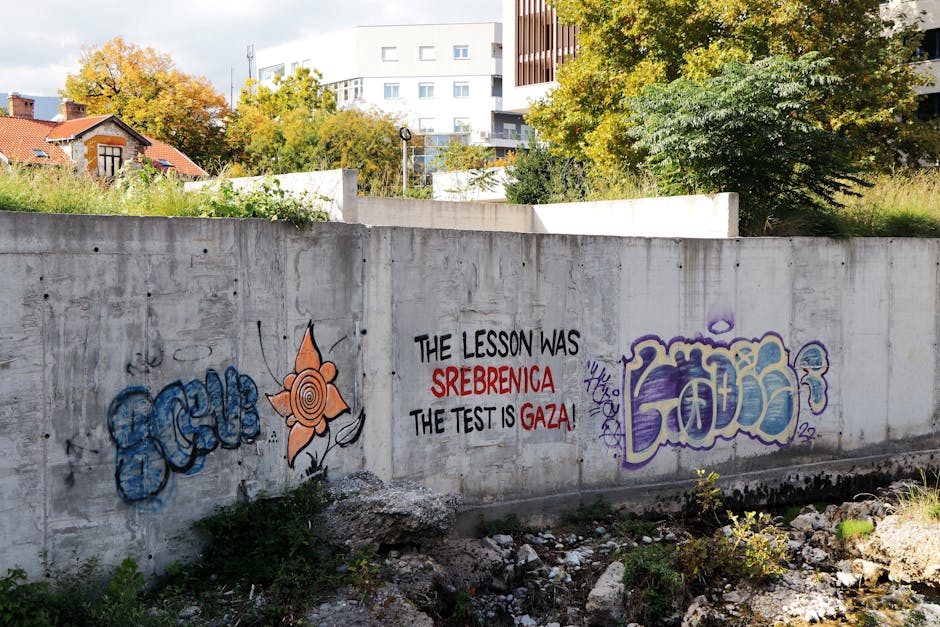
Discover Mostar’s soul through its vibrant street art, historic Ottoman architecture, and resilient urban culture on this self-guided walk.
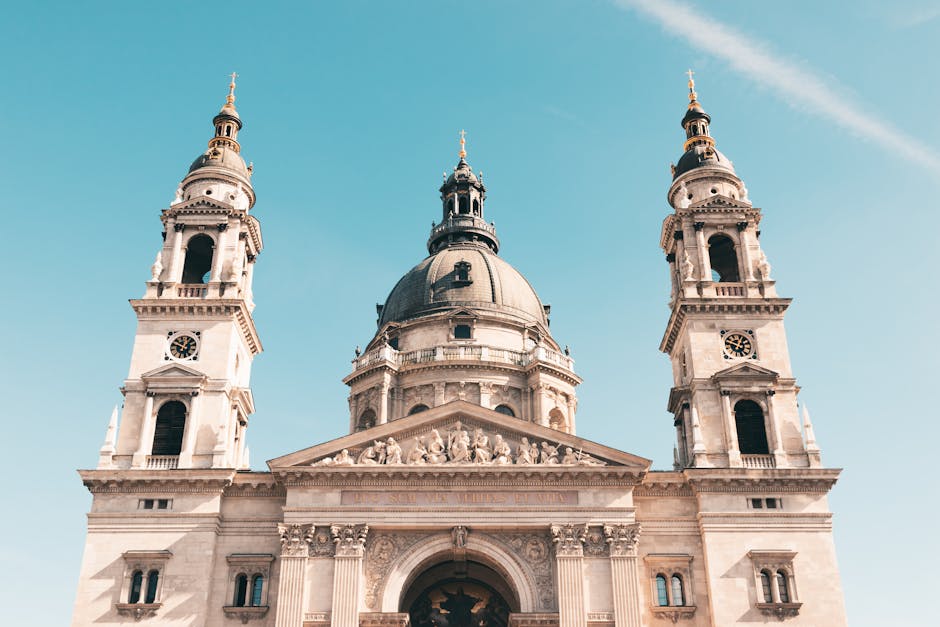 Easy
EasyMostar, Bosnia and Herzegovina
Discover Mostar's grand Austro-Hungarian boulevards, Moorish Revival architecture, and 20th-century history on this self-guided neighborhood stroll.
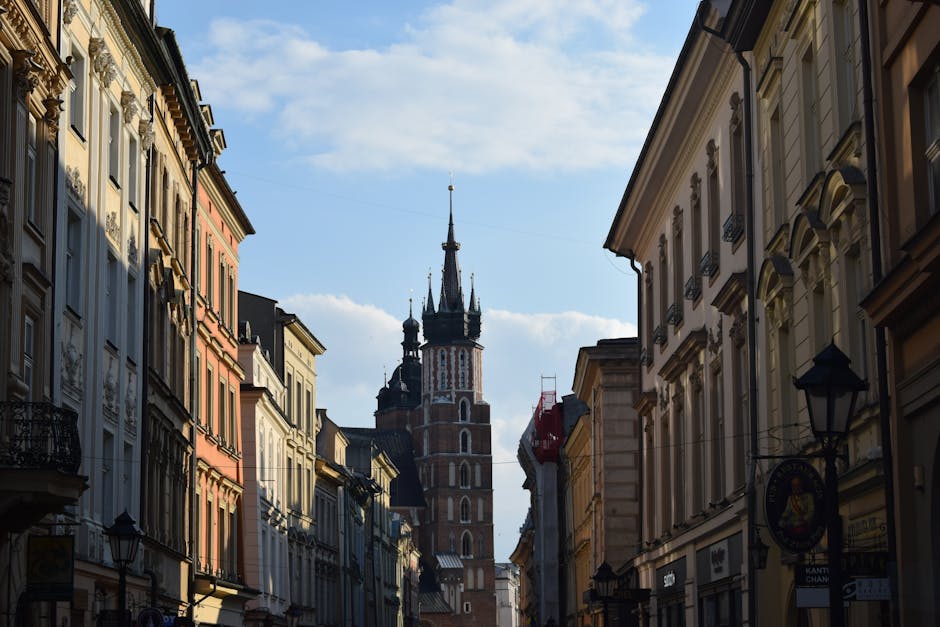 Moderate
Krakow, Poland
Discover Krakow’s stunning skyline and riverside charm on this self-guided audio walk through scenic viewpoints and historic mounds.
 Moderate
Helsinki, Finland
Explore the 'Gibraltar of the North' on this independent walking route through the historic bastions and hidden gardens of Suomenlinna Sea Fortress.
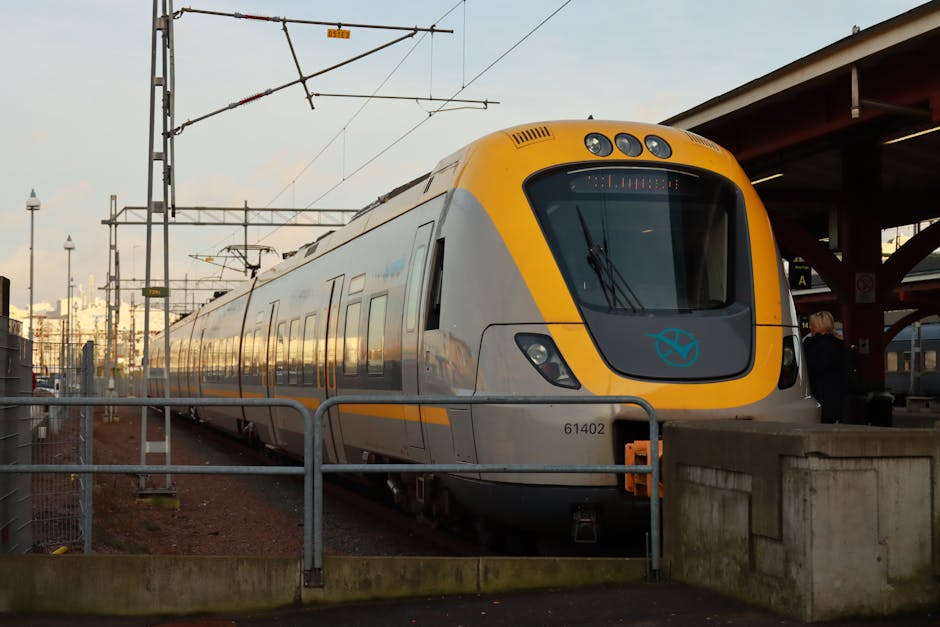 Moderate
Gothenburg, Sweden
Discover Gothenburg’s maritime soul on this self-guided walk from the historic Central Station to the scenic riverfront at Stenpiren.
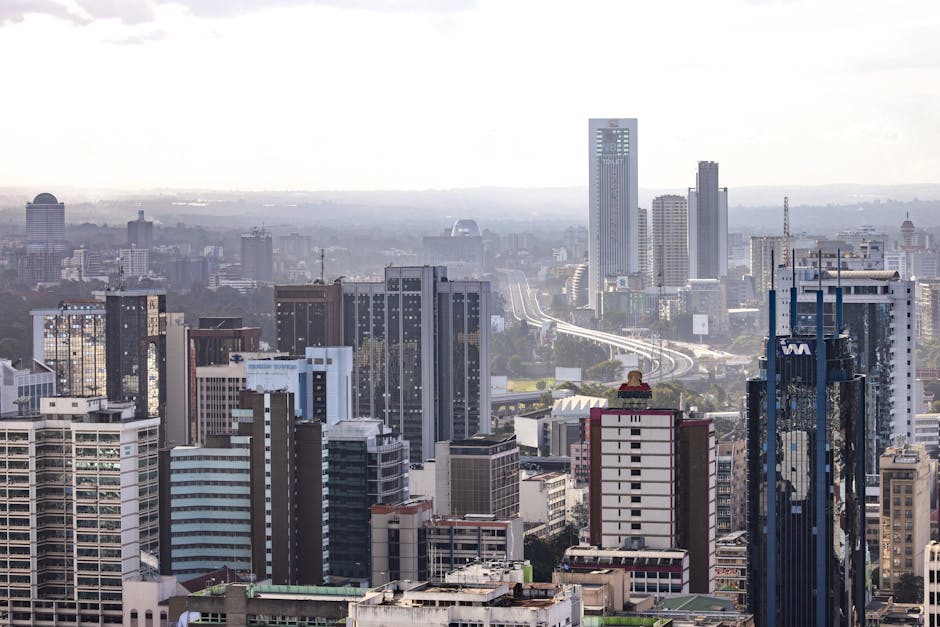 Moderate
Nairobi, Kenya
Discover Nairobi's lush side on this self-guided walk through botanical gardens, historic memorials, and vibrant local markets.
 Easy
EasySarajevo, Bosnia and Herzegovina
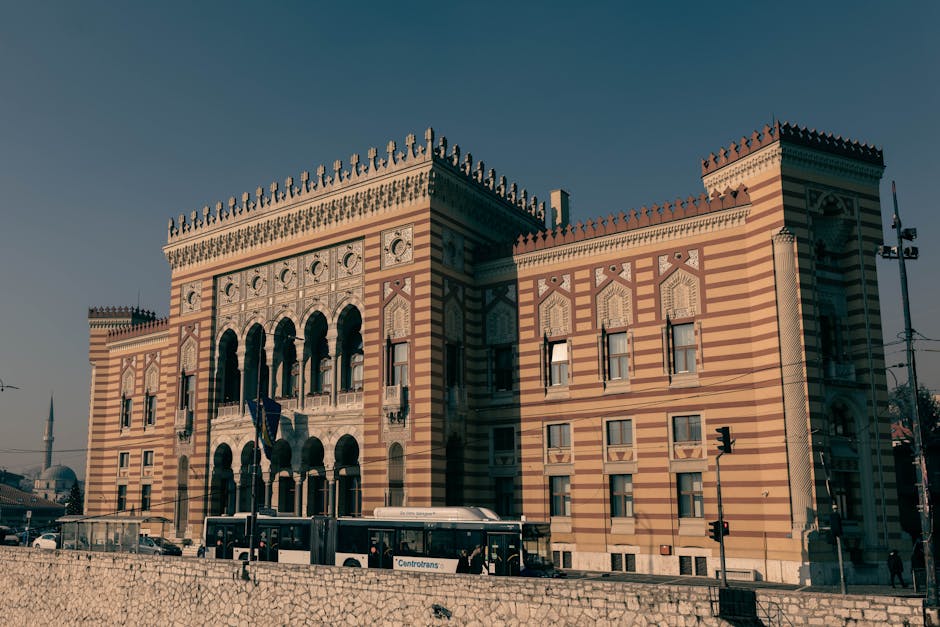
Discover Sarajevo’s history and architecture on this scenic self-guided walk across the iconic bridges of the Miljacka River.
 Moderate
Sarajevo, Bosnia and Herzegovina
Discover Sarajevo’s soul through street art, brutalist landmarks, and poignant history on this self-guided urban walking route.
 Easy
EasySarajevo, Bosnia and Herzegovina
Explore Sarajevo’s soulful nightlife on this self-guided walking route through historic pubs, hidden rakija bars, and legendary local haunts.
 Easy
EasySarajevo, Bosnia and Herzegovina
Explore Yugoslav Modernism and lush riverfront paths in Grbavica. A self-guided walk through Sarajevo's resilient 20th-century neighborhoods.