Self-guided audio tour in Barcelona
Start Free on iPhone
Start free on iPhone to unlock this self-guided walking tour in Barcelona. Hear all the stories that make it amazing, walk at your own pace, and begin whenever you want.
Your Private Tour Guide
Step into a world where time seems to hold its breath. Barcelona's Gothic Quarter, or Barri Gòtic, is a dense labyrinth of narrow, winding streets that hide over two millennia of secrets. This self-guided walk invites you to explore the very foundations of the city, beginning with the imposing Roman towers that once guarded the colony of Barcino. As you wander through this neighborhood stroll, you will discover how the city transformed from a Roman outpost into the powerful center of a Mediterranean empire. The route leads you through the shadows of the majestic Cathedral of Barcelona, where history is etched into every stone and gargoyle. Beyond the grand monuments, this walking route takes you into the hidden corners of 'El Call,' the historic Jewish Quarter, where one of the oldest synagogues in Europe still stands. You will experience the contrasting atmospheres of the district, from the political heart of Catalonia in Plaça de Sant Jaume to the haunting silence of Plaça de Sant Felip Neri, a square that still bears the physical scars of the Spanish Civil War. This is more than just a simple trek; it is an independent journey through the soul of Barcelona. Whether you are admiring the Catalan Gothic architecture of the Plaça del Rei or observing the daily bustle of the local plazas, this neighborhood stroll offers a flexible way to see the city's most iconic landmarks without the pressure of a group. Discover the legends of Saint Eulalia, the architectural triumphs of the medieval kings, and the resilient spirit of the local people. This self-guided adventure allows you to pause whenever you wish, perhaps for a coffee in a hidden courtyard or to photograph the intricate stonework of a centuries-old archway. Perfect for history buffs and curious travelers alike, this walking tour Barcelona experience provides the context and stories needed to truly understand the 'Shadows of the Gothic Quarter.'
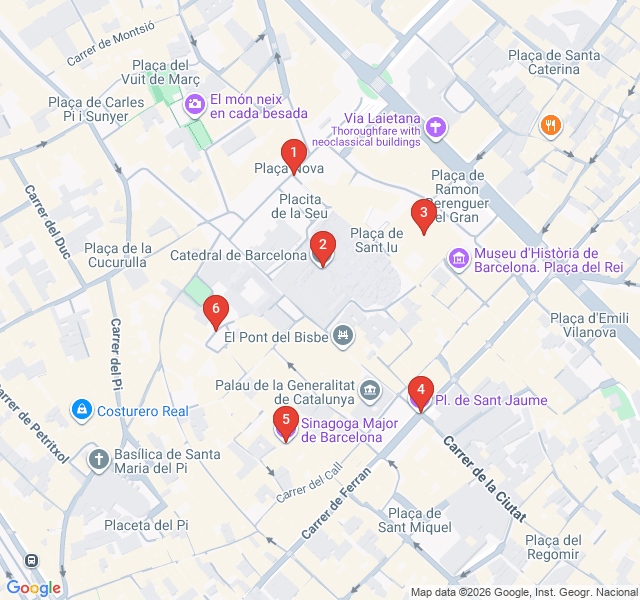
Numbers indicate the order of stops on the tour.
Your journey begins at the gateway to the ancient Roman colony of Barcino. These two massive semicircular towers were part of the second wall built in the 4th century to protect the city. Look closely at the base of the towers and the adjacent wall; you can see recycled stones from earlier Roman monuments used in their construction. This entrance was once the Decumanus Maximus, one of the two main streets of the Roman city. Imagine the soldiers and merchants who passed through these gates nearly two thousand years ago, entering a city that would eventually grow into the vibrant Barcelona we know today.
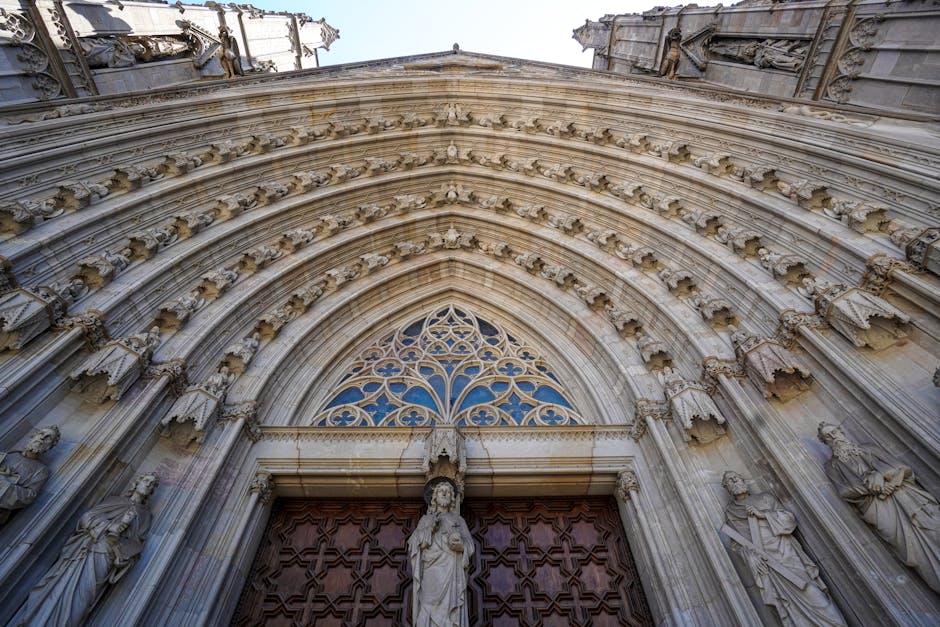
As you stand before the Cathedral of the Holy Cross and Saint Eulalia, you are looking at a masterpiece of Catalan Gothic design. While the facade was actually completed in the late 19th century in a neo-Gothic style, the core of the building dates back to the 13th century. The cathedral is dedicated to Saint Eulalia, the co-patron saint of Barcelona, a young girl who suffered thirteen tortures for her faith during the Roman era. Inside the peaceful cloister, you will find thirteen white geese. According to local tradition, they represent Eulalia’s age at her death and serve as a living reminder of her story and the city's deep religious heritage.
Welcome to the 'King’s Square,' perhaps the most complete medieval square in Barcelona. Surrounded by the Palau Reial Major—the residence of the Counts of Barcelona and Kings of Aragon—this space feels like a stage set for history. The high walls and the Watchtower of King Martí create an atmosphere of royal power. Legend says that it was on the semicircular stairs in the corner where King Ferdinand and Queen Isabella received Christopher Columbus upon his return from his first voyage to the Americas. Whether or not that specific meeting happened here, the square remains a symbol of the city’s golden age as a maritime power.
This square has been the administrative heart of Barcelona since Roman times, when the Forum was located here. Today, it is flanked by two of the most important buildings in Catalonia: the Palau de la Generalitat, the seat of the Catalan government, and the Casa de la Ciutat, the City Hall. Look at the contrast in their facades; the Generalitat features a Renaissance style, while the City Hall has a grand neoclassical front that hides an older Gothic interior. This square is the site of major local celebrations, including the famous 'Castellers' or human towers, where teams compete to build the highest human structure.
Tucked away in the narrow streets of 'El Call,' the ancient Jewish Quarter, is the Sinagoga Major. It is believed to be one of the oldest synagogues in Europe, with foundations dating back to the Roman era. The Jewish community was a vital part of Barcelona’s cultural and economic life until the tragic events of 1391, when the quarter was attacked and the community dispersed. The synagogue was forgotten for centuries, used for various purposes until it was rediscovered and restored in the late 20th century. Standing here provides a quiet moment to reflect on the multicultural layers of Barcelona's complex past.
This small, secluded square is one of the most moving spots in the Gothic Quarter. At its center is a simple fountain, and at the back, the Baroque church of Sant Felip Neri. If you look at the walls of the church, you will see deep pockmarks in the stone. These are not the result of age, but the scars of a 1938 aerial bombing during the Spanish Civil War, which claimed the lives of 42 people, many of them children seeking shelter. Today, the square is a place of quiet reflection, often filled with the sound of children playing from the local school, symbolizing the city's resilience and peace.
Start Free on iPhone
Explore “Shadows of the Gothic Quarter” with your very own Private Tour Guide with Zigway. Start free on iPhone, skip the large group and the fixed routes, and hear the city come alive as you go.
Your Private Tour Guide
Don't miss the good stuff
Explore Freely
 Moderate
Barcelona, Spain
Explore the elegant 'village' of Sarrià, where Gothic monasteries and Gaudí's hidden gems meet charming local markets and narrow streets.
 Moderate
Barcelona, Spain
Discover the revolutionary history and haunting scars of the Spanish Civil War on this self-guided walk through Barcelona's historic streets.
 Easy
EasyBarcelona, Spain
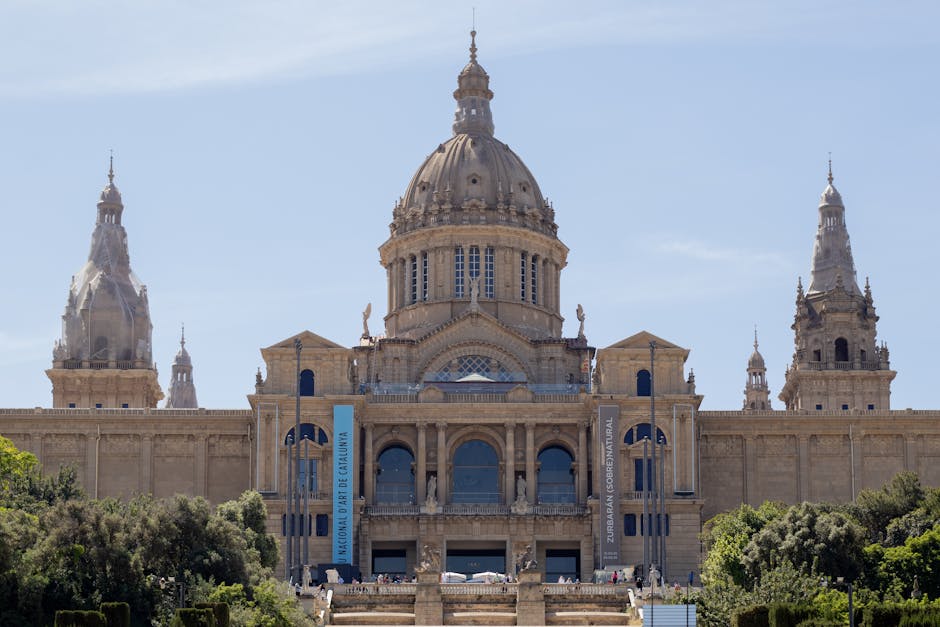
Discover the architectural wonders of Barcelona's Golden Square on this self-guided stroll through Eixample's most luxurious Modernista streets.
 Challenging
Barcelona, Spain
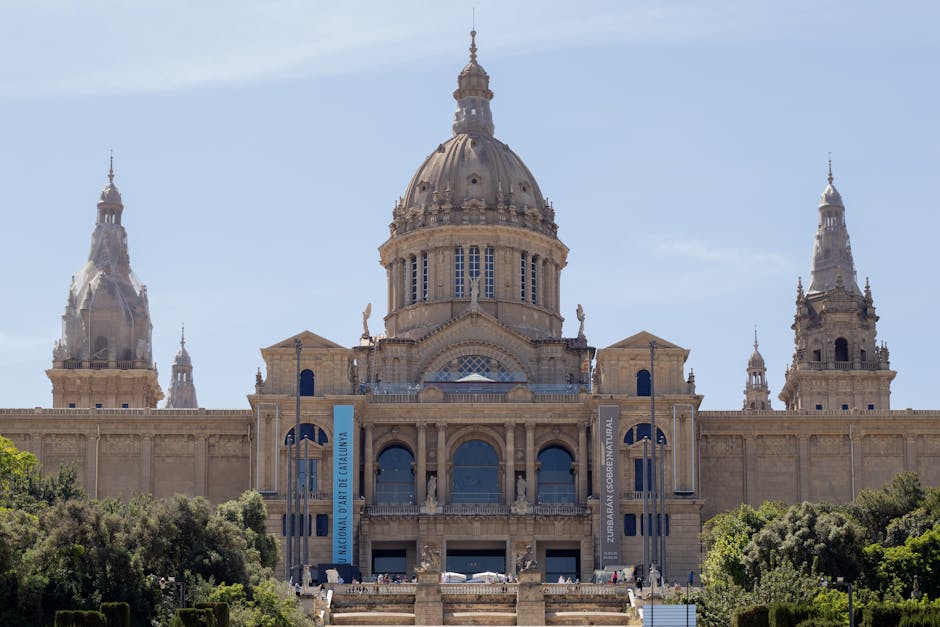
Explore Montjuïc’s lush gardens, historic fortress, and iconic Olympic venues on this scenic self-guided walk with panoramic Mediterranean views.
 Easy
EasyNairobi, Kenya
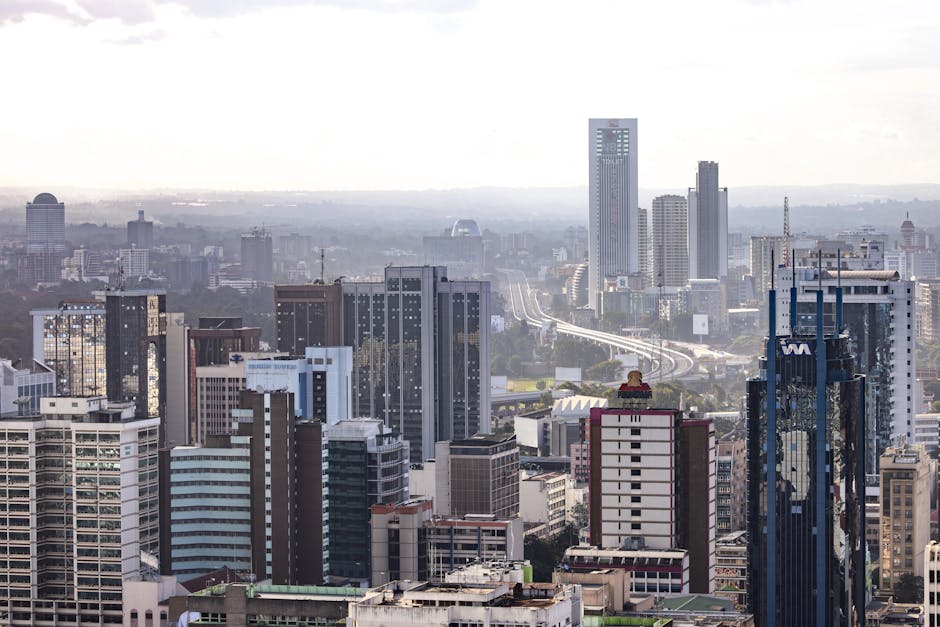
Explore Nairobi's architectural evolution from colonial-era landmarks to iconic Brutalist skyscrapers on this historic self-guided walking route.
 Easy
EasyNairobi, Kenya
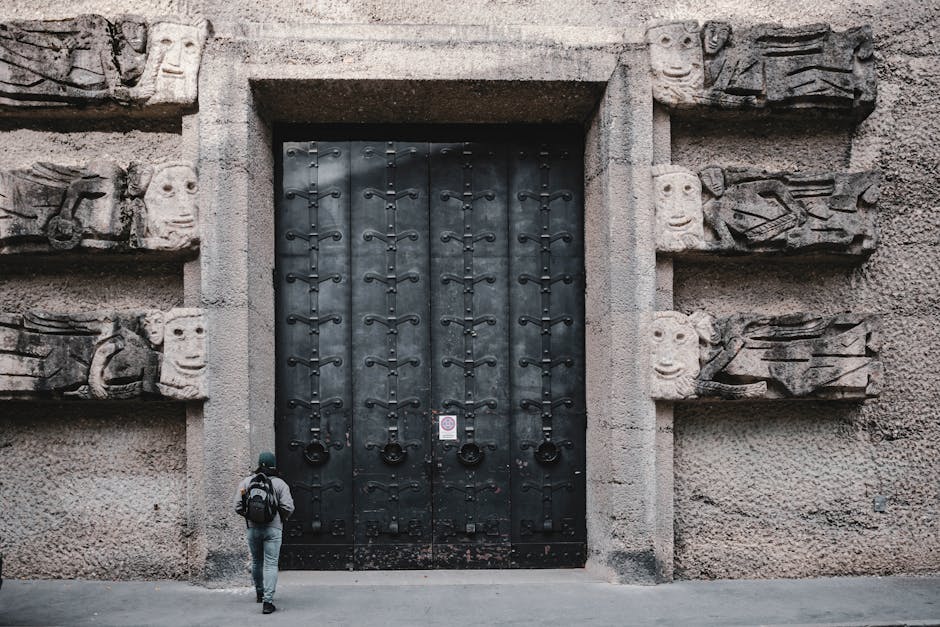
Discover Nairobi's iconic skyline on this self-guided architecture walk through the CBD’s most famous modernist and Brutalist landmarks.
 Easy
EasySalzburg, Austria
Discover Salzburg's oldest medieval alley, the birthplace of the 'Silent Night' author, and breathtaking views on this quiet self-guided walk.
 Easy
EasyKrakow, Poland
Explore the prestigious Jagiellonian University district, featuring Neo-Gothic architecture, Baroque churches, and Krakow's hidden scholarly gems.
 Easy
EasyMadrid, Spain
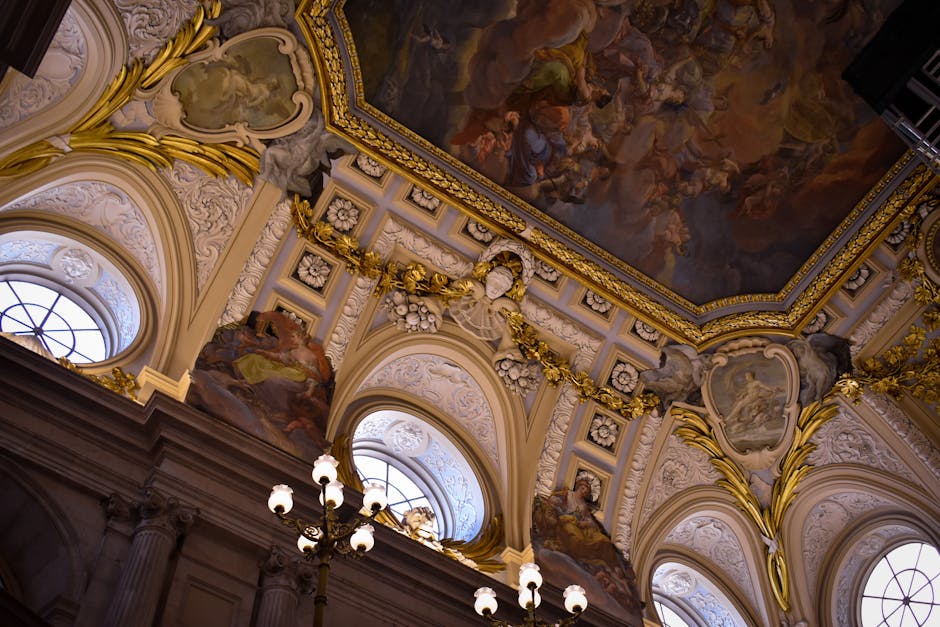
Explore Madrid's 'Landscape of Light' on this self-guided walk through the world-renowned Golden Triangle of Art, from Cibeles to the Reina Sofía.
 Moderate
Madrid, Spain
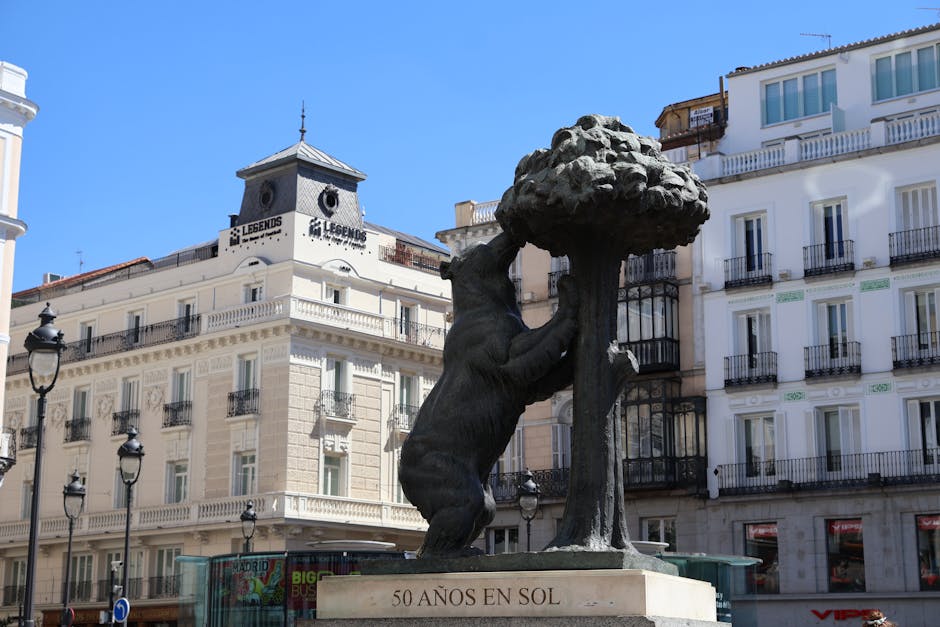
Explore Madrid's most diverse neighborhood on this self-guided walk through street art, historic markets, and multicultural squares.
 Easy
EasyMadrid, Spain
Explore the royal legacy and medieval alleys of Madrid's historic Habsburg district on this immersive self-guided walk through the city's heart.
 Easy
EasyMadrid, Spain
Discover the rebellious spirit of Malasaña on this self-guided walk through Madrid's best street art, historic squares, and counter-culture hubs.