Self-guided audio tour in Rio de Janeiro
Start Free on iPhone
Start free on iPhone to unlock this self-guided walking tour in Rio de Janeiro. Hear all the stories that make it amazing, walk at your own pace, and begin whenever you want.
Your Private Tour Guide
Nestled at the base of the towering Sugarloaf Mountain, Urca is often overlooked by travelers rushing to the cable car, yet it remains one of Rio de Janeiro’s most enchanting and peaceful neighborhoods. This self-guided walk invites you to step away from the typical tourist bustle and into a quiet, residential village where Art Deco architecture meets the shimmering waters of Guanabara Bay. Unlike the high-energy pulse of Copacabana or Ipanema, Urca offers a nostalgic glimpse into a slower-paced Rio, characterized by tree-lined streets and the iconic 'Mureta' where locals gather for afternoon drinks. On this neighborhood stroll, you will discover the secrets of a community that was once the heart of Brazilian glamour. You will pass by the historic Cassino da Urca, where international stars once performed, and see the charming Praia da Urca, a small beach offering unique views of Christ the Redeemer across the water. The route transitions from urban history to natural splendor as you enter the Pista Cláudio Coutinho, a paved trail flanking the granite cliffs of the Urca Hill. This walking route Rio de Janeiro locals love provides ample opportunities for photography, wildlife spotting—keep an eye out for marmosets—and moments of quiet reflection. Whether you are interested in the maritime history of the Brazilian Navy or simply want to find the best spot for a sunset beer, this exploration provides a comprehensive look at a hidden gem. This walking tour Rio de Janeiro experience concludes at the stunning Red Beach, or Praia Vermelha, tucked between two massive monoliths. By exploring independently, you can linger at the viewpoints that speak to you most, making this self-guided adventure the perfect way to spend a morning or late afternoon in the shadow of the world's most famous cable car.
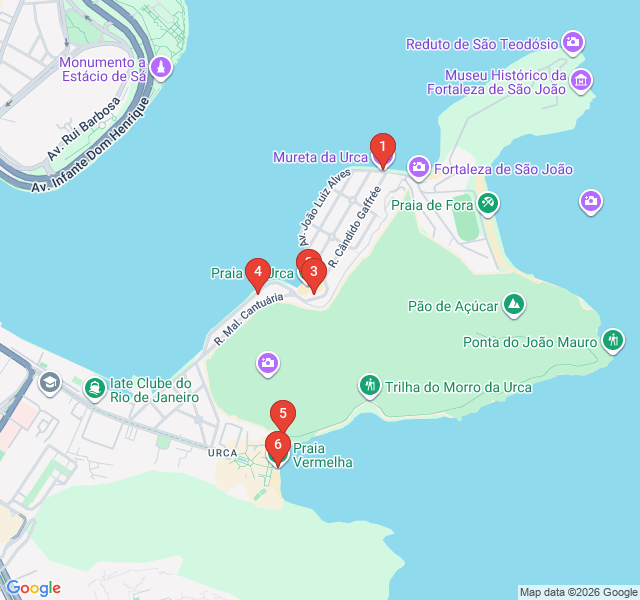
Numbers indicate the order of stops on the tour.
Welcome to the Mureta da Urca, the neighborhood's social heart. This low stone wall isn't just a barrier against the bay; it is Rio’s most informal and beloved outdoor bar. As you look across the water, you'll see the yachts of the Rio Yacht Club and the skyline of Botafogo. This area was developed in the 1920s through land reclamation, transforming what was once a rocky shore into a prestigious residential enclave. Locals come here to sit on the wall, balance a cold beer and a 'pastel' from nearby bars, and watch the sunset. It is a place that embodies the Carioca spirit of 'descontração'—a total lack of pretension despite the million-dollar views.
Walking further into the neighborhood, you reach Praia da Urca. This small, crescent-shaped beach is rarely used for swimming due to the bay's water quality, but it is a favorite for local fishers and families enjoying the view. From the sand, look directly across the bay to see the Corcovado mountain and the statue of Christ the Redeemer standing guard over the city. The houses surrounding this beach are some of the most sought-after in Rio, featuring a mix of architectural styles from the 1930s and 40s. Notice how the neighborhood feels like a separate village, protected by the massive granite peaks behind it.
This grand building holds the ghosts of Rio's Golden Age. Originally built as a hotel, it became the legendary Cassino da Urca in 1933. Before gambling was banned in Brazil in 1946, this was the place to see and be seen. International icons like Carmen Miranda were discovered here, and Walt Disney reportedly visited while developing the character Jose Carioca. After the casino closed, the building became the headquarters of TV Tupi, Brazil's first television network. Today, after years of neglect, it has been restored as an educational institution, but its facade still evokes the high-society glamour of a bygone era.
Standing prominently on the corner, the Igreja de Nossa Senhora do Brasil is a beautiful example of Neo-Colonial architecture. Completed in the early 1930s, its design reflects the nationalist architectural movements of the time, seeking to create a uniquely Brazilian style by blending Portuguese Baroque elements with modern sensibilities. The interior is known for its intimate atmosphere and beautiful tile work. As you pass by, you might notice the quiet dignity of the square it faces; this is the spiritual center of the Urca community, where many of the neighborhood’s traditional weddings and festivals take place.
Transitioning from streets to nature, you enter the Pista Cláudio Coutinho. Named after a former Brazilian army captain and national soccer coach, this 1.25-kilometer paved path is wedged between the ocean and the sheer cliffs of the Morro da Urca. It is a sanctuary for joggers and nature lovers. As you walk, look up into the trees to spot 'micos'—small marmoset monkeys—and listen for the calls of tropical birds. To your left, the Atlantic waves crash against the rocks. This path also serves as the entrance for the hiking trail that leads up the Urca Hill, the first stop of the Sugarloaf cable car.
Your walk concludes at Praia Vermelha, or Red Beach. It gets its name from the reddish tint the sand takes on when the sun sets. Tucked between the Morro da Urca and the Babylon Hill, the beach feels secluded and dramatic. This is one of the deepest points in the bay, which often gives the water a darker, more intense blue color. Above you, you can watch the cable cars gliding silently up to the Sugarloaf summit. It’s the perfect place to rest your feet after your stroll, perhaps with a coconut water from one of the kiosks, as you admire the sheer scale of the granite monoliths surrounding you.
Start Free on iPhone
Explore “Hidden Urca: A Village at the Sugarloaf's Feet” with your very own Private Tour Guide with Zigway. Start free on iPhone, skip the large group and the fixed routes, and hear the city come alive as you go.
Your Private Tour Guide
Don't miss the good stuff
Explore Freely
 Easy
EasyRio de Janeiro, Brazil
Explore the world's largest murals and futuristic architecture in Rio's revitalized port on this vibrant self-guided walking route.
 Easy
EasyRio de Janeiro, Brazil
Discover the 'BotaSoho' vibe on this self-guided food and nightlife stroll through Rio's most creative neighborhood.
 Easy
EasyRio de Janeiro, Brazil
Discover the former seat of Brazilian power on this self-guided walk through the palaces, gardens, and presidential history of Catete and Glória.
 Easy
EasyRio de Janeiro, Brazil
Discover Rio's literary soul on this self-guided walk through historic libraries, ornate Belle Époque cafes, and iconic bookstores in Centro.
 Easy
EasyKrakow, Poland
Discover Krakow’s creative soul in Zabłocie, exploring industrial heritage, contemporary art museums, and avant-garde architecture at your own pace.
 Easy
EasyWarsaw, Poland
Discover the hidden courtyards and grand pre-war architecture of Warsaw's most atmospheric neighborhood on this self-guided stroll.
 Easy
EasyWarsaw, Poland
Explore Warsaw's scenic riverfront, rooftop gardens, and industrial-chic architecture on this self-guided stroll through the Powiśle district.
 Easy
EasyHelsinki, Finland
Discover Helsinki's oldest neighborhood on this self-guided audio walk through Kruununhaka’s historic streets, hidden courtyards, and scenic shores.
 Moderate
Sao Paulo, Brazil
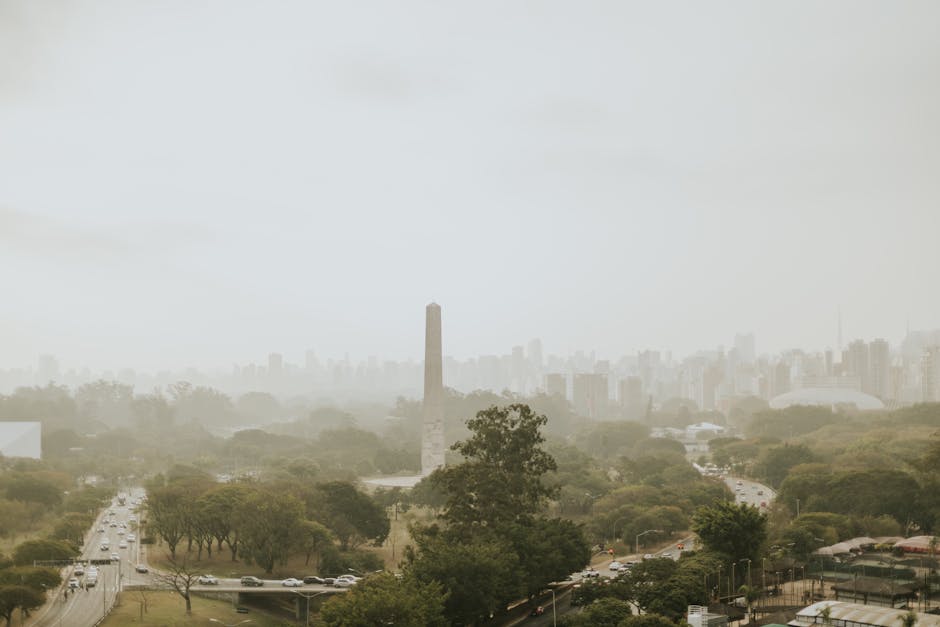
Discover the flowing concrete curves and modernist masterpieces of Oscar Niemeyer on this self-guided walk through São Paulo’s premier urban park.
 Easy
EasySao Paulo, Brazil
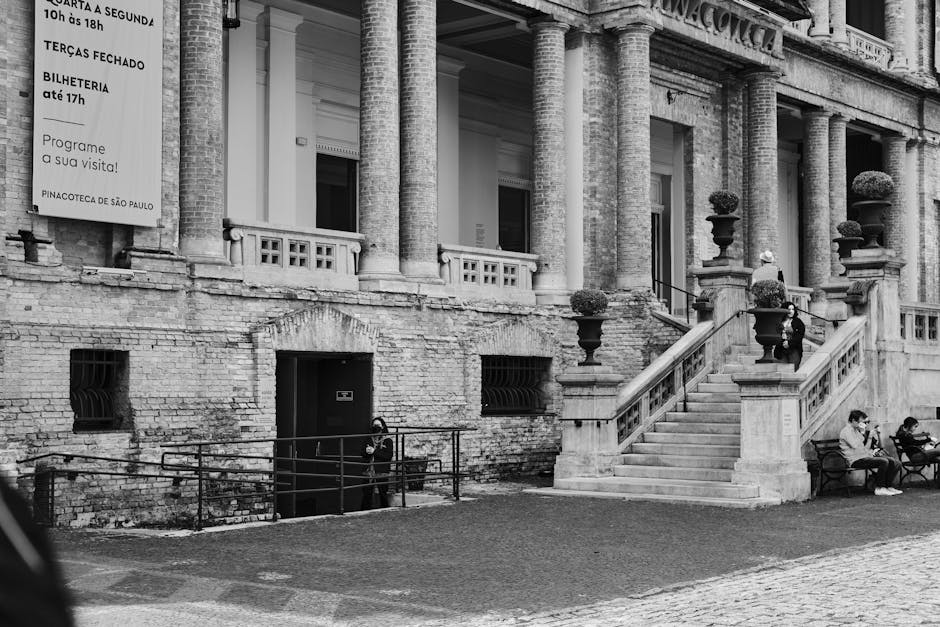
Explore the world's largest Japanese diaspora. A self-guided walk through Sao Paulo's vibrant Liberdade district, rich in history, food, and culture.
 Easy
EasySao Paulo, Brazil
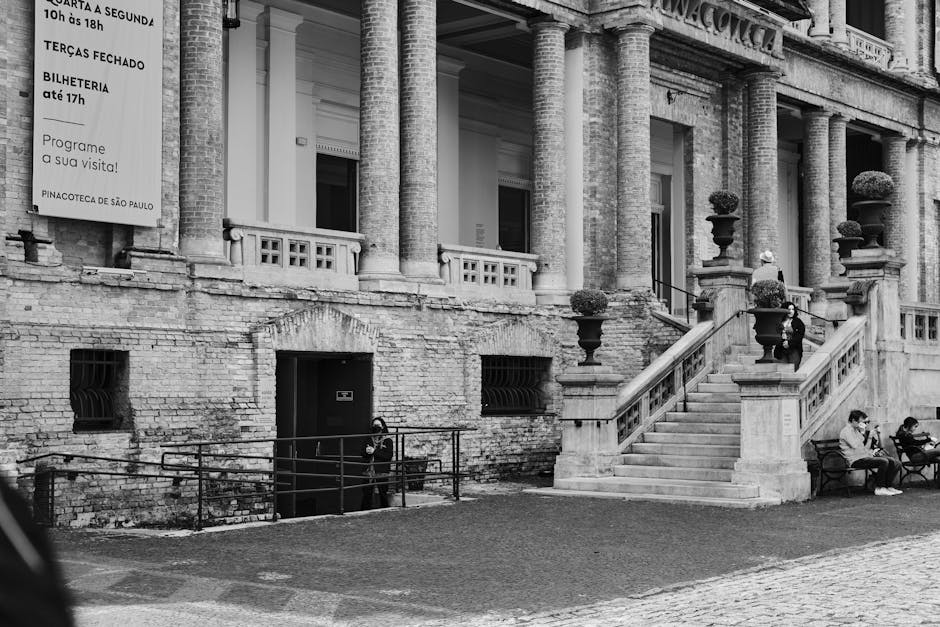
Discover the art, history, and British-inspired architecture of São Paulo’s historic Luz district on this immersive self-guided walk.
 Easy
EasySao Paulo, Brazil
Discover Sao Paulo's historic heart and vibrant food scene on this self-guided walk through the Old Center and the legendary Mercadão.