Self-guided audio tour in Sao Paulo
Start Free on iPhone
Start free on iPhone to unlock this self-guided walking tour in Sao Paulo. Hear all the stories that make it amazing, walk at your own pace, and begin whenever you want.
Your Private Tour Guide
Step into a world where the vibrant spirit of Brazil meets the deep-rooted traditions of the East. This self-guided walk through Liberdade offers a unique perspective on Sao Paulo, taking you through the heart of the largest ethnic Japanese community outside of Japan. As you explore independently, you will discover how this neighborhood evolved from a somber historical site into a bustling center of Asian-Brazilian culture. This walking route is designed for those who want to immerse themselves in a sensory journey of red torii-shaped street lamps, aromatic street food, and hidden gardens. Your journey begins at the Praça da Liberdade, the neighborhood's central pulse, where the history of the city's diverse heritage is palpable. From there, the neighborhood stroll leads you through the famous street markets where the scent of freshly made yakisoba and Brazilian pastéis fills the air. You will delve into the architectural nuances of Rua Galvão Bueno, the main artery of the district, and find moments of tranquility in the Jardim Oriental. This walking tour Sao Paulo experience isn't just about the sights; it's about the stories of the thousands of immigrants who arrived on the Kasato Maru in 1908 and transformed this corner of the city. As you follow the route, you'll see how Chinese and Korean influences have joined the Japanese foundation to create a modern, pan-Asian enclave. Whether you are a foodie looking for the best ramen or a history buff interested in the Museum of Japanese Immigration, this self-guided adventure allows you to uncover the layers of Liberdade at your own pace. While some might look for a guided tour Sao Paulo offers, exploring this area on your own terms allows for those serendipitous moments—like stumbling upon a quiet Buddhist temple or a hidden shop filled with imported curiosities—that define the true Sao Paulo experience. **Note:** This area is known for its ever-changing character. Street art, pop-up venues, and temporary exhibitions may differ from what's described. That's part of the adventure - you might discover something entirely new!
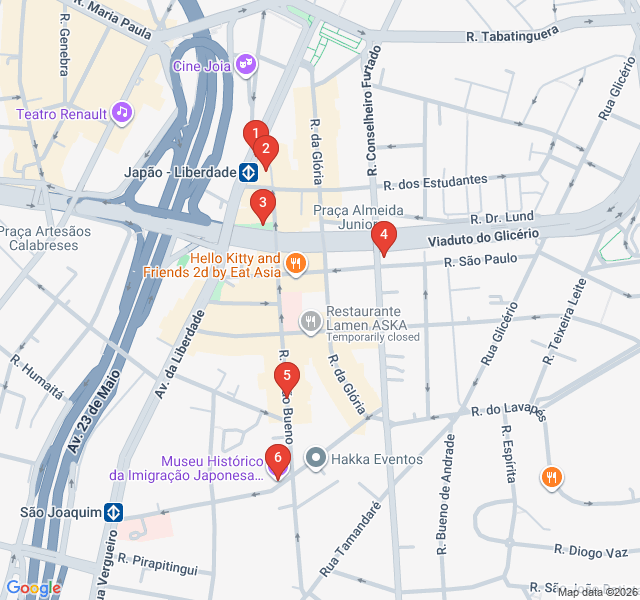
Numbers indicate the order of stops on the tour.
Welcome to the heart of Liberdade. Today, this square is a place of celebration, but its name—meaning 'Liberty'—carries a heavy history. In the 19th century, this area was known as the Largo da Forca, or 'Gallows Square,' where executions took place. The name changed after the abolition of slavery, symbolizing a new beginning. As you stand here, notice the red torii-style street lamps that define the neighborhood's aesthetic. On weekends, this square transforms into a massive open-air market. It is the perfect starting point to observe the blend of Brazilian and Asian cultures that make this district one of the most unique urban spaces in South America.
If you are visiting on a weekend, you are standing in the middle of one of Sao Paulo's most beloved traditions. The Feira da Liberdade has been running since the 1970s. It is a sensory feast where you can find everything from handmade crafts and bonsai trees to some of the best street food in the city. Keep an eye out for stalls selling 'Imagawayaki'—a sweet bean-filled pancake—or the Brazilian-Japanese fusion of giant pastéis. Even on weekdays when the market is smaller, the permanent shops around the perimeter offer a glimpse into the local commerce that sustains this community.
Tucked away from the main bustle of the shops, the Jardim Oriental, or Oriental Garden, is a pocket of serenity. This vertical garden features a traditional koi pond and a small bridge, offering a moment of Zen amidst the urban chaos. The garden is a tribute to the landscape aesthetics of Japan, emphasizing harmony with nature. It is a favorite spot for locals to take a breath between errands. Take a moment to watch the carp and appreciate the contrast between the quiet water and the sounds of the city rising just beyond the walls.
As you move deeper into the neighborhood, you will encounter the Templo Lohan. This site represents the spiritual side of the Asian influence in Sao Paulo, specifically the Chinese Buddhist tradition. While Liberdade is primarily known for its Japanese roots, Chinese and Korean communities have significantly shaped the area in recent decades. The temple is not only a place of worship but also a center for Kung Fu and Lion Dance practices. The presence of such temples throughout the district highlights the enduring role of faith and traditional arts in maintaining cultural identity across generations of the diaspora.
This is the primary artery of Liberdade. Walking down Rua Galvão Bueno, you are surrounded by the neighborhood's most iconic imagery. Look up at the rows of red lanterns and notice the Japanese characters on the storefronts. This street is home to massive Asian supermarkets, small specialty boutiques, and some of the city's most authentic ramen shops. It serves as the commercial hub where the community gathers to buy imported goods that can't be found anywhere else in Brazil. The energy here is infectious, reflecting the modern, bustling side of the Japanese-Brazilian experience.
Your walk concludes at the Museum of Japanese Immigration. Located across several floors, this museum tells the definitive story of the community you’ve just walked through. It details the arrival of the ship Kasato Maru in 1908 and the subsequent waves of immigration. You will find artifacts ranging from original farming tools used by early settlers to contemporary exhibits on the community's contribution to Brazilian agriculture and technology. It is a powerful place to reflect on the challenges of integration and the incredible resilience of a culture that managed to flourish thousands of miles from its origin.
Start Free on iPhone
Explore “East Meets West in Liberdade” with your very own Private Tour Guide with Zigway. Start free on iPhone, skip the large group and the fixed routes, and hear the city come alive as you go.
Your Private Tour Guide
Don't miss the good stuff
Explore Freely
 Moderate
Sao Paulo, Brazil
Discover the flowing concrete curves and modernist masterpieces of Oscar Niemeyer on this self-guided walk through São Paulo’s premier urban park.
 Easy
EasySao Paulo, Brazil
Discover the art, history, and British-inspired architecture of São Paulo’s historic Luz district on this immersive self-guided walk.
 Easy
EasySao Paulo, Brazil
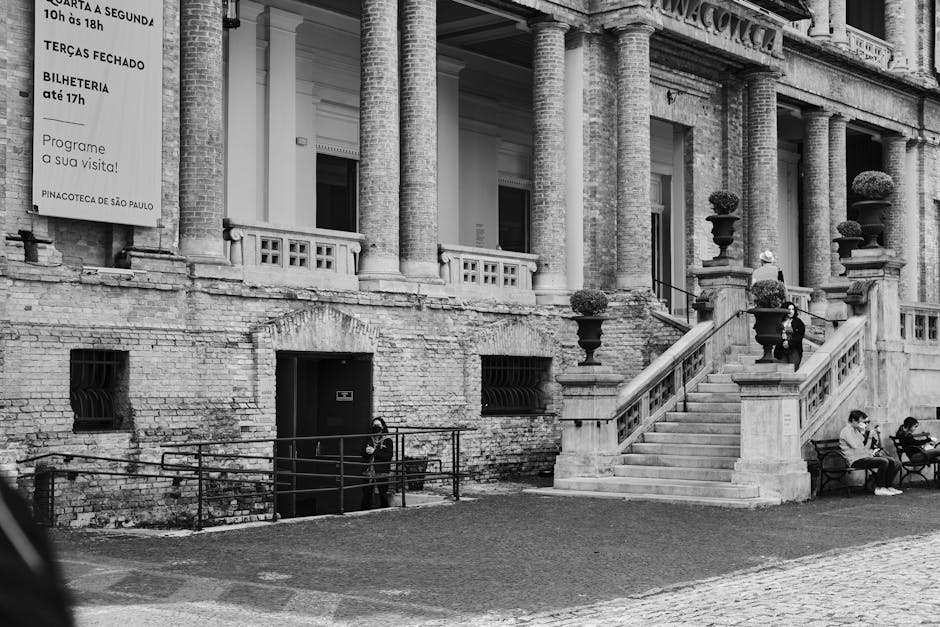
Discover Sao Paulo's historic heart and vibrant food scene on this self-guided walk through the Old Center and the legendary Mercadão.
 Moderate
Sao Paulo, Brazil
Explore Sao Paulo's historic Italian district. Discover avant-garde theater, legendary cantinas, and the soul of Calabrian heritage in Bixiga.
 Easy
EasyNairobi, Kenya
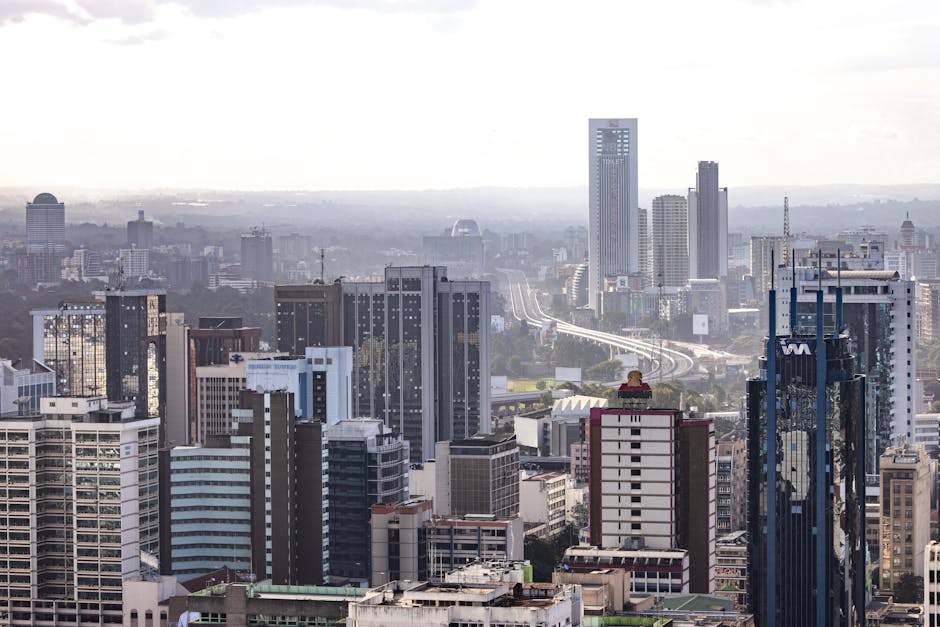
Explore the history of Kenya’s independence through the statues, monuments, and parks that define Nairobi’s political heart on this self-guided walk.
 Easy
EasyInnsbruck, Austria
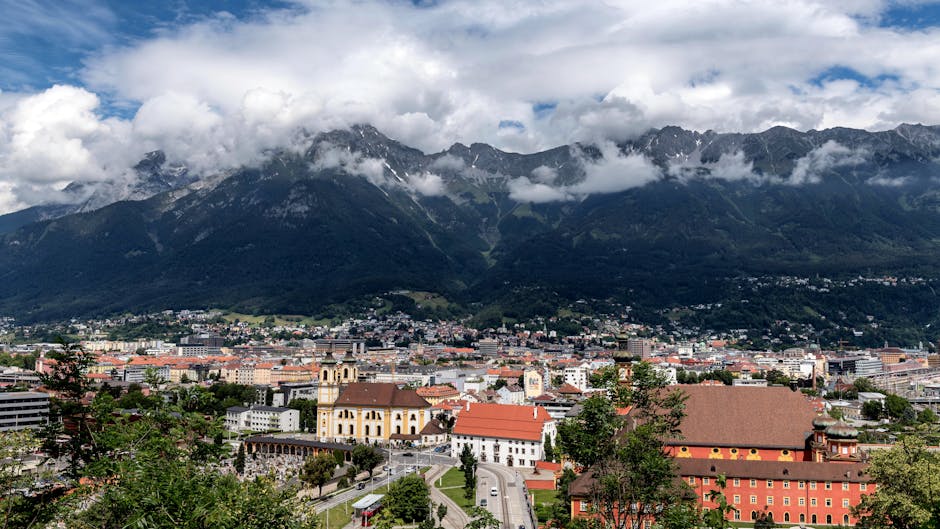
Discover the flavors of Tyrol on this self-guided stroll through Innsbruck’s historic Old Town and vibrant market hall.
 Easy
EasySalzburg, Austria
Discover the 'Rome of the North' on this self-guided walk through the Baroque squares and monumental legacy of Salzburg’s Prince-Archbishops.
 Easy
EasyGdansk, Poland
Taste the history of the Baltic. Explore Gdansk's culinary heritage from medieval markets to gold-flecked liqueurs on this self-guided walk.
 Easy
EasyRio de Janeiro, Brazil
Explore the world's largest murals and futuristic architecture in Rio's revitalized port on this vibrant self-guided walking route.
 Easy
EasyRio de Janeiro, Brazil
Discover the 'BotaSoho' vibe on this self-guided food and nightlife stroll through Rio's most creative neighborhood.
 Easy
EasyRio de Janeiro, Brazil
Discover the former seat of Brazilian power on this self-guided walk through the palaces, gardens, and presidential history of Catete and Glória.
 Easy
EasyRio de Janeiro, Brazil
Discover Rio's literary soul on this self-guided walk through historic libraries, ornate Belle Époque cafes, and iconic bookstores in Centro.