Self-guided audio tour in Novi Sad
Start Free on iPhone
Start free on iPhone to unlock this self-guided walking tour in Novi Sad. Hear all the stories that make it amazing, walk at your own pace, and begin whenever you want.
Your Private Tour Guide
Step across the Varadin Bridge and enter a world where time seems to have paused in the 18th century. While most visitors to Novi Sad head straight for the clock tower of the upper fortress, the true architectural soul of the region lies nestled at its base in the Suburbium. This self-guided walk invites you to explore the 'Lower Town' of Petrovaradin, a remarkably preserved Baroque military settlement that served as the gateway to the Austro-Hungarian Empire. As you navigate this neighborhood stroll, you will encounter the heavy stone gates, narrow cobblestone lanes, and pastel-colored facades that once housed high-ranking officers, artisans, and clergy. This walking route focuses on the unique Baroque architecture that defines the Suburbium. Unlike the more eclectic styles found in the city center of Novi Sad, the Suburbium retains a strict, uniform aesthetic dictated by its military origins. You will discover the birthplace of the famous Ban Josip Jelačić, a figure of immense regional importance, and stand beneath the monumental Belgrade Gate, which has welcomed travelers for centuries. The route also highlights the religious diversity of the area, from the Jesuit-built St. George's Monastery to the modest Protestant Church. Exploring independently with an audio walk allows you to look up and notice the small details often missed: the iron window grates, the heavy wooden doors, and the intricate cornices of these historic buildings. This is not just a walk through a neighborhood; it is a journey through the 'Gibraltar on the Danube.' Whether you are a fan of military history or simply love the charm of old European streets, this self-guided adventure offers a peaceful alternative to the busier city streets. The Suburbium is currently undergoing a massive restoration, making it an exciting time to see these historic gems being polished back to their former glory. Experience the atmosphere of a bygone era at your own pace, finishing your journey on the main artery of Petrovaradin, where modern life meets deep history.
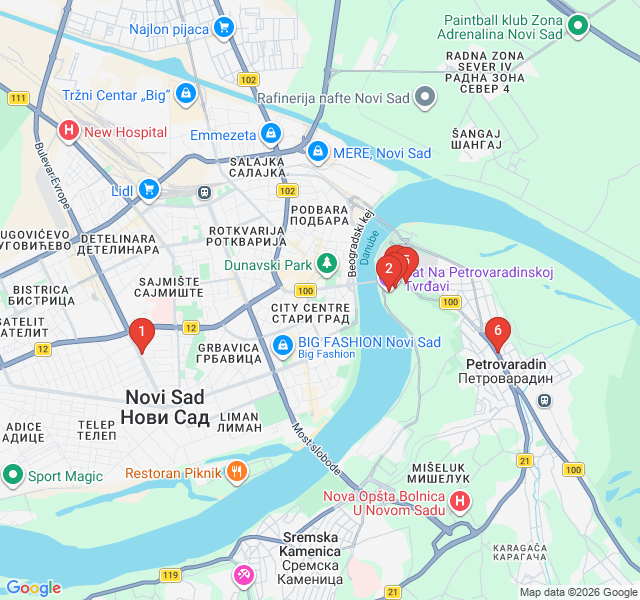
Numbers indicate the order of stops on the tour.
Begin your self-guided walk at this modest yet significant structure. Unlike the grand Catholic and Orthodox cathedrals nearby, the Protestant Church in Petrovaradin reflects the religious diversity brought by the various ethnic groups that settled here under the Habsburg Monarchy. The architecture is simple and functional, adhering to the Reformed tradition. This site serves as a quiet reminder that Petrovaradin was a melting pot of soldiers, craftsmen, and families from across central Europe. Take a moment to observe how the church fits into the residential fabric of the street, marking the beginning of our journey into the military-civilian life of the Suburbium.
As you walk along the edge of the Suburbium, you are tracing the defensive lines designed by the famous French engineer Vauban. These thick brick walls and earthen embankments were engineered to withstand the most advanced artillery of the 18th century. This specific section of the trail offers a perspective on how the Lower Town was protected separately from the Upper Fortress. Notice the star-shaped layout of the fortifications, a hallmark of Baroque military science. This trail provides a peaceful corridor away from the main road, allowing you to appreciate the sheer scale of the labor required to build this 'Gibraltar on the Danube' by hand.
Standing before St. George's Monastery, you are looking at the oldest church in Petrovaradin, built by the Jesuits between 1701 and 1714. Its facade is a classic example of Baroque restraint, designed to be both inspiring and sturdy. This church served the spiritual needs of the military garrison and the local Catholic population. Inside, the crypts hold the remains of high-ranking Austrian officers who died defending the fortress. The monastery complex once included a pharmacy and a school, making it the intellectual heart of the Suburbium for centuries. Its presence here underscores the deep connection between the church and the military administration in the Habsburg era.
This elegant building is one of the most famous private residences in the Suburbium. It is the birthplace of Count Josip Jelačić, born in 1801, who would later become the Ban of Croatia and a celebrated military commander. The house itself is a beautiful example of Baroque civil architecture, featuring a grand arched entrance and a decorative balcony. Jelačić is a national hero for many, and his birth here links this small neighborhood to the wider 19th-century history of the Balkans and the Austro-Hungarian Empire. The building has recently been restored, serving as a cultural center and a symbol of the neighborhood's revitalization.
You are now standing at the Belgrade Gate, the most impressive of the fortress's remaining portals. Completed in 1753, this gate served as the main entrance for anyone traveling from the south toward the heart of the empire. Look up to see the intricate stone carvings and the imperial coat of arms. The gate is nearly 20 meters deep, designed not just for aesthetics but as a final defensive bottleneck. In the past, the heavy wooden doors would be locked at sunset, isolating the Suburbium from the outside world. Walking through its vaulted passage today, you can almost hear the echo of horse-drawn carriages and marching boots from centuries ago.
Concluding your neighborhood stroll, you arrive at Preradovićeva Street, the main artery of Petrovaradin. This street was named after the famous poet Petar Preradović and has always been the commercial lifeline of the Suburbium. Today, it showcases the transition from the historic core to the modern town. The buildings here still maintain their Baroque proportions, though many now house shops and cafes. It is the perfect place to find a local spot for a coffee or a meal while reflecting on the military history and architectural beauty you’ve just explored. From here, you are well-positioned to either head up to the upper fortress or return across the river to Novi Sad's city center.
Start Free on iPhone
Explore “The Suburbium: Baroque Footsteps” with your very own Private Tour Guide with Zigway. Start free on iPhone, skip the large group and the fixed routes, and hear the city come alive as you go.
Your Private Tour Guide
Don't miss the good stuff
Explore Freely
 Easy
EasyNovi Sad, Serbia
Explore the vibrant soul of Novi Sad's nightlife on this self-guided walk through iconic pubs, craft beer gems, and the famous Laze Telečkog street.
 Easy
EasyNovi Sad, Serbia
Explore the Austro-Hungarian grandeur of Novi Sad's historic center on this self-guided walking route through the elegant streets of Stari Grad.
 Moderate
Novi Sad, Serbia
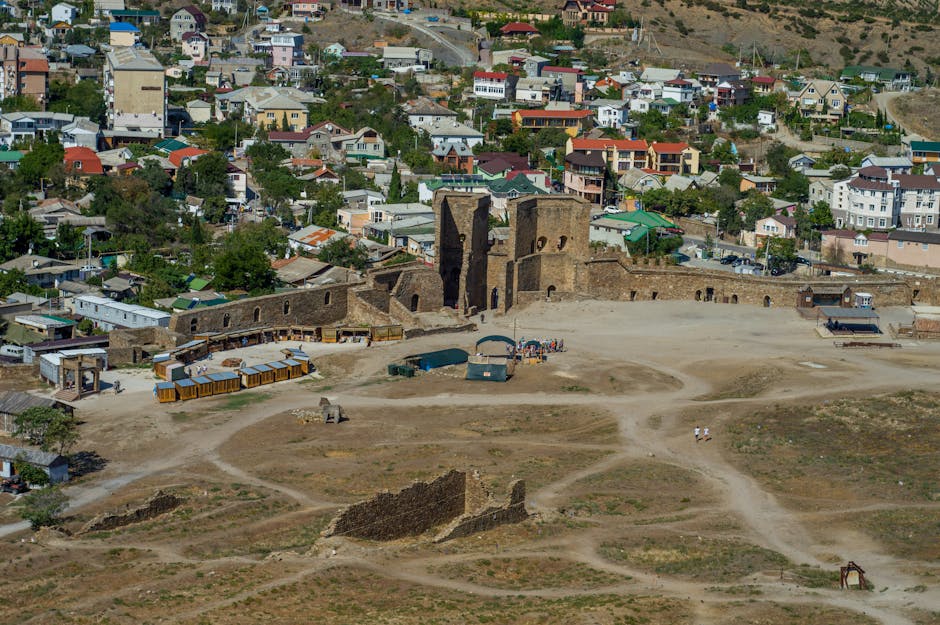
Explore the 'Gibraltar on the Danube' from Novi Sad's elegant city center to the massive underground tunnels of Petrovaradin Fortress.
 Easy
EasyNovi Sad, Serbia
Taste your way through Novi Sad's vibrant markets and iconic street food on this self-guided culinary stroll through the heart of Vojvodina.
 Easy
EasyNairobi, Kenya
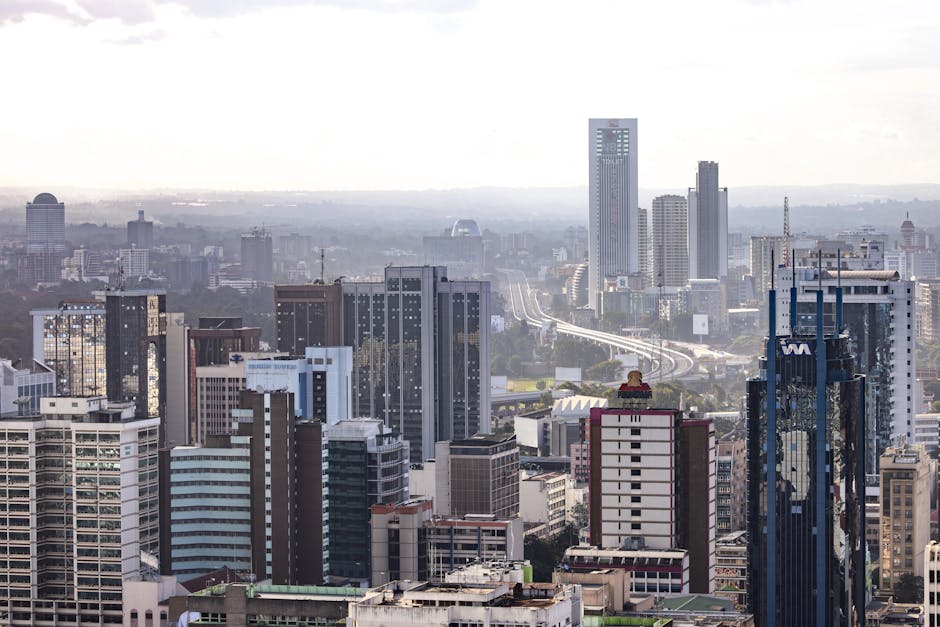
Explore Nairobi's architectural evolution from colonial-era landmarks to iconic Brutalist skyscrapers on this historic self-guided walking route.
 Easy
EasyNairobi, Kenya
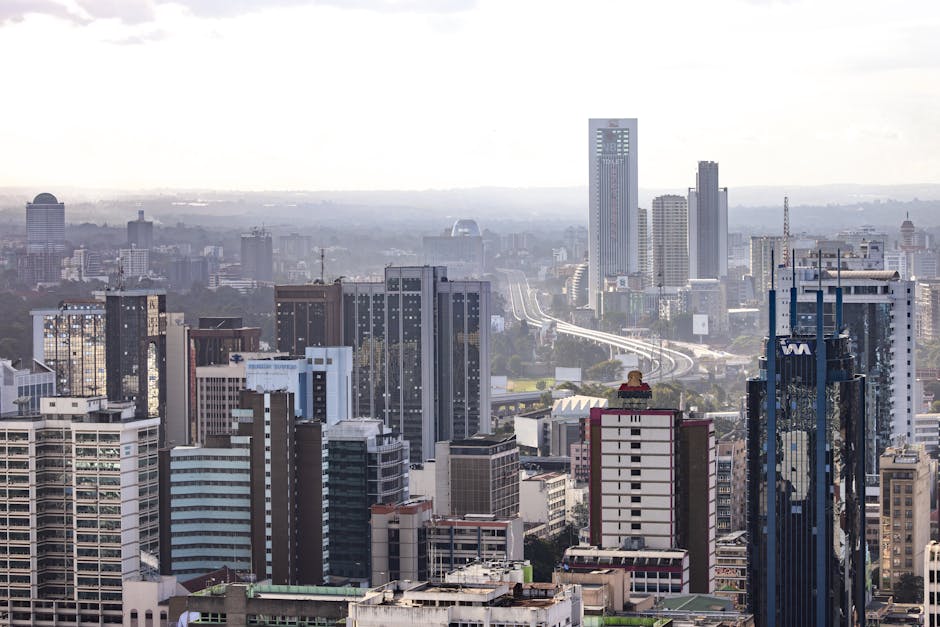
Discover Nairobi's iconic skyline on this self-guided architecture walk through the CBD’s most famous modernist and Brutalist landmarks.
 Easy
EasyKrakow, Poland
Explore the prestigious Jagiellonian University district, featuring Neo-Gothic architecture, Baroque churches, and Krakow's hidden scholarly gems.
 Easy
EasySalzburg, Austria
Discover Salzburg's oldest medieval alley, the birthplace of the 'Silent Night' author, and breathtaking views on this quiet self-guided walk.
 Easy
EasyBelgrade, Serbia
Discover Lower Dorćol, where 18th-century history meets industrial revival and vibrant street art on this self-guided stroll through Belgrade.
 Easy
EasyBelgrade, Serbia
Discover Belgrade’s bohemian heart. Explore the historic Skadarlija quarter and Dorćol’s hidden Ottoman gems on this self-guided audio walk.
 Easy
EasyBelgrade, Serbia
Explore the future of Serbia's capital on this self-guided walk through the modern Belgrade Waterfront and the scenic Sava Promenada.
 Moderate
Belgrade, Serbia
Explore the legacy of Yugoslavia on this self-guided walk from Tito’s tomb to the historic ruins and monuments of central Belgrade.