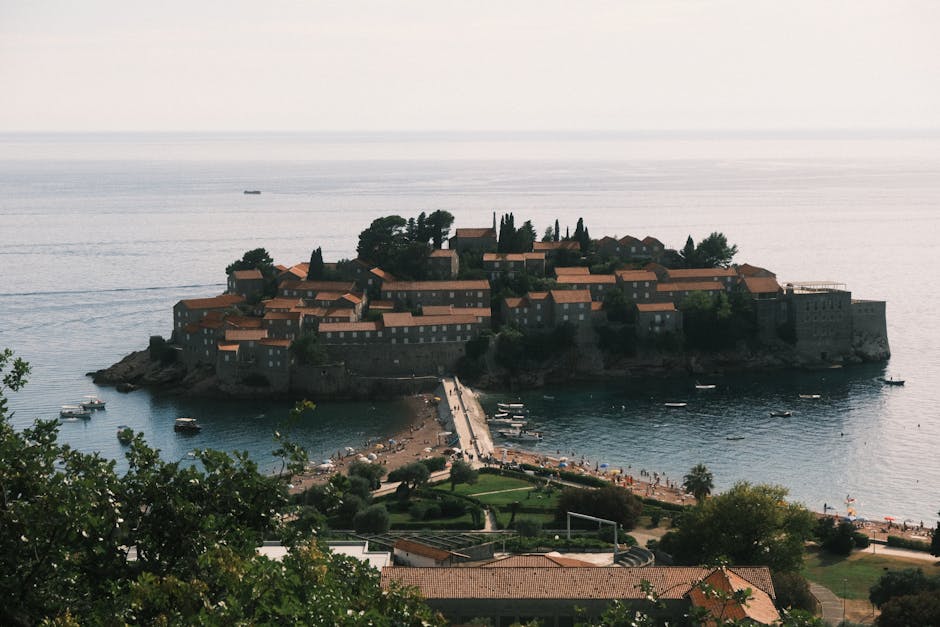
Self-guided audio tour in Budva
Start Free on iPhone
Start free on iPhone to unlock this self-guided walking tour in Budva. Hear all the stories that make it amazing, walk at your own pace, and begin whenever you want.
Your Private Tour Guide
While most visitors to Budva gravitate immediately toward the stone walls of the Stari Grad, a parallel story of ambition and transformation unfolds along the shoreline of the Slovenska Obala. This self-guided walk explores the architectural evolution of Montenegro's tourism capital, tracing its path from the functionalist ideals of the socialist era to the gleaming glass towers of modern luxury. You will discover how the city literally rose from the rubble of the 1979 earthquake to become a Mediterranean powerhouse. The route begins at the Slovenska Plaža Tourist Village, a landmark of Yugoslav modernism designed by architect Ante Rožić. This complex was envisioned as a 'city within a city,' prioritizing communal spaces and Mediterranean aesthetics over high-rise density. As you continue along the promenade, the skyline shifts dramatically. You will encounter the Tre Canne towers and TQ Plaza, buildings that represent the post-2000s construction boom and Budva’s pivot toward high-end real estate and international investment. This architectural stroll also highlights the delicate balance between progress and preservation. At the Hotel Mogren and the nearby archaeological site by Hotel Avala, you will see where modern hospitality sits directly atop Roman and Greek history, reminding us that Budva has been a hub of activity for over 2,500 years. The walk concludes at the Zavala Peninsula, home to the exclusive Dukley Gardens, a symbol of the contemporary luxury lifestyle that defines the Adriatic coast today. This walking route offers a unique perspective on Budva’s identity, moving beyond the postcard-perfect Old Town to understand the living, breathing, and ever-changing modern city. Whether you are interested in urban planning, socialist history, or contemporary design, this neighborhood stroll provides a comprehensive look at how Budva reinvented itself for the 21st century. **Note:** This area is known for its ever-changing character. Street art, pop-up venues, and temporary exhibitions may differ from what's described. That's part of the adventure - you might discover something entirely new!
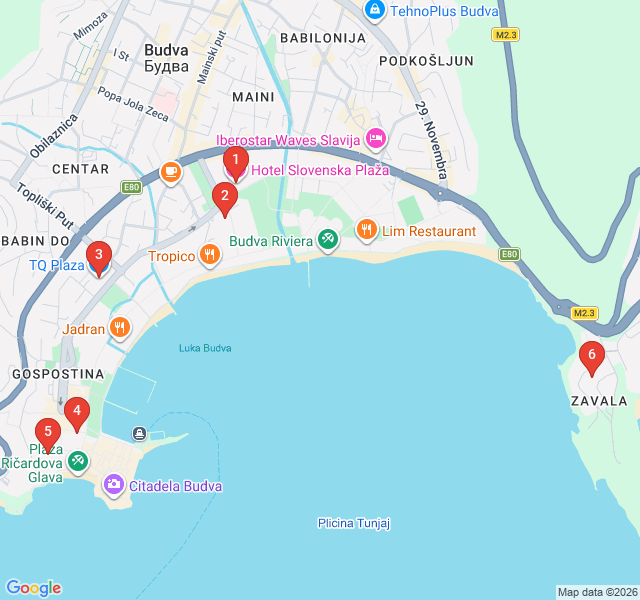
Numbers indicate the order of stops on the tour.
Begin your self-guided adventure at the entrance of Slovenska Plaža. Built in the early 1980s following a devastating earthquake, this complex is a masterpiece of Yugoslav modernist architecture. Designed by Ante Rožić, it was intended to mimic the layout of a traditional Mediterranean town with small squares, narrow streets, and low-rise white buildings. Unlike the high-rise hotels of the era, this 'tourist village' focused on human-scale design and integration with the surrounding greenery. It stands as a testament to the socialist-era vision of accessible, high-quality tourism for the masses. Notice the functionalist lines and the way the buildings are grouped to create sheltered communal courtyards.
As you move toward the city center, the landscape shifts from low-rise white concrete to soaring glass. The three towers of Tre Canne represent the 'new' Budva. Completed in the 2010s, these buildings signaled a shift toward luxury apartment living and high-end commercial space. The central tower is one of the tallest structures in the city, offering a sharp contrast to the socialist architecture you just left. This development reflects the rapid privatization and international investment that transformed the Montenegrin coast in the 21st century. The sleek, reflective surfaces are designed to mirror the Adriatic Sea, bridging the gap between urban density and the natural horizon.
Continue your walking route to TQ Plaza, a mixed-use complex whose shape was inspired by a ship moored in the harbor. This building is central to Budva's modern urban planning, housing everything from shopping centers to municipal offices and luxury residences. Its construction was a major milestone in the city's commercial development, though it has also been a subject of local debate regarding the scale of urban growth. Take a moment to observe the tiered balconies and the expansive glass facade. It serves as a hub for local life, illustrating how Budva has evolved into a year-round administrative and commercial center, rather than just a seasonal beach resort.
Approaching the edge of the Old Town, you find Hotel Mogren. While the current building dates to the post-1979 reconstruction, the Mogren name has been synonymous with Budva hospitality for nearly a century. This hotel has long served as the 'city's living room,' where locals and visitors gather at the terrace cafe. Its architecture is more traditional than the glass towers, designed to harmonize with the nearby medieval walls while providing the modern amenities expected in the 1980s. It represents the bridge between the ancient history of the Stari Grad and the modern expansion of the city along the Slovenska Obala.
Just steps away from the modern Hotel Avala, you will encounter a surprising juxtaposition. During renovations and construction in the 20th century, workers discovered a vast Roman and Greek necropolis. This site reminds us that every modern building in Budva sits atop layers of ancient history. You can see the remains of stone tombs and foundations that date back over two millennia. The way these ruins are integrated into the modern hotel landscape is a hallmark of Budva's urban identity—where luxury swimming pools and ancient history exist side-by-side. It is a poignant reminder of the many civilizations that have shaped this coastline.
To conclude your self-guided walk, head toward the Zavala Peninsula. Dukley Gardens represents the pinnacle of contemporary luxury in Montenegro. This gated community of sleek, minimalist villas is built into the hillside, designed to offer privacy and unobstructed views of the Budva Riviera. The project was controversial during its early phases but has since become an iconic part of the coastline's silhouette. From here, you can look back across the bay and see the entire architectural timeline you've just walked: from the red roofs of the Old Town to the socialist blocks and the modern glass towers. It is the final word in Budva’s transformation into a luxury destination.
Start Free on iPhone
Explore “Modern Budva: From Socialism to Luxury” with your very own Private Tour Guide with Zigway. Start free on iPhone, skip the large group and the fixed routes, and hear the city come alive as you go.
Your Private Tour Guide
Don't miss the good stuff
Explore Freely
 Moderate
Budva, Montenegro
Discover Budva's hidden parks, panoramic hill views, and the stunning 'Hawaii of Montenegro' island on this refreshing self-guided audio walk.
 Moderate
Budva, Montenegro
Capture Budva’s most breathtaking vistas on this self-guided audio walk through historic fortresses and scenic mountain paths at sunset.
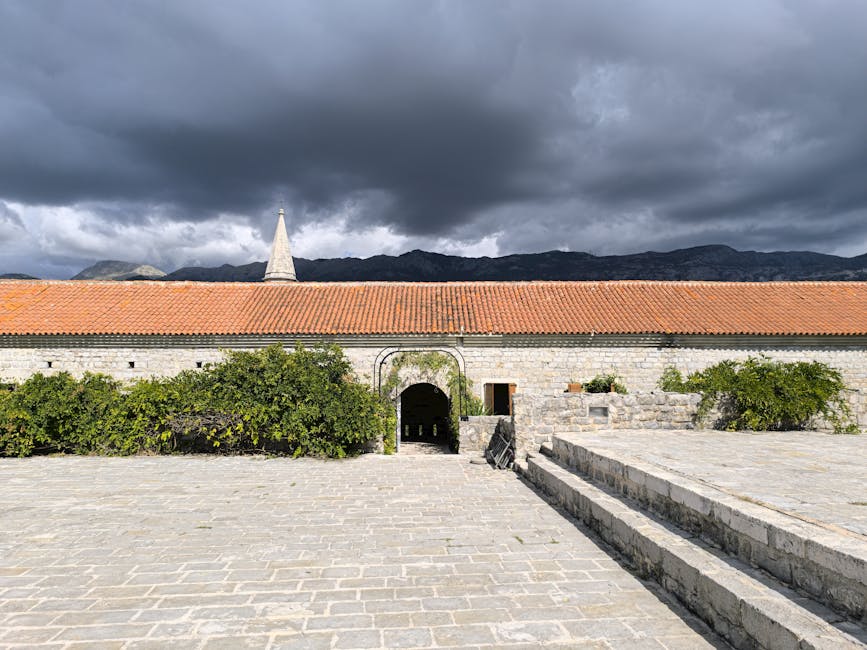 Easy
EasyBudva, Montenegro
Uncover 2,500 years of history in Budva, from Roman mosaics and ancient city gates to a 2,000-year-old olive tree on this self-guided walk.
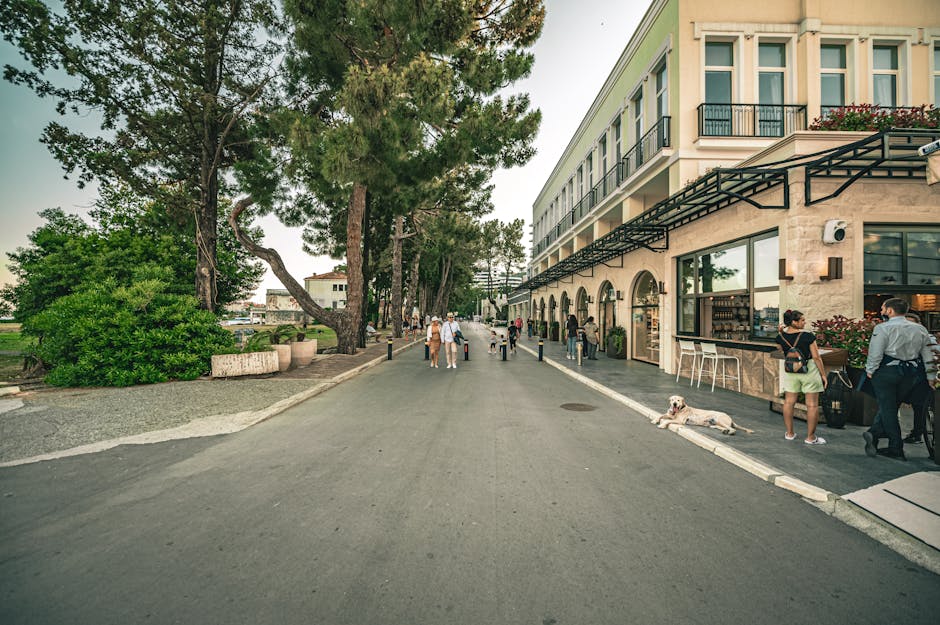 Moderate
Budva, Montenegro
Explore Budva’s spiritual heart on this self-guided walk from the Old Town’s Roman ruins to the serene hillside monasteries and panoramic viewpoints.
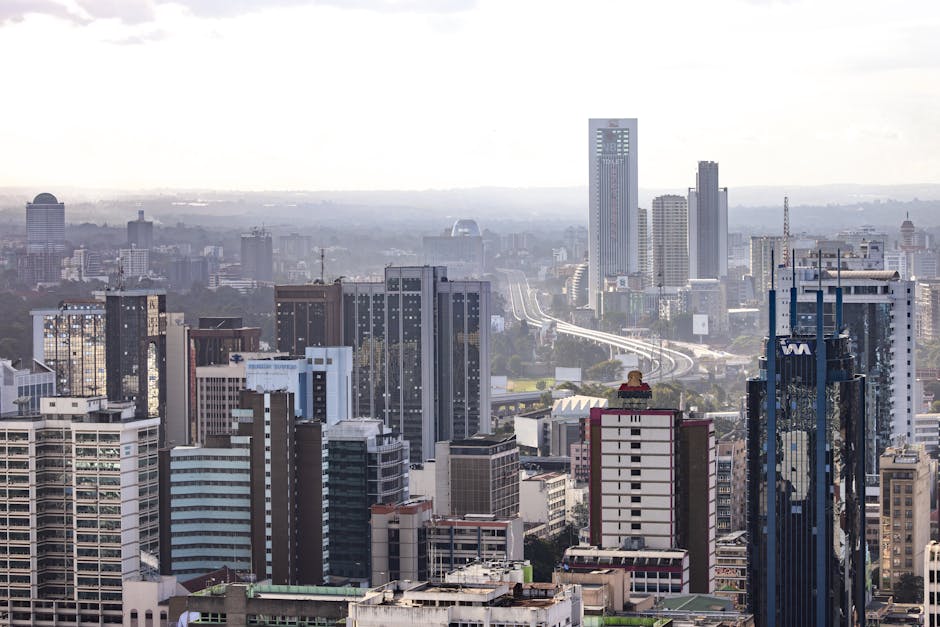 Easy
EasyNairobi, Kenya
Discover Nairobi's iconic skyline on this self-guided architecture walk through the CBD’s most famous modernist and Brutalist landmarks.
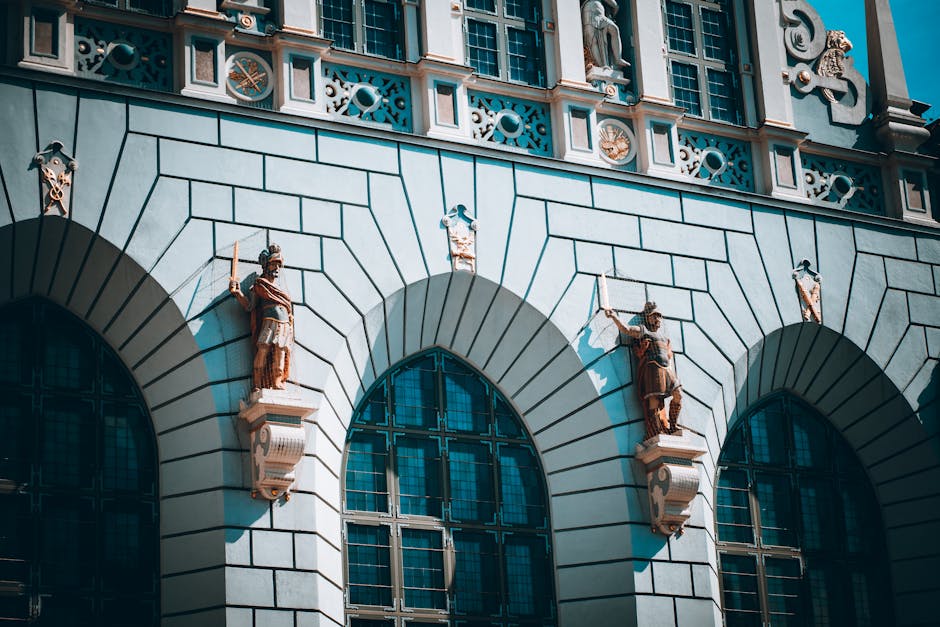 Easy
EasyGdansk, Poland
Discover the opulent Royal Way of Gdansk at your own pace. Explore Hanseatic history, gilded architecture, and the iconic Neptune's Fountain.
 Moderate
Gothenburg, Sweden
Discover Gothenburg’s maritime soul on this self-guided walk from the historic Central Station to the scenic riverfront at Stenpiren.
 Easy
EasyGothenburg, Sweden
Discover Gothenburg’s 17th-century Dutch foundations, historic canals, and military fortifications on this self-guided architectural walk.
 Easy
EasyKotor, Montenegro
Discover Kotor's medieval squares, Venetian palaces, and mountain fortresses on this self-guided audio walk through the historic Old Town.
 Easy
EasyKotor, Montenegro
Discover Kotor’s legendary seafaring past on this self-guided audio walk through the historic Old Town and the scenic harbor.
 Easy
EasyKotor, Montenegro
Discover Kotor’s hidden squares, Venetian bastions, and coastal paths on this flexible self-guided audio walk through the historic Old Town.
 Easy
EasyKotor, Montenegro
Explore Kotor's marble streets and meeting its famous feline residents on this charming self-guided stroll through Montenegro's cat-loving capital.