Self-guided audio tour in Kotor
Start Free on iPhone
Start free on iPhone to unlock this self-guided walking tour in Kotor. Hear all the stories that make it amazing, walk at your own pace, and begin whenever you want.
Your Private Tour Guide
Nestled between the limestone cliffs of Mount Lovćen and the sapphire waters of the Adriatic, the UNESCO-listed Old Town of Kotor is a labyrinth of medieval secrets. This self-guided walk offers a perfect introduction to the 'Gateway to the Gulf,' leading you through narrow alleys and sun-drenched squares that have remained largely unchanged for centuries. As you explore independently, you will witness the architectural legacy of the Venetian Republic, which ruled this fortified city for nearly four hundred years, leaving behind elegant palaces and sturdy stone walls. The route begins in the heart of the social scene at the Karampana Well, where for centuries, the town’s residents gathered to exchange news and water. From there, you will navigate toward the aristocratic Bizanti and Beskuca Palaces, each telling a story of wealth, resilience, and the occasional touch of irony—such as the 'homeless' family living in a mansion. This walking route Kotor provides isn't just about the grand structures; it's about the texture of the stone under your feet and the laundry hanging between green-shuttered windows. You will stand beneath the iconic Clock Tower, the city's primary timekeeper since the 17th century, and pass through the Sea Gate, the main portal that has welcomed sailors and merchants for generations. The journey concludes at the magnificent Saint Tryphon Cathedral, a Romanesque masterpiece that predates many of Europe's most famous cathedrals. Whether you are a fan of maritime history or simply want to soak in the atmosphere of a living museum, this audio walk allows you to discover the charm of Kotor at your own pace, away from the constraints of a rigid schedule. It is an essential experience for anyone looking to understand why this Montenegrin jewel is considered one of the best-preserved medieval towns in the Mediterranean. This self-guided walking tour Kotor experience ensures you don't miss the hidden details that make the city unique.
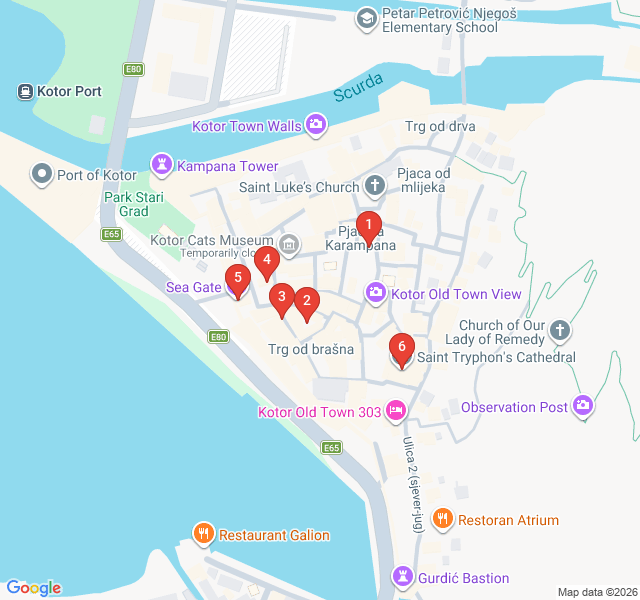
Numbers indicate the order of stops on the tour.
Welcome to the heart of Kotor's social history. The Karampana Well was once the town's only source of fresh water, making it the natural meeting point for residents. In the days before social media, this was where the 'news' was shared—often in the form of lively gossip. The wrought-iron structure you see today dates back to the Baroque period, specifically the 17th and 18th centuries. As you stand here, imagine the clatter of buckets and the voices of women from centuries past. The well remains a symbol of community life, situated in a square that still hums with the energy of local cafes and passing travelers.
As you move through the streets, you will encounter the Bizanti Palace, a testament to the city's aristocratic past. Built in the 14th century, this palace has been reshaped by the forces of nature, most notably the great earthquake of 1667. Following the disaster, it was reconstructed in the Baroque style, though elements of its original Renaissance character remain visible. Look up at the windows and the family crest; the Bizanti family was one of the most influential in Kotor, producing many notable sailors and scholars. The palace's internal courtyard and staircase are classic examples of the elegant urban planning favored by the Venetian administration.
The Beskuca Palace features one of the most beautiful Gothic portals in the entire Adriatic. Built in 1776, the palace belonged to the Beskuca family. The name 'Beskuca' literally translates to 'homeless.' Legend says the family started with nothing and vowed to build a hundred houses to prove their success. While they didn't quite reach a hundred, this grand residence certainly proves they were far from homeless. The ornate carvings around the doorway are a highlight of the city's stone masonry tradition. Take a moment to admire the intricate details of the family coat of arms, which ironically features a small house.
Standing tall in the Main Square, the Clock Tower has been the city's heartbeat since 1602. It is a curious mix of styles, blending Baroque and Renaissance elements. If you look closely, you might notice the tower leans slightly to one side—a result of the massive 1979 earthquake. Beneath the tower sits a small stone pyramid known as the Pillar of Shame. In medieval times, criminals were placed here so that the entire town could witness their disgrace. Today, it is a much more peaceful spot, serving as a landmark for those beginning their exploration of the town's winding interior.
The Sea Gate is the primary entrance to Kotor, built in 1555 during the Venetian period. As you pass through the thick stone walls, look up to see the winged Lion of Saint Mark, the symbol of Venice, which signifies Kotor's long history under the Republic. Above the gate, you will also see an inscription from 1944, commemorating the city's liberation from Nazi occupation during World War II, along with a quote from Josip Broz Tito. This gate has served as a transition point between the maritime world of the bay and the sheltered sanctuary of the city for nearly five centuries.
Our walk concludes at the Saint Tryphon Cathedral, the most iconic landmark in Kotor. Consecrated in 1166, this Romanesque cathedral is much older than many famous European landmarks, including Notre Dame in Paris. It was built to house the relics of Saint Tryphon, the city's patron saint, which were brought here from Constantinople in the 9th century. Inside, the silver bas-relief altar and the collection of gold artifacts are breathtaking. The two towers are actually different heights; after an earthquake destroyed the original towers, the city lacked the funds to complete both with the same level of ornamentation, resulting in the unique silhouette you see today.
Start Free on iPhone
Explore “Gateway to the Gulf: First Impressions” with your very own Private Tour Guide with Zigway. Start free on iPhone, skip the large group and the fixed routes, and hear the city come alive as you go.
Your Private Tour Guide
Don't miss the good stuff
Explore Freely
 Easy
EasyKotor, Montenegro
Discover Kotor's medieval squares, Venetian palaces, and mountain fortresses on this self-guided audio walk through the historic Old Town.
 Easy
EasyKotor, Montenegro
Discover Kotor’s legendary seafaring past on this self-guided audio walk through the historic Old Town and the scenic harbor.
 Easy
EasyKotor, Montenegro
Discover Kotor’s hidden squares, Venetian bastions, and coastal paths on this flexible self-guided audio walk through the historic Old Town.
 Easy
EasyKotor, Montenegro
Explore Kotor's marble streets and meeting its famous feline residents on this charming self-guided stroll through Montenegro's cat-loving capital.
 Easy
EasyWarsaw, Poland
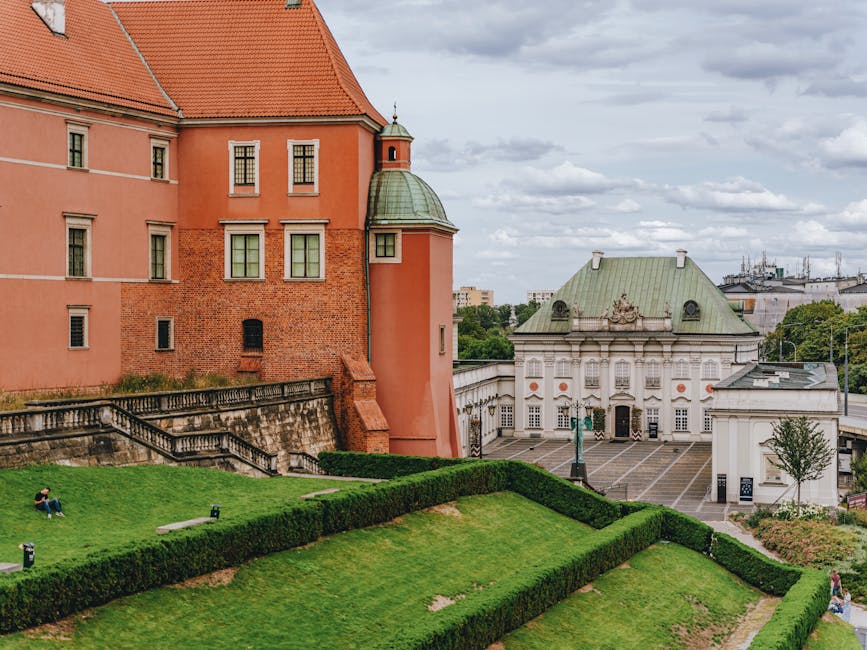
Explore the miracle of Warsaw's reconstructed Old Town on this self-guided walk through royal squares, medieval walls, and heroic monuments.
 Easy
EasyGothenburg, Sweden
Discover Gothenburg’s 17th-century Dutch foundations, historic canals, and military fortifications on this self-guided architectural walk.
 Easy
EasyNairobi, Kenya
Explore the history of Kenya’s independence through the statues, monuments, and parks that define Nairobi’s political heart on this self-guided walk.
 Easy
EasyNairobi, Kenya
Discover Nairobi's iconic skyline on this self-guided architecture walk through the CBD’s most famous modernist and Brutalist landmarks.
 Moderate
Budva, Montenegro
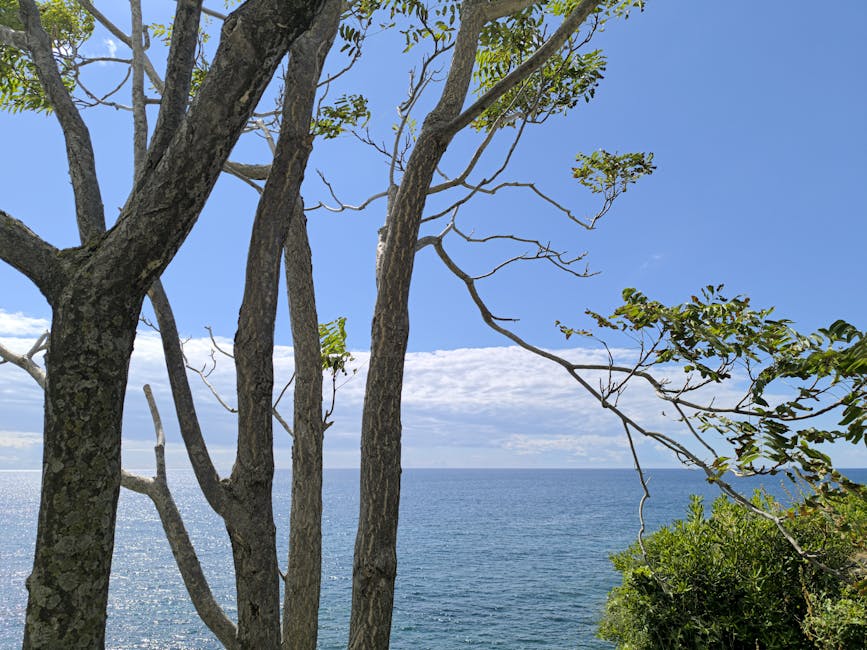
Discover Budva's hidden parks, panoramic hill views, and the stunning 'Hawaii of Montenegro' island on this refreshing self-guided audio walk.
 Moderate
Budva, Montenegro
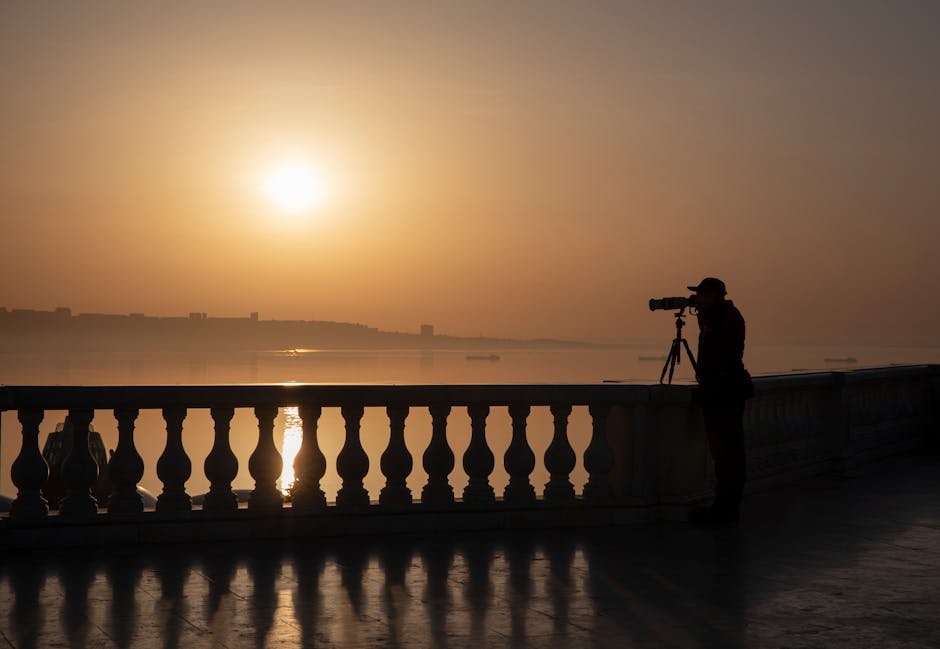
Capture Budva’s most breathtaking vistas on this self-guided audio walk through historic fortresses and scenic mountain paths at sunset.
 Easy
EasyBudva, Montenegro
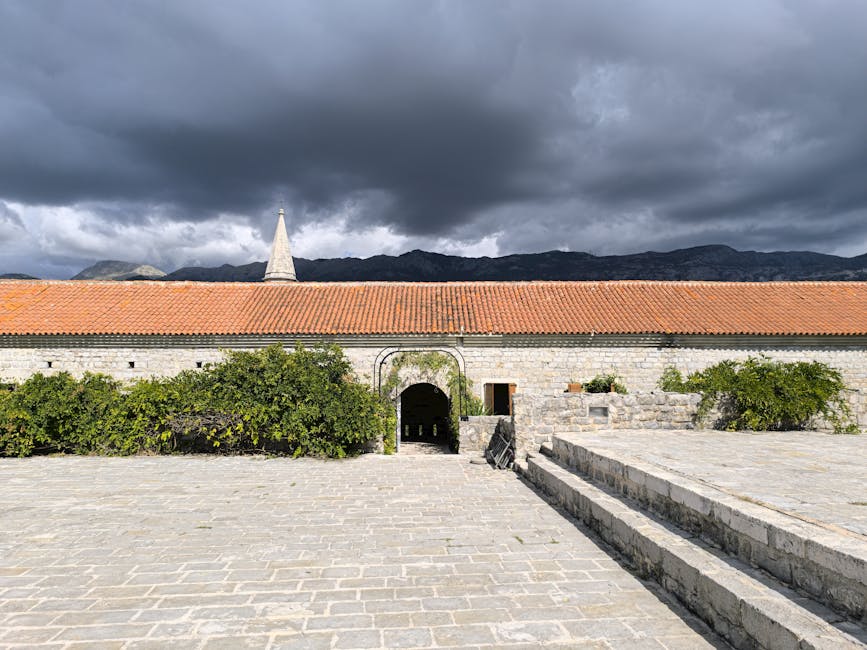
Uncover 2,500 years of history in Budva, from Roman mosaics and ancient city gates to a 2,000-year-old olive tree on this self-guided walk.
 Moderate
Budva, Montenegro
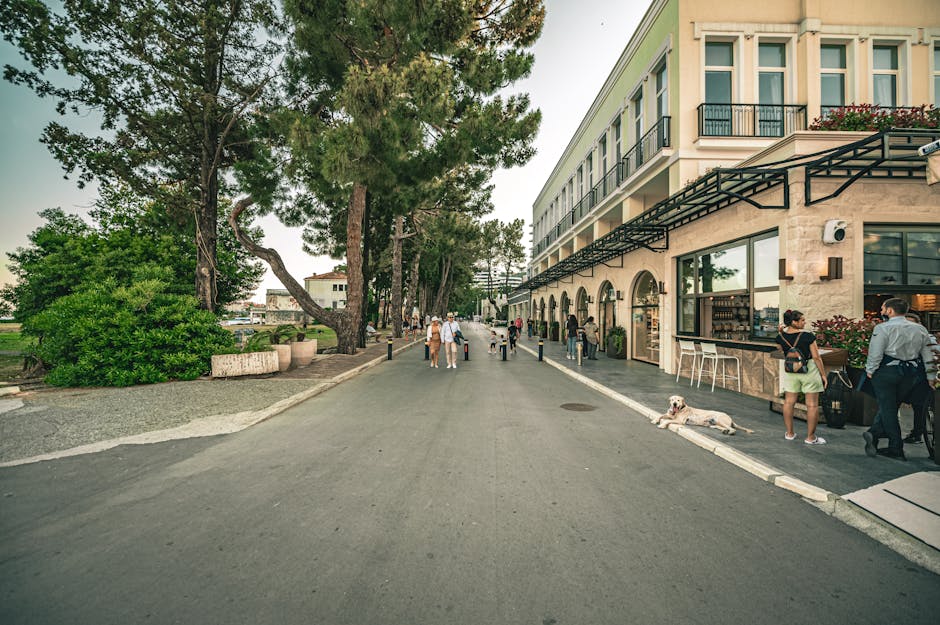
Explore Budva’s spiritual heart on this self-guided walk from the Old Town’s Roman ruins to the serene hillside monasteries and panoramic viewpoints.