Self-guided audio tour in Madrid
Start Free on iPhone
Start free on iPhone to unlock this self-guided walking tour in Madrid. Hear all the stories that make it amazing, walk at your own pace, and begin whenever you want.
Your Private Tour Guide
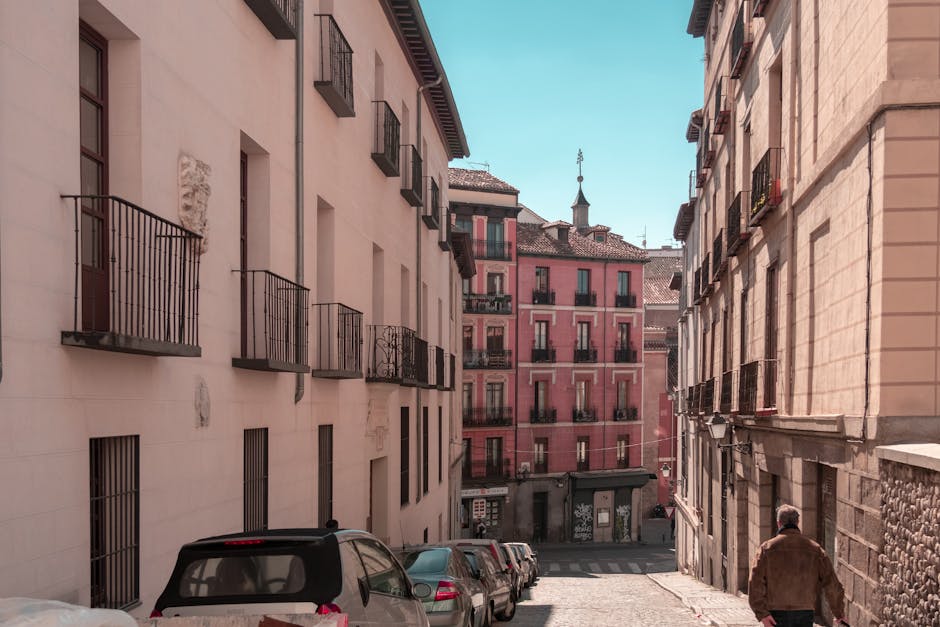
Step away from the crowded plazas of the city center and discover Chamberí, a district that captures the refined elegance and architectural ambition of early 20th-century Madrid. This self-guided walk leads you through a neighborhood where aristocratic mansions meet avant-garde design, revealing a side of the Spanish capital often missed by the average traveler. Chamberí was the playground for the visionary architect Antonio Palacios and the home of the 'Painter of Light,' Joaquín Sorolla. On this route, you will uncover the city’s 'ghost' history and see how old-world charm blends seamlessly with modern Madrileño life. The journey begins at the Palacio de Longoria, a rare and swirling masterpiece of Modernista architecture that feels more like Barcelona than Madrid. From there, the walking route Madrid transitions into the subterranean past at Andén 0, a preserved 1919 metro station that serves as a time capsule of the city's industrial heritage. As you wander through the leafy streets, you will encounter sun-drenched plazas like Olavide, where locals gather for 'la hora del vermut,' and quiet gardens that offer a peaceful respite from the urban buzz. This neighborhood stroll is designed for those who appreciate the finer details—from the intricate tile work on Neo-Mudéjar facades to the historical significance of international cultural exchanges. It is an exploration of the 'Golden Age' of Spanish urbanism, providing a comprehensive look at how the city expanded and modernized without losing its soul. By the time you reach the final stop, you will have experienced the artistic legacy and the hidden-gems that make Chamberí one of the most prestigious and atmospheric districts in the city. This self-guided adventure allows you to move at your own pace, ensuring you have plenty of time to soak in the light and the legends of this unique corner of Madrid.
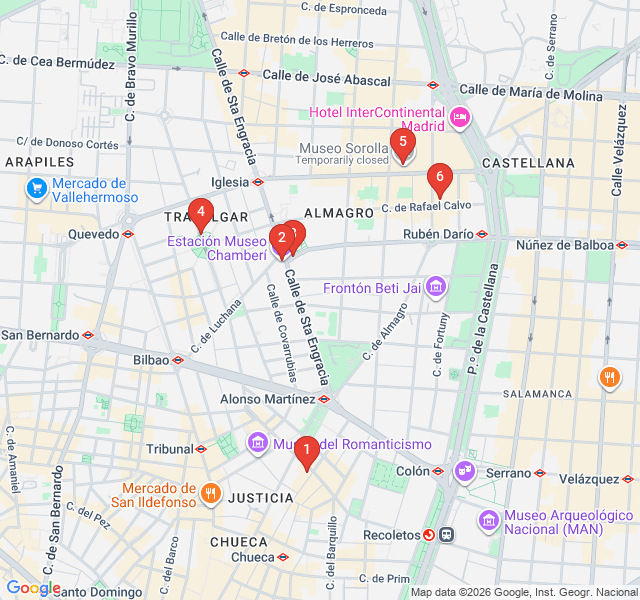
Numbers indicate the order of stops on the tour.
Start your journey at one of Madrid’s most eye-catching buildings. Built in 1902 by architect José Grases Riera, this is one of the few examples of pure Modernista architecture in the city—a style more commonly associated with Gaudí’s Barcelona. Notice the organic, flowing lines of the stone and the intricate ironwork that looks like frosting on a wedding cake. Originally built as a private residence and office for financier Javier González Longoria, it now serves as the headquarters for the Spanish Society of Authors and Publishers (SGAE). Its highly decorative, swirling facade marked a departure from the more rigid, classical styles that dominated Madrid at the turn of the century.
Descend into the past at what locals call the 'Ghost Station.' Opened in 1919 as part of Madrid's very first metro line, this station was designed by the legendary Antonio Palacios. When the metro lines were expanded in the 1960s to accommodate longer trains, the platforms here couldn't be lengthened due to the curve of the tracks, so the station was closed in 1966. It sat abandoned for decades until it was meticulously restored and reopened as a museum. Today, you can see the original ticket booths, ceramic tile advertisements from the 1920s, and the vintage signage, offering a hauntingly beautiful glimpse into early 20th-century transit.
This plaza serves as the civic heart of the neighborhood. The large building dominating the square is the Junta Municipal de Chamberí, an elegant structure that reflects the district's mid-19th-century origins when it was developed as an expansion of the city. The square is a perfect example of the Neo-Mudéjar style, characterized by the use of red brick and geometric patterns inspired by Spain's Moorish past. Take a moment to observe the local life here—families under the trees and residents visiting the nearby market—showing why Chamberí is considered one of the most liveable and traditional neighborhoods in Madrid.
Walk toward this unique octagonal plaza, a favorite haunt for locals. Until the 1970s, this space was occupied by a large covered market. Today, it is a bustling pedestrian zone filled with terrace cafes and fountains. The layout is unusual for Madrid, creating a circular hub of social activity. It is the perfect place to experience 'terrace culture.' As you circle the plaza, look up at the residential architecture; these buildings represent the transition into more modern, functional living spaces for the middle class during the mid-20th century. It remains one of the most vibrant social centers in the Chamberí district.
Enter the former home and studio of Joaquín Sorolla, the 'Painter of Light.' This is arguably one of the most charming museums in Europe. Sorolla designed the house himself, and it remains much as it was when he lived here until his death in 1923. The museum houses a massive collection of his vibrant, sun-drenched paintings, but the house itself is a work of art. Don't miss the gardens, which Sorolla inspired by the Moorish courtyards of the Alcázar in Seville and the Alhambra in Granada. The sound of running water and the scent of jasmine make this a peaceful sanctuary within the city.
Conclude your walk at this historic mansion, which represents the long-standing cultural link between Spain and the United States. Founded in the late 19th century to promote the education of Spanish women, the institute moved into this beautiful building in 1906. The architecture is a fine example of the high-end residential style that once lined these boulevards. It has hosted countless intellectuals and artists over the last century. Today, it continues to serve as a center for language and cultural exchange, maintaining the intellectual and cosmopolitan spirit that has defined the Chamberí neighborhood for generations.
Start Free on iPhone
Explore “Chamberí’s Modernist Gems and Ghost Stations” with your very own Private Tour Guide with Zigway. Start free on iPhone, skip the large group and the fixed routes, and hear the city come alive as you go.
Your Private Tour Guide
Don't miss the good stuff
Explore Freely
 Easy
EasyMadrid, Spain
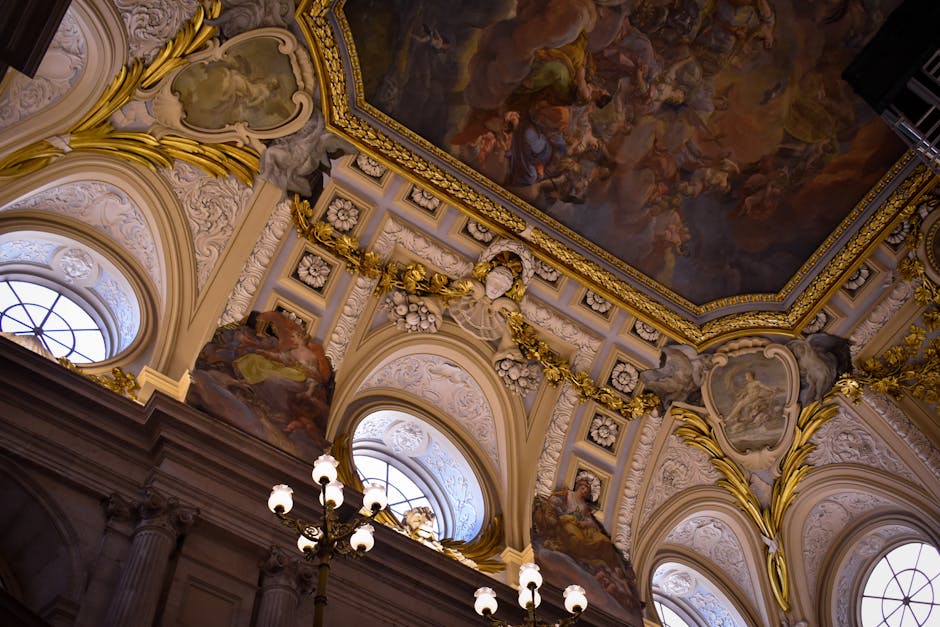
Explore Madrid's 'Landscape of Light' on this self-guided walk through the world-renowned Golden Triangle of Art, from Cibeles to the Reina Sofía.
 Moderate
Madrid, Spain
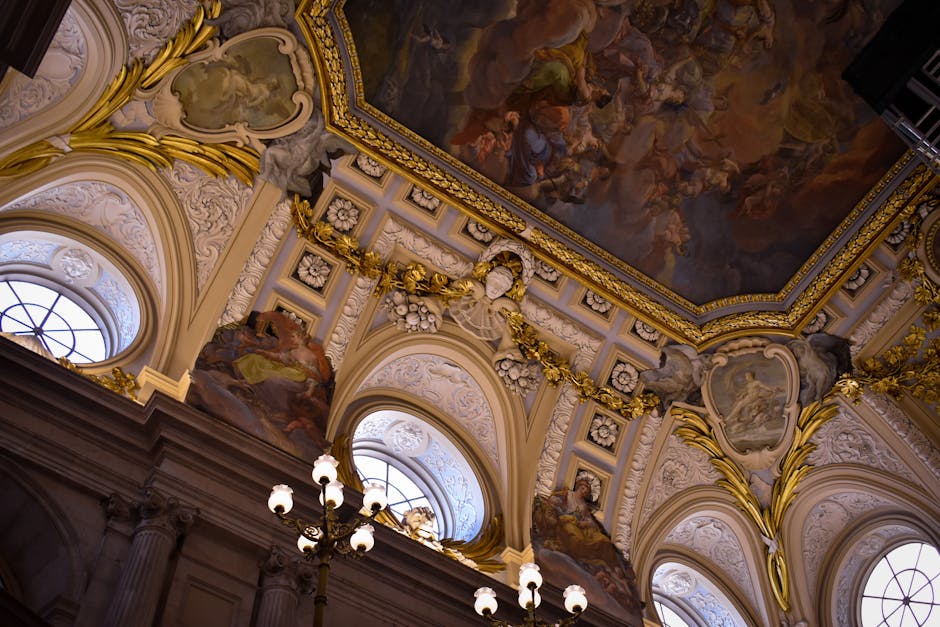
Explore Madrid's most diverse neighborhood on this self-guided walk through street art, historic markets, and multicultural squares.
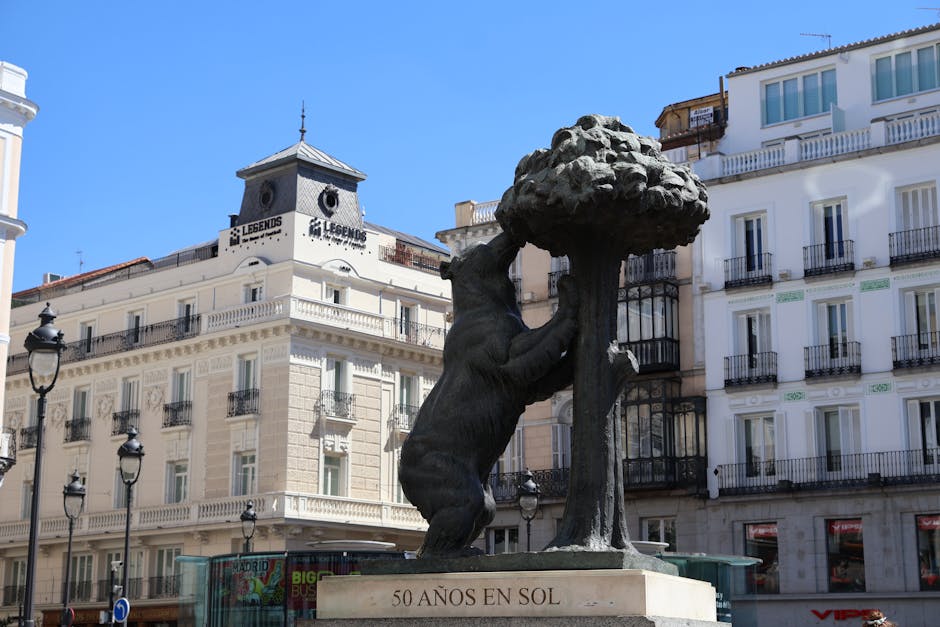 Easy
EasyMadrid, Spain
Explore the royal legacy and medieval alleys of Madrid's historic Habsburg district on this immersive self-guided walk through the city's heart.
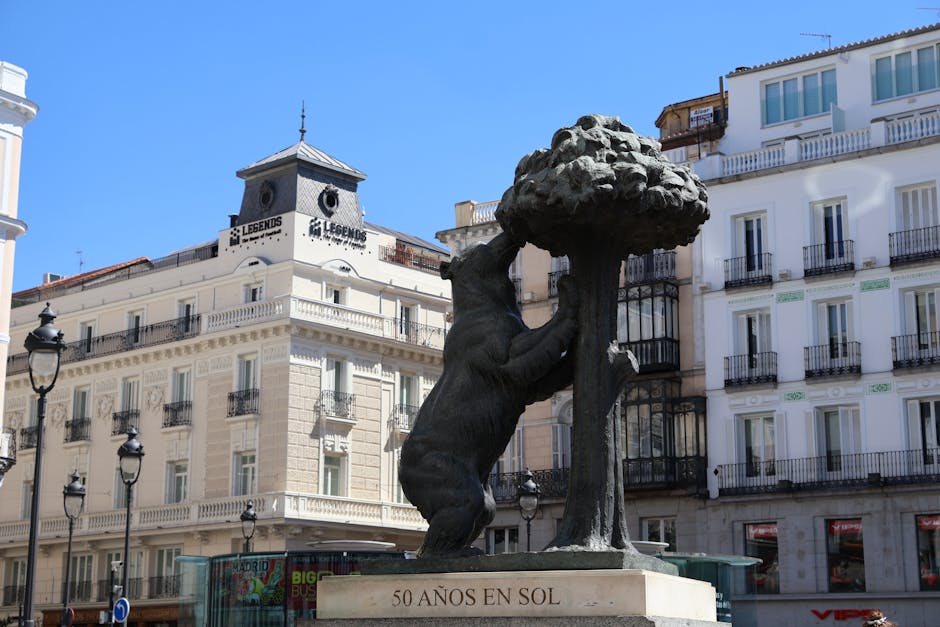 Easy
EasyMadrid, Spain
Discover the rebellious spirit of Malasaña on this self-guided walk through Madrid's best street art, historic squares, and counter-culture hubs.
 Easy
EasyGothenburg, Sweden
Explore Gothenburg's elegant academic district, featuring grand 19th-century stone architecture and the iconic cultural hub of Götaplatsen.
 Easy
EasyKrakow, Poland
Explore the prestigious Jagiellonian University district, featuring Neo-Gothic architecture, Baroque churches, and Krakow's hidden scholarly gems.
 Easy
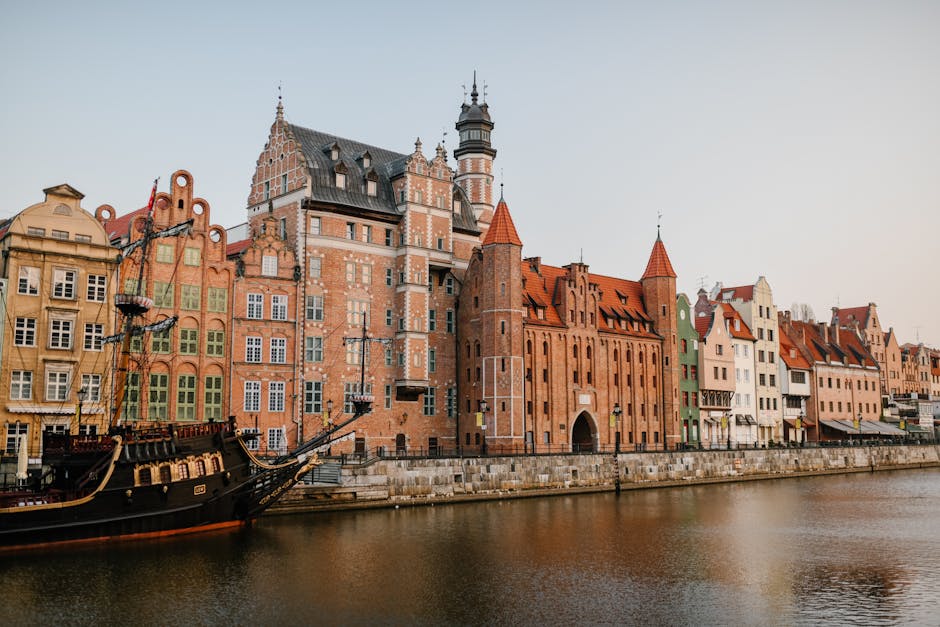
EasyGdansk, Poland
Discover the 'Baltic Gold' on this self-guided walk through Gdansk's historic mills, massive cathedrals, and the magical Mariacka Street.
 Easy
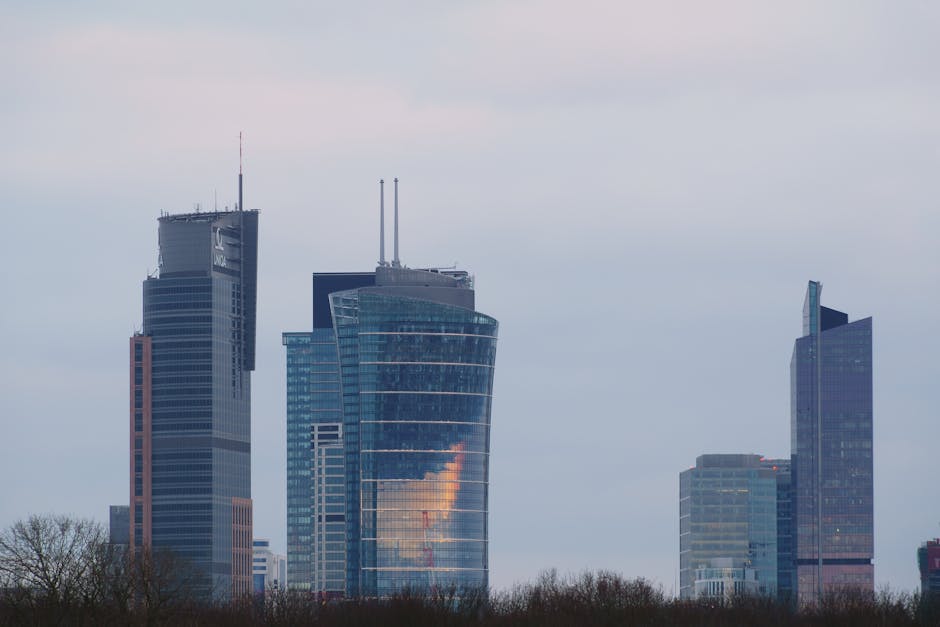
EasyWarsaw, Poland
Discover the hidden courtyards and grand pre-war architecture of Warsaw's most atmospheric neighborhood on this self-guided stroll.
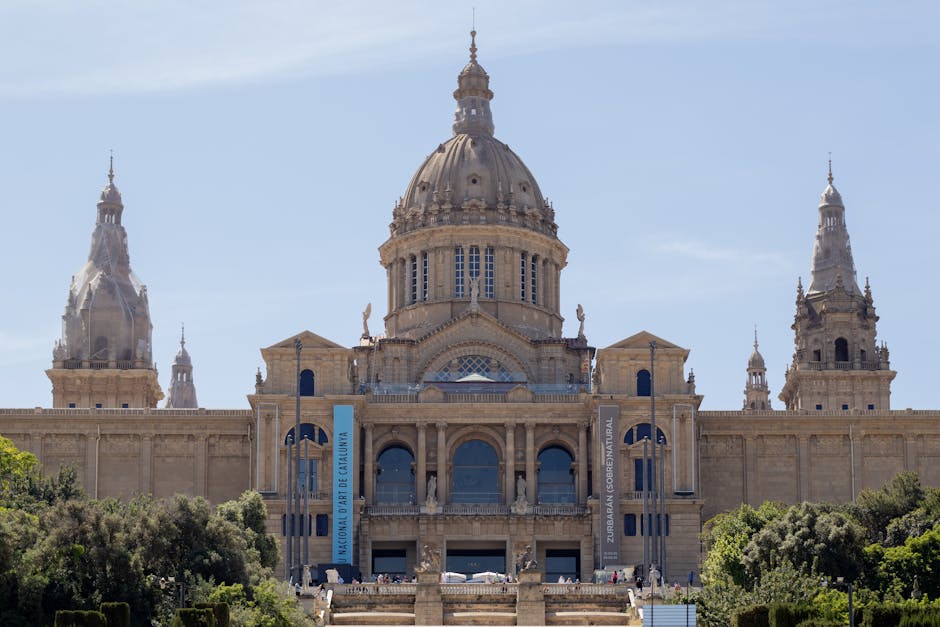 Moderate
Barcelona, Spain
Explore the elegant 'village' of Sarrià, where Gothic monasteries and Gaudí's hidden gems meet charming local markets and narrow streets.
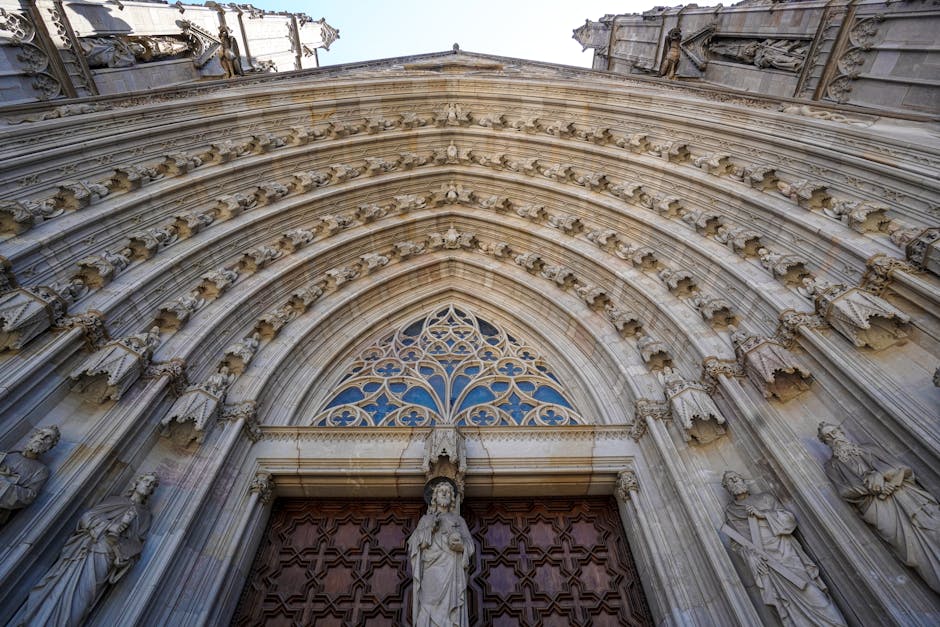 Moderate
Barcelona, Spain
Discover the revolutionary history and haunting scars of the Spanish Civil War on this self-guided walk through Barcelona's historic streets.
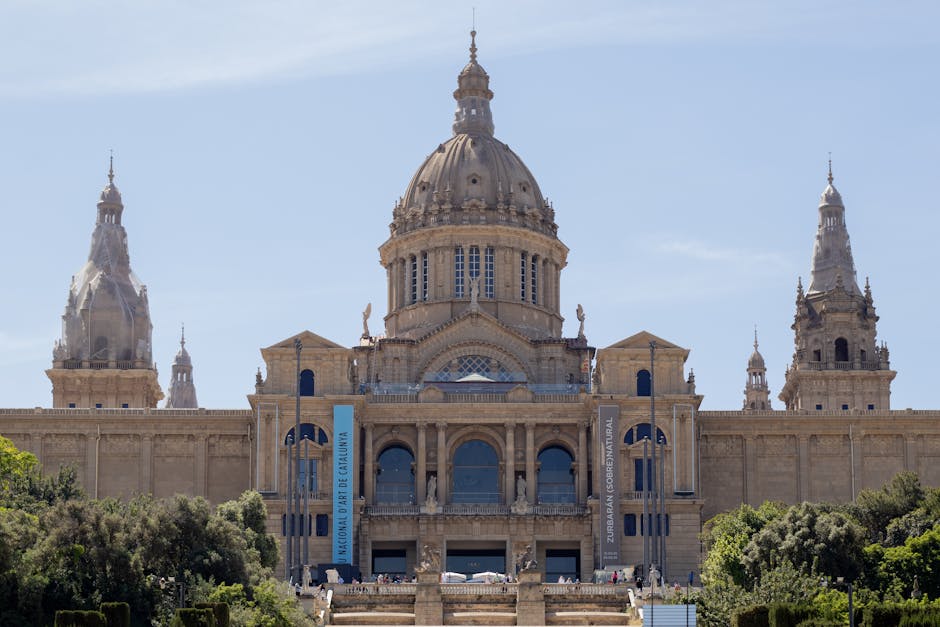 Easy
EasyBarcelona, Spain
Discover the architectural wonders of Barcelona's Golden Square on this self-guided stroll through Eixample's most luxurious Modernista streets.
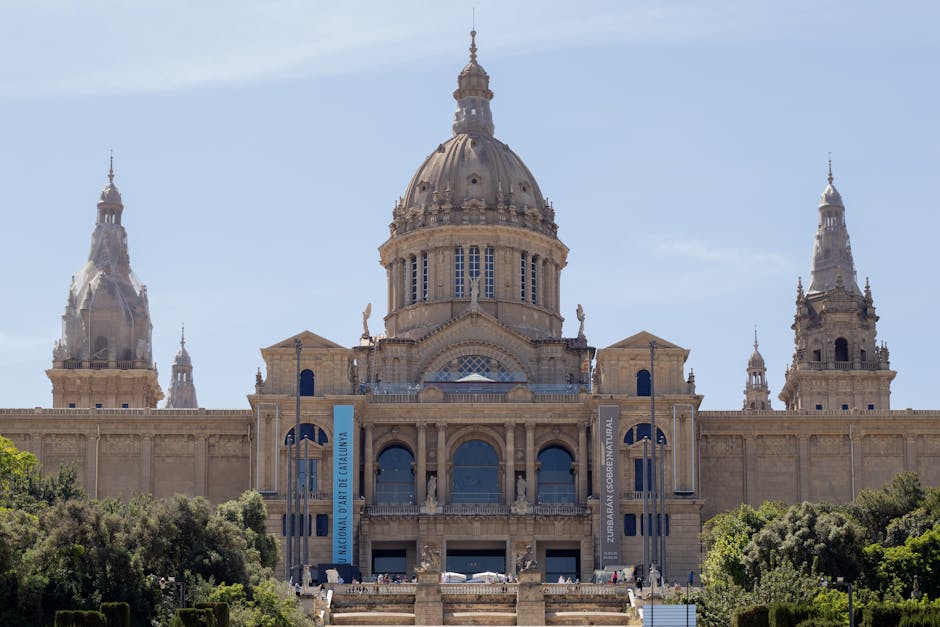 Challenging
Barcelona, Spain
Explore Montjuïc’s lush gardens, historic fortress, and iconic Olympic venues on this scenic self-guided walk with panoramic Mediterranean views.