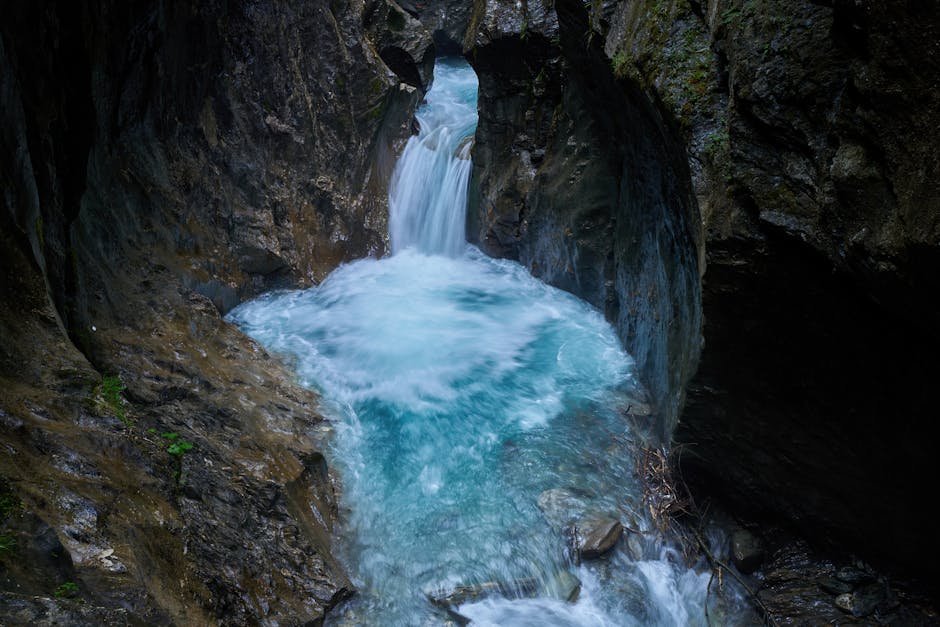
Self-guided audio tour in Salzburg
Start Free on iPhone
Start free on iPhone to unlock this self-guided walking tour in Salzburg. Hear all the stories that make it amazing, walk at your own pace, and begin whenever you want.
Your Private Tour Guide
Salzburg is world-renowned for its grand baroque domes and the melodies of Mozart, but beneath the surface of the Altstadt lies a labyrinth of secrets waiting to be discovered by those who look closer. This neighborhood stroll takes you away from the crowded thoroughfares and into the 'Durchhäuser'—the medieval cut-through houses that form a unique network of passageways and courtyards. These hidden arteries were once vital for merchants and local residents, and today they offer a tranquil escape into the city's storied past. On this self-guided adventure, you will explore the narrowest alleys of the Goldgasse, find quiet respite in the ancient cemetery of St. Peter, and see where the medieval city meets its Roman foundations. Unlike a traditional walking tour Salzburg visitors might expect, this route emphasizes the architectural quirks and local legends that define the city's character. You will start at the historic Waagplatz, once the site of the municipal weighing scales, before navigating the curved Goldgasse, where artisans have worked for centuries. One of the highlights is finding the Schatz-Konditorei, a legendary pastry shop tucked away inside a nondescript building passage, proving that Salzburg’s best treasures are often hidden in plain sight. This walking route also leads you through the Alter Markt to see the smallest house in the city and culminates in the serene Sankt-Peter-Bezirk, one of the oldest monastic sites in the German-speaking world. By following this self-guided walk, you can explore at your own pace, stopping for a coffee in a courtyard or photographing the intricate wrought-iron signs that hang above the narrow lanes. It is an ideal way to experience the authentic atmosphere of the Altstadt without the pressure of a fixed schedule. Whether you are a first-time visitor or a returning traveler, these secret passages provide a new perspective on the UNESCO World Heritage site, revealing a city that is as much about its intimate, hidden corners as it is about its monumental squares.
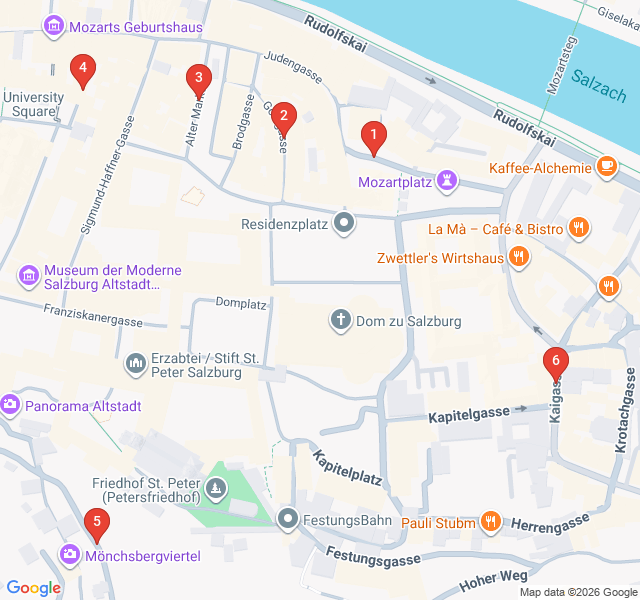
Numbers indicate the order of stops on the tour.
Welcome to Waagplatz, one of Salzburg's oldest squares. In the Middle Ages, this was the heart of the city's commerce. The square takes its name from the public scales, or 'Waag', that were once housed here. Every merchant entering the city had to have their goods weighed and taxed here before they could be sold. Look around and you’ll notice the buildings are huddled closely together, a characteristic of medieval urban planning. This square was also once the site of the city’s courthouse and tavern, making it a hub of both legal and social life for centuries. It serves as the perfect starting point to dive into the city's hidden network of alleys.
Step into the Goldgasse, a narrow, curving lane that feels like a journey back in time. This street was historically the home of goldsmiths, silversmiths, and other skilled craftsmen. If you look up, you will see the elaborate wrought-iron guild signs that indicated what was sold in each shop—a tradition from an era when many people were illiterate. The Goldgasse is also famous for its 'Durchhäuser'—look for the doorways that lead through the buildings to other streets. These passages were designed to provide shortcuts through the dense city blocks, and many still house small, independent boutiques and hidden workshops today.
The Alter Markt, or Old Market, has been the center of Salzburg’s civic life since the 13th century. While the grand fountain of St. Florian dominates the center, the real secrets are on the periphery. Look for house number 10b—it is the smallest house in Salzburg, measuring just over one meter wide. It was built in the mid-19th century to fill a tiny gap between two larger buildings. Also located here is the Hofapotheke, a pharmacy with a stunning historic interior that has been serving the city for centuries. This square perfectly illustrates how Salzburg manages to blend grand public spaces with quirky, small-scale architectural details.
To find the Schatz-Konditorei, you have to look for a passage leading off the main path. This is one of Salzburg’s most beloved traditional pastry shops, and its location inside a 'Durchhaus' makes it feel like a local secret. Founded in 1877, the shop has maintained its historic charm and original recipes. It is the perfect example of how the city’s passageways are not just shortcuts, but vibrant spaces for commerce and social life. The aroma of traditional Austrian cakes often wafts through the corridor, inviting passersby to step out of the flow of traffic and into a quieter, sweeter side of Salzburg history.
Enter the St. Peter's district, a place of profound peace and history. This monastery complex is the oldest in the German-speaking world, with roots stretching back to the 7th century. The cemetery here is world-famous, not just for its beauty, but for the 'catacombs' carved directly into the face of the Mönchsberg mountain. These early Christian hermitages overlook the graves of famous Salzburgers, including Mozart's sister, Nannerl. The courtyard of the abbey feels like a city within a city, featuring its own bakery powered by a waterwheel that has been grinding grain for over 800 years. It is a masterclass in atmospheric historic preservation.
Our final stop is Kaigasse, a street that follows the curve of the Festungsberg mountain toward the castle. This area was once the heart of the Roman settlement of Juvavum. If you look closely at some of the building foundations, you are seeing stones that have been in place for nearly two millennia. During the Middle Ages, this was a prestigious address for cathedral canons and wealthy citizens. Today, it remains a charming thoroughfare filled with historic inns and quiet side-courts. It marks the transition from the bustling market center to the quieter residential quarters of the Old Town, concluding our exploration of Salzburg’s hidden layers.
Start Free on iPhone
Explore “Hidden Passageways and Secret Courtyards” with your very own Private Tour Guide with Zigway. Start free on iPhone, skip the large group and the fixed routes, and hear the city come alive as you go.
Your Private Tour Guide
Don't miss the good stuff
Explore Freely
 Easy
EasySalzburg, Austria
Discover the 'Rome of the North' on this self-guided walk through the Baroque squares and monumental legacy of Salzburg’s Prince-Archbishops.
 Easy
EasySalzburg, Austria
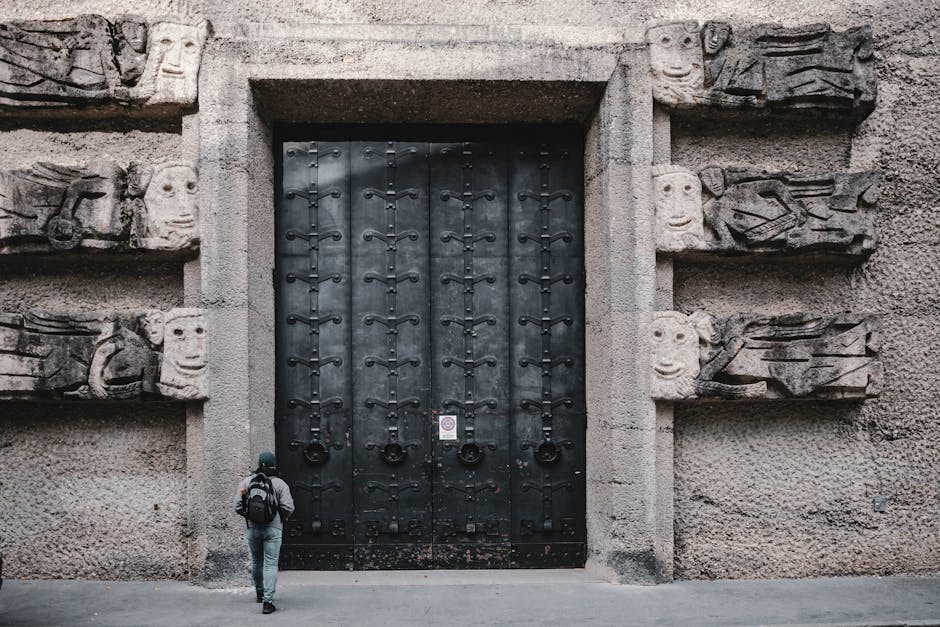
Discover Salzburg's oldest medieval alley, the birthplace of the 'Silent Night' author, and breathtaking views on this quiet self-guided walk.
 Easy
EasySalzburg, Austria
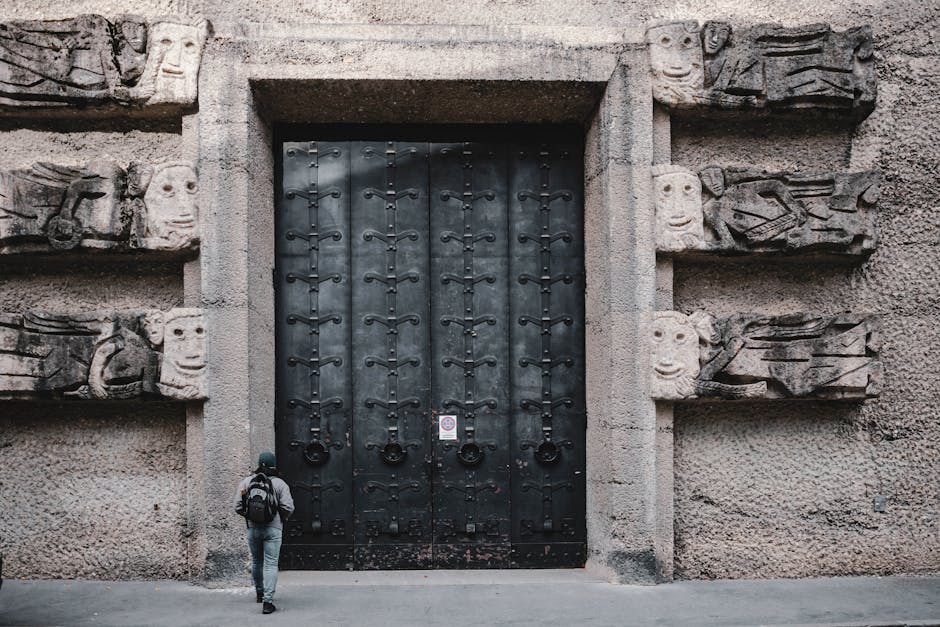
Walk through the iconic filming locations of The Sound of Music and discover the real history of the von Trapp family in Salzburg.
 Challenging
Salzburg, Austria
Scale the heights of Salzburg on this self-guided walk to the Hohensalzburg Fortress, exploring medieval walls and ancient monastic grounds.
 Easy
EasyWarsaw, Poland
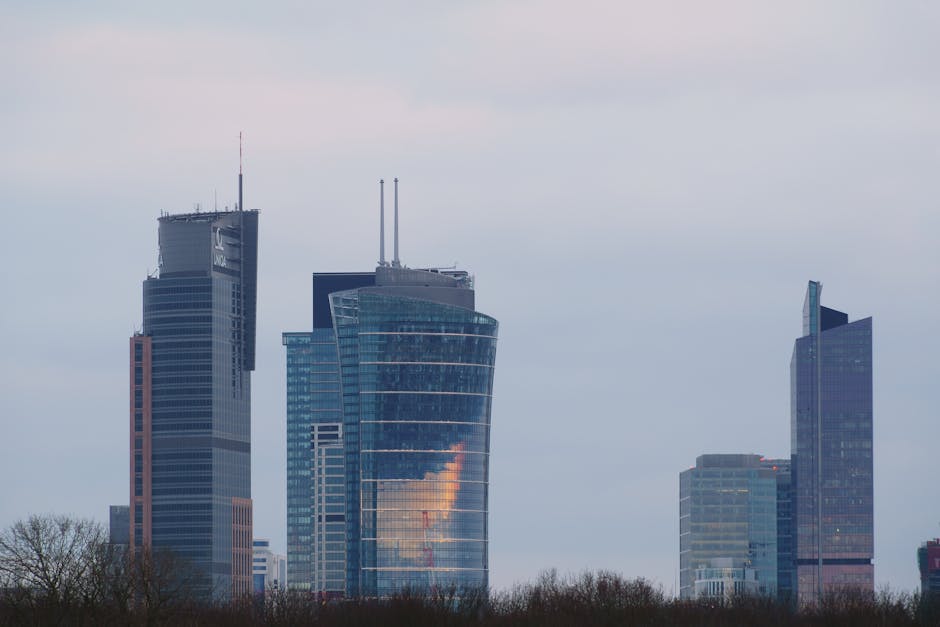
Discover the hidden courtyards and grand pre-war architecture of Warsaw's most atmospheric neighborhood on this self-guided stroll.
 Easy
EasyNairobi, Kenya
Discover Nairobi's iconic skyline on this self-guided architecture walk through the CBD’s most famous modernist and Brutalist landmarks.
 Easy
EasyKrakow, Poland
Explore the prestigious Jagiellonian University district, featuring Neo-Gothic architecture, Baroque churches, and Krakow's hidden scholarly gems.
 Easy
EasyNairobi, Kenya
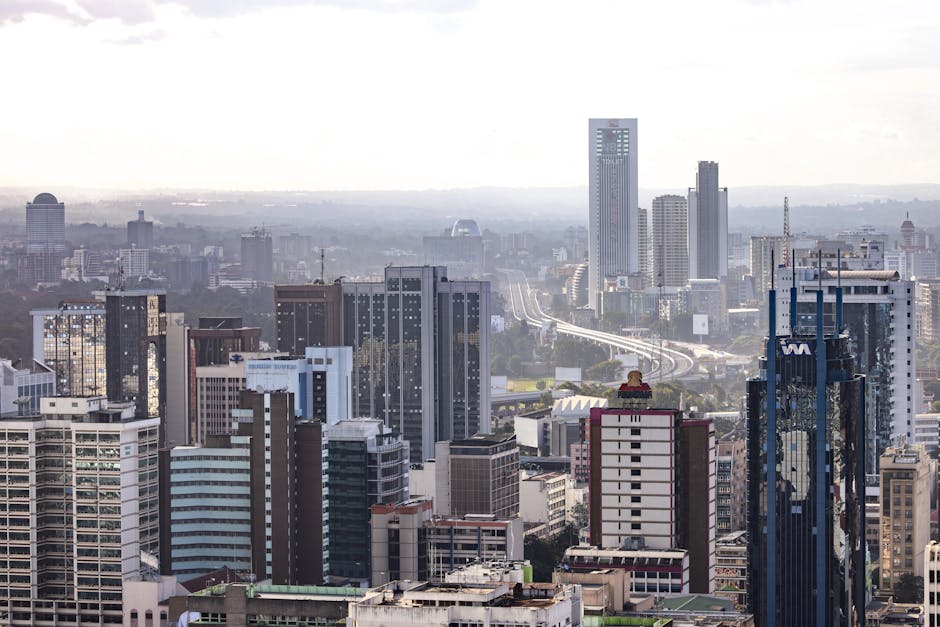
Explore Nairobi's architectural evolution from colonial-era landmarks to iconic Brutalist skyscrapers on this historic self-guided walking route.
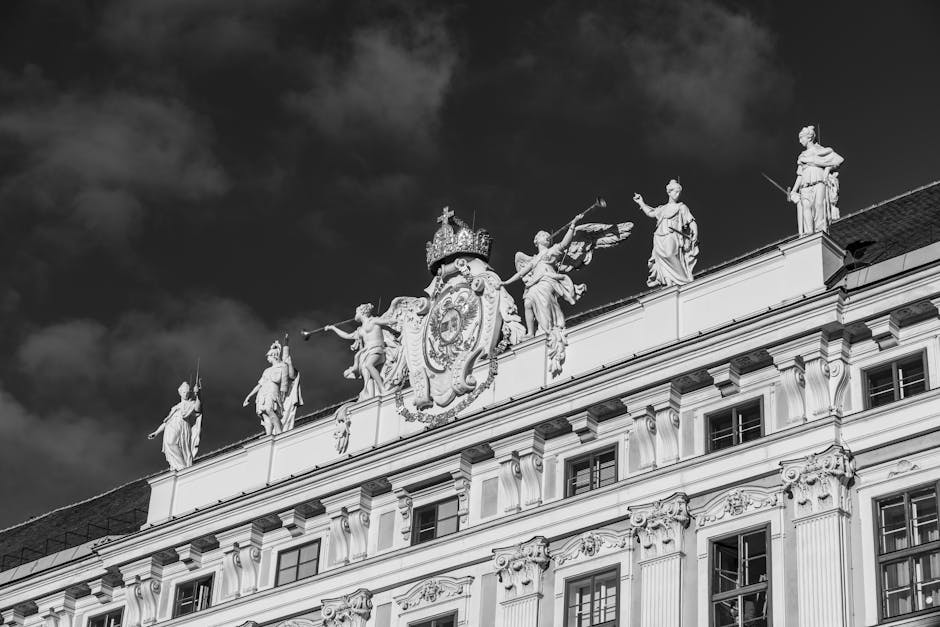 Easy
EasyVienna, Austria
Explore Vienna’s vibrant open-air gallery along the Danube Canal on this self-guided street art and nightlife stroll through Leopoldstadt.
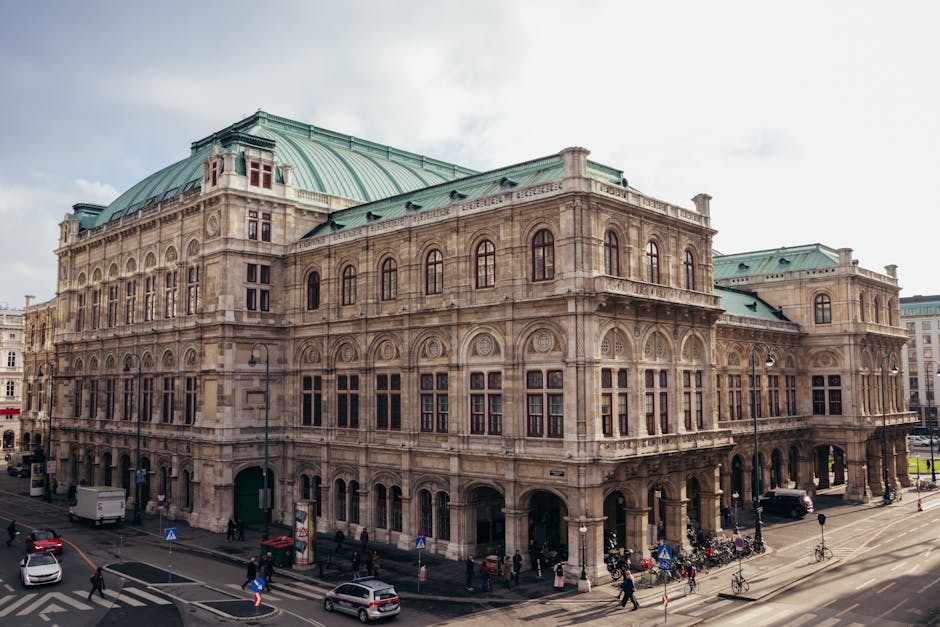 Moderate
Vienna, Austria
Follow the footsteps of Mozart and Strauss through Vienna’s historic center on this self-guided walk through the city's rich musical history.
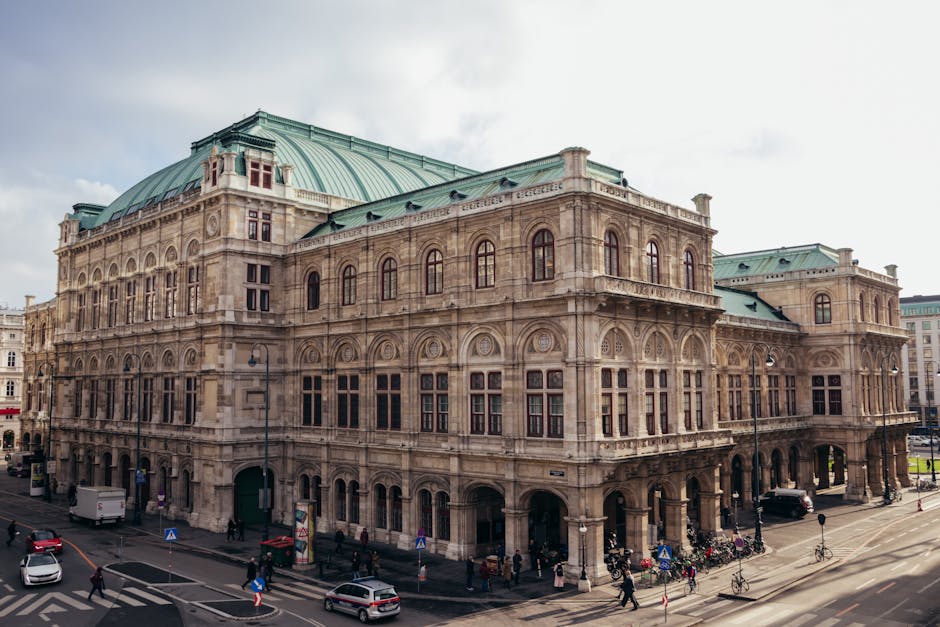 Moderate
Vienna, Austria
Discover the noir world of The Third Man and Cold War Vienna on this atmospheric self-guided audio walk through the historic Innere Stadt.
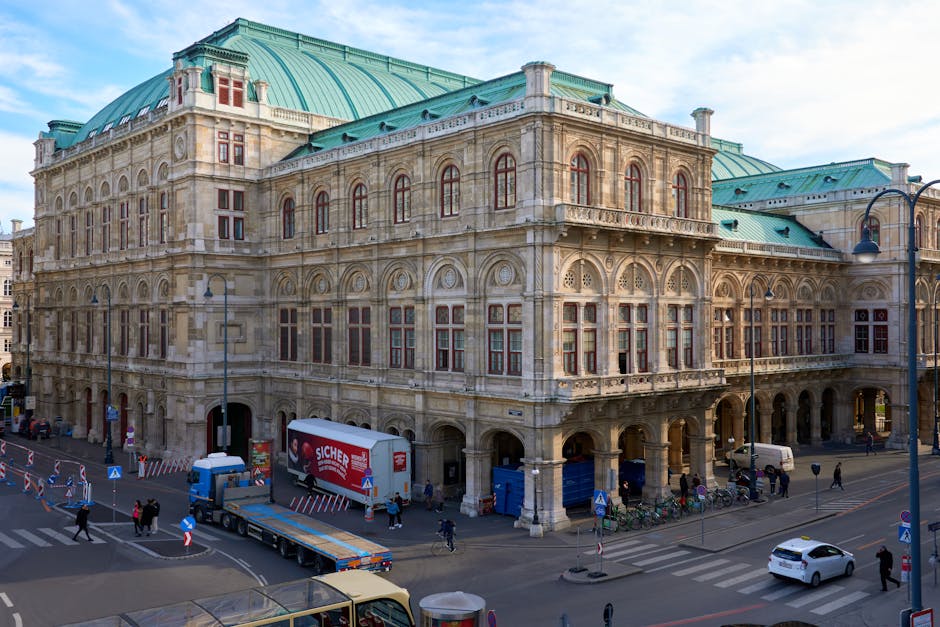 Easy
EasyVienna, Austria
Discover the literary haunts and architectural gems of Vienna's legendary coffee culture on this self-guided stroll through the historic city center.