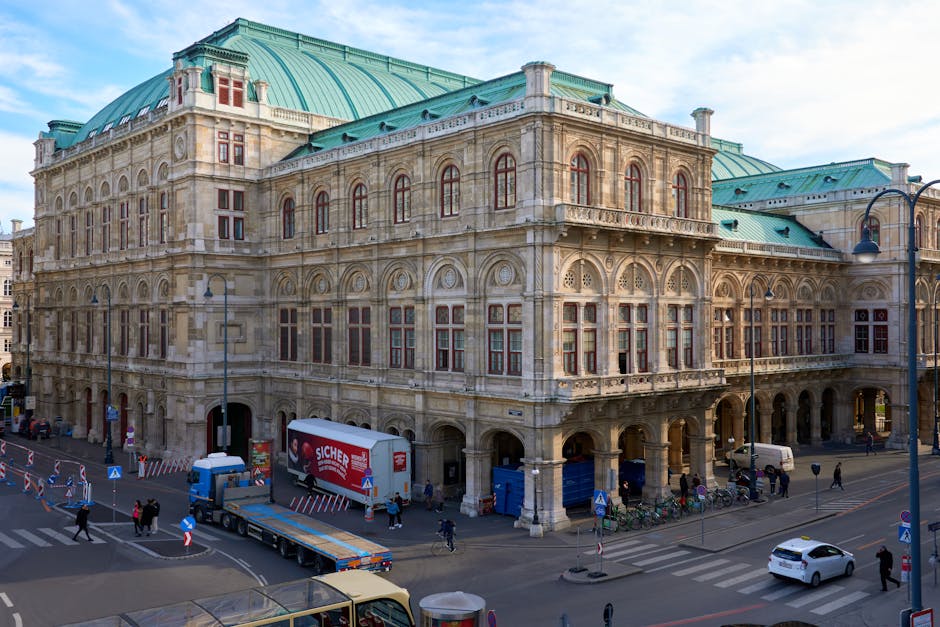
Self-guided audio tour in Vienna
Start Free on iPhone
Start free on iPhone to unlock this self-guided walking tour in Vienna. Hear all the stories that make it amazing, walk at your own pace, and begin whenever you want.
Your Private Tour Guide
Step into the 'living room' of Vienna with this self-guided walk through the city’s legendary coffee house culture. In Vienna, a coffee house is more than just a place to grab a drink; it is a cultural institution recognized by UNESCO as an Intangible Cultural Heritage. This neighborhood stroll through the Innere Stadt invites you to discover the places where intellectuals, artists, and revolutionaries once debated the future of the world over a single cup of 'mélange'. From the minimalist designs of Adolf Loos to the opulent neo-Renaissance halls of the Palais Ferstel, you will explore the architectural and social evolution of these historic spaces. This walking route highlights the diverse personalities of Vienna’s cafes, ranging from the aristocratic elegance of the Hotel Sacher to the bohemian grit of Café Hawelka. Along the way, you will learn about the strict etiquette of the 'Herr Ober' (the head waiter), the history of the world-famous Sacher Torte, and how the 1683 Siege of Vienna supposedly brought coffee to the city. Whether you are interested in the literary history of Peter Altenberg or the architectural shifts of the fin de siècle, this self-guided walk offers a deep dive into the heart of Viennese identity. Experience the city at your own pace, stopping for a pastry or simply soaking in the atmosphere of marble tables, Thonet chairs, and stacks of daily newspapers. This walking tour Vienna provides an authentic look at the social hubs that shaped modern psychology, art, and politics. By following this route, you can navigate the winding streets of the old city while uncovering the hidden stories behind the steam of a perfectly brewed coffee. It is an essential experience for any first-time visitor looking to understand the true spirit of the Austrian capital.
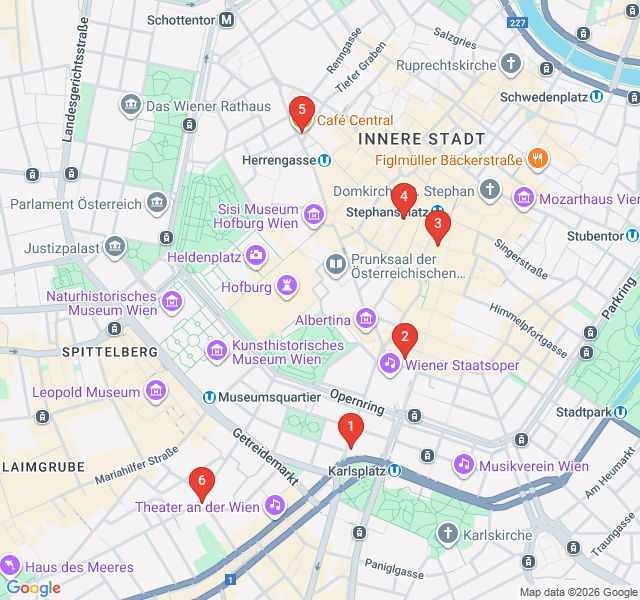
Numbers indicate the order of stops on the tour.
Start your self-guided adventure at Café Museum, a place once known as 'Café Nihilism.' When it opened in 1899, its interior was designed by the radical architect Adolf Loos. Unlike the plush, ornate cafes of the time, Loos opted for stark simplicity and functionalism, which shocked the Viennese public. Despite the initial controversy, it became the preferred meeting spot for the city's greatest avant-garde artists, including Gustav Klimt, Egon Schiele, and Oskar Kokoschka. As you stand here, imagine the intense artistic debates that took place under these very ceilings. While the interior has been renovated over the years, the spirit of intellectual modernism remains a cornerstone of this historic site.
A short walk takes you to the epitome of Viennese elegance: Café Sacher. Located within the Hotel Sacher, this cafe is world-renowned for the Original Sacher Torte, a dense chocolate cake with apricot jam created by Franz Sacher in 1832. This location represents the 'Imperial' side of coffee house culture, where the aristocracy and high society would gather after performances at the nearby State Opera. Notice the red damask walls and crystal chandeliers, which evoke the grandeur of the Habsburg era. The cafe was famously managed by Anna Sacher, a formidable woman known for smoking cigars and keeping French bulldogs, who turned the hotel into a global landmark.
Tucked away in a small side street is the Loos American Bar, a masterpiece of modern architecture. Also designed by Adolf Loos in 1908, this tiny space—only about 27 square meters—uses mirrors and rich materials like mahogany, leather, and onyx to create an illusion of depth and luxury. While it serves cocktails rather than coffee, it is an essential stop on this cultural route because it represents Vienna's embrace of international trends at the turn of the century. The coffered marble ceiling and the backlit onyx tiles above the entrance are hallmarks of Loos's rejection of superfluous decoration, focusing instead on the inherent beauty of the materials themselves.
Contrast the luxury of Sacher with the artistic grit of Café Hawelka. Opened by Leopold and Josefine Hawelka in 1939, this cafe became the heart of Vienna's bohemian life after World War II. It is famous for its dark, lived-in atmosphere, with posters of art exhibitions lining the walls and a faint scent of 'Buchteln'—sweet yeast rolls—in the air. For decades, Leopold would greet guests at the door while Josefine baked in the kitchen. It was a sanctuary for writers and actors who lived in small, cold apartments and needed a 'second living room' where they could stay all day for the price of one coffee. It remains one of the most authentic, unchanged spaces in the city.
Enter the breathtaking Palais Ferstel to find Café Central, perhaps the most famous 'literary cafe' in the world. In the early 20th century, this was the home of 'Centralists'—intellectuals like Peter Altenberg, who even had his mail delivered here. The soaring neo-Renaissance columns and vaulted ceilings once hosted figures such as Sigmund Freud, Leon Trotsky, and Vladimir Lenin. Legend has it that when a politician was told a revolution was breaking out in Russia, he scoffed, 'Who is going to make a revolution? Maybe Mr. Bronstein at Café Central?' referring to Trotsky. Today, it remains a majestic reminder of the intellectual ferment that defined Vienna 1900.
To conclude your journey, walk slightly out of the immediate center to Café Sperl. Founded in 1880, Sperl is often cited as the most beautiful coffee house in Vienna because it has preserved its original interior almost perfectly. With its parquet floors, marble tables, and historic billiard tables, it feels like stepping back into the 19th century. Unlike the more tourist-heavy spots, Sperl maintains a quiet, local dignity. It was a favorite of military officers from the nearby academy and remains a place where you can sit undisturbed with a newspaper for hours. It is the perfect spot to reflect on the enduring legacy of Viennese coffee house culture before ending your walk.
Start Free on iPhone
Explore “Caffeine and Culture: Vienna's Historic Coffee Houses” with your very own Private Tour Guide with Zigway. Start free on iPhone, skip the large group and the fixed routes, and hear the city come alive as you go.
Your Private Tour Guide
Don't miss the good stuff
Explore Freely
 Easy
EasyVienna, Austria
Explore Vienna’s vibrant open-air gallery along the Danube Canal on this self-guided street art and nightlife stroll through Leopoldstadt.
 Moderate
Vienna, Austria
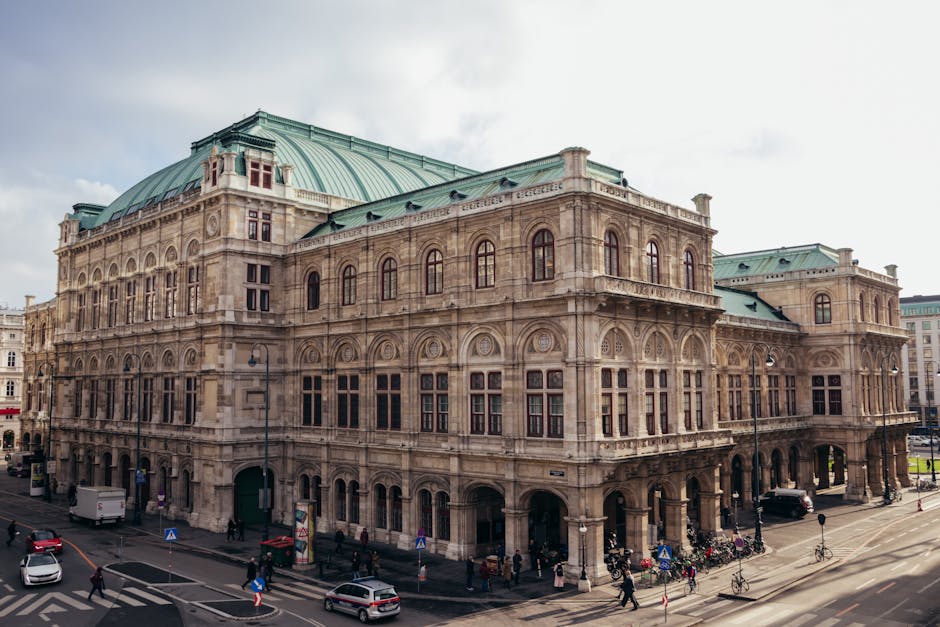
Follow the footsteps of Mozart and Strauss through Vienna’s historic center on this self-guided walk through the city's rich musical history.
 Moderate
Vienna, Austria
Discover the noir world of The Third Man and Cold War Vienna on this atmospheric self-guided audio walk through the historic Innere Stadt.
 Easy
EasyVienna, Austria
Explore the resilient spirit of Vienna's Jewish community on this self-guided audio walk through the historic Second District.
 Easy
EasyKrakow, Poland
Explore the prestigious Jagiellonian University district, featuring Neo-Gothic architecture, Baroque churches, and Krakow's hidden scholarly gems.
 Easy
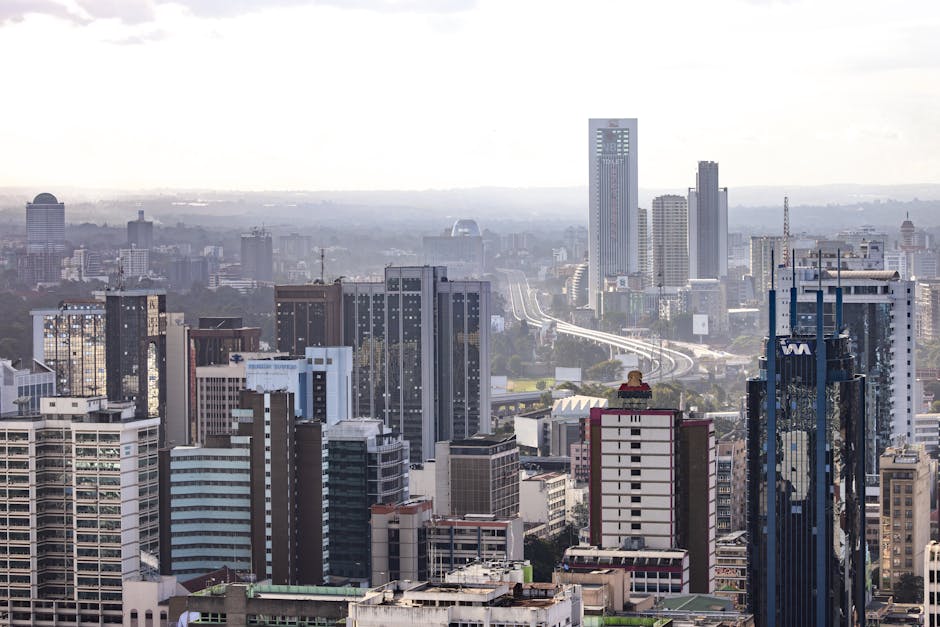
EasyNairobi, Kenya
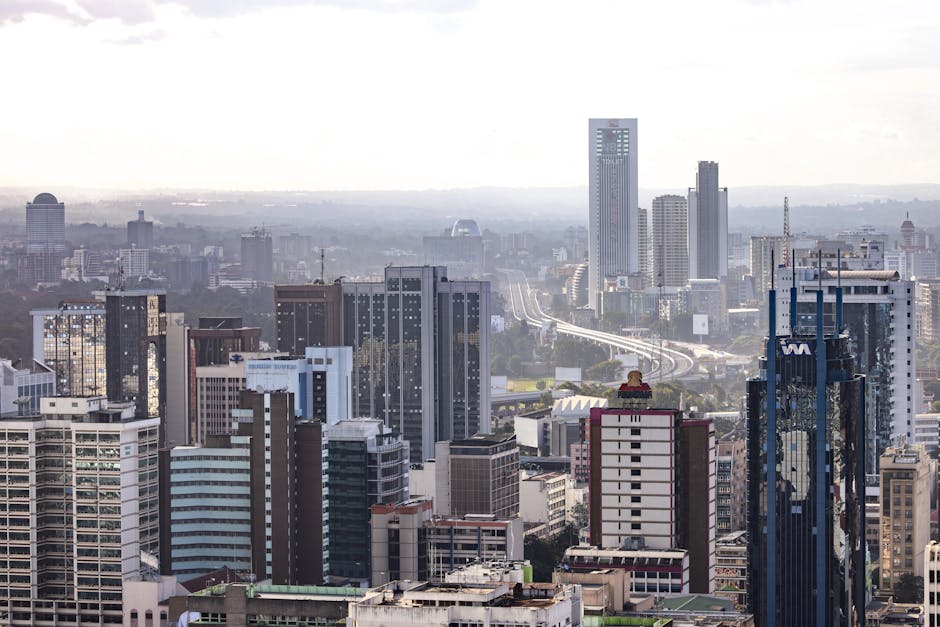
Explore Nairobi's architectural evolution from colonial-era landmarks to iconic Brutalist skyscrapers on this historic self-guided walking route.
 Easy
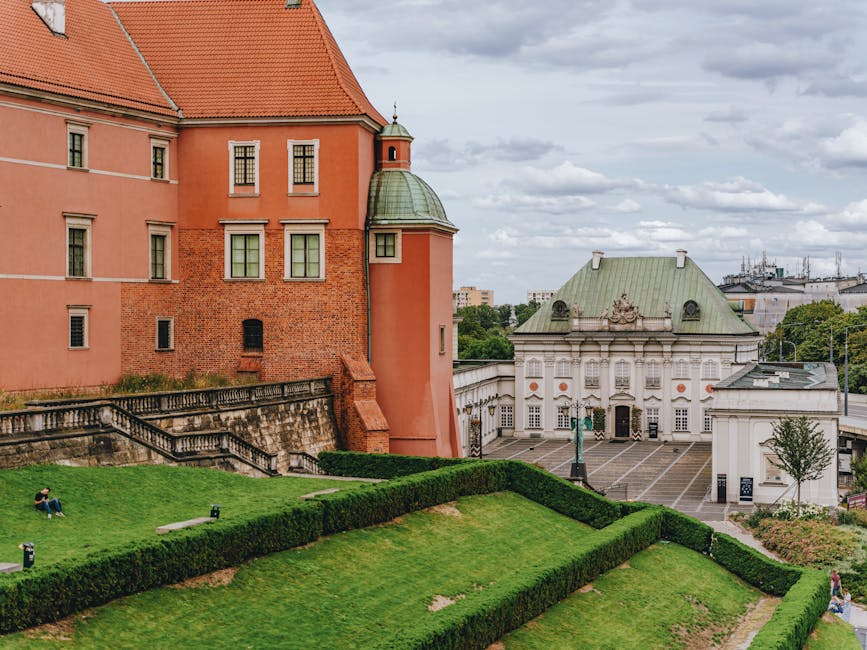
EasyNairobi, Kenya
Discover Nairobi's iconic skyline on this self-guided architecture walk through the CBD’s most famous modernist and Brutalist landmarks.
 Easy
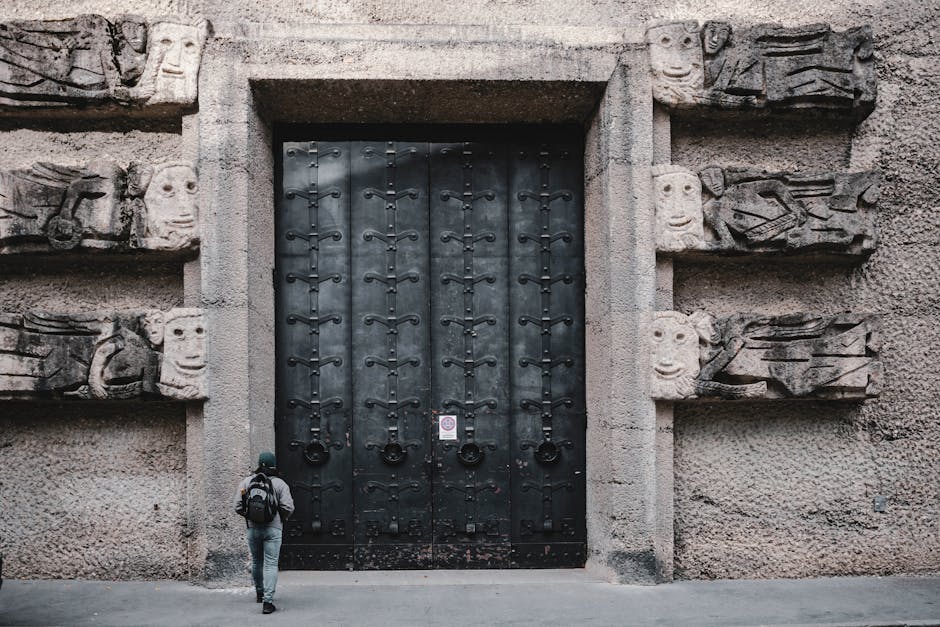
EasyWarsaw, Poland
Follow the life of Fryderyk Chopin through Warsaw’s historic center. See where he lived, studied, and where his heart remains today.
 Easy
EasySalzburg, Austria
Discover the 'Rome of the North' on this self-guided walk through the Baroque squares and monumental legacy of Salzburg’s Prince-Archbishops.
 Easy
EasySalzburg, Austria
Discover Salzburg's oldest medieval alley, the birthplace of the 'Silent Night' author, and breathtaking views on this quiet self-guided walk.
 Easy
EasySalzburg, Austria
Walk through the iconic filming locations of The Sound of Music and discover the real history of the von Trapp family in Salzburg.
 Challenging
Salzburg, Austria
Scale the heights of Salzburg on this self-guided walk to the Hohensalzburg Fortress, exploring medieval walls and ancient monastic grounds.