Self-guided audio tour in Rio de Janeiro
Start Free on iPhone
Start free on iPhone to unlock this self-guided walking tour in Rio de Janeiro. Hear all the stories that make it amazing, walk at your own pace, and begin whenever you want.
Your Private Tour Guide
Step back into the golden age of Rio de Janeiro with this self-guided walking route through the heart of Copacabana. Long before it became a global tourism hub, this neighborhood was the pinnacle of South American glamour, defined by elegant Art Deco lines and the birth of Bossa Nova. This neighborhood stroll invites you to explore the 'Princess of the Sea' through its architectural evolution, from the geometric symmetry of the 1930s to the modernist heights of the 1950s. You will begin in the Lido area, a concentrated pocket of Art Deco treasures that once housed the city's social elite. As you wander, the route highlights the contrast between the rigid elegance of early 20th-century design and the breezy, rhythmic lifestyle of the beach-culture that defines Rio today. A major highlight is the world-famous Copacabana Palace, an architectural masterpiece that cemented Rio’s status on the international stage. Beyond the grand facades, this walking route Rio de Janeiro also dives into the hidden corners of musical history. You will visit the narrow alleyway where Bossa Nova found its voice, proving that Copacabana’s history is as much about sound as it is about stone. The journey concludes at the historic Copacabana Fort, offering a transition from the neighborhood's artistic side to its strategic military past, all while providing breathtaking views of the Atlantic coastline. This architecture-focused walking tour Rio de Janeiro is perfect for those who want to see beyond the beach towels and discover the sophisticated soul of Brazil’s most famous shoreline. Whether you are an architecture enthusiast or a history buff, this self-guided adventure provides the context needed to appreciate the layers of history hidden in plain sight among the bustling streets and salty air of Copacabana.
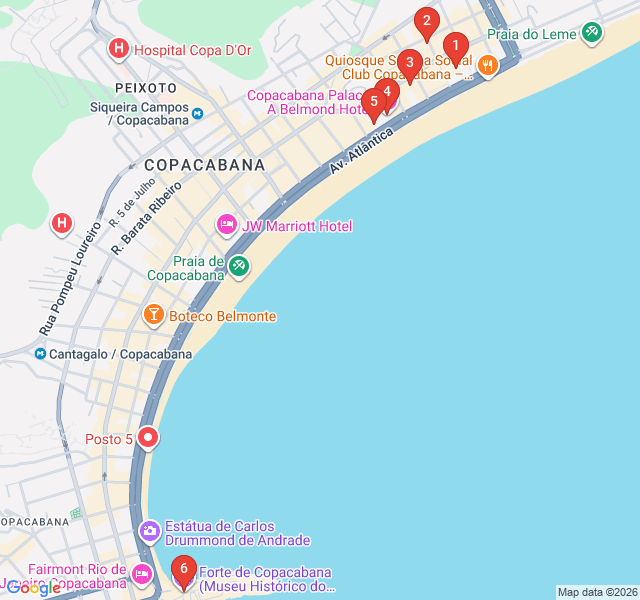
Numbers indicate the order of stops on the tour.
Welcome to Praça do Lido, the gateway to Copacabana's architectural heritage. In the 1930s and 40s, this area was the most sophisticated residential pocket in Rio. Look around and you will see buildings that define the Art Deco movement in Brazil: vertical lines, geometric patterns, and stylized ornaments. This square was named after the Lido in Venice, reflecting the European aspirations of Rio's elite at the time. It serves as a perfect starting point to understand how the city transitioned from colonial styles to the 'Streamline Moderne' aesthetic. The square today remains a vibrant local hub, often hosting small markets and providing a leafy respite from the sun-drenched beach just a block away.
As you stand before the GUAHY building, you are looking at one of the finest examples of Art Deco residential architecture in the city. Built in the 1930s, its name is a nod to indigenous roots, a common trend where Brazilian architects blended international modernism with local identity. Notice the porthole-style windows and the rounded balconies that mimic the decks of great ocean liners—a style known as 'Paquebot' or Nautical Moderne. This aesthetic was incredibly popular in seaside cities, as it made residents feel like they were living on a permanent luxury cruise. The symmetry and the use of reinforced concrete here represented the cutting edge of technology and fashion during Copacabana's first major boom.
Turn into this narrow alleyway, known as the 'Alley of Bottles,' to find the soul of Brazilian music. In the late 1950s and early 60s, this was the epicenter of the Bossa Nova movement. Clubs like Little Club and Bottle’s Bar hosted legendary performers like Elis Regina and Sergio Mendes before they were international stars. The name 'Beco das Garrafas' allegedly comes from residents of the surrounding apartments throwing bottles down into the alley to complain about the noise from the musicians. Despite its humble appearance, this spot changed global music forever, blending samba rhythms with cool jazz. It’s a reminder that Copacabana’s glamour wasn’t just about grand hotels, but also about the bohemian creativity found in its side streets.
Standing before the Copacabana Palace, you are looking at the building that put Rio on the global map. Opened in 1923 and designed by French architect Joseph Gire, it was inspired by the grand hotels of the French Riviera, such as the Negresco in Nice. For a century, it has hosted royalty, Hollywood stars, and rock legends. While the style is more Neoclassical than Art Deco, its presence dictated the luxury development of the entire neighborhood. It survived several threats of demolition in the 1970s and 80s, eventually being designated a historic landmark. Look up at the white stucco and imagine the legendary balls held in the Golden Room, which helped define the high-society beach-culture of Rio.
Directly adjacent to the Palace is the Edifício Chopin, representing the next chapter in Rio's architectural story: Modernism. Built in 1956, this building is famous for its wide glass windows and the 'pilotis' (pillars) that lift the structure, a hallmark of Le Corbusier’s influence on Brazilian design. It was designed by Artur Licio Pontual and became a symbol of a new, more transparent luxury. The Chopin is famous for its high-society residents and its legendary New Year's Eve parties, as the balconies offer the best view of the fireworks. The proximity of the Chopin to the Palace illustrates the rapid shift from European classicism to the bold, minimalist lines of mid-century Brazil.
Your walk concludes at the Forte de Copacabana, situated on a rocky promontory at the end of the beach. Completed in 1914, this military fortification was built to defend the entrance to Guanabara Bay. Today, it houses the Army History Museum, but most visitors come for the 'Confeitaria Colombo' cafe and the spectacular panoramic views. Looking back from here, you can see the entire curve of the Copacabana beach, including the famous black-and-white wave mosaic sidewalk designed by Roberto Burle Marx. It is the perfect place to reflect on the neighborhood's journey from a remote fishing village to a global icon of architecture and glamour.
Start Free on iPhone
Explore “Art Deco Copacabana: Glamour by the Sea” with your very own Private Tour Guide with Zigway. Start free on iPhone, skip the large group and the fixed routes, and hear the city come alive as you go.
Your Private Tour Guide
Don't miss the good stuff
Explore Freely
 Easy
EasyRio de Janeiro, Brazil
Explore the world's largest murals and futuristic architecture in Rio's revitalized port on this vibrant self-guided walking route.
 Easy
EasyRio de Janeiro, Brazil
Discover the 'BotaSoho' vibe on this self-guided food and nightlife stroll through Rio's most creative neighborhood.
 Easy
EasyRio de Janeiro, Brazil
Discover the former seat of Brazilian power on this self-guided walk through the palaces, gardens, and presidential history of Catete and Glória.
 Easy
EasyRio de Janeiro, Brazil
Discover Rio's literary soul on this self-guided walk through historic libraries, ornate Belle Époque cafes, and iconic bookstores in Centro.
 Easy
EasyGdansk, Poland
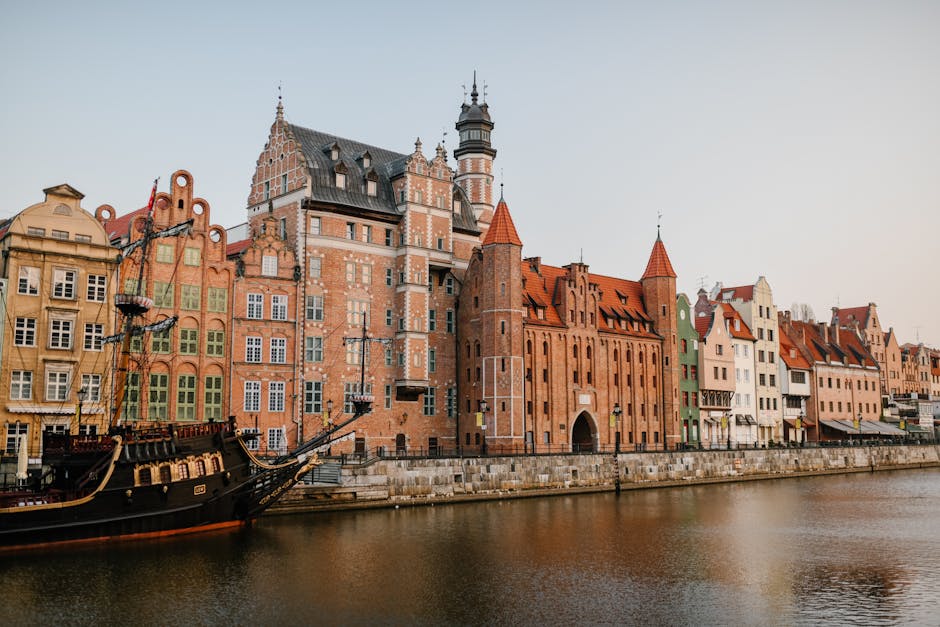
Discover the 'Baltic Gold' on this self-guided walk through Gdansk's historic mills, massive cathedrals, and the magical Mariacka Street.
 Easy
EasyGdansk, Poland
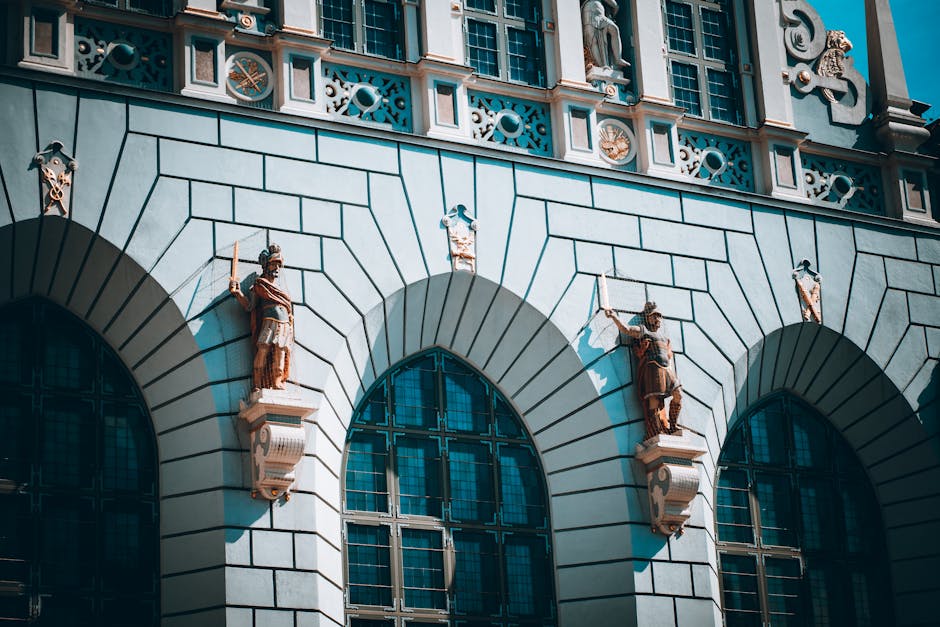
Discover the opulent Royal Way of Gdansk at your own pace. Explore Hanseatic history, gilded architecture, and the iconic Neptune's Fountain.
 Easy
EasyWarsaw, Poland
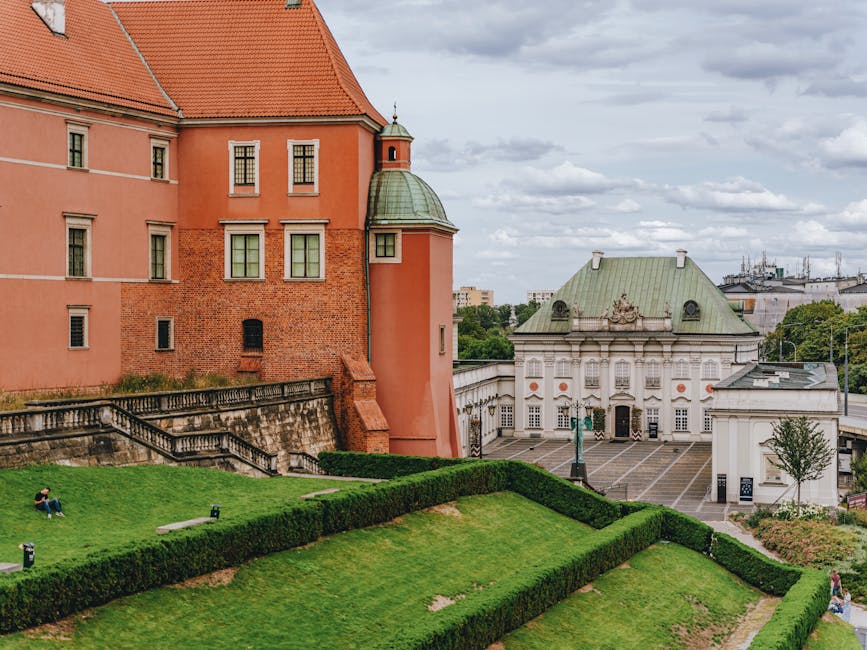
Explore the miracle of Warsaw's reconstructed Old Town on this self-guided walk through royal squares, medieval walls, and heroic monuments.
 Easy
EasyHelsinki, Finland
Discover Helsinki's oldest neighborhood on this self-guided audio walk through Kruununhaka’s historic streets, hidden courtyards, and scenic shores.
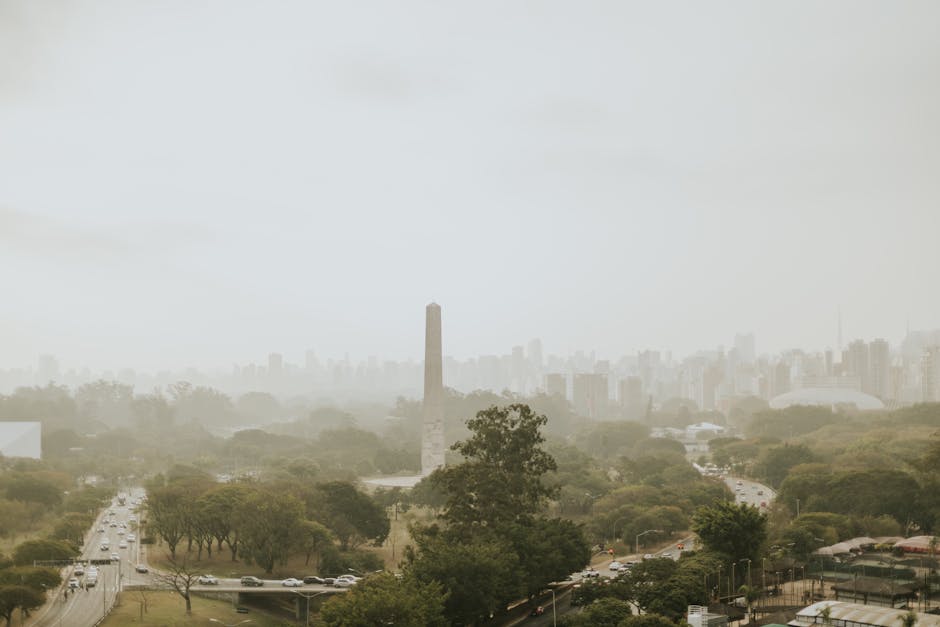 Moderate
Sao Paulo, Brazil
Discover the flowing concrete curves and modernist masterpieces of Oscar Niemeyer on this self-guided walk through São Paulo’s premier urban park.
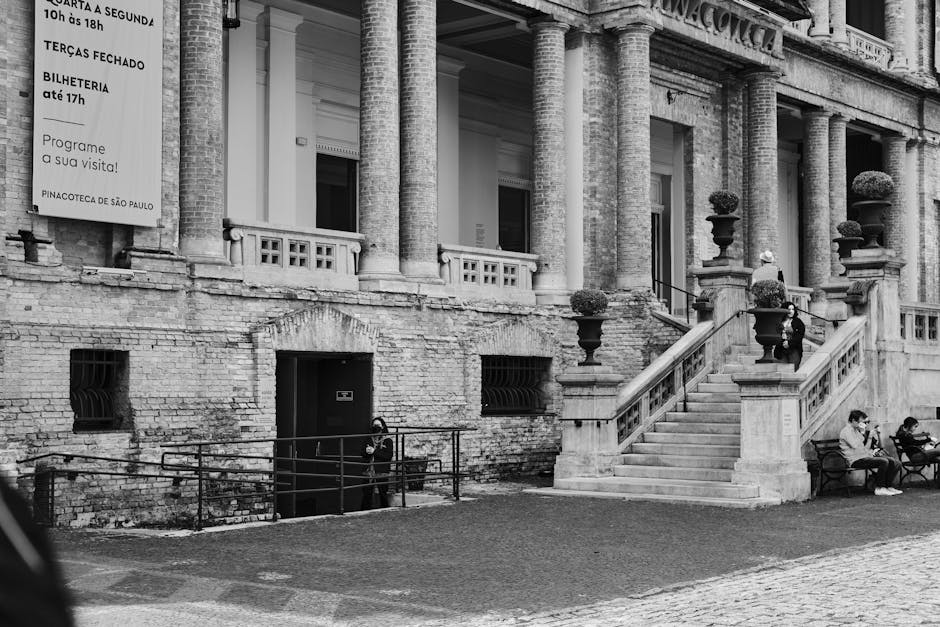 Easy
EasySao Paulo, Brazil
Explore the world's largest Japanese diaspora. A self-guided walk through Sao Paulo's vibrant Liberdade district, rich in history, food, and culture.
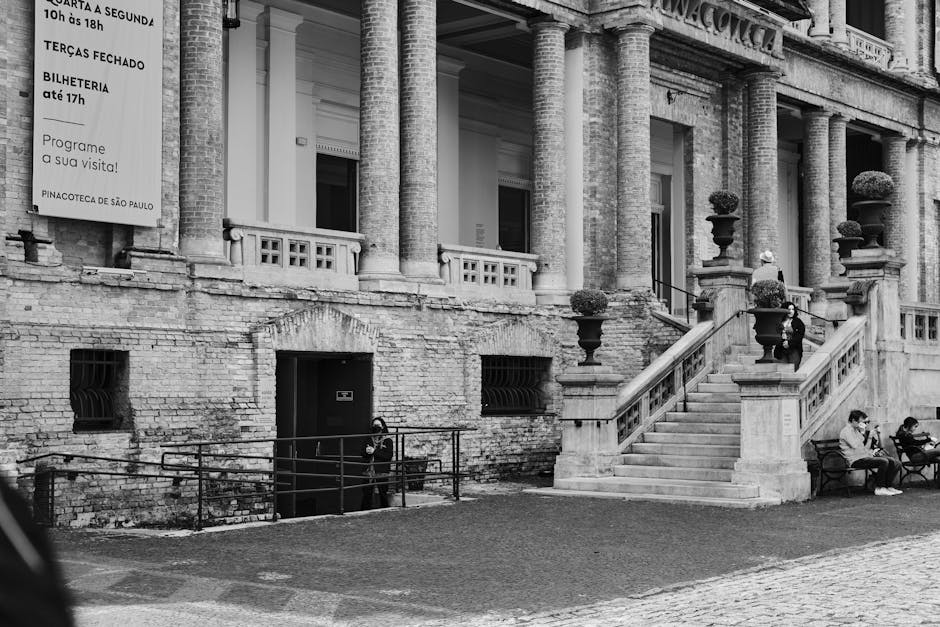 Easy
EasySao Paulo, Brazil
Discover the art, history, and British-inspired architecture of São Paulo’s historic Luz district on this immersive self-guided walk.
 Easy
EasySao Paulo, Brazil
Discover Sao Paulo's historic heart and vibrant food scene on this self-guided walk through the Old Center and the legendary Mercadão.