Self-guided audio tour in Rio de Janeiro
Start Free on iPhone
Start free on iPhone to unlock this self-guided walking tour in Rio de Janeiro. Hear all the stories that make it amazing, walk at your own pace, and begin whenever you want.
Your Private Tour Guide
As the sun sets over Rio, the bohemian neighborhood of Lapa transforms into a vibrant stage of rhythm and history. This self-guided walk invites you to explore the epicenter of Carioca nightlife, where the echoes of colonial architecture meet the pulse of modern samba. Lapa is more than just a party destination; it is a living museum of Brazilian cultural resistance and artistic expression. This neighborhood stroll takes you through the most iconic landmarks of the district, offering a flexible way to experience the area without the constraints of a rigid schedule. You will begin at the monumental Arcos da Lapa, an 18th-century aqueduct that now serves as the gateway to the city’s nocturnal energy. From there, the walking route winds past legendary performance venues like Circo Voador and Fundição Progresso, which have hosted the biggest names in Brazilian music. You will also discover the sophisticated side of the area at the Cecília Meireles Hall and dive into the authentic samba scene at Beco do Rato. Whether you are a music lover or a history enthusiast, this audio walk provides a unique perspective on Rio’s identity. Exploring independently allows you to linger where the music catches your ear or move quickly through the bustling crowds. The experience culminates at the world-renowned Rio Scenarium, a multi-story antique-filled club that epitomizes the Lapa aesthetic. While many visitors look for a standard walking tour Rio de Janeiro experience, this self-guided adventure offers the freedom to see the city on your own terms. Discover the stories behind the graffiti-covered walls and the grand arches that define this legendary district. Please note that Lapa is a dynamic area where street art and venue lineups change frequently, so there is always something new to see. This walking tour Rio de Janeiro route is best enjoyed on weekend evenings when the energy is at its peak. **Note:** This area is known for its ever-changing character. Street art, pop-up venues, and temporary exhibitions may differ from what's described. That's part of the adventure - you might discover something entirely new!
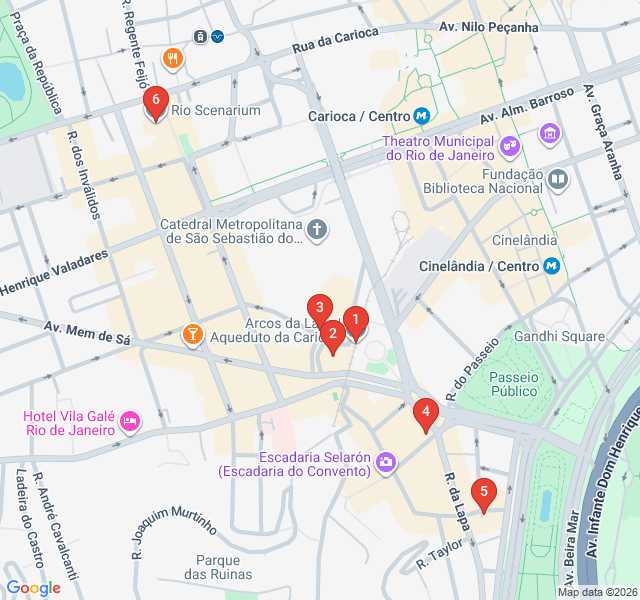
Numbers indicate the order of stops on the tour.
Standing before you are the Arcos da Lapa, perhaps the most recognizable landmark in central Rio. Formally known as the Carioca Aqueduct, this impressive structure was completed in the mid-18th century to bring fresh water from the Carioca River to the city center. Its double tier of 42 massive arches is a masterpiece of colonial engineering. In 1896, the aqueduct was repurposed to serve as a bridge for the 'bonde' or tram, which still connects the city center to the hilltop neighborhood of Santa Teresa today. At night, the arches are often illuminated, serving as a majestic backdrop for the street parties and drum circles that spontaneously erupt in the square below. It is the literal and figurative gateway to Rio's nightlife.
Just steps from the arches is Circo Voador, or the 'Flying Circus.' This venue is the soul of Rio's alternative and rock scene. It originally started as a temporary tent in Arpoador in 1982 before finding its permanent home here in Lapa. Over the decades, it has been a launchpad for Brazil's most influential bands. The venue is known for its palm trees and open-air feel, creating an intimate connection between the artist and the audience. While the exterior might look like a simple tent structure, the history inside is legendary. Keep an eye out for the ever-changing posters and murals nearby that announce upcoming performances, as the local street art here is as dynamic as the music itself.
Directly adjacent to Circo Voador is Fundição Progresso. Once an iron foundry that produced everything from manhole covers to safe boxes, it was saved from demolition by artists and activists in the 1980s. Today, it stands as one of the city's premier cultural centers. It is much more than a concert hall; it houses workshops for circus arts, theater, and music, including rehearsals for some of Rio's famous carnival 'blocos.' The building itself is a beautiful example of industrial heritage repurposed for the community. The large murals on the facade are a testament to Lapa's status as a hub for urban art, though these displays are frequently updated by local artists.
As you move slightly away from the rowdiest part of the street, you encounter the Cecília Meireles Hall. Named after one of Brazil's most celebrated poets, this venue is a temple of chamber and classical music. Housed in a building that was once a grand hotel and later a cinema, it was inaugurated as a concert hall in 1965. It represents the sophisticated, high-culture side of Lapa that often surprises visitors. The hall is renowned for its exceptional acoustics and serves as a reminder that this neighborhood has always been a meeting point for all genres of art, from the classical to the contemporary.
Welcome to Beco do Rato, or 'Rat’s Alley.' Despite the name, this is one of the most authentic and beloved samba spots in Rio. This venue captures the true spirit of 'Samba de Raiz' or roots samba. It is a colorful, open-air space decorated with murals of Brazilian music legends. Unlike the massive tourist clubs, Beco do Rato is where locals go to hear high-quality musicians in a more traditional setting. The atmosphere here is often electric, especially during the 'rodas de samba' where musicians sit around a table and play while the crowd sings along. The street art leading into the alley changes often, reflecting the current cultural pulse of the samba community.
The route concludes at Rio Scenarium, a venue that consistently ranks among the most beautiful bars in the world. Spread across three floors of a meticulously restored 19th-century warehouse, it functions as a combination of a nightclub, restaurant, and antique pavilion. The interior is filled with thousands of items: vintage bicycles, movie props, old clocks, and ornate furniture. Each floor typically features a different style of music, ranging from traditional samba to forró and pop. It is the perfect place to see how Rio blends its historical past with a modern, festive present. Even if you don't stay for a drink, the architecture and the scale of the collection are a sight to behold.
Start Free on iPhone
Explore “Lapa After Dark: Arches, Samba, and Streets” with your very own Private Tour Guide with Zigway. Start free on iPhone, skip the large group and the fixed routes, and hear the city come alive as you go.
Your Private Tour Guide
Don't miss the good stuff
Explore Freely
 Easy
EasyRio de Janeiro, Brazil
Explore the world's largest murals and futuristic architecture in Rio's revitalized port on this vibrant self-guided walking route.
 Easy
EasyRio de Janeiro, Brazil
Discover the 'BotaSoho' vibe on this self-guided food and nightlife stroll through Rio's most creative neighborhood.
 Easy
EasyRio de Janeiro, Brazil
Discover the former seat of Brazilian power on this self-guided walk through the palaces, gardens, and presidential history of Catete and Glória.
 Easy
EasyRio de Janeiro, Brazil
Discover Rio's literary soul on this self-guided walk through historic libraries, ornate Belle Époque cafes, and iconic bookstores in Centro.
 Easy
EasyNairobi, Kenya
Explore Nairobi's architectural evolution from colonial-era landmarks to iconic Brutalist skyscrapers on this historic self-guided walking route.
 Easy
EasyNairobi, Kenya
Discover Nairobi's iconic skyline on this self-guided architecture walk through the CBD’s most famous modernist and Brutalist landmarks.
 Moderate
Vienna, Austria
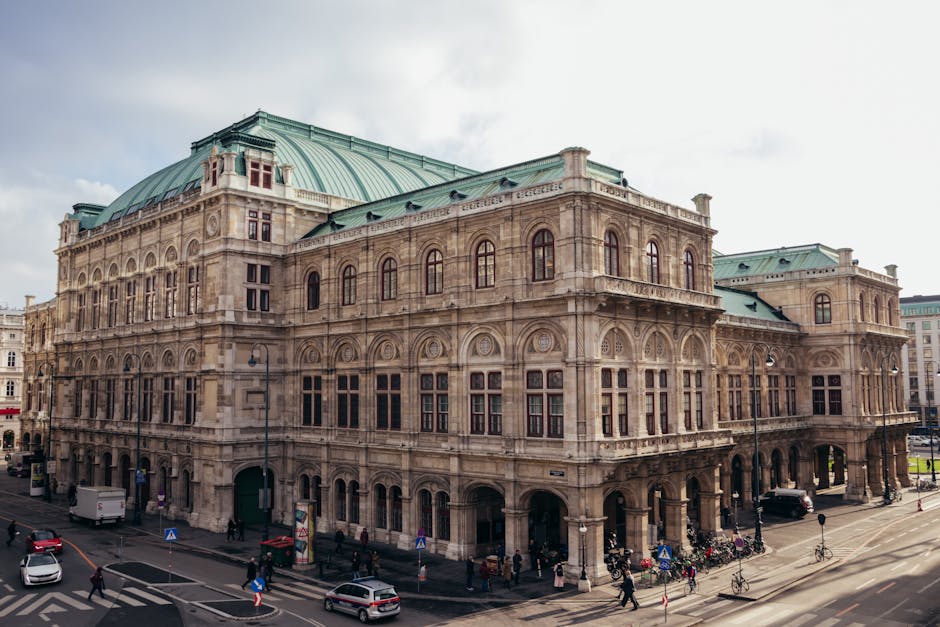
Discover the noir world of The Third Man and Cold War Vienna on this atmospheric self-guided audio walk through the historic Innere Stadt.
 Easy
EasyKrakow, Poland
Explore the historic heart of Kazimierz on this self-guided walk through synagogues, ancient cemeteries, and vibrant squares.
 Moderate
Sao Paulo, Brazil
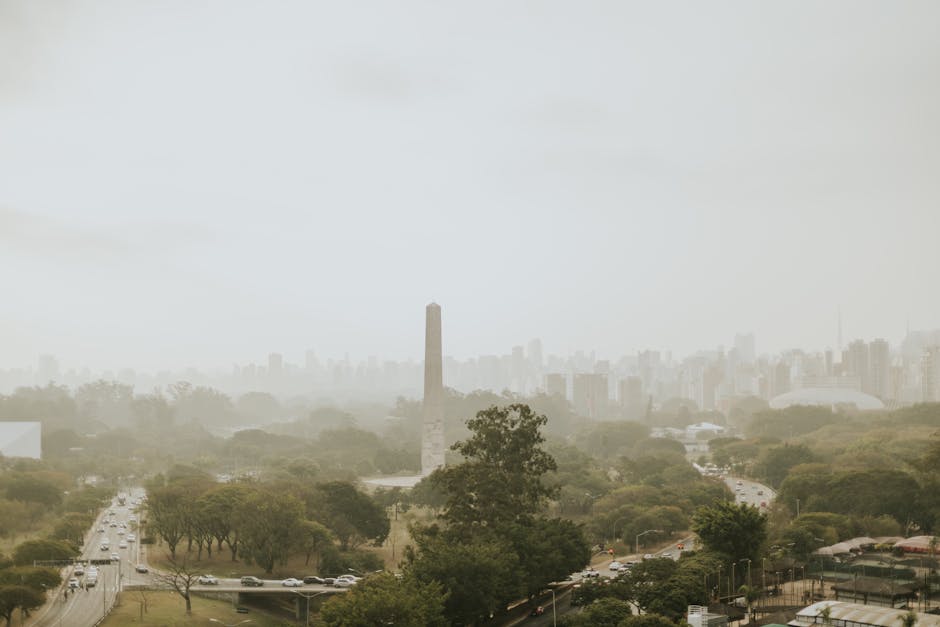
Discover the flowing concrete curves and modernist masterpieces of Oscar Niemeyer on this self-guided walk through São Paulo’s premier urban park.
 Easy
EasySao Paulo, Brazil
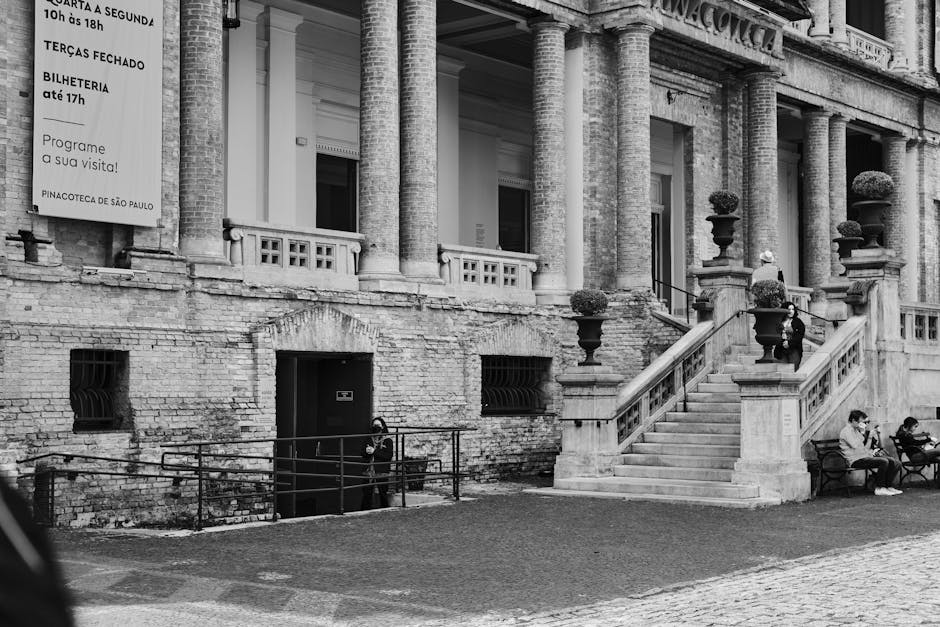
Explore the world's largest Japanese diaspora. A self-guided walk through Sao Paulo's vibrant Liberdade district, rich in history, food, and culture.
 Easy
EasySao Paulo, Brazil
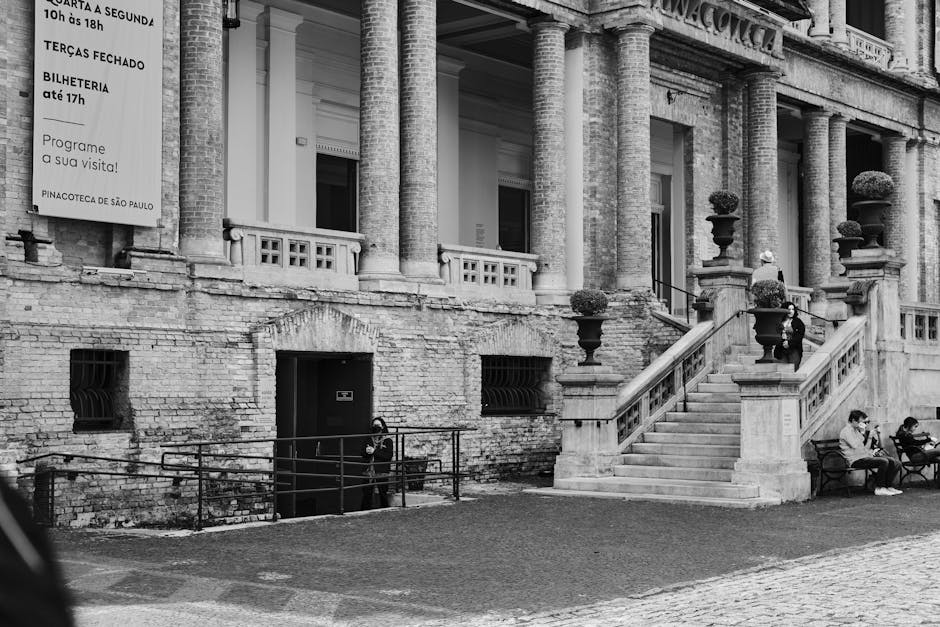
Discover the art, history, and British-inspired architecture of São Paulo’s historic Luz district on this immersive self-guided walk.
 Easy
EasySao Paulo, Brazil
Discover Sao Paulo's historic heart and vibrant food scene on this self-guided walk through the Old Center and the legendary Mercadão.