Self-guided audio tour in Sofia
Start Free on iPhone
Start free on iPhone to unlock this self-guided walking tour in Sofia. Hear all the stories that make it amazing, walk at your own pace, and begin whenever you want.
Your Private Tour Guide
Sofia’s charm is often tucked away behind heavy wooden doors and inside inconspicuous passageways. This self-guided walk, "Hidden Passages and Craft Courtyards," invites you to step off the main boulevards and discover the city's intimate side. Beginning at the Small 5 Corners—a favorite local intersection known for its bohemian spirit—this walking route Sofia explores the layers of the capital’s history. You will find yourself moving from contemporary artisan shops to the profound silence of the Ancient Orthodox Rotunda of Saint George, the oldest building in Sofia, nestled within a courtyard of Roman ruins. As you explore independently, you will encounter the creative pulse of the National Academy for Theatre and Film Arts and the boutique-lined Angel Kanchev Street. This neighborhood stroll isn't just a sightseeing trip; it's a journey through the city's green lungs, connecting the socialist-era grandeur of the National Palace of Culture with the sprawling serenity of Borisova Gradina and South Park. This audio walk provides the context needed to appreciate the architectural shifts from the ornate Renaissance style of Sofia University to the bold Brutalist lines of the University of Architecture and the Park Hotel Moskva. Experience the city like a local by discovering secret cut-throughs on Vitosha Boulevard and the historical significance of the Russian Monument. This self-guided adventure allows you to set the pace, whether you want to spend extra time browsing handmade Bulgarian crafts or simply enjoy a coffee in a hidden courtyard. Perfect for those who want to see more than just the major landmarks, this route highlights the hidden gems that give Sofia its unique, layered character. By the time you reach the lush expanses of South Park, you will have seen the transition from the ancient Roman Serdica to the vibrant, modern European capital Sofia is today. **Note:** This area is known for its ever-changing character. Street art, pop-up venues, and temporary exhibitions may differ from what's described. That's part of the adventure - you might discover something entirely new!
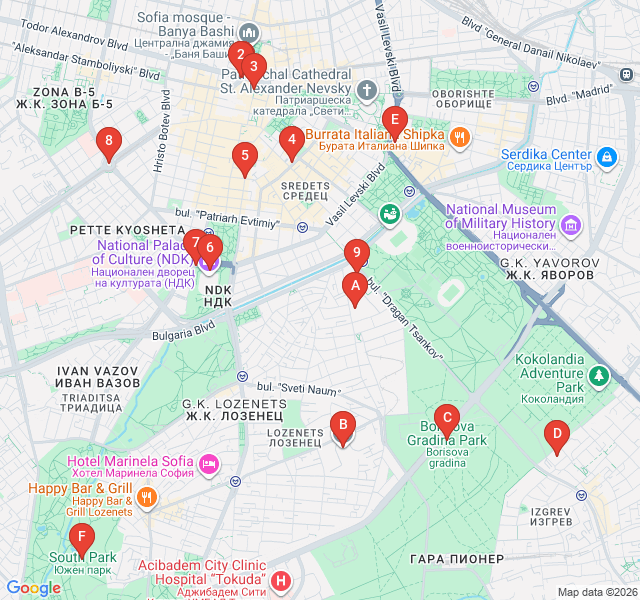
Numbers indicate the order of stops on the tour.
Start exploring at the Small 5 Corners, one of Sofia's most beloved local hubs. This isn't just a busy intersection; it's the heart of the city's bohemian culture. As five streets converge, you'll find a cluster of independent bookstores, small coffee roasters, and local bakeries. The atmosphere here is distinctly different from the commercial center, favoring slow living and creative expression. Take a moment to look at the eclectic architecture and the small-scale boutiques that specialize in everything from vinyl records to handmade soaps. This spot sets the tone for the rest of your neighborhood stroll, highlighting the personal, artisanal side of Sofia.
Tucked away near the busy center is the L'Etranger Courtyard, a prime example of Sofia's hidden urban spaces. Often accessed through a narrow passage, these inner courtyards were historically designed to provide residents with a quiet escape from the street. This particular spot has gained a reputation for its European charm and intimate feel. While the businesses here may change over time, the architectural layout remains a testament to the city's multi-layered urban planning. It is a perfect place to observe how modern Sofia repurposes historical spaces for contemporary leisure, blending the old stone walls with modern café culture.
Step back nearly 1,700 years at the Church of Saint George. This red-brick rotunda is widely considered the oldest building in Sofia, dating back to the 4th century when the city was known as Serdica. It is hidden in plain sight, completely surrounded by the monumental buildings of the Presidency and a luxury hotel. The courtyard also contains the remains of a Roman street and other ancient ruins. Inside, if accessible, you can see layers of frescoes that were preserved under plaster during the Ottoman period. This site represents the spiritual heart of the city and its enduring Roman legacy.
The National Academy for Theatre and Film Arts (NATFA) is the prestigious 'Krastyo Sarafov' academy, the first of its kind in Bulgaria. This building is the epicenter of the country's performing arts scene. You'll often see students gathered outside, contributing to the youthful, energetic vibe of the Rakovski Street area, often called Sofia's 'Broadway.' The academy has produced generations of Bulgarian actors and directors. While the interior is for students, the exterior and the surrounding street life reflect the city's deep-seated love for theater and the creative arts, which continues to thrive in these historic halls.
Angel Kanchev Street is a favorite among locals for its mix of high-end boutiques and quirky artisan shops. This street runs parallel to the main Vitosha Boulevard but offers a much more curated and quiet experience. As you walk, look for local designers showcasing handmade jewelry, contemporary Bulgarian fashion, and specialty food shops. The architecture here is a mix of early 20th-century townhouses and more modern additions. It is the perfect place to find a unique souvenir that isn't a typical tourist trinket, embodying the modern craft movement that is revitalizing the city center.
The National Palace of Culture (NDK) and its surrounding park are icons of late-Socialist architecture. Completed in 1981 to celebrate Bulgaria's 1300th anniversary, the massive hexagonal building is one of the largest convention centers in Southeastern Europe. The park itself is a massive public space featuring fountains, monuments, and underground walkways. It serves as a major meeting point for residents. The contrast between the grand, geometric design of the palace and the lush greenery of the gardens illustrates the scale of urban planning during the late 20th century. It remains a vibrant hub for festivals, concerts, and daily life.
Vitosha Boulevard is Sofia's main commercial artery, but its true secrets lie in the passages that cut through its massive residential blocks. These cut-throughs often lead to hidden courtyards, small galleries, or shortcut paths to parallel streets. Keep an eye out for the arched entrances between the storefronts. These passages offer a glimpse into the private life of the city, where the noise of the shopping street fades away. While some are residential and gated, many remain open, providing a maze-like experience for those who enjoy exploring the urban fabric beyond the main storefronts.
The Russian Monument is an impressive obelisk located in the center of a large roundabout. Erected in 1882, it was the first monument built in Sofia after Bulgaria’s liberation. It commemorates the Russian soldiers who fought in the Russo-Turkish War. The monument is simple and dignified, surrounded by a small green space that offers a momentary respite from the surrounding traffic. It marks an important historical transition for the city, signaling the end of five centuries of Ottoman rule and the beginning of modern Bulgaria's development as an independent nation.
The University of Architecture, Civil Engineering and Geodesy (UASG) is a landmark of Bulgarian higher education. The building itself is a fascinating study in functionalist design, reflecting the mid-20th-century architectural priorities of the country. As you approach, notice the scale and the use of concrete and glass. This is the place where Sofia's future architects and urban planners are trained. The surrounding area is always buzzing with students, often seen carrying large drafting tubes, giving the neighborhood a distinct intellectual and industrious energy that contrasts with the more relaxed vibe of the city's parks.
Continuing around the UASG campus, you can appreciate the different wings and extensions of the university. This institution has played a critical role in rebuilding Sofia after the world wars and shaping the skyline you see today. The campus architecture reflects the evolution of Bulgarian design from more rigid socialist styles to contemporary openness. It's a key stop for anyone interested in how education and architecture intersect in Eastern Europe. The nearby cafes and student hangouts are great places to observe the local 'academic' lifestyle in Sofia.
Located in the Lozenets district, the Faculty of Mathematics and Informatics of Sofia University is another pillar of the city's academic life. This area feels like a city within a city, characterized by its quiet, tree-lined streets and the constant presence of the country's brightest young minds. The building itself is straightforward and academic, but its significance lies in Bulgaria's strong reputation for mathematics and computer science. The faculty is a source of pride for the nation, and the surrounding neighborhood is one of the most prestigious and greenest residential areas in the capital.
Borisova Gradina is the oldest and most famous park in Sofia, established in 1884. It is named after the Bulgarian Tsar Boris III. This isn't just a park; it's a massive forest-like expanse that stretches deep into the city. As you enter, you'll see the carefully landscaped flowerbeds and monuments, but as you walk further, it becomes more wild and natural. It houses several stadiums, the astronomical observatory, and the iconic 'Lily Pond.' It is the 'green lung' of Sofia, where locals come to run, cycle, and escape the urban heat. The park's history is intertwined with the city's growth, with different sections added by various European gardeners over the decades.
Rising high above the edge of Borisova Gradina is the Park Hotel Moskva. This building is a classic example of Brutalist-influenced architecture from the 1970s. Its towering height makes it a visible landmark from many parts of the city. Originally built to host international guests and diplomats, it remains a functioning hotel today. Its stark, vertical lines and repetitive window patterns are characteristic of the era's design philosophy. Looking at it from the greenery of the park offers a striking visual contrast between the natural forest and the monumental concrete structures that defined the late 20th-century Bulgarian skyline.
The main building of Sofia University is a masterpiece of the Neo-Renaissance and Baroque Revival styles. Founded in 1888, it is the oldest and most prestigious institution of higher learning in Bulgaria. The grand facade, with its ornate carvings and statues of the university's early benefactors, the brothers Evlogi and Hristo Georgiev, is one of the most photographed spots in the city. The interior features stunning marble staircases and stained glass windows. It stands as a symbol of Bulgaria's commitment to education and its cultural rebirth after centuries of foreign rule.
Conclude your self-guided adventure at South Park, one of Sofia's largest and most modern green spaces. Unlike the more historic Borisova Gradina, South Park has a more open, airy feel with vast lawns and clear views of Vitosha Mountain. It is a hub of activity, especially on weekends, filled with families, street performers, and outdoor enthusiasts. The park was designed to connect the city center with the foothills of the mountain. It's the perfect place to sit by one of the many ponds, reflect on your journey through Sofia's hidden passages, and enjoy the local atmosphere before heading back to the city center.
Start Free on iPhone
Explore “Hidden Passages and Craft Courtyards” with your very own Private Tour Guide with Zigway. Start free on iPhone, skip the large group and the fixed routes, and hear the city come alive as you go.
Your Private Tour Guide
Don't miss the good stuff
Explore Freely
 Easy
EasySofia, Bulgaria
Explore the homes and haunts of Bulgaria's greatest writers on this self-guided literary stroll through central Sofia.
 Easy
EasySofia, Bulgaria
Uncover Sofia's clandestine bars, bohemian courtyards, and secret social hubs on this self-guided evening walking route through the city center.
 Moderate
Sofia, Bulgaria
Explore Sofia's Communist past through its massive monuments and Brutalist architecture on this insightful self-guided walking route.
 Easy
EasySofia, Bulgaria
Discover Sofia's culinary soul on this self-guided walk through historic markets, artisan bakeries, and vibrant rakia bars.
 Easy
EasyWarsaw, Poland
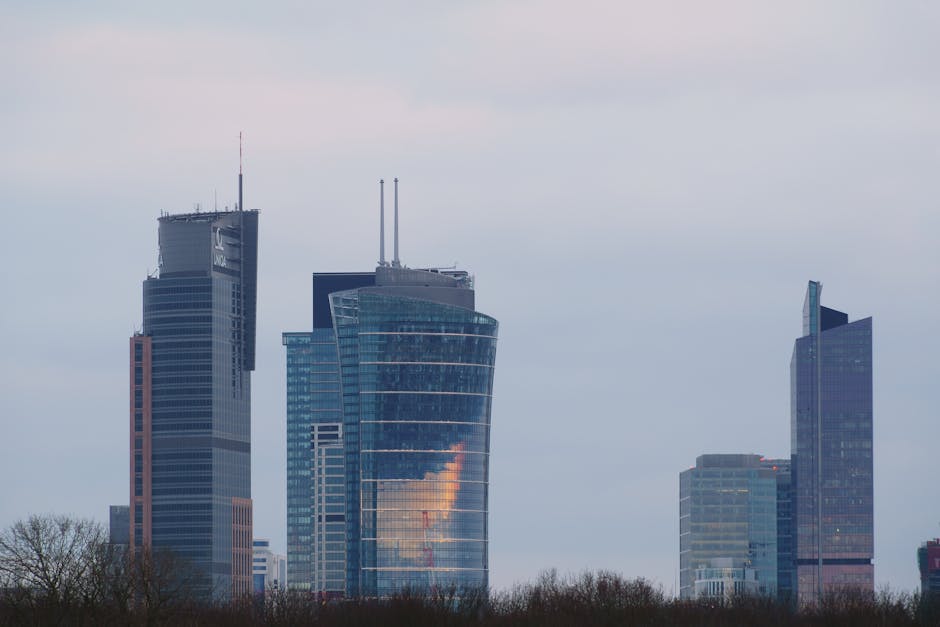
Discover the hidden courtyards and grand pre-war architecture of Warsaw's most atmospheric neighborhood on this self-guided stroll.
 Easy
EasySalzburg, Austria
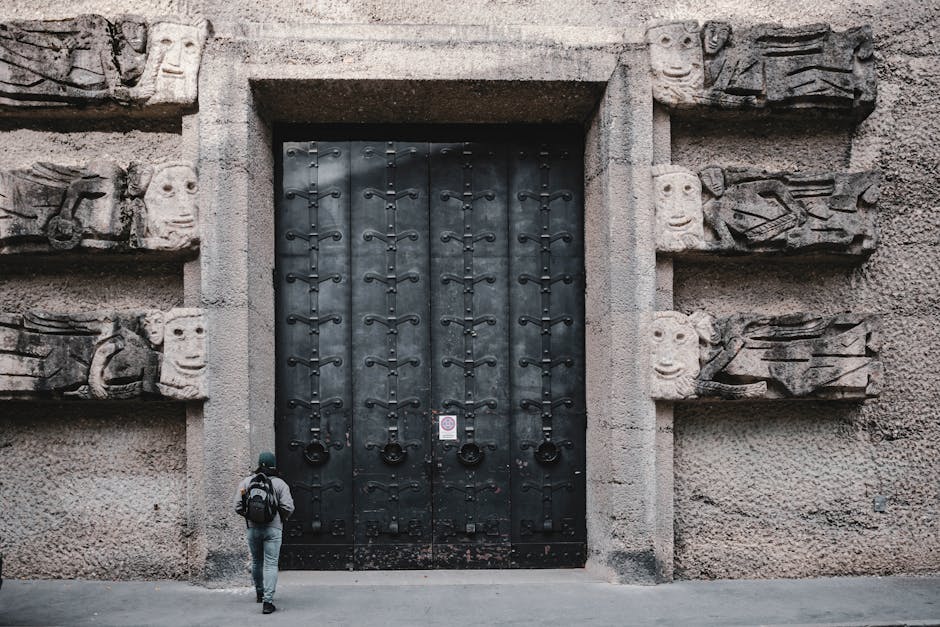
Discover Salzburg's oldest medieval alley, the birthplace of the 'Silent Night' author, and breathtaking views on this quiet self-guided walk.
 Moderate
Nairobi, Kenya
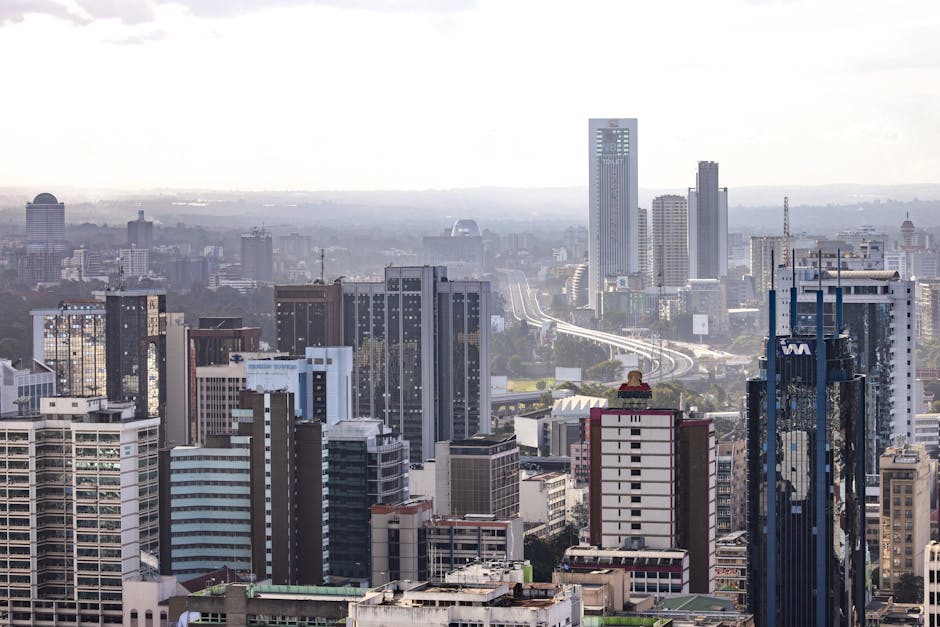
Discover Nairobi's lush side on this self-guided walk through botanical gardens, historic memorials, and vibrant local markets.
 Moderate
Nairobi, Kenya
Discover the pulse of Nairobi's contemporary art scene on this self-guided walk through the galleries and creative spaces of Kilimani.
 Moderate
Plovdiv, Bulgaria
Explore Plovdiv’s socialist past, from the towering Alyosha monument to Brutalist gems and the International Fair on this self-guided walking route.
 Moderate
Plovdiv, Bulgaria
Discover secret gardens and secluded 19th-century courtyards in Plovdiv's historic Old Town on this peaceful self-guided walk.
 Easy
EasyPlovdiv, Bulgaria
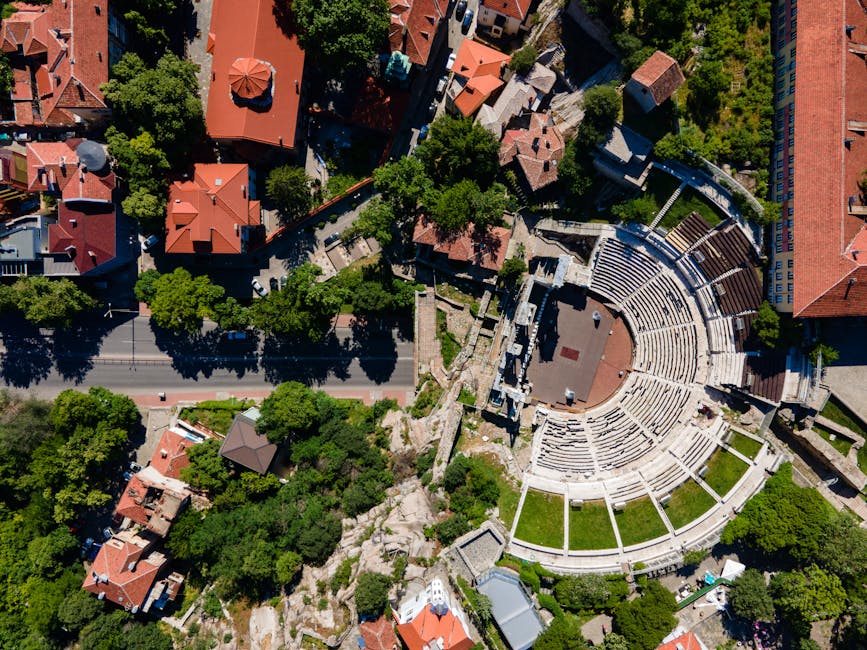
Discover the Roman heart of Philippopolis on this self-guided walk through Plovdiv's ancient forums, massive stadium, and breathtaking mosaics.
 Easy
EasyPlovdiv, Bulgaria
Discover Plovdiv's multi-layered history on this self-guided walk through ancient Roman ruins, Ottoman mosques, and vibrant Orthodox cathedrals.