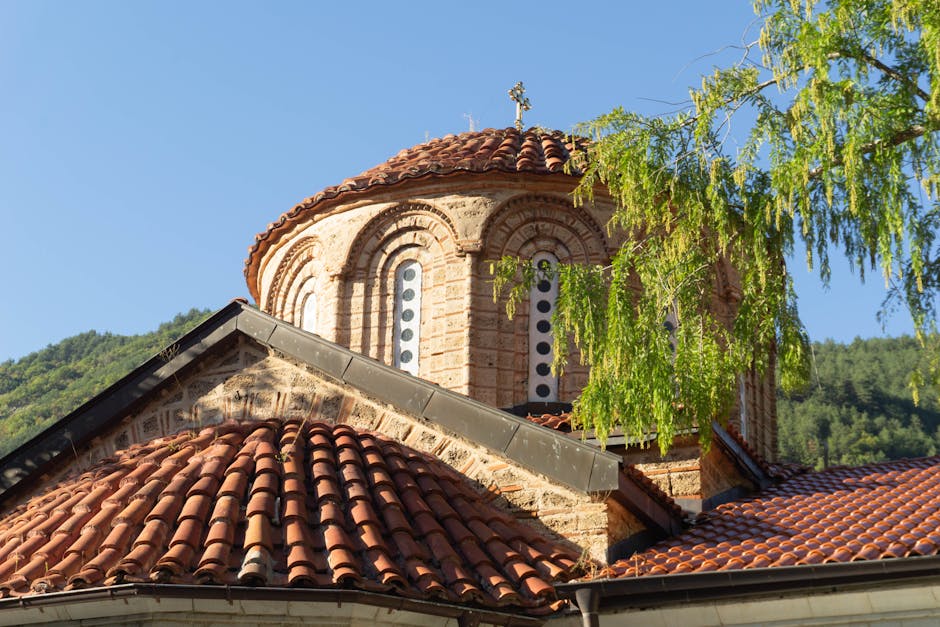
Self-guided audio tour in Plovdiv
Start Free on iPhone
Start free on iPhone to unlock this self-guided walking tour in Plovdiv. Hear all the stories that make it amazing, walk at your own pace, and begin whenever you want.
Your Private Tour Guide
Plovdiv is often cited as the oldest continuously inhabited city in Europe, and nowhere is this longevity more apparent than in the spiritual layers of its streets. This self-guided walk invites you to explore a 'Spiritual Mosaic' where Thracian ruins, Roman theaters, Ottoman mosques, and Orthodox cathedrals exist in a harmonious architectural dialogue. As you wander through the cobblestone alleys of the Old Town and the vibrant pedestrian zones of the modern center, you will discover how Plovdiv earned its reputation as a crossroads of civilizations. This neighborhood stroll takes you beyond the surface-level beauty of the city's famous colorful houses to reveal the deep-seated religious tolerance that has defined the local culture for centuries. Beginning in the heart of the Old Town at the Regional Ethnographic Museum, the route winds through the ancient fortifications of Nebet Tepe before descending into the Roman heart of the city. You will encounter the striking Dzhumaya Mosque, standing as a testament to the Ottoman era, and the Zion Synagogue, which speaks to the city's enduring Jewish heritage. The walking route also highlights Plovdiv's Christian identity, from the ornate Armenian Church of St. Surp Hovhannes to the grandeur of the Bishop’s Basilica, home to some of the most spectacular late-antique mosaics in the Balkans. What makes this exploration unique is the seamless transition between eras. One moment you are standing on a 2nd-century Roman stadium, and the next, you are sipping traditional Turkish coffee in the shadow of a minaret. This audio walk provides the historical context needed to appreciate these landmarks independently, allowing you to pause for a photo or a break whenever you choose. Whether you are a history buff or a curious traveler, this experience offers a comprehensive look at the diverse faiths and cultures that have called Plovdiv home for over 8,000 years.
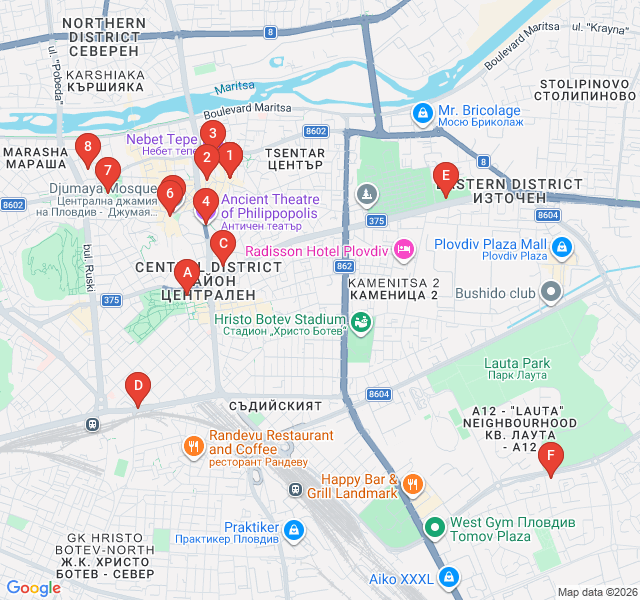
Numbers indicate the order of stops on the tour.
Start exploring with Zigway at the Kuyumdzhioglu House, which now houses the Regional Ethnographic Museum. Built in 1847, this is a prime example of the 'Plovdiv Baroque' style. Notice the symmetrical facade and the undulating eaves that characterize the Bulgarian National Revival period. Inside, the museum showcases the traditional life of the Thrace region, but even from the outside, the building tells a story of wealth and cultural awakening. This house belonged to Argir Kuyumdzhioglu, a prominent merchant, and its presence here marks the beginning of our journey through Plovdiv's social and spiritual evolution.
Just a short walk away is the House of Stepan Hindliyan. This merchant of Armenian descent built one of the most ornate homes in the Old Town. As you look at the exterior, imagine the interior walls, which are famously decorated with landscapes of cities Hindliyan visited, such as Alexandria and Constantinople. This stop highlights the international connections of Plovdiv’s merchant class and the Armenian community’s long-standing influence on the city's cultural and economic fabric. It is a testament to the cosmopolitan nature of 19th-century Plovdiv.
Ascend to Nebet Tepe, one of the hills where Plovdiv began over 8,000 years ago. Here, you can see the ruins of ancient Thracian fortifications, later expanded by Philip II of Macedon and the Romans. This spot offers more than just history; it provides a panoramic view of the city’s 'Spiritual Mosaic.' From this height, you can spot the belfries of churches and the minaret of the mosque, illustrating how different faiths have shared this landscape for millennia. It is the perfect place to reflect on the city's endurance through various empires.
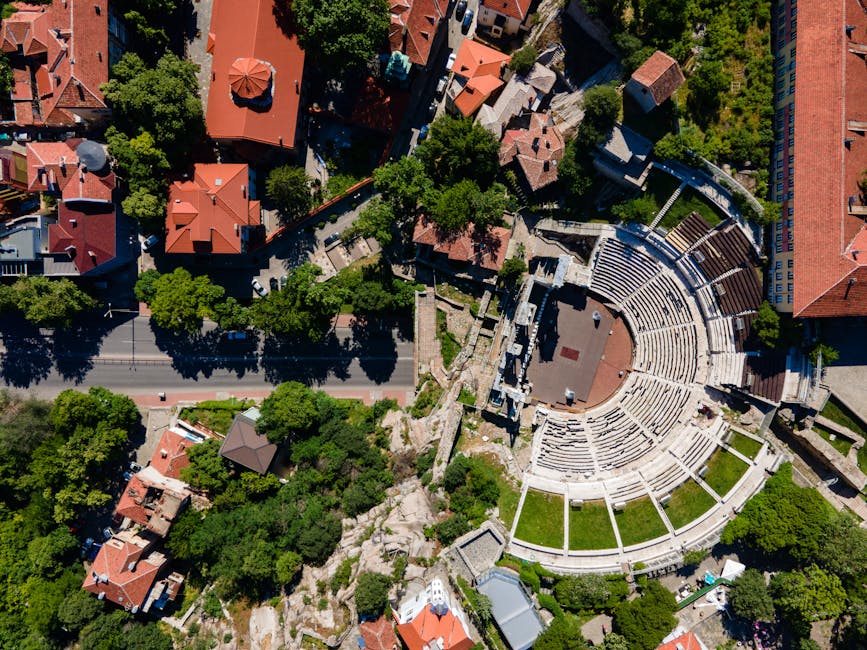
This is one of the world's best-preserved ancient theaters. Built in the 2nd century AD during the reign of Emperor Trajan, it could once hold up to 7,000 spectators. It was rediscovered only in the 1970s after a landslide. Today, it remains a functioning venue for opera and concerts, bridging the gap between Roman antiquity and modern Bulgarian culture. Note the inscriptions on the seats, which indicated the districts where the spectators lived, showing the organized social structure of Roman Philippopolis.
As you transition from the Old Town to the modern pedestrian street, you encounter the Dzhumaya Mosque. Built in the 14th century after the Ottoman conquest, it stands on the site of a former Christian cathedral. Its nine domes and unique brickwork are classic examples of early Ottoman architecture. Adjacent to the mosque is a traditional cafe where you can experience a taste of the Ottoman legacy with sand-brewed Turkish coffee and syrup-soaked baklava. This spot is a living symbol of the city’s Islamic heritage and its integration into daily Plovdiv life.
Right next to the mosque, you are literally standing on top of history. The Ancient Stadium, modeled after the one in Delphi, lies beneath the main pedestrian street. Only the northern curved end is visible here, but the stadium once stretched 240 meters in length and held 30,000 people for athletic games and gladiator combats. It serves as a reminder that the modern city is built directly upon the foundations of its Roman predecessor, with the past always just a few steps below the surface.
Leaving the Roman center, we head toward the green spaces of Plovdiv. The Museum of Natural Sciences is housed in a beautiful former municipal building. While its focus is on the flora and fauna of Bulgaria, its location near Dondukov Garden—the first public park in Bulgaria—highlights the city's 19th-century modernization. This area represents the secular growth of Plovdiv as it moved toward a European-style urban identity during the post-Ottoman period.
The Zion Synagogue is one of the few remaining Jewish houses of worship in Bulgaria. It represents the Sephardic Jewish community that flourished here after being expelled from Spain in 1492. The interior is a vibrant display of Moorish-style designs. Plovdiv is particularly proud of its role during World War II, when the local population and church leaders successfully protested to prevent the deportation of the city’s Jewish residents. The synagogue is a monument to that courage and the city's history of religious coexistence.
Looking up toward Bunardzhik Hill, you will see the towering granite statue of 'Alyosha,' a tribute to the Soviet soldiers of World War II. While a controversial landmark for some, it is an undeniable part of Plovdiv’s 20th-century history. The climb to the monument is steep, but it offers another spiritual perspective—the secular, ideological layer of the city's past. From here, the view encompasses the entire Maritsa River valley, showing how the city has expanded far beyond its original seven hills.
Returning to the city center, we visit the Roman Forum, the administrative and commercial heart of ancient Philippopolis. Imagine this space filled with shops, libraries, and public buildings where citizens gathered to discuss politics and trade. It was the civic counterpart to the religious and entertainment sites we've seen. The surrounding modern buildings, including the Central Post Office, were built directly over these ruins, illustrating Plovdiv's continuous urban evolution.
The Bishop's Basilica is a UNESCO-listed marvel. Dating back to the 4th century, it is one of the largest early Christian churches in the Balkans. What makes it extraordinary are the two layers of stunning floor mosaics, featuring over 100 unique bird species. These mosaics symbolize the Garden of Eden and reflect the transition of the Roman Empire toward Christianity. This site was lost for centuries and only recently restored, making it one of the most exciting archaeological discoveries in Europe.
Near the Basilica stands the Cathedral of St. Louis, the main Roman Catholic church in Plovdiv. Its eclectic architecture, blending Neoclassical and Baroque elements, reflects the influence of the Catholic community in Bulgaria. The cathedral is named after King Louis IX of France and holds the sarcophagus of Princess Maria Louisa of Bourbon-Parma. This stop adds yet another layer to our spiritual mosaic, showing the diversity within the Christian faith in this city.
This Orthodox cathedral, with its striking blue and white bell tower, was built in 1844. It played a crucial role in the struggle for Bulgarian church independence from the Greek Patriarchate during the National Revival. The iconostasis inside is a masterpiece of woodcarving. The church is dedicated to the patron saint of the city, and its location on the slopes of the Old Town makes it a visible landmark of the Bulgarian Orthodox faith that sustained the local culture through centuries of foreign rule.
The Armenian Apostolic Church of St. Surp Hovhannes is one of the oldest churches in the city, with records of an Armenian sanctuary here as far back as the 5th century. The current building dates to 1828 and features a unique Armenian architectural style, including a distinctively shaped dome and a courtyard containing a memorial to the victims of the Armenian Genocide. It serves as a spiritual anchor for the local Armenian community, which has been an integral part of Plovdiv since the Middle Ages.
We conclude our walking route in the Trakiya district. While the city center is ancient, Trakiya represents the modern face of Plovdiv, developed in the late 20th century as a planned residential area. The Municipality building here oversees one of the city's most populous regions. This stop highlights how Plovdiv continues to grow and adapt, moving from its ancient hills into wide boulevards and modern parks, while still carrying the cultural and spiritual legacy of the crossroads we have explored today.
Start Free on iPhone
Explore “The Spiritual Mosaic: Plovdiv’s Religious Crossroads” with your very own Private Tour Guide with Zigway. Start free on iPhone, skip the large group and the fixed routes, and hear the city come alive as you go.
Your Private Tour Guide
Don't miss the good stuff
Explore Freely
 Moderate
Plovdiv, Bulgaria
Explore Plovdiv’s socialist past, from the towering Alyosha monument to Brutalist gems and the International Fair on this self-guided walking route.
 Moderate
Plovdiv, Bulgaria
Discover secret gardens and secluded 19th-century courtyards in Plovdiv's historic Old Town on this peaceful self-guided walk.
 Easy
EasyPlovdiv, Bulgaria
Discover the Roman heart of Philippopolis on this self-guided walk through Plovdiv's ancient forums, massive stadium, and breathtaking mosaics.
 Challenging
Plovdiv, Bulgaria
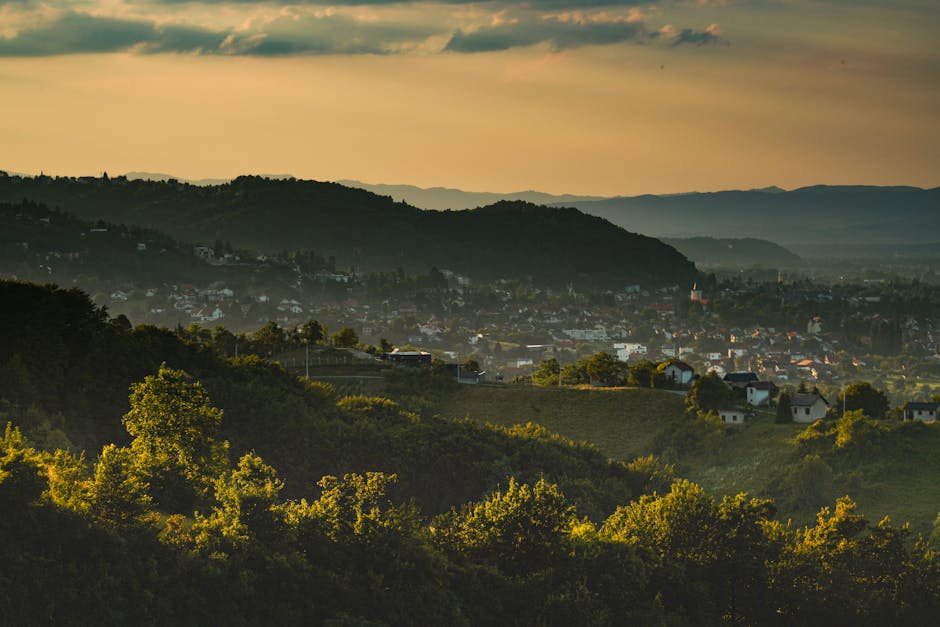
Scale Plovdiv's iconic peaks on this self-guided walking route. Capture stunning sunset views from the city's historic and natural summits.
 Moderate
Warsaw, Poland
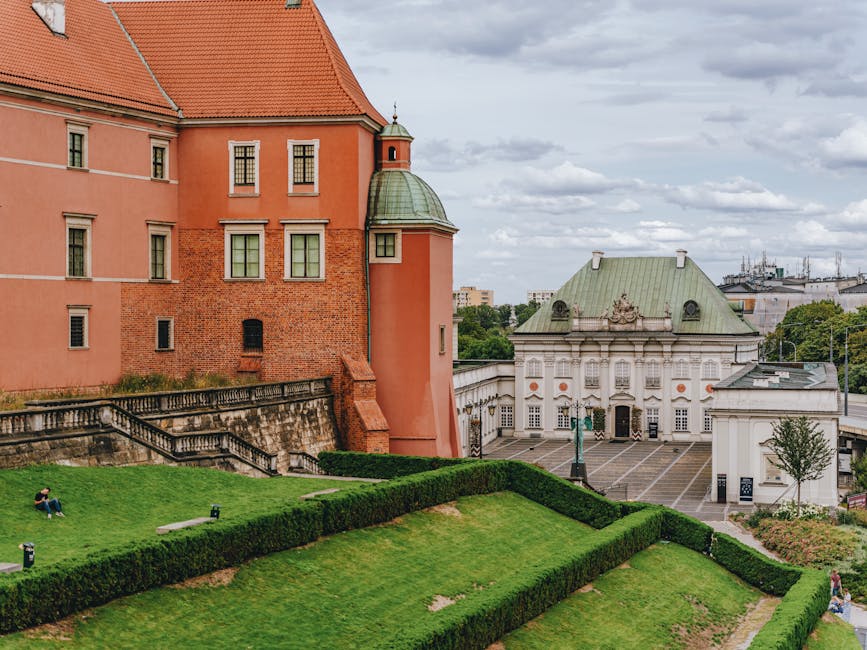
Explore the resilient spirit of Warsaw's Muranów district on this self-guided walk through the history and landmarks of the former Jewish Ghetto.
 Moderate
Gothenburg, Sweden
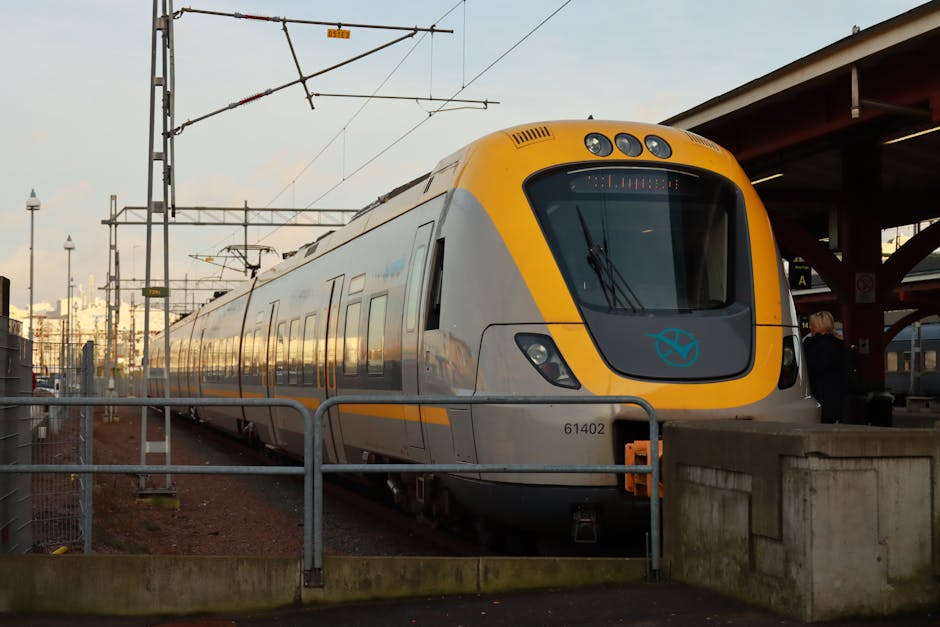
Discover Gothenburg’s maritime soul on this self-guided walk from the historic Central Station to the scenic riverfront at Stenpiren.
 Easy
EasyNairobi, Kenya
Discover Nairobi's iconic skyline on this self-guided architecture walk through the CBD’s most famous modernist and Brutalist landmarks.
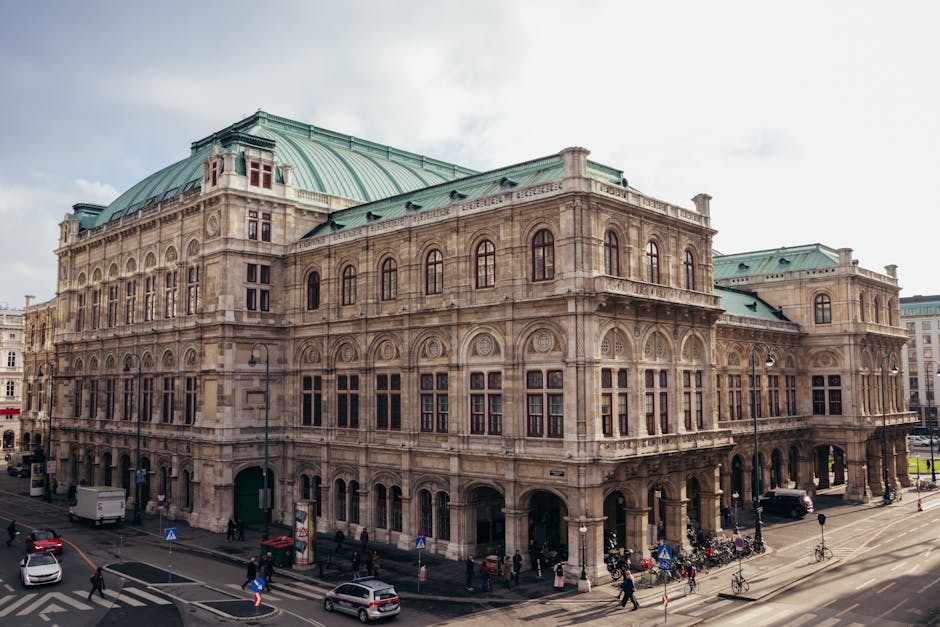 Moderate
Vienna, Austria
Follow the footsteps of Mozart and Strauss through Vienna’s historic center on this self-guided walk through the city's rich musical history.
 Easy
EasySofia, Bulgaria
Explore the homes and haunts of Bulgaria's greatest writers on this self-guided literary stroll through central Sofia.
 Easy
EasySofia, Bulgaria
Uncover Sofia's clandestine bars, bohemian courtyards, and secret social hubs on this self-guided evening walking route through the city center.
 Moderate
Sofia, Bulgaria
Explore Sofia's Communist past through its massive monuments and Brutalist architecture on this insightful self-guided walking route.
 Easy
EasySofia, Bulgaria
Discover Sofia's culinary soul on this self-guided walk through historic markets, artisan bakeries, and vibrant rakia bars.