Self-guided audio tour in Sofia
Start Free on iPhone
Start free on iPhone to unlock this self-guided walking tour in Sofia. Hear all the stories that make it amazing, walk at your own pace, and begin whenever you want.
Your Private Tour Guide
Sofia’s skyline is a living museum of the 20th century's most dramatic political shifts. This self-guided walk invites you to explore the complex history of Bulgaria’s Communist era, a period that reshaped the city’s physical and social landscape from 1944 to 1989. As you traverse the capital, you will encounter the stark contrast between grand Stalinist 'Empire' style and the massive concrete forms of late-socialist Brutalism. This route provides a deep dive into how ideology was carved into stone and bronze, leaving behind monuments that remain subjects of intense debate today. The journey begins at the Museum of Socialist Art, where the discarded statues of leaders like Lenin and the original red star from the Party House now reside in a curated garden. From there, you will head toward the city center to explore the 'Largo,' one of the finest examples of Socialist Classicism in the Balkans. You will see the Former Communist Party House, a building designed to project power and stability, and the Monument to the Soviet Army, which has become a focal point for modern political expression and street art. The walk concludes at the National Palace of Culture (NDK), a sprawling hexagonal complex that represents the peak of late-socialist architectural ambition. Along this walking route, you will uncover the stories of the people who lived through these changes and the architects who were tasked with building a new utopia. Whether you are interested in the Cold War, urban design, or the way history is remembered and forgotten, this neighborhood stroll offers a comprehensive look at Sofia’s Red Legacy. This is an essential experience for those seeking a walking tour Sofia provides that goes beyond the surface of its ancient Roman ruins to explore its more recent, turbulent past.
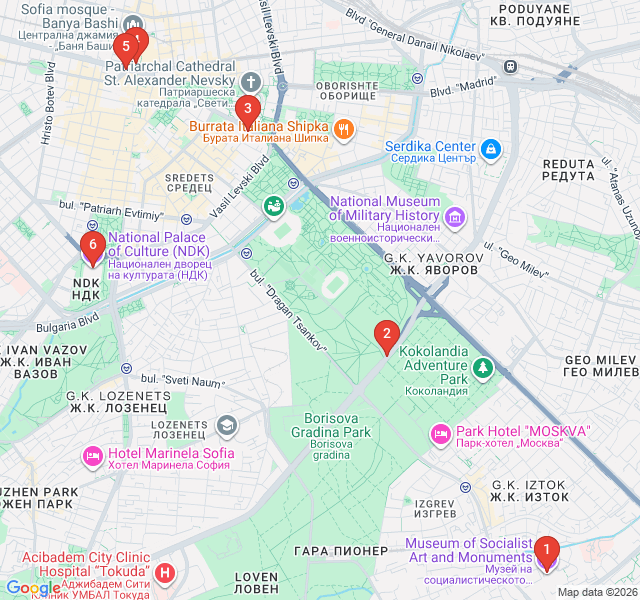
Numbers indicate the order of stops on the tour.
Begin your exploration at this unique site, which serves as a 'retirement home' for the symbols of Bulgaria's socialist past. After the fall of the regime in 1989, many statues were removed from public spaces. In this garden, you can stand face-to-face with a massive bronze Lenin and see the original ruby-red star that once sat atop the Party House in the city center. The museum offers a rare, concentrated look at the aesthetic of the era, showcasing how art was used as a tool for state propaganda. It is a quiet, contemplative place that sets the stage for understanding the scale of the ideology that once dominated the nation.
Located in a neighborhood named after two British brothers who were champions of Bulgarian causes, this stop highlights the transition of memory. While the Buxton brothers themselves were pre-socialist figures, the way monuments were designed in this residential area reflects the mid-century urban planning style. It represents the everyday side of Sofia's growth during the socialist era, where residential districts were expanded rapidly to accommodate the growing working class. Notice the surrounding apartment blocks, which offer a glimpse into the 'panelka' lifestyle that defined the living experience for millions during the Communist period.
Though this monument honors the Russian Tsar Alexander II for his role in liberating Bulgaria from Ottoman rule in 1878, it remained a significant site during the Communist era. The socialist regime heavily emphasized the historical bond between Bulgaria and Russia, framing the Soviet Union as the 'Second Liberators.' This site helps you understand the historical narrative that the Communist Party used to legitimize its close ties with Moscow. The grand square around it, surrounded by the Parliament and the Bulgarian Academy of Sciences, is the heart of the city's political and intellectual life, bridging the gap between royal history and socialist reinterpretation.
You are now standing in the center of the 'Largo,' the most prominent architectural ensemble in Sofia. This building, once the headquarters of the Bulgarian Communist Party, is a classic example of Socialist Classicism, or 'Stalinist Empire' style. Completed in the 1950s, its heavy columns and symmetrical design were intended to inspire awe and project the permanence of the state. While the red star is gone—replaced by the Bulgarian flag—the building still dominates the square. Look closely at the facades of the surrounding buildings, which now house the President's Office and a luxury hotel, to see the intricate socialist-era carvings and symbols still embedded in the stone.
This is perhaps the most debated landmark in Sofia. Built in 1954 to commemorate the 10th anniversary of the Soviet entry into Bulgaria, it features a Red Army soldier flanked by a Bulgarian worker and a mother. In recent years, it has become a canvas for political protest; the bronze figures have been famously painted as American superheroes, Ukrainian soldiers, and even Pussy Riot members. As you walk around it, you'll see the tension between those who view it as a piece of history and those who see it as a symbol of occupation. It remains a vibrant, if controversial, public space for the city's youth and activists.
The walk ends at the National Palace of Culture, known locally as NDK. Opened in 1981 to celebrate the 1300th anniversary of the Bulgarian state, this is the largest multi-functional conference and exhibition center in Southeast Asia. Its hexagonal, Brutalist design is a masterpiece of late-socialist architecture, emphasizing functionality and massive scale. The surrounding park is a favorite local hangout, featuring fountains and a segment of the Berlin Wall nearby. NDK represents a shift in the regime's focus toward cultural prestige and national identity in its later years. It is the perfect place to reflect on the layers of Sofia's history while enjoying the modern energy of the city.
Start Free on iPhone
Explore “Red Stars and Brutalism: Sofia's Communist Legacy” with your very own Private Tour Guide with Zigway. Start free on iPhone, skip the large group and the fixed routes, and hear the city come alive as you go.
Your Private Tour Guide
Don't miss the good stuff
Explore Freely
 Easy
EasySofia, Bulgaria
Explore the homes and haunts of Bulgaria's greatest writers on this self-guided literary stroll through central Sofia.
 Easy
EasySofia, Bulgaria
Uncover Sofia's clandestine bars, bohemian courtyards, and secret social hubs on this self-guided evening walking route through the city center.
 Easy
EasySofia, Bulgaria
Discover Sofia's culinary soul on this self-guided walk through historic markets, artisan bakeries, and vibrant rakia bars.
 Easy
EasySofia, Bulgaria
Discover Sofia's secret courtyards, artisan boutiques, and ancient ruins on this self-guided walk through the city's most charming hidden passages.
 Moderate
Warsaw, Poland
Explore the resilient spirit of Warsaw's Muranów district on this self-guided walk through the history and landmarks of the former Jewish Ghetto.
 Moderate
Vienna, Austria
Follow the footsteps of Mozart and Strauss through Vienna’s historic center on this self-guided walk through the city's rich musical history.
 Moderate
Gdansk, Poland
Discover the origins of WWII in Gdansk on this self-guided walk through heroic last stands, massive museums, and strategic hilltop fortifications.
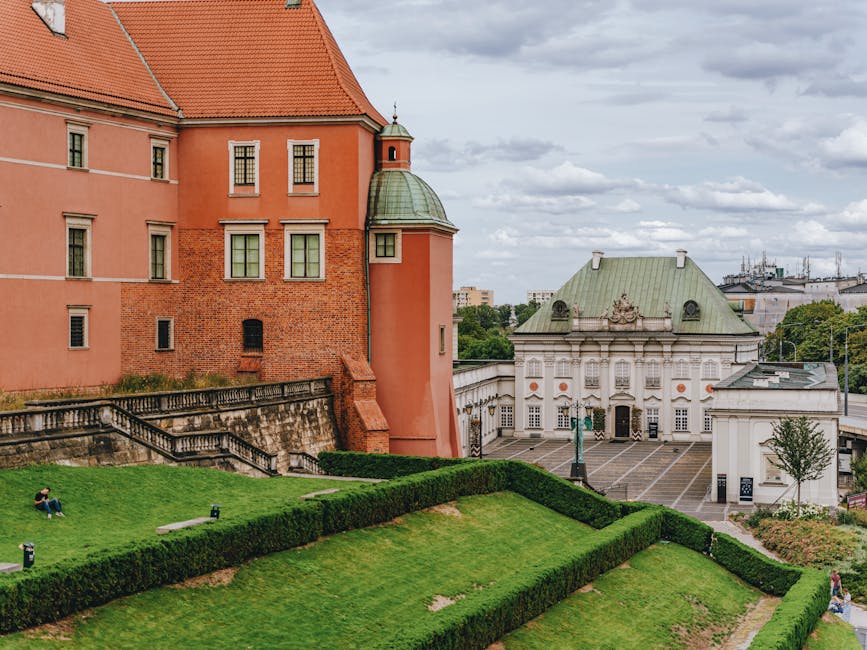 Moderate
Warsaw, Poland
A powerful self-guided walk through Warsaw's WWII history, tracking the 1944 Uprising from ruined skyscrapers to solemn memorials.
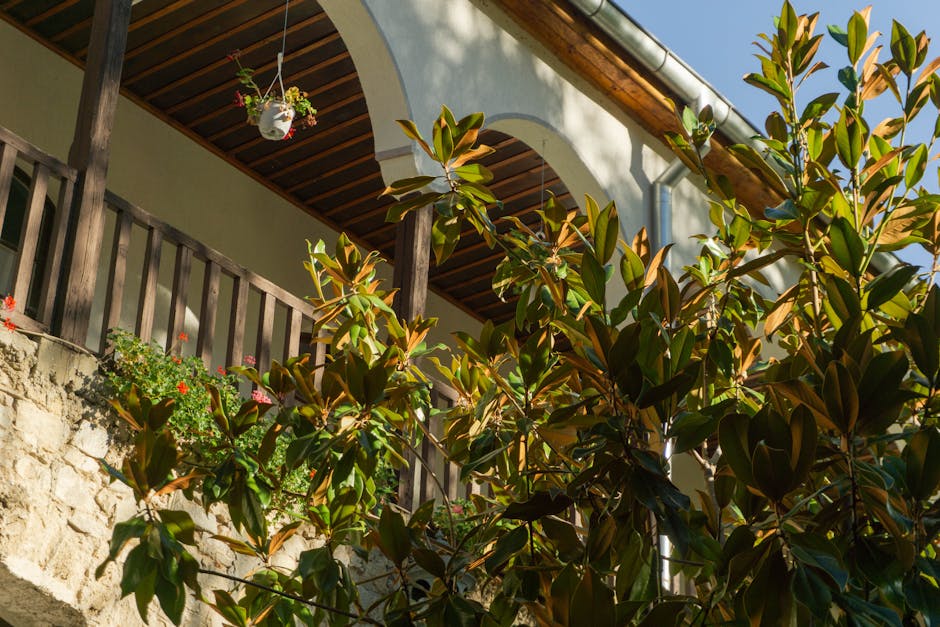 Moderate
Plovdiv, Bulgaria
Explore Plovdiv’s socialist past, from the towering Alyosha monument to Brutalist gems and the International Fair on this self-guided walking route.
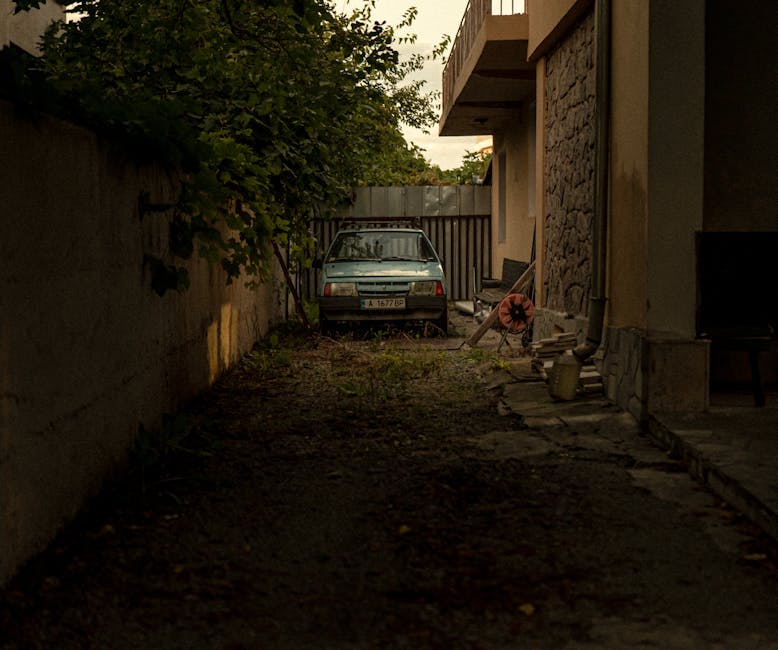 Moderate
Plovdiv, Bulgaria
Discover secret gardens and secluded 19th-century courtyards in Plovdiv's historic Old Town on this peaceful self-guided walk.
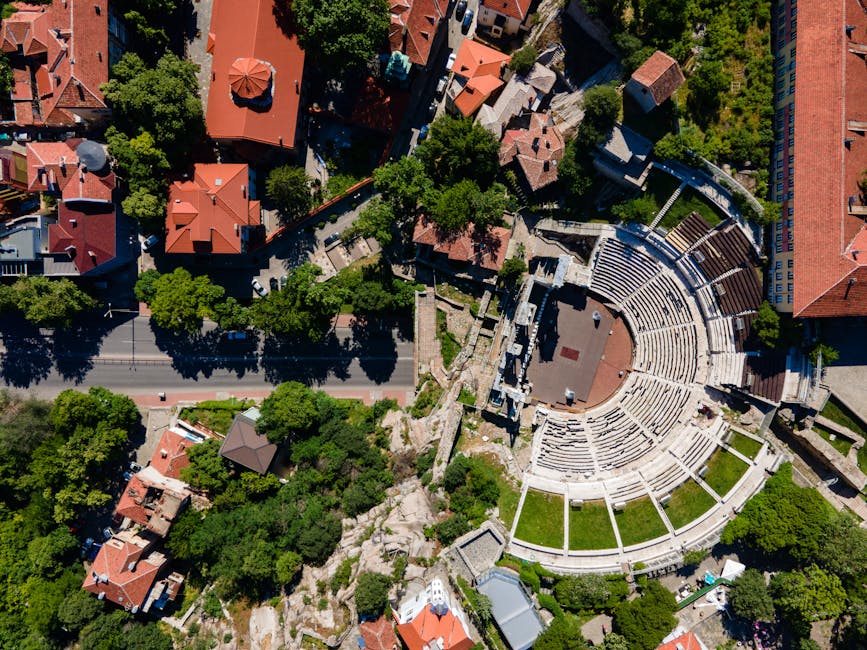 Easy
EasyPlovdiv, Bulgaria
Discover the Roman heart of Philippopolis on this self-guided walk through Plovdiv's ancient forums, massive stadium, and breathtaking mosaics.
 Easy
EasyPlovdiv, Bulgaria
Discover Plovdiv's multi-layered history on this self-guided walk through ancient Roman ruins, Ottoman mosques, and vibrant Orthodox cathedrals.