Self-guided audio tour in Plovdiv
Start Free on iPhone
Start free on iPhone to unlock this self-guided walking tour in Plovdiv. Hear all the stories that make it amazing, walk at your own pace, and begin whenever you want.
Your Private Tour Guide
While Plovdiv is famous for its ancient Roman theater and colorful 19th-century Old Town, a more recent layer of history often hides in plain sight. This self-guided walk invites you to look beyond the ruins and explore the monumental legacy of Bulgaria’s socialist period. From the late 1940s until 1989, Plovdiv was transformed by the architectural and artistic language of Communism, leaving behind a skyline defined by Brutalist concrete and heroic granite figures. This neighborhood stroll takes you through the heart of the city and across the Maritsa River to uncover the stories of ideology, modernization, and controversy etched into these massive structures. On this walking route, you will encounter the iconic Central Post Office, a masterpiece of Socialist Modernism that dominates the central square. You will then ascend Bunardzhik Hill to stand beneath the gaze of Alyosha, the 11-meter-tall Soviet soldier who remains one of the most debated landmarks in the country. The journey continues toward the International Fair grounds, a symbol of socialist economic ambition, and concludes at the Brotherhood Cairn, a haunting Brutalist memorial that looks like a concrete blossom emerging from the earth. This is more than just an architecture walk; it is a dive into the complex identity of a city that has lived through empires, kingdoms, and regimes. By choosing a self-guided adventure, you can spend as much time as you like analyzing the intricate bas-reliefs or simply soaking in the panoramic views of the city from the hills. Discover at your own pace how Plovdiv’s socialist heritage continues to echo through its modern streets, offering a fascinating contrast to the better-known ancient sites. This walking tour Plovdiv experience provides a unique perspective on 20th-century history without the constraints of a rigid schedule.
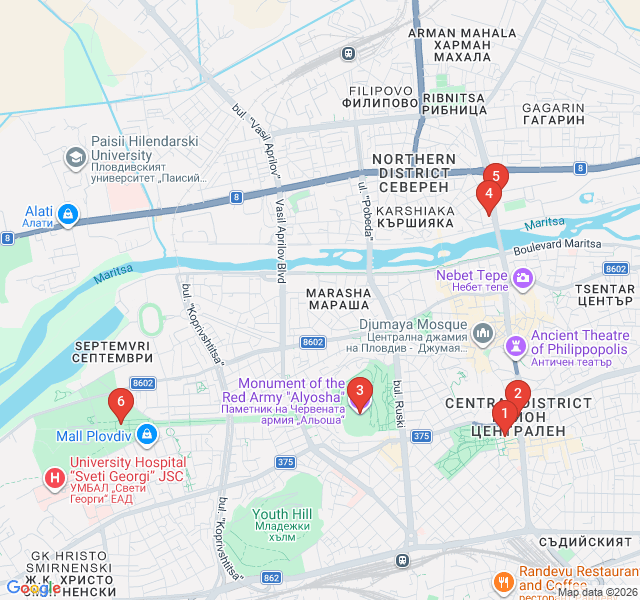
Numbers indicate the order of stops on the tour.
Standing at the edge of Central Square, the Central Post Office is a quintessential example of Socialist Modernism. Built in the 1970s and later expanded, its massive, blocky structure was designed to represent the efficiency and connectivity of the state. Look closely at the facade and the surrounding plaza; this area was the heart of socialist public life, where parades and official gatherings took place. The building sits directly atop parts of the ancient Roman Forum, a physical manifestation of how the socialist regime literally built upon the layers of the past to assert its new vision for Bulgaria.
This building serves as the administrative heart of the city. While it has undergone renovations, its placement and style reflect the mid-century transition in Bulgarian civic architecture. During the socialist era, City Hall was the local seat of the Communist Party's administrative power. The square in front, featuring a fountain and open space, was designed to facilitate the movement of large crowds, typical of the urban planning of the era which prioritized grand, collective spaces over intimate private ones.
Perched atop Bunardzhik Hill, Alyosha is one of Plovdiv’s most visible and controversial landmarks. Erected in 1957, this 11-meter-tall granite statue of a Soviet soldier commemorates the Red Army's entry into Bulgaria during World War II. For decades, it was a site of mandatory pilgrimage for schoolchildren and workers. Today, it remains a point of heated debate: some see it as a historical monument, while others view it as a symbol of occupation. Regardless of political views, the site offers some of the most breathtaking 360-degree views of Plovdiv and the surrounding Rhodope Mountains.
As you cross the river, you see Hotel Maritsa. During the socialist period, this was the city's premier luxury hotel, designed specifically to house foreign delegates and businessmen attending the International Fair. Its architecture is functional yet imposing, intended to show international visitors that Plovdiv was a modern, cosmopolitan city capable of hosting the world. It stands as a reminder of the 'prestige projects' the government funded to bolster the nation's image during the Cold War.
The International Fair is a massive complex that was the pride of socialist Bulgaria’s industrial and economic ambitions. Founded much earlier, it was during the Communist era that it became a massive showcase for the Eastern Bloc’s technological achievements. The various pavilions exhibit a range of architectural styles from the 1950s through the 80s. Walking past its gates, you can imagine the thousands of visitors who once flocked here to see the latest Soviet tractors, Bulgarian computers, and heavy machinery, all under the watchful eye of the state.
The Brotherhood Cairn is perhaps the most striking Brutalist monument in Plovdiv. Designed by the famous sculptor Lyubomir Dalchev and opened in 1974, its shape is inspired by a Thracian burial mound, but rendered in sharp, dramatic concrete. It was built to honor the fallen in the struggle against fascism and the socialist revolution. Inside (though often closed to the public), it contains a 90-meter-long frieze and an eternal flame. The surrounding park, once a site for solemn ceremonies, is now a quiet spot for locals, showing how these ideological spaces have been reclaimed by everyday life.
Start Free on iPhone
Explore “Concrete Echoes: Plovdiv’s Socialist Heritage” with your very own Private Tour Guide with Zigway. Start free on iPhone, skip the large group and the fixed routes, and hear the city come alive as you go.
Your Private Tour Guide
Don't miss the good stuff
Explore Freely
 Moderate
Plovdiv, Bulgaria
Discover secret gardens and secluded 19th-century courtyards in Plovdiv's historic Old Town on this peaceful self-guided walk.
 Easy
EasyPlovdiv, Bulgaria
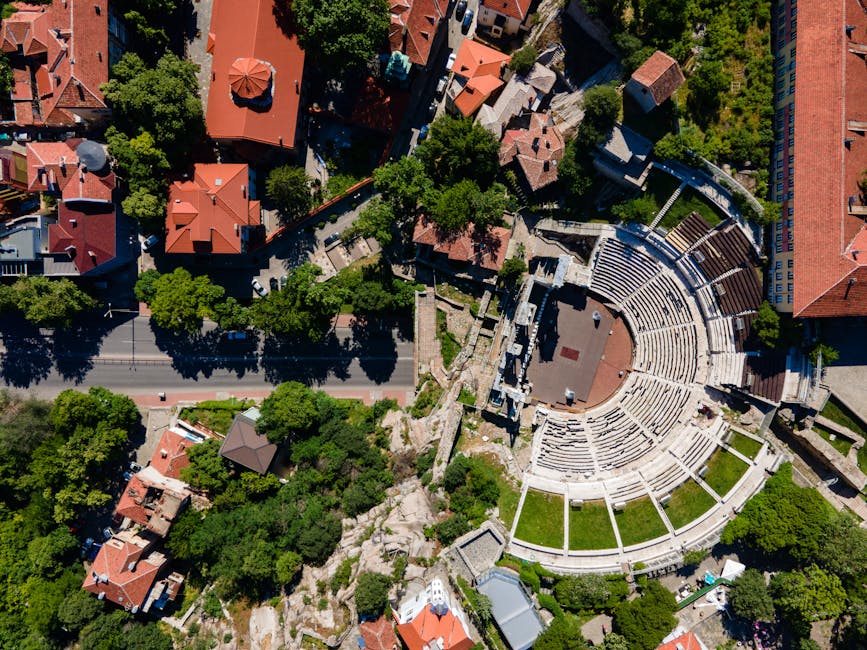
Discover the Roman heart of Philippopolis on this self-guided walk through Plovdiv's ancient forums, massive stadium, and breathtaking mosaics.
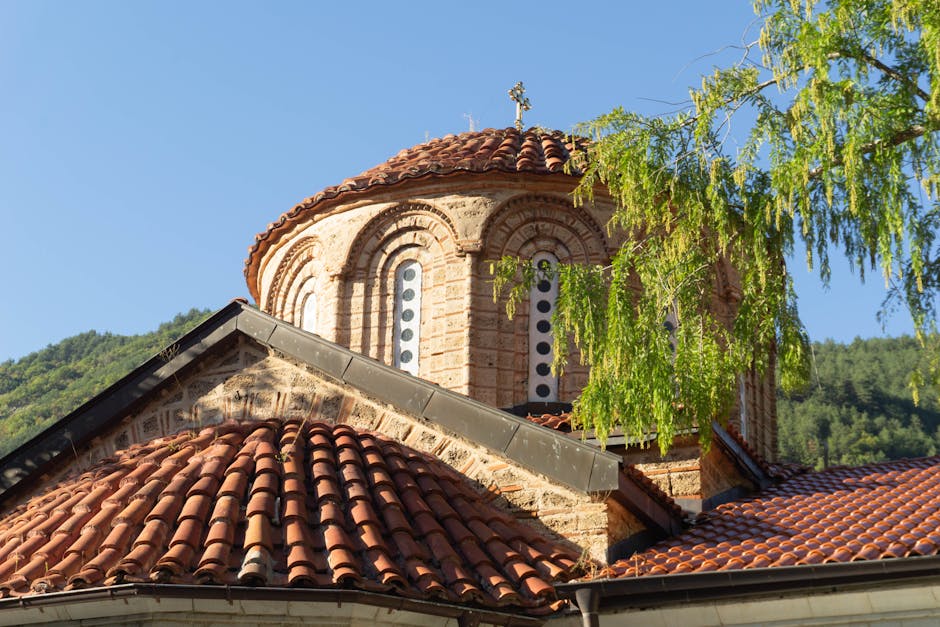 Easy
EasyPlovdiv, Bulgaria
Discover Plovdiv's multi-layered history on this self-guided walk through ancient Roman ruins, Ottoman mosques, and vibrant Orthodox cathedrals.
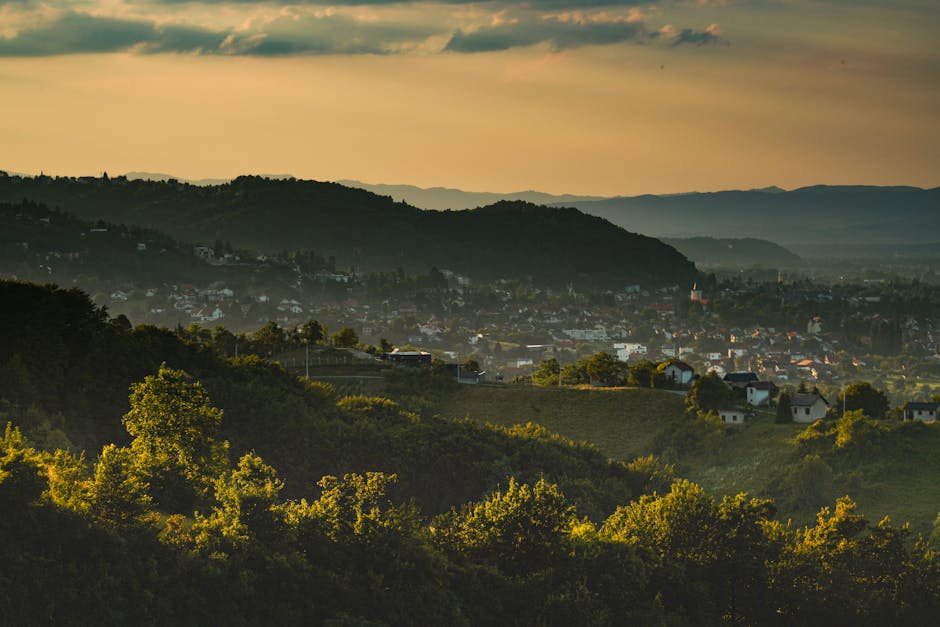 Challenging
Plovdiv, Bulgaria
Scale Plovdiv's iconic peaks on this self-guided walking route. Capture stunning sunset views from the city's historic and natural summits.
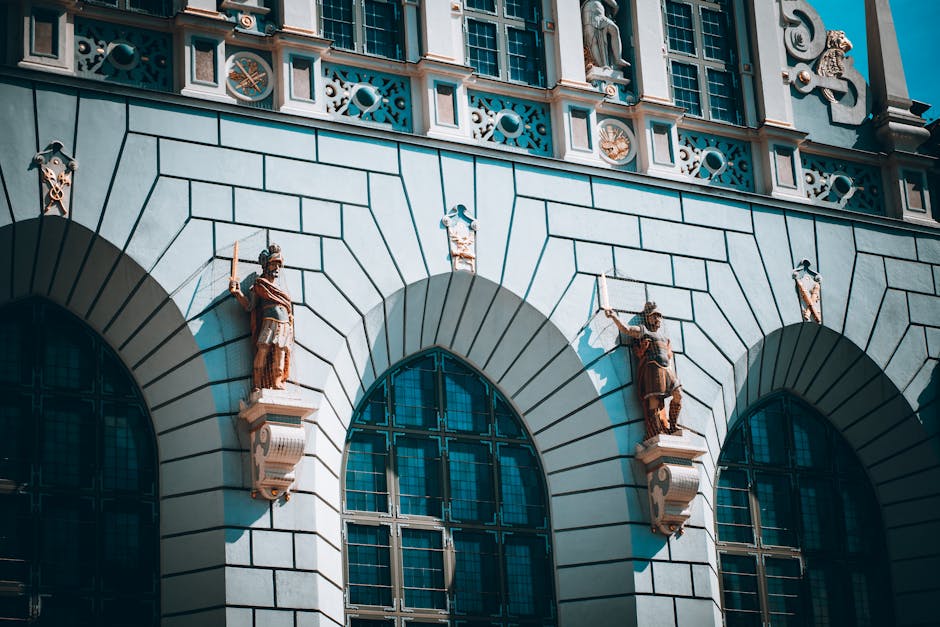 Moderate
Gdansk, Poland
Discover the origins of WWII in Gdansk on this self-guided walk through heroic last stands, massive museums, and strategic hilltop fortifications.
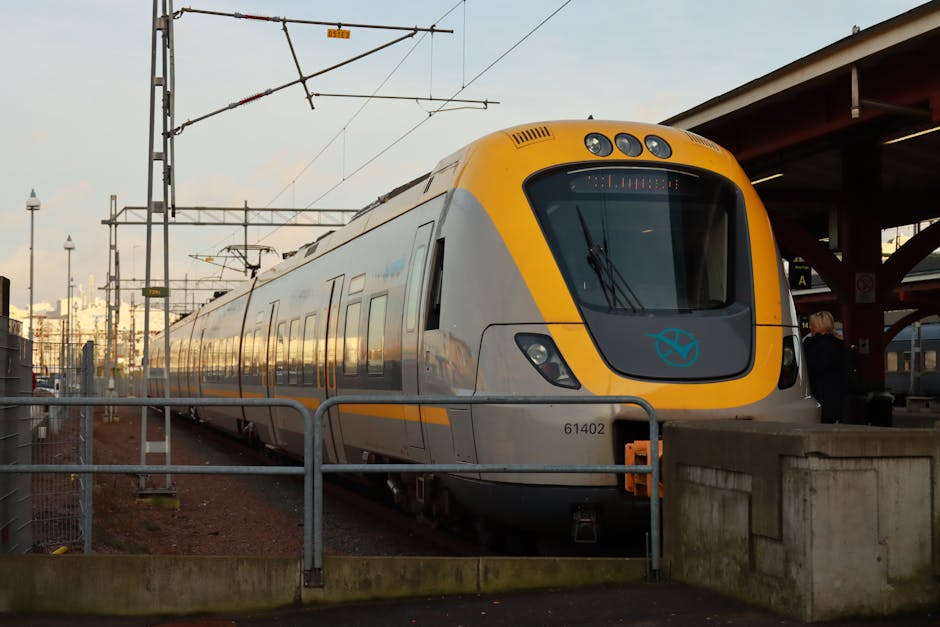 Moderate
Gothenburg, Sweden
Discover Gothenburg’s maritime soul on this self-guided walk from the historic Central Station to the scenic riverfront at Stenpiren.
 Easy
EasyNairobi, Kenya
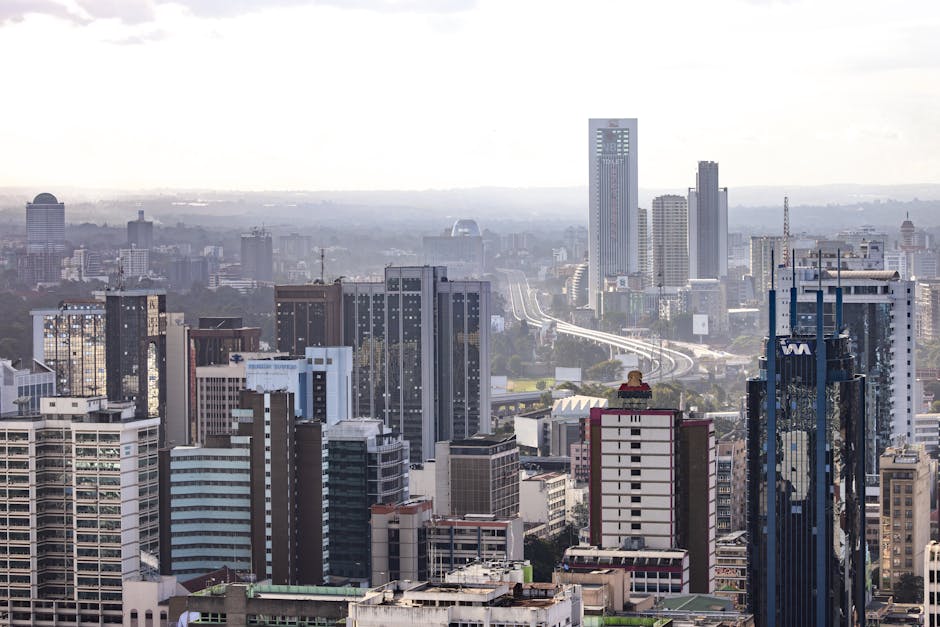
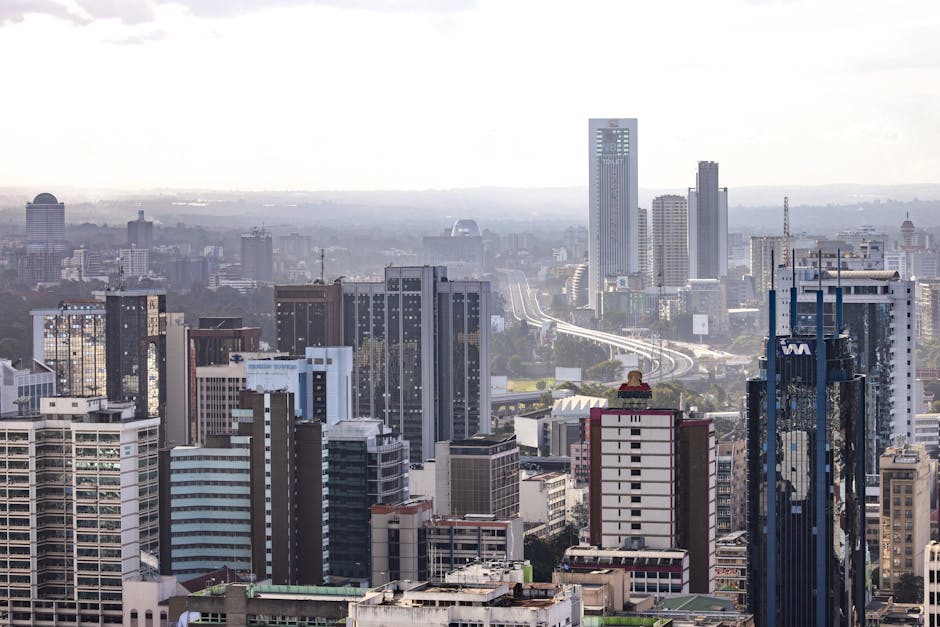
Discover Nairobi's iconic skyline on this self-guided architecture walk through the CBD’s most famous modernist and Brutalist landmarks.
 Moderate
Nairobi, Kenya
Discover Nairobi's lush side on this self-guided walk through botanical gardens, historic memorials, and vibrant local markets.
 Easy
EasySofia, Bulgaria
Explore the homes and haunts of Bulgaria's greatest writers on this self-guided literary stroll through central Sofia.
 Easy
EasySofia, Bulgaria
Uncover Sofia's clandestine bars, bohemian courtyards, and secret social hubs on this self-guided evening walking route through the city center.
 Moderate
Sofia, Bulgaria
Explore Sofia's Communist past through its massive monuments and Brutalist architecture on this insightful self-guided walking route.
 Easy
EasySofia, Bulgaria
Discover Sofia's culinary soul on this self-guided walk through historic markets, artisan bakeries, and vibrant rakia bars.