Self-guided audio tour in Zagreb
Start Free on iPhone
Start free on iPhone to unlock this self-guided walking tour in Zagreb. Hear all the stories that make it amazing, walk at your own pace, and begin whenever you want.
Your Private Tour Guide
Step back into the 13th century with this self-guided walk through Gornji Grad, the historic heart of Zagreb. Once known as Gradec, this hilltop settlement was a fortified town defined by its rivalry with neighboring Kaptol and its struggle against medieval threats. This neighborhood stroll leads you through narrow alleys where gas lamps still flicker at dusk, illuminating a past filled with legends of witchcraft, miraculous fires, and defensive towers. Your journey begins at the statue of the Witch of Grič, a tribute to both local folklore and the pioneering woman who brought these stories to life. As you explore independently, you will encounter the Stone Gate, the only surviving medieval entrance to the old town, which remains a site of deep spiritual significance for locals. The route continues to the iconic St. Mark's Church, famous for its colorful tiled roof that displays the heraldic history of the region. You will also experience the grandeur of Katarinin Trg and the defensive might of the Lotrščak Tower, where a daily cannon blast has marked noon for over a century. This walking route Zagreb offers a perfect blend of architectural mastery and atmospheric storytelling, concluding in the subterranean depths of the Grič Tunnel, a relic of 20th-century history hidden beneath the medieval streets. Whether you are a history buff or a photography enthusiast, this audio walk provides the freedom to discover the shadows of Zagreb’s past at your own pace, away from the constraints of a traditional walking tour Zagreb.
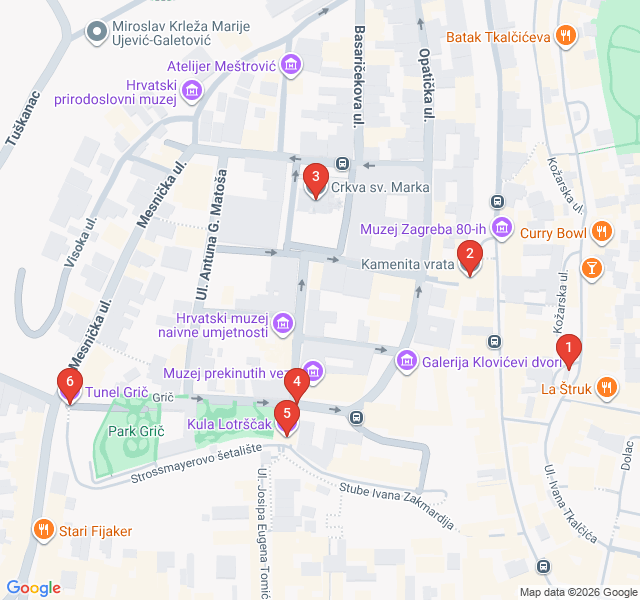
Numbers indicate the order of stops on the tour.
Begin your self-guided adventure at the statue of Marija Jurić Zagorka, located near the Dolac Market. Zagorka was Croatia’s first female journalist and a prolific novelist who penned 'The Witch of Grič,' a story that blended historical facts with local legends of witchcraft trials in the 1700s. The statue stands as a symbol of female defiance and literary heritage. In medieval Gradec, accusations of witchcraft were a grim reality, often used to settle local disputes. As you look at the figure of Zagorka, imagine the atmospheric, dark alleys she described, which you are about to explore. This spot marks the transition from the bustling Lower Town to the mysterious Upper Town.
Walk up the hill to reach the Stone Gate, or Kamenita Vrata. This is the only medieval town gate still standing from the original five that once guarded Gradec. However, it isn't just a piece of military architecture; it is a sacred shrine. In 1731, a devastating fire destroyed most of the wooden structure, but a painting of the Virgin Mary and Child was found miraculously untouched among the ashes. Today, you will see locals pausing here to light candles and pray in the quiet, soot-stained passage. Look closely at the walls to see 'Hvala' (Thank You) tablets left by those who believe their prayers were answered here.
Emerging from the Stone Gate, you enter St. Mark’s Square, the political heart of Croatia. The centerpiece is St. Mark’s Church, one of Zagreb’s oldest architectural monuments. While the Romanesque windows date back to the 13th century, the church is most famous for its vibrant 1880s tiled roof. On the left, the coat of arms represents the Triune Kingdom of Croatia, Dalmatia, and Slavonia; on the right is the emblem of Zagreb itself—a white castle on a red background. The square is also home to the Banski Dvori (Government Palace) and the Croatian Parliament, symbolizing the long history of self-governance in this region.
Continue south to St. Catherine’s Square, dominated by the Baroque Church of St. Catherine. Built by the Jesuits in the 17th century, it is considered one of the most beautiful churches in the city. The square itself offers a moment of tranquility away from the main thoroughfares. If you walk to the edge of the plateau behind the church, you will find one of the best vantage points in the Upper Town. From here, you can see the twin spires of the Zagreb Cathedral in Kaptol, reminding us of the centuries-long rivalry between the ecclesiastical Kaptol and the secular, fortified Gradec where you now stand.
Next is the Lotrščak Tower, built in the mid-13th century to guard the southern gate of the town walls. Its name comes from the 'campana latrunculorum' or 'thieves' bell,' which rang every evening to signal the closing of the town gates. Since 1877, the tower has housed the Grič Cannon. Every day at exactly noon, the cannon fires a thunderous blast to synchronize the city's clocks. If you arrive at midday, expect a loud surprise! The tower stands next to the Strossmayer Promenade and the top station of the Zagreb Funicular, the shortest cable car ride in the world, which has connected the Upper and Lower towns since 1890.
For your final stop, descend from the heights of the hill into the Grič Tunnel. This 350-meter-long underground passage was built during World War II as a bomb shelter. After decades of neglect, it served as a site for early 1990s raves and a shelter during the Croatian War of Independence before being renovated as a public walkway and exhibition space. Walking through its cool, damp interior offers a stark contrast to the medieval streets above. The tunnel connects the Mesnička and Radićeva streets, serving as a literal bridge between Zagreb’s wartime history and its modern urban life. Exit toward Radićeva street to find yourself back near the vibrant cafes of the city center.
Start Free on iPhone
Explore “Medieval Shadows of Gornji Grad” with your very own Private Tour Guide with Zigway. Start free on iPhone, skip the large group and the fixed routes, and hear the city come alive as you go.
Your Private Tour Guide
Don't miss the good stuff
Explore Freely
 Easy
EasyZagreb, Croatia
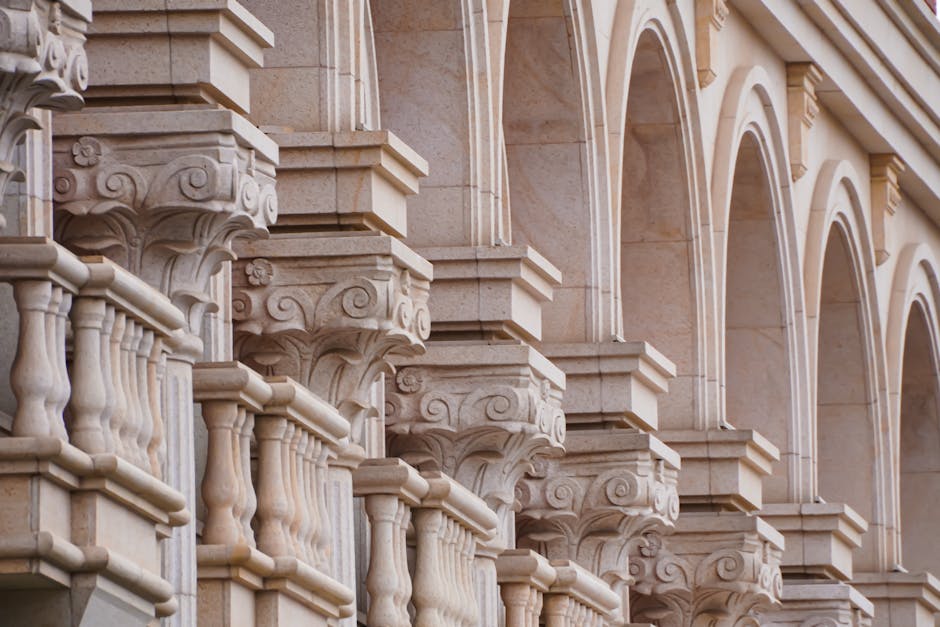
Explore Zagreb's grand 'Green Horseshoe' on this self-guided walk through stunning 19th-century parks, iconic museums, and lush gardens.
 Moderate
Zagreb, Croatia
Discover the Brutalist icons of Novi Zagreb on this self-guided walk through massive residential blocks and striking socialist-era architecture.
 Moderate
Zagreb, Croatia
Explore the dark folklore and witch-hunt history of Zagreb's Upper Town on this atmospheric self-guided audio walk through Gornji Grad.
 Easy
EasyZagreb, Croatia
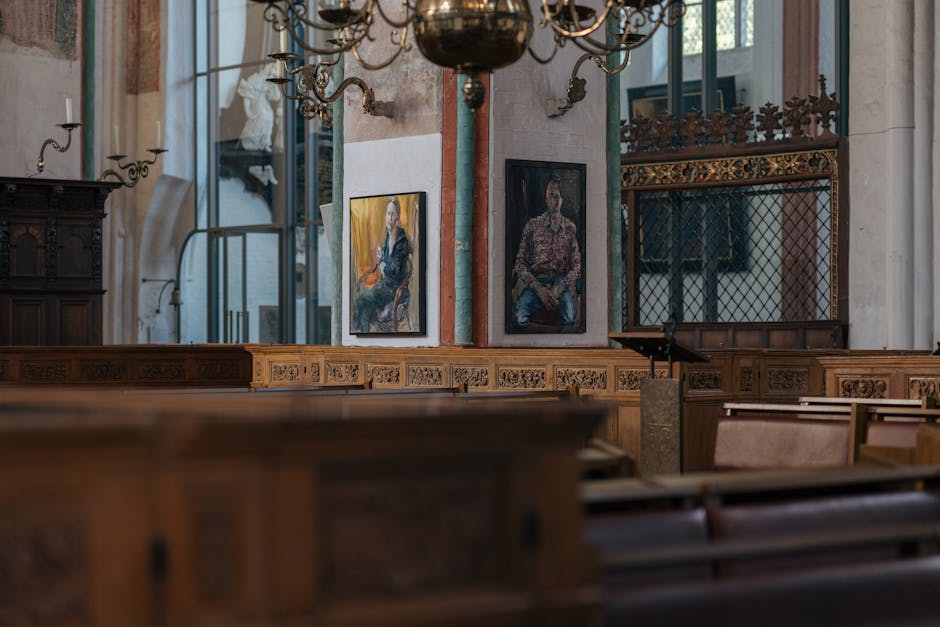
Explore Zagreb's stunning Mirogoj Cemetery and iconic university architecture on this peaceful, self-guided artistic journey.
 Easy
EasyNairobi, Kenya
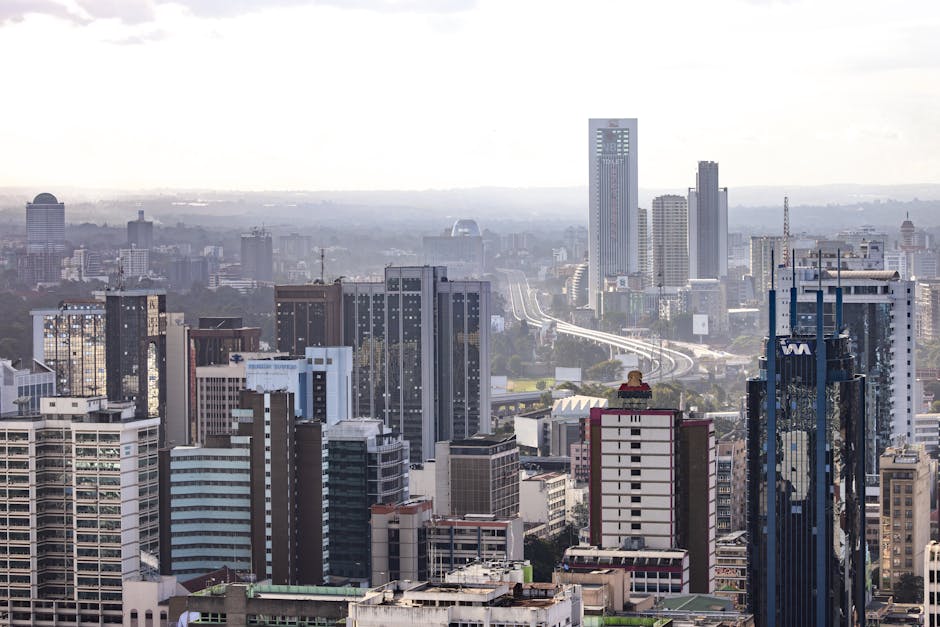
Discover Nairobi's iconic skyline on this self-guided architecture walk through the CBD’s most famous modernist and Brutalist landmarks.
 Moderate
Vienna, Austria
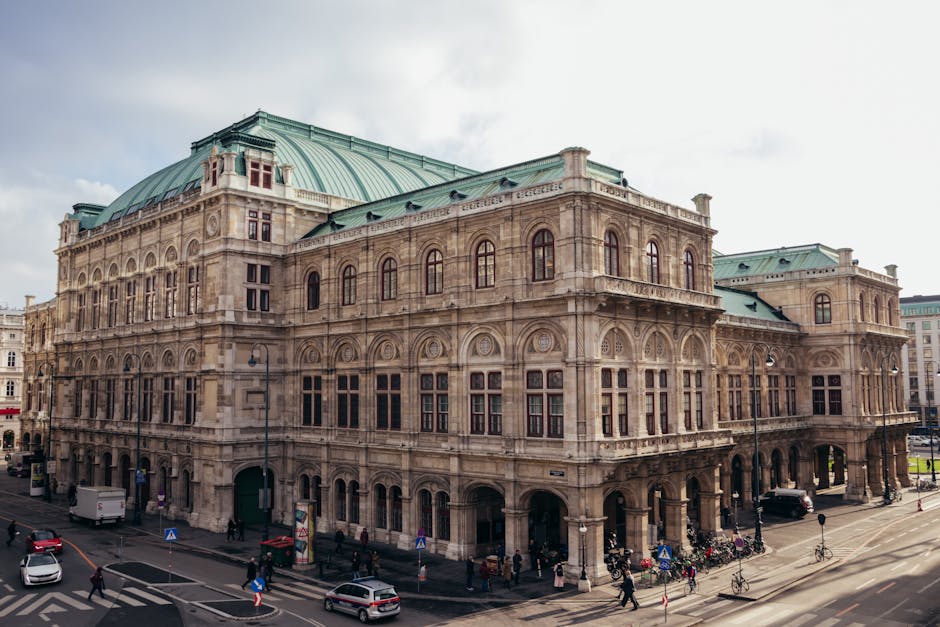
Discover the noir world of The Third Man and Cold War Vienna on this atmospheric self-guided audio walk through the historic Innere Stadt.
 Easy
EasyGdansk, Poland
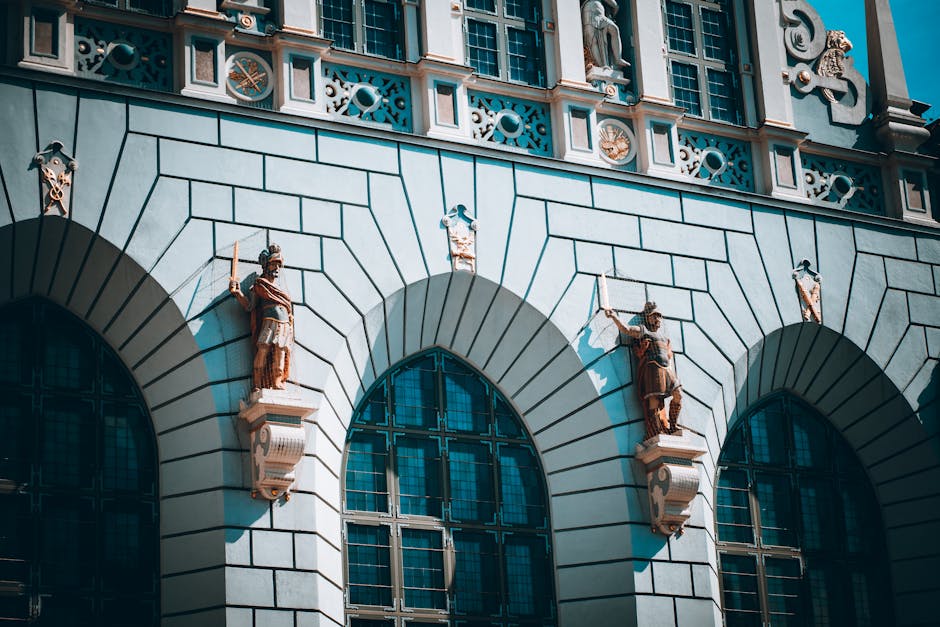
Discover the opulent Royal Way of Gdansk at your own pace. Explore Hanseatic history, gilded architecture, and the iconic Neptune's Fountain.
 Moderate
Gothenburg, Sweden
Discover Gothenburg’s maritime soul on this self-guided walk from the historic Central Station to the scenic riverfront at Stenpiren.
 Easy
EasyDubrovnik, Croatia
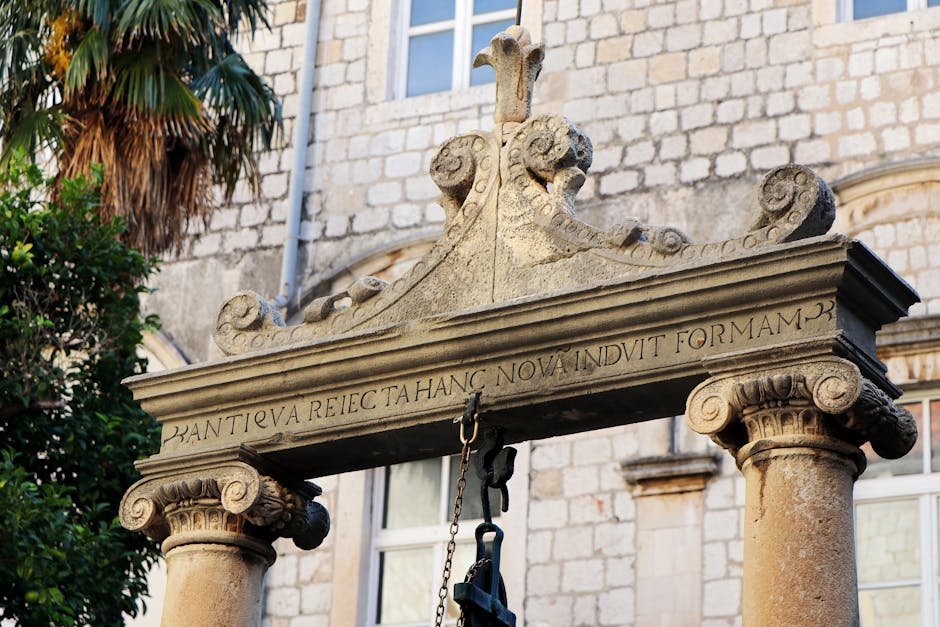
Explore Dubrovnik’s legendary maritime history on this self-guided walk through the Old Port, ancient shipyards, and the historic quarantine station.
 Easy
EasyDubrovnik, Croatia
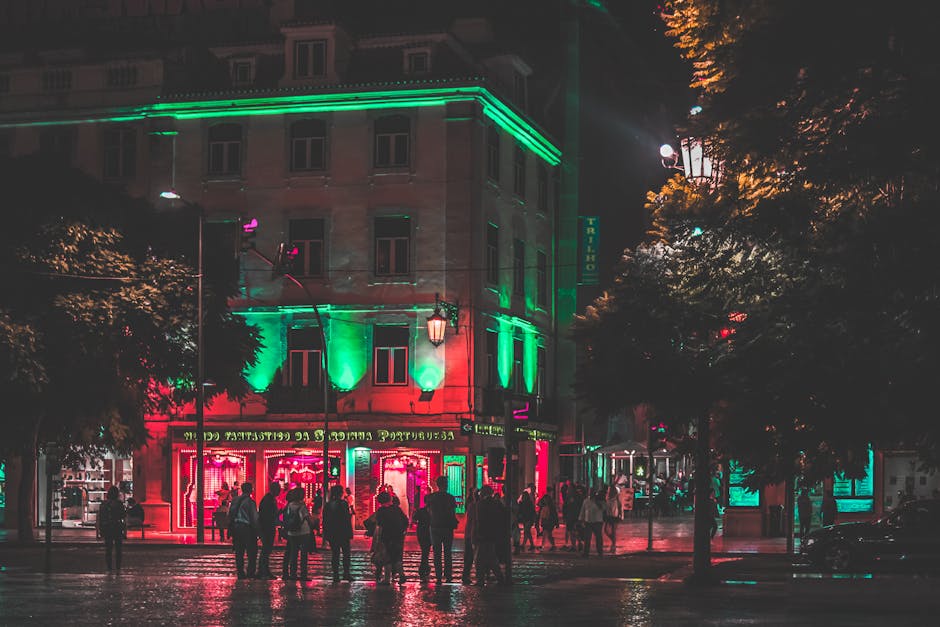
Discover Dubrovnik's nocturnal charm on this self-guided walk through lantern-lit alleys, jazz spots, and hidden cliffside bars.
 Moderate
Dubrovnik, Croatia
Escape the crowds and discover Dubrovnik's wild side on this scenic self-guided coastal walk through Lapad's pine forests and hidden bays.
 Easy
EasyDubrovnik, Croatia
Discover Dubrovnik's intellectual soul on this self-guided walk through ancient libraries, historic pharmacies, and serene monastic cloisters.