Self-guided audio tour in Dubrovnik
Start Free on iPhone
Start free on iPhone to unlock this self-guided walking tour in Dubrovnik. Hear all the stories that make it amazing, walk at your own pace, and begin whenever you want.
Your Private Tour Guide
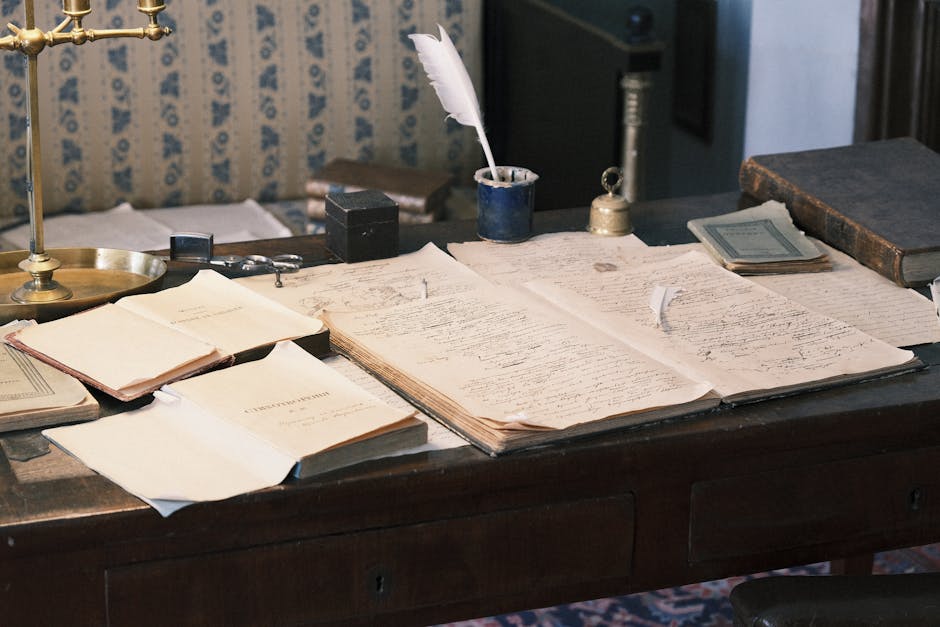
Step into a world where stone walls whisper secrets of medieval medicine and Renaissance poetry. Dubrovnik is often celebrated for its formidable fortifications, but this self-guided walk invites you to look beyond the ramparts and into the intellectual and spiritual heart of the 'Pearl of the Adriatic.' This route focuses on the city's rich literary heritage and the monastic traditions that preserved knowledge through centuries of upheaval. You will explore quiet cloisters that feel worlds away from the bustling main street, Stradun, and discover how Dubrovnik became a beacon of culture in the Mediterranean. This neighborhood stroll takes you through the most significant repositories of history in the Old Town. You will see the Franciscan Monastery, home to one of the world's oldest continuously operating pharmacies, and the Dominican Monastery, which houses a staggering collection of incunabula and Renaissance art. The path also honors the city’s literary giants, particularly at the House of Marin Držić, where the life of the 'Dubrovnik Shakespeare' comes into focus. Unlike a standard walking tour Dubrovnik often offers to cruise ship crowds, this walking route allows you to linger in the cool shadows of Gothic arches and spend time with ancient manuscripts at your own pace. You will encounter the Sponza Palace, a masterpiece of Gothic-Renaissance architecture that served as the city’s custom house and mint, now guarding the Republic's precious archives. The journey concludes at the stunning Church of St. Ignatius, reached by the famous Baroque staircase. Whether you are a bibliophile, a history enthusiast, or simply someone looking for a peaceful way to experience the city's deeper layers, this audio walk provides a comprehensive look at the scholars and saints who shaped Dubrovnik. Experience the city as a living museum of human achievement, where every library shelf and monastery garden tells a story of resilience and enlightenment. For those seeking a guided tour Dubrovnik has many options, but none offer the flexibility and intimacy of exploring these hallowed halls independently.
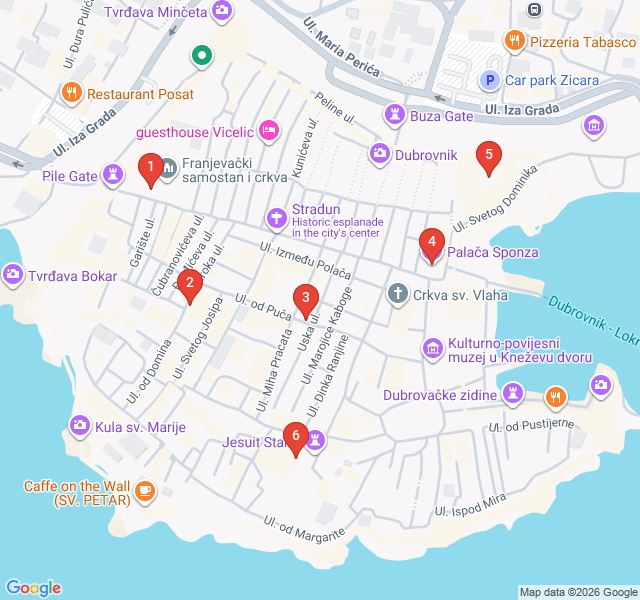
Numbers indicate the order of stops on the tour.
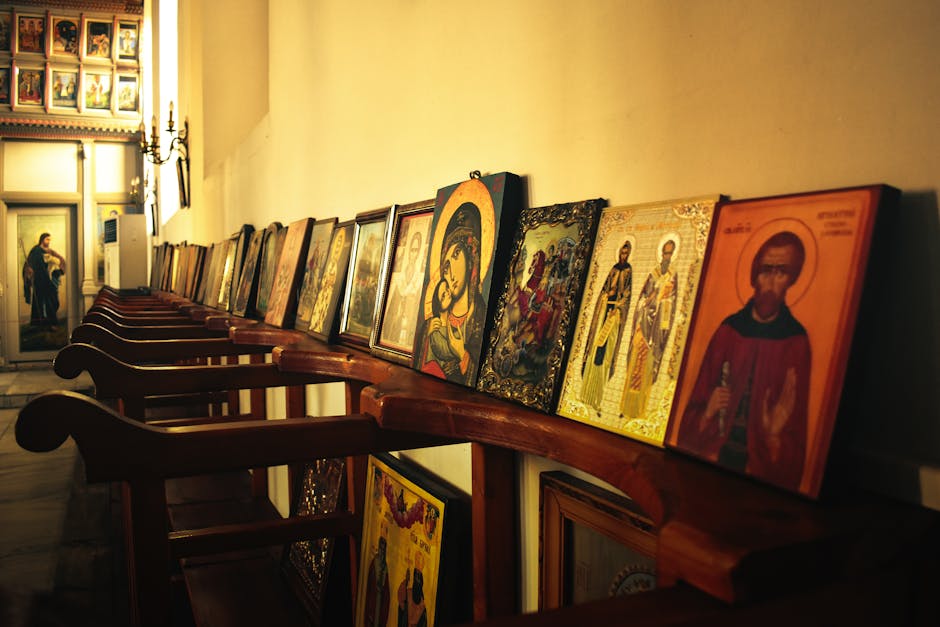
Start your journey at the Franciscan Monastery, located just inside the Pile Gate. Founded in 1317, this complex is a masterpiece of Romanesque and Gothic design. Its most famous feature is the Old Pharmacy, which has been dispensing remedies for over 700 years, making it one of the oldest continuously operating pharmacies in the world. As you walk through the cloister, look for the intricate carvings on the capitals of the columns, each depicting unique animal and human figures. The monastery also houses a library with over 30,000 volumes and 1,500 valuable manuscripts. It’s a place where science and spirituality have coexisted for centuries, providing a sanctuary for both the body and the mind of Dubrovnik’s citizens.
A short walk from the monastery brings you to the home of Marin Držić, the most celebrated playwright of the Croatian Renaissance. Often called the 'Shakespeare of Dubrovnik,' Držić was a master of comedy and social satire. This museum, located in the house where he lived, offers a glimpse into 16th-century life and the theatrical world of the Republic. Držić’s works are still performed today during the Dubrovnik Summer Festival, reflecting the city's enduring love for the performing arts. The exhibits here use modern technology to bring his characters and the political intrigues of his time to life, highlighting the city's role as a cultural powerhouse during the Renaissance.
Continue toward the heart of the Old Town to find the City Library, housed in the magnificent Gradskac-Crijević-Pucić Palace. This Baroque building is more than just a place to borrow books; it is a symbol of the city's commitment to literacy and learning. The palace itself is a work of art, featuring a grand staircase and elegant salons that have been preserved despite the centuries. Inside, you can find a vast collection of modern works alongside historical publications. It serves as a quiet retreat for locals and a reminder that even in a city built on trade and maritime power, the pursuit of knowledge was always held in the highest regard.
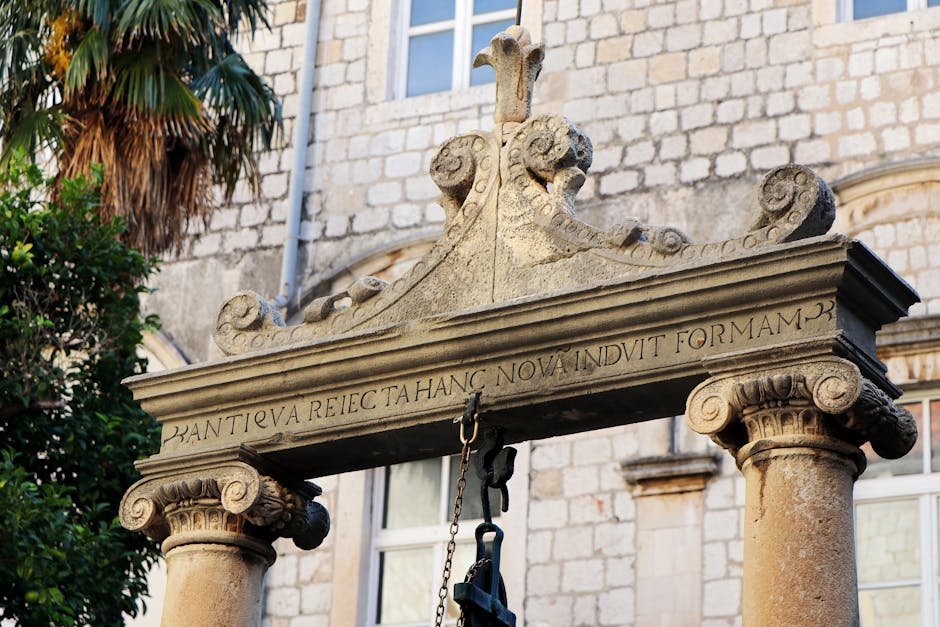
Standing at the end of the Stradun, Sponza Palace is one of the few buildings to survive the devastating earthquake of 1667 entirely intact. Its architecture is a perfect blend of Gothic and Renaissance styles. Historically, this was the city's custom house, mint, and treasury. Note the Latin inscription on the arch, which warns merchants not to cheat: 'Our weights do not permit cheating. When I measure, God measures with me.' Today, Sponza houses the State Archives, one of the most important historical archives in the world, containing documents dating back to the 11th century. It is the 'memory' of the Dubrovnik Republic, meticulously preserved for future generations.
Walk toward the Ploče Gate to reach the Dominican Monastery. Established in the 13th century, this complex was a vital part of the city’s defense and intellectual life. The cloister here is widely considered the most beautiful in Dubrovnik, designed by local and foreign masters in the 15th century. The monastery's museum contains an exceptional collection of Renaissance paintings from the Dubrovnik School, including a work by the Italian master Titian. The library is equally impressive, holding over 200 incunabula—books printed before 1501. The quiet courtyard, with its orange trees and well, provides a perfect moment of reflection on the city's monastic heritage.
Conclude your walk by ascending the grand Baroque staircase, modeled after the Spanish Steps in Rome, to the Church of St. Ignatius. This Jesuit church is a landmark of the Counter-Reformation in Dubrovnik. The interior is famous for its magnificent trompe-l'oeil frescoes by Gaetano Garcia, which depict scenes from the life of St. Ignatius of Loyola. The church stands adjacent to the Collegium Ragusinum, the city's former Jesuit college, which was the center of higher education for centuries. From this elevated position, you can look back over the rooftops of the Old Town, reflecting on the layers of history and the enduring legacy of the manuscripts and monasteries you’ve discovered.
Start Free on iPhone
Explore “Monasteries & Manuscripts” with your very own Private Tour Guide with Zigway. Start free on iPhone, skip the large group and the fixed routes, and hear the city come alive as you go.
Your Private Tour Guide
Don't miss the good stuff
Explore Freely
 Easy
EasyDubrovnik, Croatia
Explore Dubrovnik’s legendary maritime history on this self-guided walk through the Old Port, ancient shipyards, and the historic quarantine station.
 Easy
EasyDubrovnik, Croatia
Discover Dubrovnik's nocturnal charm on this self-guided walk through lantern-lit alleys, jazz spots, and hidden cliffside bars.
 Moderate
Dubrovnik, Croatia
Escape the crowds and discover Dubrovnik's wild side on this scenic self-guided coastal walk through Lapad's pine forests and hidden bays.
 Easy
EasyDubrovnik, Croatia
Experience the golden hour in Dubrovnik on this scenic self-guided walk through the elegant Ploče neighborhood and along the Adriatic cliffs.
 Easy
EasyNairobi, Kenya
Explore Nairobi's architectural evolution from colonial-era landmarks to iconic Brutalist skyscrapers on this historic self-guided walking route.
 Easy
EasyNairobi, Kenya
Discover Nairobi's iconic skyline on this self-guided architecture walk through the CBD’s most famous modernist and Brutalist landmarks.
 Easy
EasyKrakow, Poland
Explore the prestigious Jagiellonian University district, featuring Neo-Gothic architecture, Baroque churches, and Krakow's hidden scholarly gems.
 Easy
EasyKrakow, Poland
Explore the historic heart of Kazimierz on this self-guided walk through synagogues, ancient cemeteries, and vibrant squares.
 Moderate
Split, Croatia
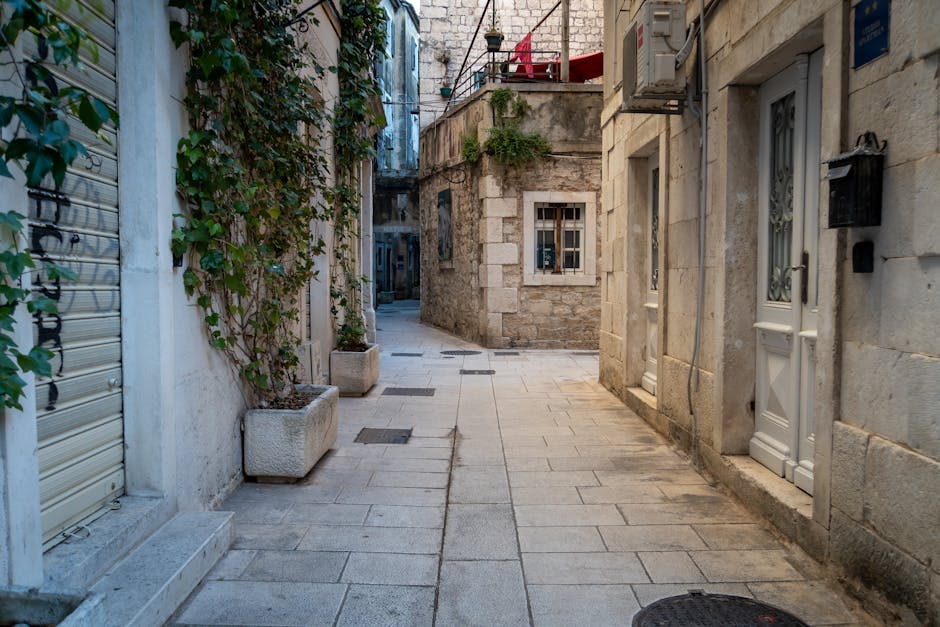
Wander through the narrow stone alleys and hidden medieval chapels of Split's historic fisherman's quarter on this scenic self-guided adventure.
 Easy
EasySplit, Croatia
Taste the heart of Dalmatia on this self-guided walk through Split's historic markets, legendary taverns, and vibrant street food spots.
 Easy
EasySplit, Croatia
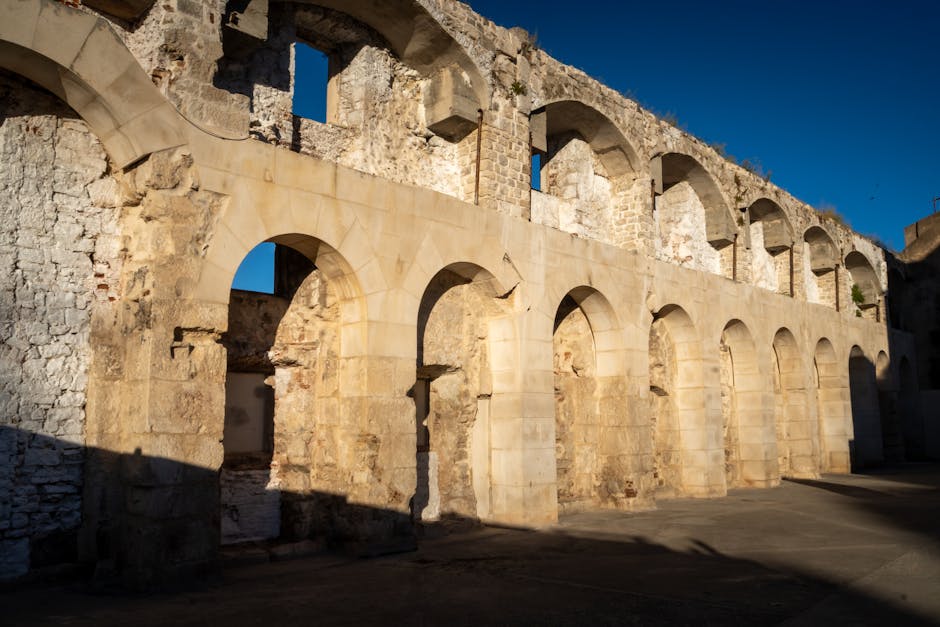
Explore a 1,700-year-old Roman palace turned vibrant city. Discover ancient temples and medieval streets at your own pace with this audio walk.
 Easy
EasySplit, Croatia
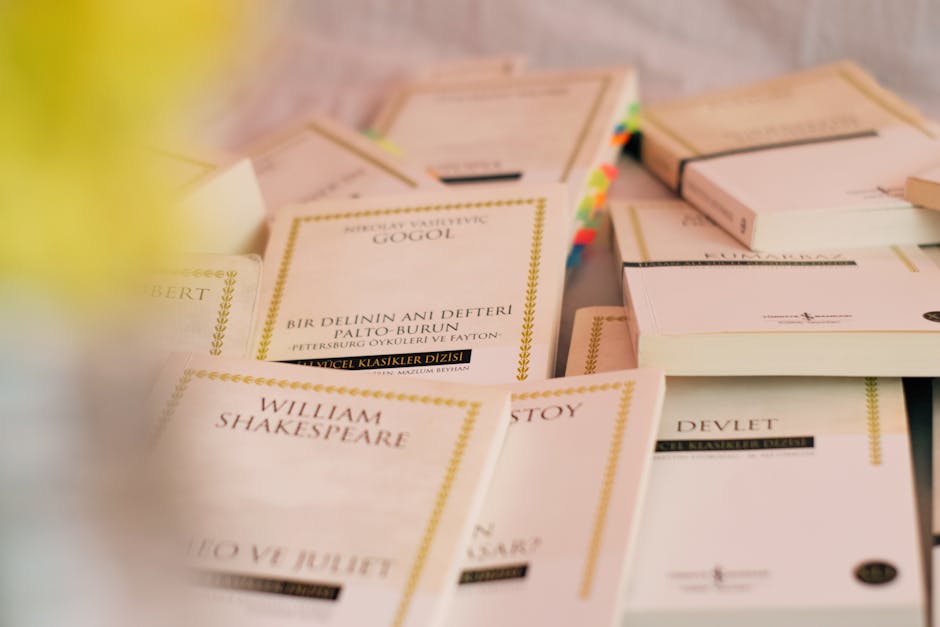
Explore Split's literary heritage on this self-guided walk through the Old Town, featuring iconic poets, playwrights, and historic theaters.