Self-guided audio tour in Zagreb
Start Free on iPhone
Start free on iPhone to unlock this self-guided walking tour in Zagreb. Hear all the stories that make it amazing, walk at your own pace, and begin whenever you want.
Your Private Tour Guide
Step into the shadows of Zagreb’s Upper Town on this self-guided walk that reveals the city's darker side. Long before the charming cafes and gas lamps defined Gornji Grad, these medieval streets were the site of brutal witch trials, neighborhood wars, and mysterious occurrences. As you wander through the historic heart of the capital, you will uncover the stories of 'coprnice' (witches) and the fear that once gripped the local population. This walking route is designed for those who prefer to explore at their own pace, away from the typical tourist trails. The journey begins at a location with a name that hints at its violent past: the Bloody Bridge. This narrow street was once a bridge over a stream that separated the rival settlements of Gradec and Kaptol, often serving as the frontline for their bloody disputes. From there, you will climb toward the Stone Gate, a place of spiritual refuge that holds secrets about the city's great fire and the trials of those accused of dark magic. As you navigate the cobblestone alleys, you will encounter the Priest’s Tower and the entrance to the Tuškanac forest, where folklore suggests the supernatural once roamed. This neighborhood stroll offers a unique perspective on Zagreb’s heritage, blending documented history with the chilling legends that have survived for centuries. It is an atmospheric travel experience that highlights the resilience and the superstitions of the people who built this city. Whether you are a fan of history or mystery, this audio walk provides a deep dive into the folklore that shaped the Croatian capital. By following this route independently, you can linger at the sites that intrigue you most, taking in the medieval architecture and the hauntingly beautiful vistas of the city below. Discover the secrets of the Inquisition in Zagreb and the final days of the witch hunts on a route that is as educational as it is eerie. This self-guided adventure is the perfect way to see a side of Zagreb that many visitors miss, all while enjoying the freedom of a private exploration.
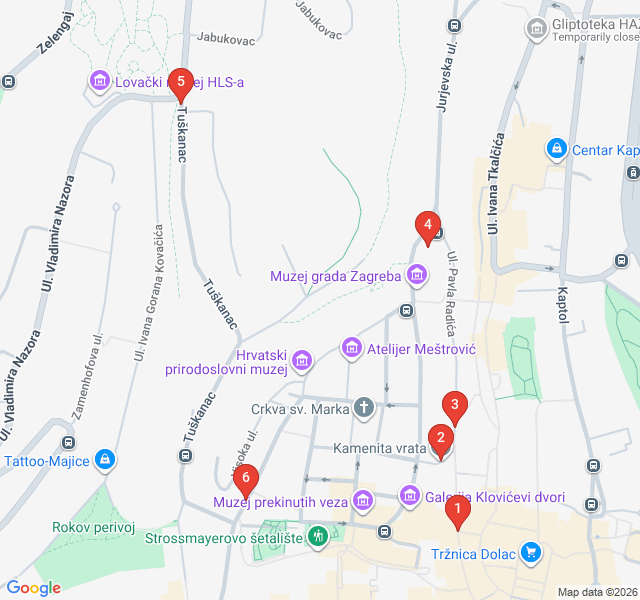
Numbers indicate the order of stops on the tour.
Welcome to Krvavi Most, which translates directly to 'Bloody Bridge.' Today, it looks like a standard paved street, but centuries ago, a wooden bridge stood here over the Medveščak stream. This was the boundary between the two rival towns that would eventually become Zagreb: the ecclesiastical Kaptol and the secular Gradec. For hundreds of years, the two sides were in constant conflict over water rights and taxes. The bridge earned its name from the frequent, violent skirmishes that took place right where you are standing. It serves as a reminder that the peaceful city you see today was forged through centuries of territorial tension and bloodshed.
The Stone Gate, or Kamenita Vrata, is the only surviving medieval gate of the Gradec town defenses. While it is now a sacred shrine, its history is intertwined with the city's darker moments. In 1731, a massive fire destroyed much of the area, but a painting of the Virgin and Child remained miraculously untouched in the ashes. However, the gate also had a grimmer purpose; it was through these arches that many accused of witchcraft were led toward their trials or executions. Look closely at the walls and the ironwork, and you will feel the weight of the thousands of prayers and the heavy history of those who passed through.
Zagreb’s history with the Inquisition and secular witch trials was particularly intense during the 17th and 18th centuries. The Tortureum offers a sobering look at the instruments used to extract confessions from those accused of dark magic or heresy. In Croatia, witch hunts were legal until the mid-1700s, and the methods used were often influenced by the 'Malleus Maleficarum,' the infamous witch-hunting manual. This stop provides context for the fear and superstition that once governed daily life in the Upper Town, revealing the physical reality of the folklore you are exploring on this walk.
Standing at the northern end of the Upper Town, Popov Toranj was built in the 13th century as part of the city's fortifications against Mongol invasions. Its name, the Priest's Tower, stems from the fact that it was owned by the Bishop of Kaptol, even though it sat on Gradec territory—a constant source of friction. Over the centuries, it has served as a defensive fort, a school, and an observatory. In local lore, towers like these were often whispered about as places where those who didn't fit into society were kept away from the public eye, adding to the mysterious aura of the city's northern wall.
As you approach the edge of the Tuškanac forest, the city noise fades, replaced by the rustle of ancient trees. In Croatian folklore, forests were the domain of the supernatural. This specific woodland was long associated with stories of 'Coprnice'—local witches who were said to gather here for their sabbaths under the full moon. While today it is a popular spot for a peaceful stroll, the deep shadows of Tuškanac once inspired genuine fear in medieval citizens, who believed the woods were a gateway to another world where dark deals were struck and spirits roamed free.
Your walk concludes on Mesnička Street, one of the oldest and steepest routes connecting the Upper and Lower towns. This street has seen everything from royal processions to the somber walk of the condemned. The nearby town hall was often the site of the actual 'witch' trials, where local women were interrogated before the public. As you descend toward the modern city center, reflect on how these narrow alleys once echoed with the cries of the accused. The contrast between the vibrant street life today and the dark folklore of the past is what makes Zagreb’s Gornji Grad so uniquely compelling.
Start Free on iPhone
Explore “Witchcraft and Dark Folklore” with your very own Private Tour Guide with Zigway. Start free on iPhone, skip the large group and the fixed routes, and hear the city come alive as you go.
Your Private Tour Guide
Don't miss the good stuff
Explore Freely
 Easy
EasyZagreb, Croatia
Explore Zagreb's grand 'Green Horseshoe' on this self-guided walk through stunning 19th-century parks, iconic museums, and lush gardens.
 Moderate
Zagreb, Croatia
Discover the Brutalist icons of Novi Zagreb on this self-guided walk through massive residential blocks and striking socialist-era architecture.
 Easy
EasyZagreb, Croatia
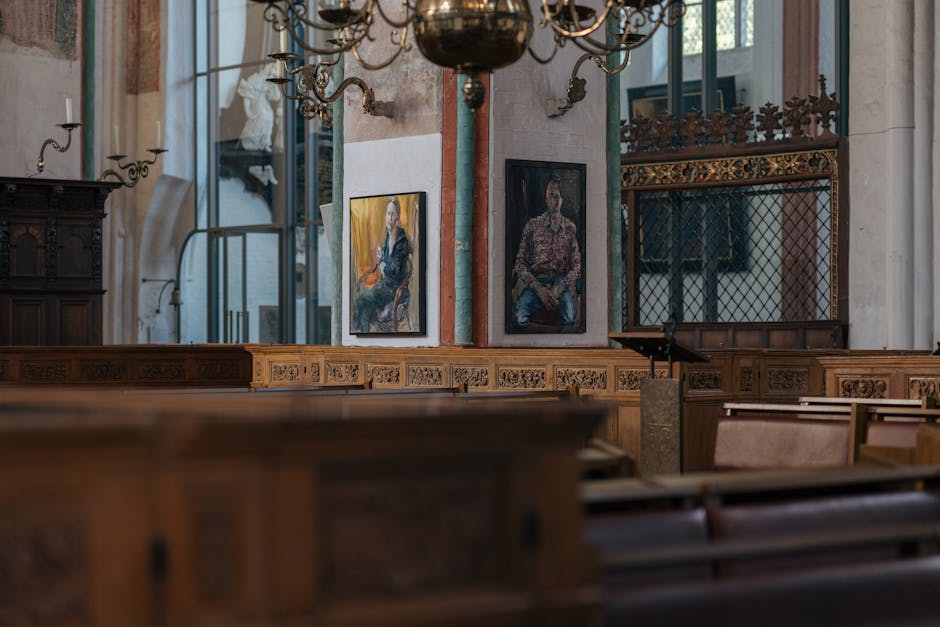
Explore Zagreb's stunning Mirogoj Cemetery and iconic university architecture on this peaceful, self-guided artistic journey.
 Easy
EasyZagreb, Croatia
Discover the soul of Zagreb through its iconic coffee rituals and the legacy of its most famous bohemian poets on this self-guided stroll.
 Moderate
Vienna, Austria
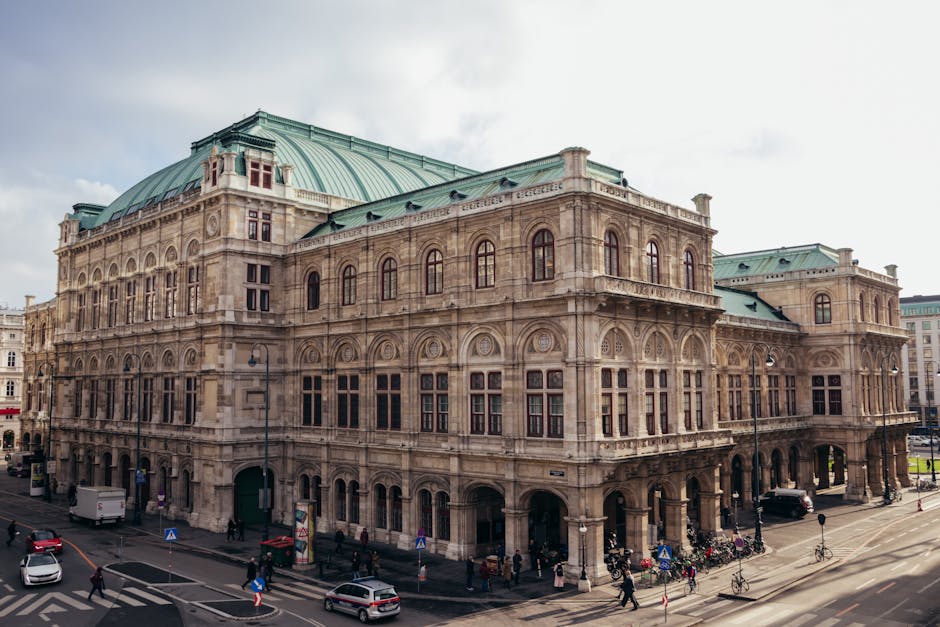
Discover the noir world of The Third Man and Cold War Vienna on this atmospheric self-guided audio walk through the historic Innere Stadt.
 Moderate
Helsinki, Finland
Explore Helsinki's bohemian heart. Discover historic saunas, granite churches, and the vibrant local life of the Kallio neighborhood at your own pace.
 Easy
EasyNairobi, Kenya
Discover Nairobi’s literary soul on this self-guided walk through historic libraries, iconic bookshops, and cultural centers in the heart of the CBD.
 Easy
EasyKrakow, Poland
Explore the prestigious Jagiellonian University district, featuring Neo-Gothic architecture, Baroque churches, and Krakow's hidden scholarly gems.
 Easy
EasyDubrovnik, Croatia
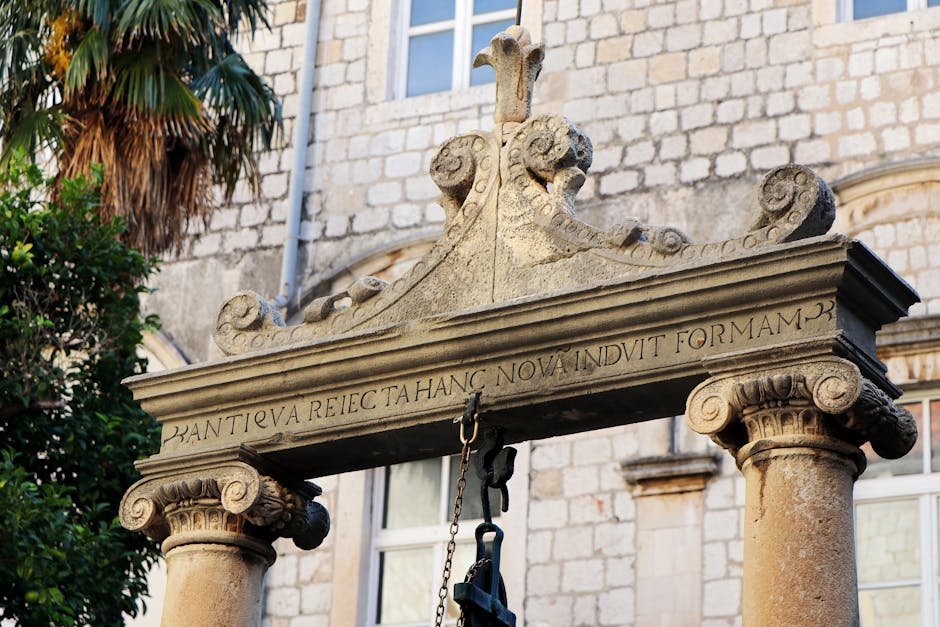
Explore Dubrovnik’s legendary maritime history on this self-guided walk through the Old Port, ancient shipyards, and the historic quarantine station.
 Easy
EasyDubrovnik, Croatia
Discover Dubrovnik's nocturnal charm on this self-guided walk through lantern-lit alleys, jazz spots, and hidden cliffside bars.
 Moderate
Dubrovnik, Croatia
Escape the crowds and discover Dubrovnik's wild side on this scenic self-guided coastal walk through Lapad's pine forests and hidden bays.
 Easy
EasyDubrovnik, Croatia
Discover Dubrovnik's intellectual soul on this self-guided walk through ancient libraries, historic pharmacies, and serene monastic cloisters.