Self-guided audio tour in Dubrovnik
Start Free on iPhone
Start free on iPhone to unlock this self-guided walking tour in Dubrovnik. Hear all the stories that make it amazing, walk at your own pace, and begin whenever you want.
Your Private Tour Guide
Step back into the golden age of the Republic of Ragusa with this self-guided walk through Dubrovnik’s historic harbor. While many visitors flock to the city walls, the true heart of Dubrovnik’s power lay in its mastery of the seas. This walking route explores the maritime legacy that allowed a tiny city-state to maintain independence through diplomacy and trade, rather than just military might. Starting at the formidable St. John’s Fortress, home to the Maritime Museum, you will discover how the local shipbuilders, sailors, and merchants created one of the most sophisticated maritime networks in the Mediterranean. As you follow this neighborhood stroll, you will venture onto the Porporela Pier, where the rhythmic sound of the Adriatic serves as a backdrop to stories of legendary sea captains. The route winds through the Old Port, a bustling harbor that once sheltered a fleet of over 300 ships. You will pass the site of the ancient Arsenal, where the city’s massive galleons were built and repaired behind heavy stone arches. The walk also highlights the strategic defenses of St. Luke’s Tower and concludes at the Lazareti, a pioneer in public health history. This complex served as the world’s first systematic quarantine station, ensuring that the wealth brought by sea trade didn't bring the plague with it. This walking route is perfect for history enthusiasts and photography lovers alike. You will see the city from a different perspective, looking back at the limestone walls from the water's edge. Whether you are interested in the engineering of ancient shipyards or the fascinating social history of maritime trade, this exploration offers a deep dive into the soul of Dubrovnik. Explore independently and at your own pace, soaking in the salt air and the architectural grandeur of a city built on water and wisdom. This maritime-themed experience is an essential part of any visit to the Pearl of the Adriatic.
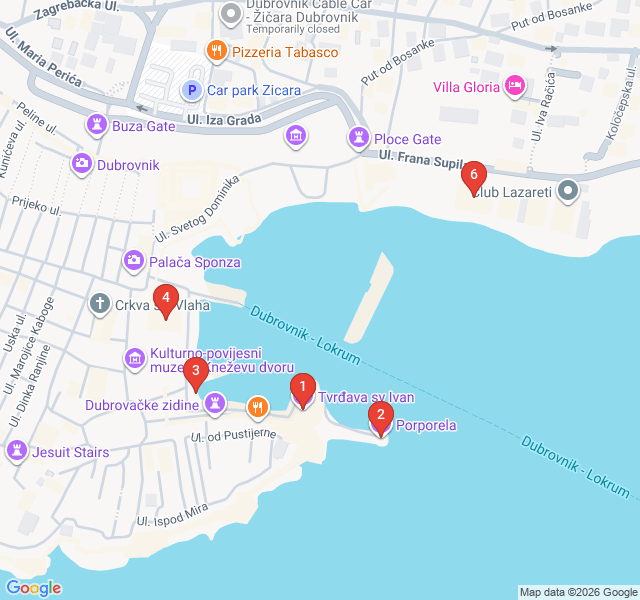
Numbers indicate the order of stops on the tour.
Begin your self-guided adventure at the massive St. John’s Fortress, which has guarded the harbor entrance since the 14th century. Inside, the Maritime Museum houses a collection that tells the story of the Republic of Ragusa’s rise to naval prominence. During the 16th century, this small city-state possessed one of the largest merchant fleets in the world. You’ll find models of 'karakas' and 'galijuns,' the heavy-duty ships that reached as far as the Americas and England. The fortress itself was designed to be impregnable, featuring thick walls that could withstand heavy cannon fire. As you stand here, imagine the massive metal chain that was once pulled across the water from this fortress to the opposite tower to block enemy ships from entering the port.
Step out onto the Porporela, the iconic pier and breakwater that extends into the sea. Built during the Austro-Hungarian period, it was designed to protect the harbor from the powerful southern 'Jugo' wind and the crashing waves of the Adriatic. Today, it is a favorite spot for locals to stroll and enjoy the view of Lokrum Island. Look for the red lighthouse at the end of the pier, a classic maritime landmark. The name 'Porporela' comes from the Latin word for purple, possibly referring to the color of the seaweed or the stones used in its construction. It’s a perfect place to feel the sea breeze and understand why Dubrovnik’s identity is so inextricably linked to the water.
The Old Port was the economic engine of the Republic. For centuries, this harbor was filled with goods from the Orient and the West: silk, spices, salt, and silver. Unlike many other Mediterranean ports of the time, the Republic of Ragusa remained a free port, meaning it focused on trade rather than conquest. As you walk along the quay, notice the small stone bollards used for mooring. Today, the large galleons are gone, replaced by colorful local fishing boats and ferries heading to Lokrum. The architecture surrounding the port, including the customs house and the warehouses, reflects the organized and regulated nature of Ragusan commerce, where every bale of wool and barrel of wine was meticulously recorded.
This impressive building with its three large arches was once the city’s Arsenal—the shipyard where the Republic’s naval vessels were built and repaired. Each arch served as a dry dock for a single ship. It was a site of high security and immense pride; the secrets of Ragusan shipbuilding were closely guarded. In the 16th century, the term 'Argosy' in the English language (used by Shakespeare) actually referred to a 'Ragusa ship,' a testament to their fame for being large and richly laden. Today, the space has been converted into a café and restaurant, but the architectural bones of the shipyard remain visible, reminding us of the industrial might that fueled the city’s wealth.
Positioned at the northern edge of the harbor, St. Luke’s Tower served as a vital defensive point. It is one of the oldest towers in the harbor fortification system, dating back to the 13th century. From this vantage point, guards would keep a sharp eye on the horizon for pirates or Ottoman fleets. This was the other anchor point for the Great Chain that protected the port. The tower’s rounded shape was a later adaptation to better deflect cannonballs as gunpowder technology evolved. It stands as a bridge between the harbor and the land gates, symbolizing the city's need to protect itself from both sea-based invasions and overland threats.
Finish your walk at the Lazareti, a series of interconnected stone buildings located just outside the city walls. This was the world’s first purpose-built quarantine station. In 1377, Dubrovnik’s Great Council passed a law requiring all travelers and merchants coming from plague-infested areas to spend 30 days (later 40, hence 'quarantine' from the Italian 'quaranta') in isolation here before entering the city. This revolutionary approach to public health allowed trade to continue even during pandemics. Each of the ten halls had its own courtyard and ventilation system. Today, the complex serves as a vibrant cultural hub, hosting art galleries and performances, but its history as a protector of the city’s health remains its most significant legacy.
Start Free on iPhone
Explore “Maritime Might of the Old Port” with your very own Private Tour Guide with Zigway. Start free on iPhone, skip the large group and the fixed routes, and hear the city come alive as you go.
Your Private Tour Guide
Don't miss the good stuff
Explore Freely
 Easy
EasyDubrovnik, Croatia
Discover Dubrovnik's nocturnal charm on this self-guided walk through lantern-lit alleys, jazz spots, and hidden cliffside bars.
 Moderate
Dubrovnik, Croatia
Escape the crowds and discover Dubrovnik's wild side on this scenic self-guided coastal walk through Lapad's pine forests and hidden bays.
 Easy
EasyDubrovnik, Croatia
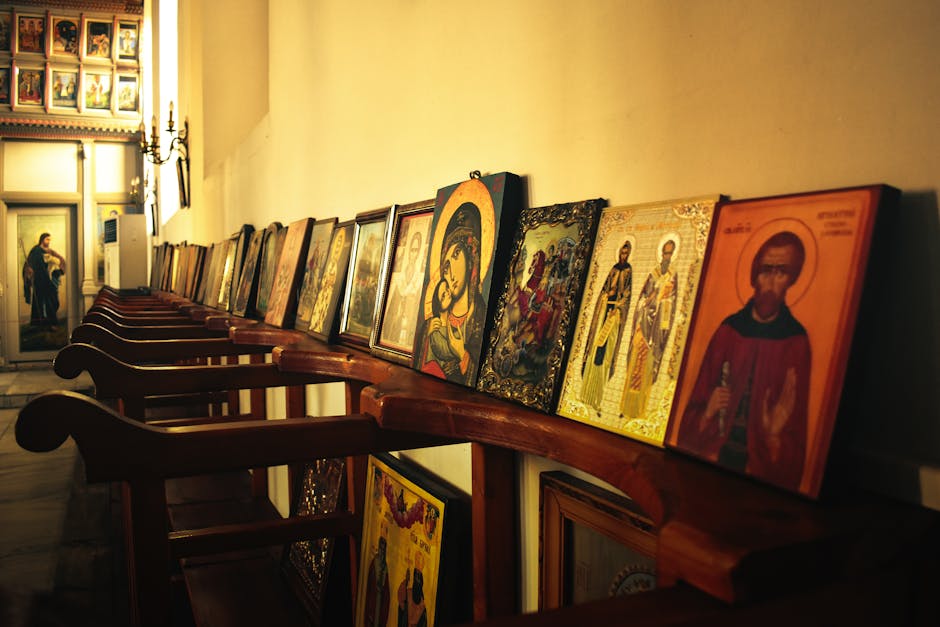
Discover Dubrovnik's intellectual soul on this self-guided walk through ancient libraries, historic pharmacies, and serene monastic cloisters.
 Easy
EasyDubrovnik, Croatia
Experience the golden hour in Dubrovnik on this scenic self-guided walk through the elegant Ploče neighborhood and along the Adriatic cliffs.
 Easy
EasyNairobi, Kenya
Discover Nairobi's iconic skyline on this self-guided architecture walk through the CBD’s most famous modernist and Brutalist landmarks.
 Easy
EasyNairobi, Kenya
Explore Nairobi's architectural evolution from colonial-era landmarks to iconic Brutalist skyscrapers on this historic self-guided walking route.
 Easy
EasyGdansk, Poland
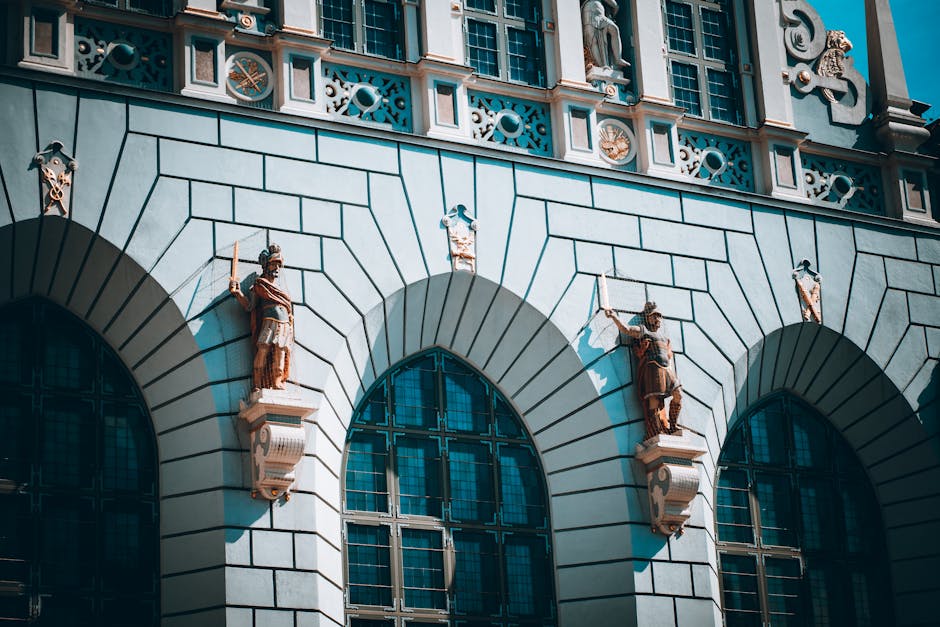
Discover the opulent Royal Way of Gdansk at your own pace. Explore Hanseatic history, gilded architecture, and the iconic Neptune's Fountain.
 Easy
EasySalzburg, Austria
Discover the 'Rome of the North' on this self-guided walk through the Baroque squares and monumental legacy of Salzburg’s Prince-Archbishops.
 Moderate
Split, Croatia
Wander through the narrow stone alleys and hidden medieval chapels of Split's historic fisherman's quarter on this scenic self-guided adventure.
 Easy
EasySplit, Croatia
Taste the heart of Dalmatia on this self-guided walk through Split's historic markets, legendary taverns, and vibrant street food spots.
 Easy
EasySplit, Croatia
Explore a 1,700-year-old Roman palace turned vibrant city. Discover ancient temples and medieval streets at your own pace with this audio walk.
 Easy
EasySplit, Croatia
Explore Split's literary heritage on this self-guided walk through the Old Town, featuring iconic poets, playwrights, and historic theaters.