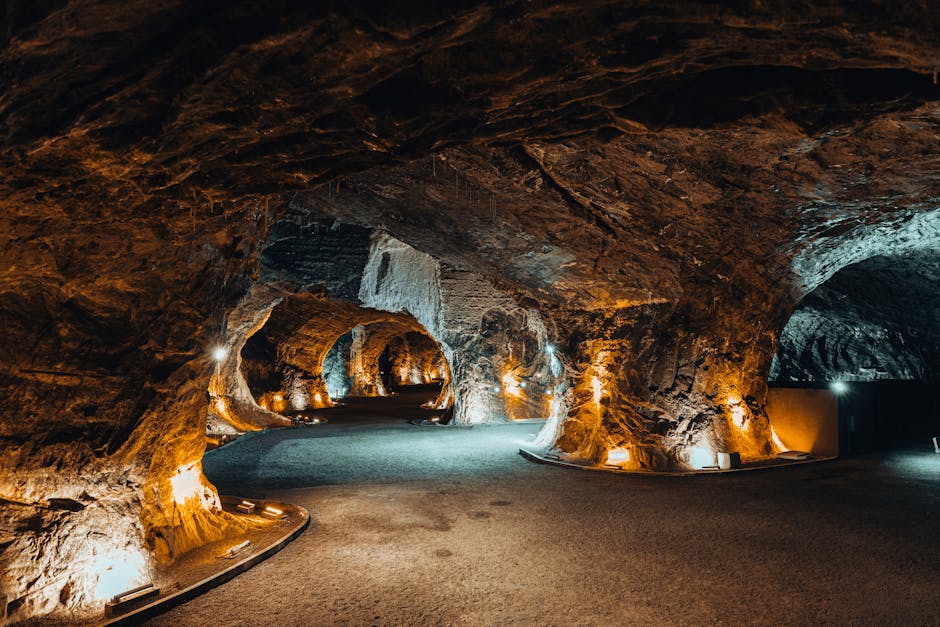
Self-guided audio tour in Novi Sad
Start Free on iPhone
Start free on iPhone to unlock this self-guided walking tour in Novi Sad. Hear all the stories that make it amazing, walk at your own pace, and begin whenever you want.
Your Private Tour Guide
Step away from the typical tourist routes and uncover the layers of Novi Sad, the city often called the 'Serbian Athens.' This self-guided walk invites you to explore beyond the colorful facades of Dunavska Street and dive into the labyrinth of 'pasaži'—the hidden passages and internal courtyards that define the city's unique architectural soul. While the main thoroughfares are grand and bustling, the true lifestyle of Novi Sad is tucked away in these quiet patios, where small boutiques, artisanal workshops, and local cafes thrive in the shadows of 18th-century buildings. Beginning at the prestigious Museum of Vojvodina, this neighborhood stroll bridges the gap between the historic Stari Grad and the vibrant energy of the modern University district. You will experience the architectural evolution of the city, from the Baroque and Neoclassical heritage of the oldest street to the functionalist and modernist designs of the 20th-century campus. Highlights include the serene Dunavski Park, the monumental statue of Svetozar Miletić, and the prestigious Matica Srpska, the oldest cultural-scientific institution in Serbia. As you transition toward the southern part of the center, the route explores the academic heart of Novi Sad. Here, the 'hidden gems' shift from historic passages to the impressive socialist-modernist buildings of the various faculties. This walking route offers a comprehensive look at how Novi Sad balances its Austro-Hungarian past with its identity as a modern European Capital of Culture. Whether you are interested in the intricate details of a wrought-iron gate in a hidden courtyard or the stark lines of a mid-century faculty building, this experience provides a deep dive into the city’s multifaceted character. Discover at your own pace how the residents of Novi Sad have shaped their urban environment over centuries, creating a city that is as much about its secret corners as its grand squares. **Note:** This area is known for its ever-changing character. Street art, pop-up venues, and temporary exhibitions may differ from what's described. That's part of the adventure - you might discover something entirely new!
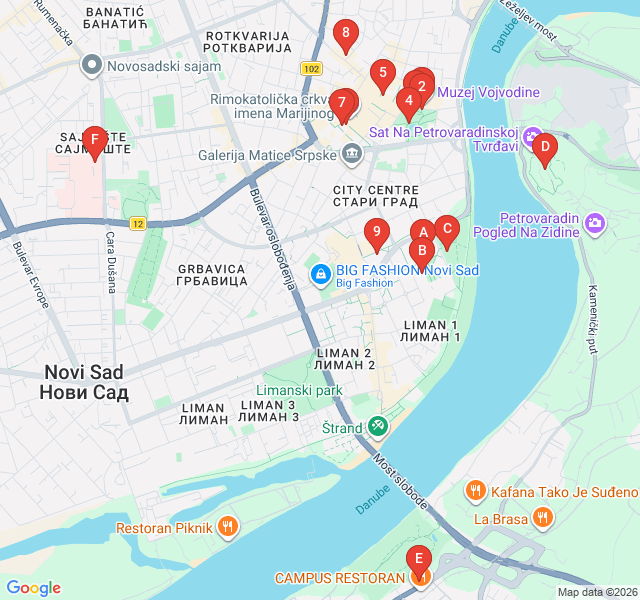
Numbers indicate the order of stops on the tour.
Start exploring with Zigway at the Museum of Vojvodina, one of the most important cultural institutions in Serbia. This building houses a massive collection detailing the history of the region from the Paleolithic era to the 20th century. Look for the three 4th-century Roman golden helmets, which are the museum's pride and joy. These rare artifacts were found in the village of Berkasovo and serve as a reminder of the region's deep connection to the Roman Empire. The museum provides a perfect historical foundation before you dive into the streets of the modern city.
One of the most characteristic features of Novi Sad architecture is the 'pasaž' or passage. Pasaz 22 is a prime example of how the city's social life is often tucked away behind street-facing facades. These courtyards were historically used for artisanal shops and residential access, but today they often host quirky cafes and independent boutiques. As you walk through, notice the narrow, long structure typical of the city's plots. Keep in mind that these are living spaces; while the shops are public, the atmosphere remains intimate and respectful of the residents living above.
You are now at the entrance of Dunavska (Danube) Street, the oldest street in Novi Sad. After the city was nearly destroyed in the 1849 revolution, this area was rebuilt in the Neoclassical and Romantic styles you see today. The street once connected the city center to the river port, making it a hub of commerce. Look up at the colorful facades and ornate balconies. Many of these buildings have survived for over 150 years, housing the city’s oldest pharmacy and various traditional libraries. It is the architectural heart of the Stari Grad neighborhood.
Dunavski Park is the most beloved green space in Novi Sad. Originally a marshy area known for its reeds and mosquitoes, it was transformed into a sophisticated park in the late 19th century. The central pond, known as Erzsébet (named after the Austro-Hungarian Empress Sisi), is home to a pair of swans that have become local celebrities. The park is dotted with statues of famous Serbian poets and thinkers, making it a literal and figurative breath of fresh air. It is a perfect spot to observe local life, from families strolling to students reading on the benches.
The City Library is a cornerstone of Novi Sad’s literary identity. Located in a beautiful historic building, it continues the tradition of the 'Srpska Čitaonica' (Serbian Reading Room) founded in 1845. The library isn't just about books; it’s a cultural hub that hosts exhibitions and literary evenings. Its location on the edge of the pedestrian zone makes it a quiet sentinel of knowledge amid the city's commercial energy. The architecture reflects the civic pride of the 19th-century Serbian middle class who sought to establish Novi Sad as a center of education.
You are entering the core of the city center. This area is defined by the contrast between the Catholic Name of Mary Church (often mistakenly called a cathedral) and the Neo-Renaissance City Hall. The open square is the site of all major city events, from Christmas markets to protests. Notice the 'Pannonian' feel of the architecture—wide, open, and grand. This area was meticulously planned to showcase the city's status within the Austro-Hungarian Empire while maintaining a distinct local character.
Standing tall in the center of Trg Slobode (Liberty Square) is the bronze statue of Svetozar Miletić. He was the most influential Serbian politician in the 19th-century Vojvodina region and a former mayor of the city. The statue, created by the world-renowned sculptor Ivan Meštrović, depicts Miletić with a defiant clenched fist, symbolizing the struggle for Serbian national rights within the empire. It is a major landmark and the most common 'meeting point' for locals. The statue’s powerful presence anchors the entire square.
Matica Srpska is the oldest cultural, literary, and scientific institution of the Serbian people. Founded in Pest in 1826 and moved to Novi Sad in 1864, it earned the city its nickname 'Serbian Athens.' The building itself is an architectural gem, but its significance lies in its role in preserving Serbian language and culture during periods of foreign rule. Today, it houses a massive library and a gallery with an exceptional collection of Serbian art. Its presence signifies the intellectual weight of Novi Sad.
As we move toward the University district, the architecture shifts. This faculty represents the city’s expansion in the 20th century. Novi Sad is a major sporting hub, and this campus area reflects the socialist-modernist style of the former Yugoslavia. The buildings here are functional and spacious, designed to accommodate the growing student population. This area feels quite different from the narrow passages of Dunavska, showcasing a city that was rapidly modernizing and looking toward a future of health and progress.
The Faculty of Agriculture is one of the largest and most prestigious parts of the University of Novi Sad. Given that Vojvodina is the agricultural heartland of Serbia, this faculty is of immense importance. The campus layout is open and green, integrating educational spaces with the natural environment. The architecture here is typical of the mid-20th century, emphasizing light and accessibility. It’s a place where tradition (farming) meets modern science, and the student energy here keeps the neighborhood vibrant year-round.
Known locally as FTN, this is one of the largest faculties in the region. Its massive complex is a testament to the industrial and technological growth of Novi Sad. The buildings here often feature brutalist or late-modernist elements, which provide a stark contrast to the Baroque city center you saw earlier. This is where the city’s 'IT Boom' began, as many graduates from this faculty have gone on to turn Novi Sad into a regional tech hub. The atmosphere here is always bustling with students and researchers.
The University campus is a 'city within a city.' Unlike many European universities that are scattered throughout the town, Novi Sad has a centralized campus located right by the Danube. This area, known as the 'University City,' offers a unique blend of academic buildings, parks, and student hangouts. The ESHERE area (European Space for Higher Education and Research) highlights the city's integration into modern European standards. It’s a great place to see the local youth culture and enjoy the riverside breeze.
Located near the bridge and overlooking the river, this branch of the City Museum offers insights into the urban development of Novi Sad. While the Museum of Vojvodina covers the broad region, this museum focuses on the city's specific story—from its founding as a merchant colony near the Petrovaradin Fortress to its modern-day status. The exhibits often rotate, so there is usually something new to discover about the city's social history or industrial heritage. It serves as a bridge between the old town and the river.
This stop represents the modern, private sector of education in Novi Sad. Educons is part of the newer wave of architectural development in the city, showing how the educational landscape has diversified since the end of the socialist era. The design is contemporary and reflects the city's continued growth as a regional center for higher learning. It stands as a symbol of the 21st-century changes in the Serbian educational system and the city’s ability to adapt to new global trends.
Our final stop is the Medical Faculty, located slightly further from the main campus. This institution is a pillar of the city’s healthcare system, training generations of doctors for the entire region. The building and its surrounding clinics form a significant medical district. As you conclude your walk, notice how the city has evolved from the small passages of Dunavska to these large-scale, specialized institutional blocks. This journey across Novi Sad reveals a city that is both deeply traditional and ambitiously modern.
Start Free on iPhone
Explore “Passages and Patios: Hidden Dunavska” with your very own Private Tour Guide with Zigway. Start free on iPhone, skip the large group and the fixed routes, and hear the city come alive as you go.
Your Private Tour Guide
Don't miss the good stuff
Explore Freely
 Easy
EasyNovi Sad, Serbia
Explore the vibrant soul of Novi Sad's nightlife on this self-guided walk through iconic pubs, craft beer gems, and the famous Laze Telečkog street.
 Easy
EasyNovi Sad, Serbia
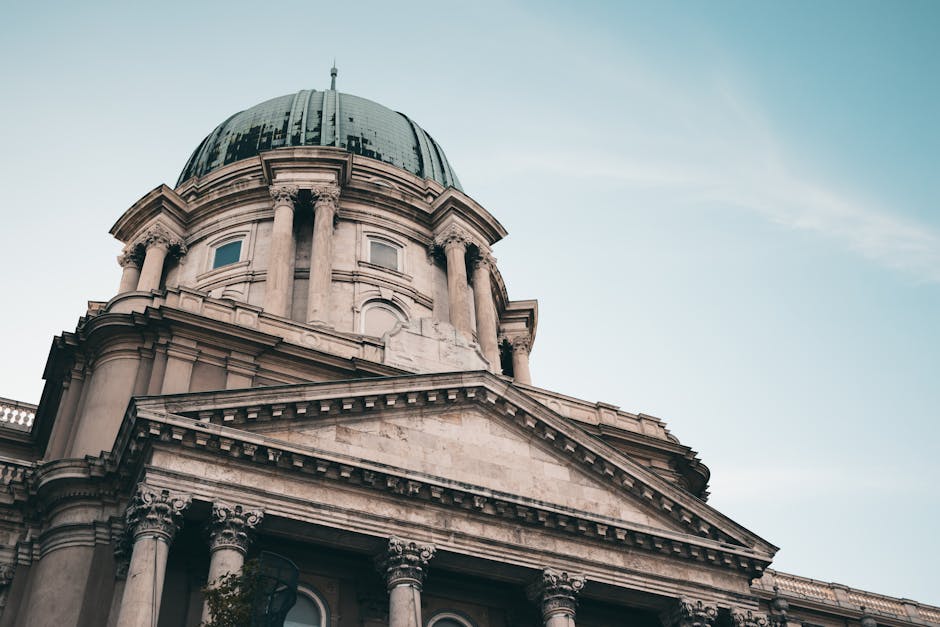
Explore the Austro-Hungarian grandeur of Novi Sad's historic center on this self-guided walking route through the elegant streets of Stari Grad.
 Moderate
Novi Sad, Serbia
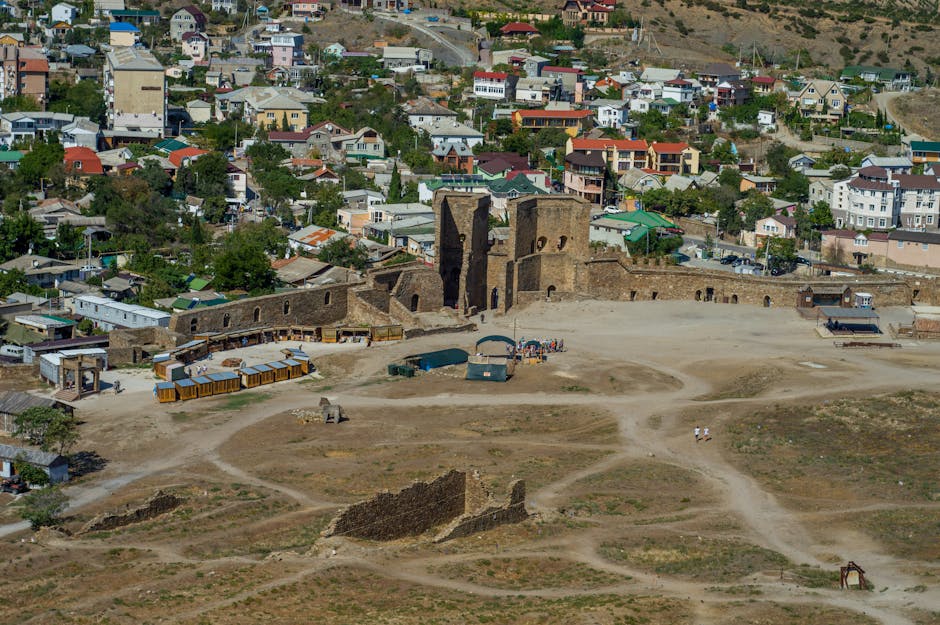
Explore the 'Gibraltar on the Danube' from Novi Sad's elegant city center to the massive underground tunnels of Petrovaradin Fortress.
 Easy
EasyNovi Sad, Serbia
Taste your way through Novi Sad's vibrant markets and iconic street food on this self-guided culinary stroll through the heart of Vojvodina.
 Easy
EasyNairobi, Kenya
Discover Nairobi’s literary soul on this self-guided walk through historic libraries, iconic bookshops, and cultural centers in the heart of the CBD.
 Easy
EasyWarsaw, Poland
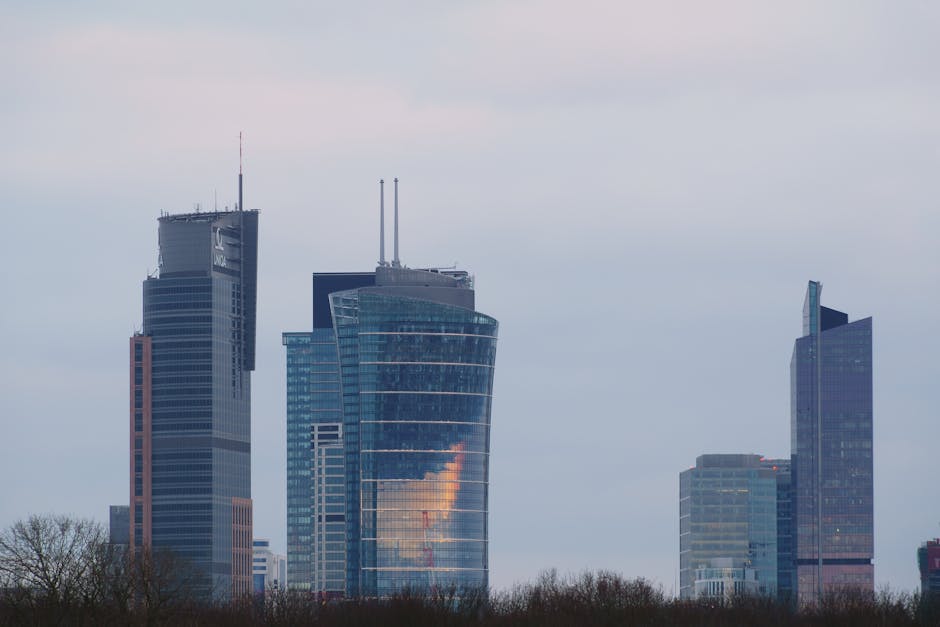
Discover the hidden courtyards and grand pre-war architecture of Warsaw's most atmospheric neighborhood on this self-guided stroll.
 Easy
EasyGothenburg, Sweden
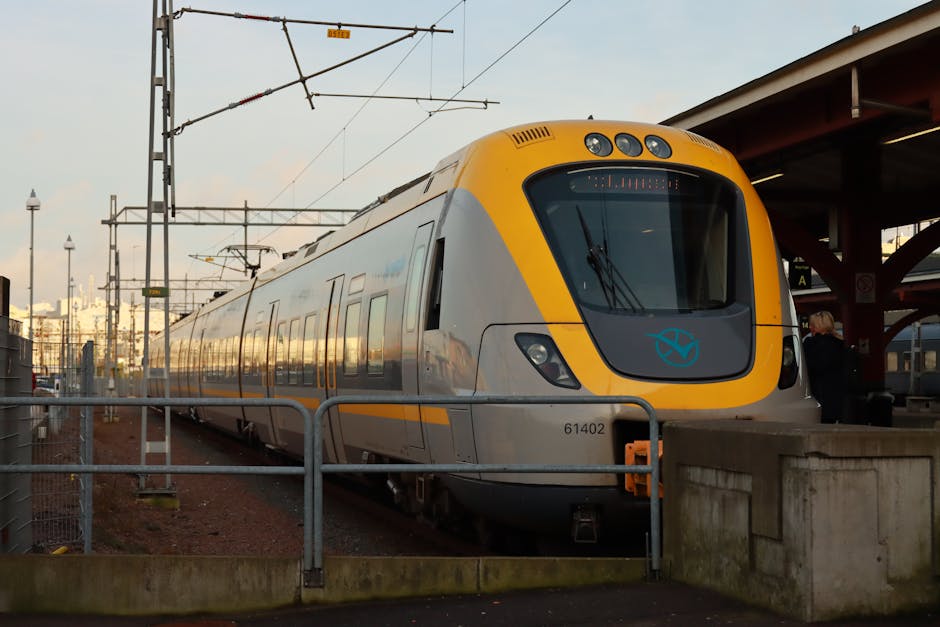
Explore Gothenburg's elegant academic district, featuring grand 19th-century stone architecture and the iconic cultural hub of Götaplatsen.
 Easy
EasyKrakow, Poland
Explore the prestigious Jagiellonian University district, featuring Neo-Gothic architecture, Baroque churches, and Krakow's hidden scholarly gems.
 Easy
EasyBelgrade, Serbia
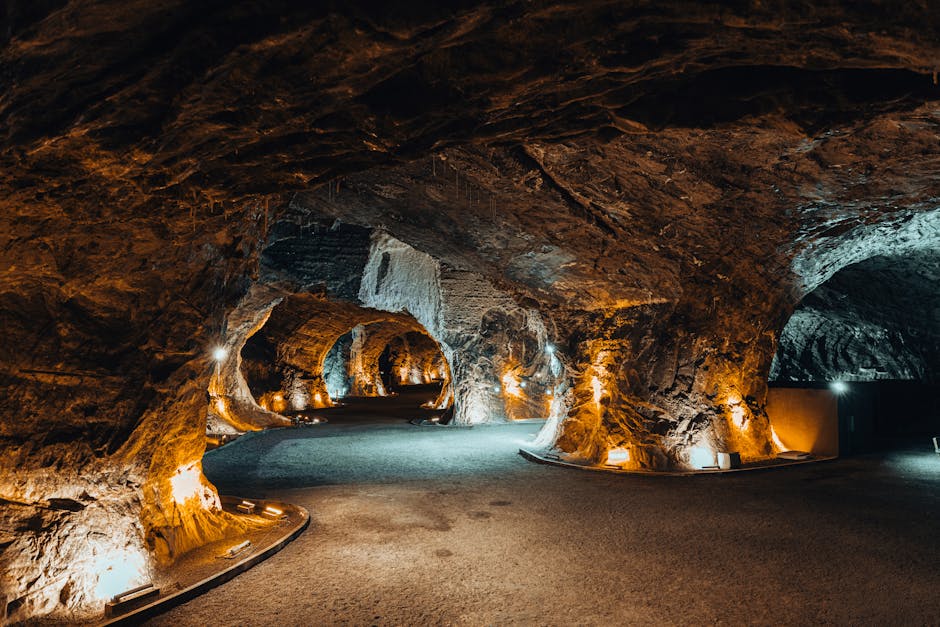
Discover Lower Dorćol, where 18th-century history meets industrial revival and vibrant street art on this self-guided stroll through Belgrade.
 Easy
EasyBelgrade, Serbia
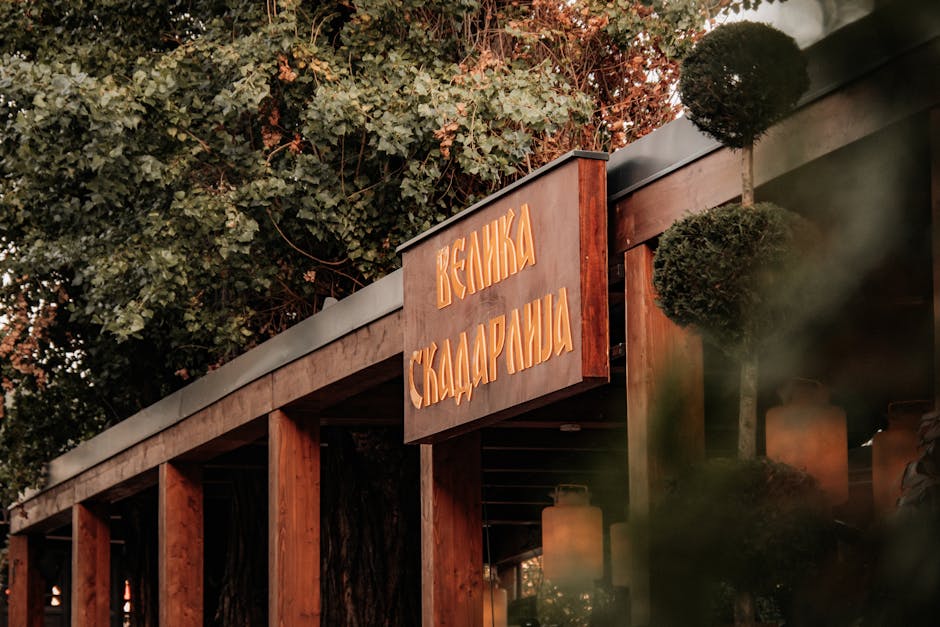
Discover Belgrade’s bohemian heart. Explore the historic Skadarlija quarter and Dorćol’s hidden Ottoman gems on this self-guided audio walk.
 Easy
EasyBelgrade, Serbia
Explore the future of Serbia's capital on this self-guided walk through the modern Belgrade Waterfront and the scenic Sava Promenada.
 Moderate
Belgrade, Serbia
Explore the legacy of Yugoslavia on this self-guided walk from Tito’s tomb to the historic ruins and monuments of central Belgrade.