Self-guided audio tour in Novi Sad
Start Free on iPhone
Start free on iPhone to unlock this self-guided walking tour in Novi Sad. Hear all the stories that make it amazing, walk at your own pace, and begin whenever you want.
Your Private Tour Guide
Step into the oldest and most atmospheric corner of Novi Sad with this self-guided walk through the Almaški Kraj. Often overlooked by those sticking to the main pedestrian boulevard, this neighborhood is the true heart of the city, where the spirit of the 'Serbian Athens' was born. This walking route invites you to wander through narrow, winding streets that still follow the 18th-century layouts established by the settlers of the village of Almaš. Unlike the rigid grid of the city center, the Almaški district feels organic, intimate, and steeped in layers of history. Your self-guided adventure begins at the Svilara Cultural Station, a striking example of industrial heritage repurposed for modern creativity. From there, you will explore the spiritual and intellectual foundations of the city. You will encounter the Almaška Church, which houses some of the most significant Serbian Orthodox art in the region, and the prestigious Matica Srpska, the oldest cultural-scientific institution of the Serbian people. This area isn't just about grand buildings; it’s about the stories of the people who lived here, from wealthy benefactors like Marija Trandafil to the local artisans who keep traditional crafts alive today. This neighborhood stroll is perfect for those who want to escape the crowds and discover hidden gems. You will see how 18th-century Baroque architecture blends with 19th-century civic pride and 21st-century artistic energy. As you navigate the cobblestones, you’ll find that the Almaški Kraj is a living museum, protected as a cultural-historical entity. Whether you are interested in religious history, the evolution of industrial spaces, or simply finding the most 'Instagram-worthy' rustic corners of Novi Sad, this route offers a quiet, profound look at the city's identity. Use this walking tour Novi Sad to uncover the soul of the city at your own pace, ending near the vibrant artisan studios that continue the neighborhood's legacy of creation.
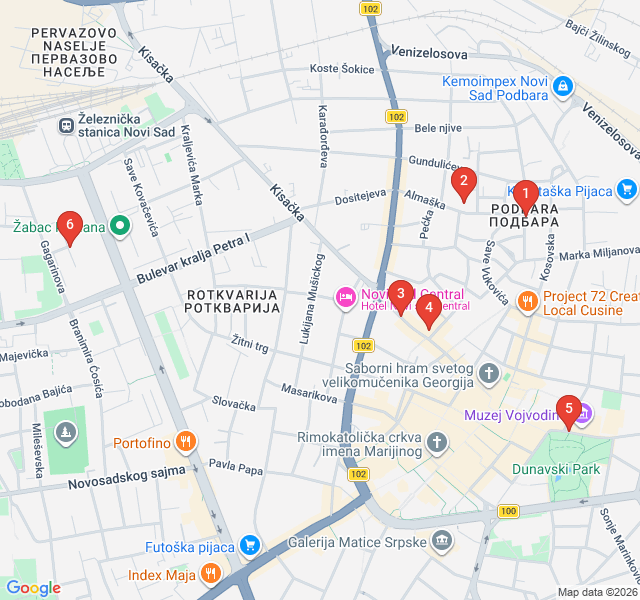
Numbers indicate the order of stops on the tour.
Begin your self-guided adventure at Svilara, a landmark that bridges the city's industrial past and its creative present. Built in 1884 as a silk-dyeing factory, its most recognizable feature is the towering brick chimney that dominates the skyline. After decades of neglect, this space was transformed into a 'cultural station' for Novi Sad’s stint as the European Capital of Culture. It now serves as a community hub for exhibitions, performances, and workshops. Take a moment to admire how the industrial red-brick aesthetic has been preserved while integrating modern glass and steel elements. This site represents the neighborhood’s resilience, moving from a center of production to a center of inspiration.
A short walk leads you to the Almaška Church, the spiritual anchor of this district. Dedicated to the Three Holy Hierarchs, the current building dates back to 1791, though a smaller church stood here as early as 1718. It is the largest Orthodox church in Novi Sad and is famous for its massive proportions, which were quite a statement at the time of its construction. Inside, the iconostasis is a masterpiece by Arsenije Teodorović, one of the most prominent Serbian painters of the late 18th century. The church’s humble exterior belies the richness within, mirroring the character of the Almaški people—modest on the outside, but deeply rooted in tradition and culture.
As you reach this square, you are standing on ground dedicated to one of Novi Sad’s most remarkable figures. Marija Trandafil was a wealthy widow and a legendary philanthropist who used her fortune to help the poor, fund education, and build hospitals. This square serves as a gateway between the Almaški Kraj and the city center. Nearby, you will see the Orphanage she founded, which now serves as the seat of the Matica Srpska. The square is a peaceful spot to reflect on how private wealth in the 19th century was often funneled back into the community, earning Novi Sad its reputation as a city of culture and enlightenment.
You are now at the Matica Srpska, the oldest cultural and scientific institution among Serbs. Founded in Budapest in 1826 and moved to Novi Sad in 1864, it was the primary reason the city became known as the 'Serbian Athens.' This building houses a massive library, a publishing house, and a gallery of world-class importance. Its mission was to preserve Serbian language and culture during a time when the people were under Austro-Hungarian rule. Look at the architecture—it exudes the dignity and intellectual ambition of the 19th-century Serbian bourgeoisie. It remains a functioning academic powerhouse today, continuing to publish the 'Letopis,' one of the world's oldest continuously published literary journals.
Turning toward the older residential streets, you will find the House of the Two Lions. This is one of the few remaining examples of late 18th-century Baroque residential architecture in Novi Sad. The house is named for the two stone lion figures guarding the entrance gate, which have become symbols of the neighborhood’s longevity. It was once owned by wealthy merchants and later served as a pharmacy. Notice the thick walls and the characteristic arched gateway, designed to allow horse-drawn carriages to enter the inner courtyard. It is a rare survivor of the 1849 bombardment that destroyed much of the city, standing as a silent witness to Novi Sad’s turbulent history.
Finish your walking route at Koža Art Studio, where the neighborhood's history of craftsmanship meets modern design. The Almaški district was historically home to tanners and leather workers, and this studio keeps that tactile tradition alive. Here, you can see how traditional leather-working techniques are used to create contemporary art and accessories. It’s a perfect example of how the 'Oldest Quarter' isn't just about the past—it’s a place where young creatives are finding inspiration in old methods. This area, with its quiet alleys and artistic energy, provides a perfect conclusion to your exploration of the soul of Novi Sad.
Start Free on iPhone
Explore “The Soul of Almaški: Novi Sad's Oldest Quarter” with your very own Private Tour Guide with Zigway. Start free on iPhone, skip the large group and the fixed routes, and hear the city come alive as you go.
Your Private Tour Guide
Don't miss the good stuff
Explore Freely
 Easy
EasyNovi Sad, Serbia
Explore the vibrant soul of Novi Sad's nightlife on this self-guided walk through iconic pubs, craft beer gems, and the famous Laze Telečkog street.
 Easy
EasyNovi Sad, Serbia
Explore the Austro-Hungarian grandeur of Novi Sad's historic center on this self-guided walking route through the elegant streets of Stari Grad.
 Moderate
Novi Sad, Serbia
Explore the 'Gibraltar on the Danube' from Novi Sad's elegant city center to the massive underground tunnels of Petrovaradin Fortress.
 Easy
EasyNovi Sad, Serbia
Taste your way through Novi Sad's vibrant markets and iconic street food on this self-guided culinary stroll through the heart of Vojvodina.
 Easy
EasyKrakow, Poland
Explore the prestigious Jagiellonian University district, featuring Neo-Gothic architecture, Baroque churches, and Krakow's hidden scholarly gems.
 Easy
EasySalzburg, Austria
Discover Salzburg's oldest medieval alley, the birthplace of the 'Silent Night' author, and breathtaking views on this quiet self-guided walk.
 Easy
EasyHelsinki, Finland
Discover Helsinki's oldest neighborhood on this self-guided audio walk through Kruununhaka’s historic streets, hidden courtyards, and scenic shores.
 Easy
EasyGothenburg, Sweden
Discover Gothenburg’s 17th-century Dutch foundations, historic canals, and military fortifications on this self-guided architectural walk.
 Easy
EasyBelgrade, Serbia
Discover Lower Dorćol, where 18th-century history meets industrial revival and vibrant street art on this self-guided stroll through Belgrade.
 Easy
EasyBelgrade, Serbia
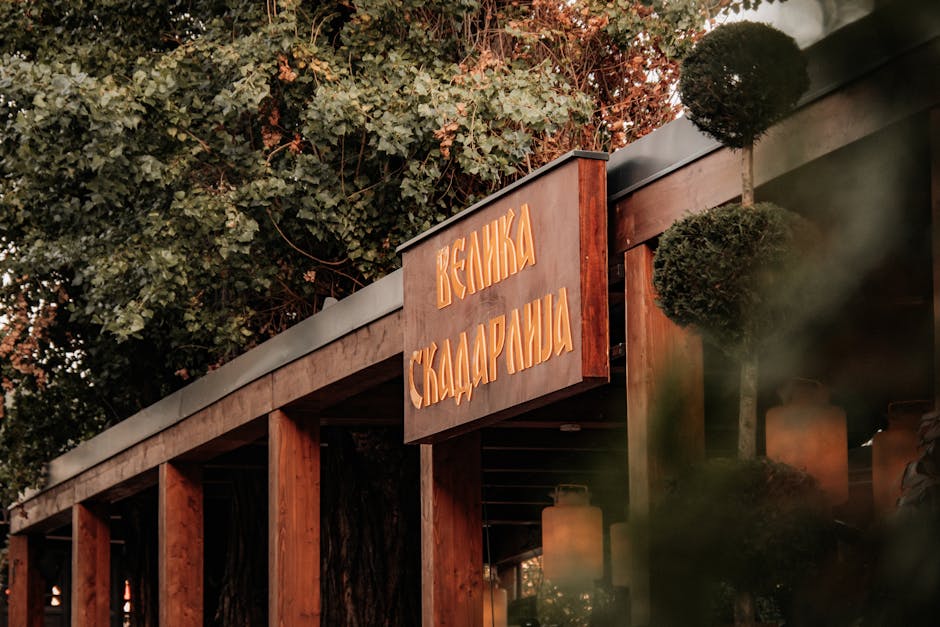
Discover Belgrade’s bohemian heart. Explore the historic Skadarlija quarter and Dorćol’s hidden Ottoman gems on this self-guided audio walk.
 Easy
EasyBelgrade, Serbia
Explore the future of Serbia's capital on this self-guided walk through the modern Belgrade Waterfront and the scenic Sava Promenada.
 Moderate
Belgrade, Serbia
Explore the legacy of Yugoslavia on this self-guided walk from Tito’s tomb to the historic ruins and monuments of central Belgrade.