Self-guided audio tour in Belgrade
Start Free on iPhone
Start free on iPhone to unlock this self-guided walking tour in Belgrade. Hear all the stories that make it amazing, walk at your own pace, and begin whenever you want.
Your Private Tour Guide
Step into a world where concrete was the medium of a utopian dream. This self-guided walk through Novi Beograd (New Belgrade) offers an immersive look at some of the most significant Modernist and Brutalist structures in Europe. Rising from the marshlands after World War II, New Belgrade was designed to be the administrative and residential heart of the Socialist Federal Republic of Yugoslavia. Today, it stands as a living museum of mid-century architectural ambition and urban planning. This neighborhood stroll takes you away from the Ottoman and Austro-Hungarian influences of the old city and into a landscape of massive blocks, wide boulevards, and soaring concrete towers. As you explore independently, you will encounter the Palace of Serbia, a monumental administrative center that reflects the grandeur of the Yugoslav state, and the Western City Gate (Genex Tower), an iconic Brutalist landmark that has defined the city's skyline for decades. This walking route is not just for architecture enthusiasts; it is for anyone curious about how ideology can be etched into the built environment. You will see how the 'Functionalist' ideals of the time translated into massive housing blocks and futuristic cultural centers. Starting at the confluence of the Sava and Danube rivers, you will trace the evolution of Yugoslav architecture from the elegant Modernism of the Museum of Contemporary Art to the raw, exposed concrete of the residential blocks. This experience is best enjoyed with a camera in hand, as the interplay of light and shadow on the textured concrete surfaces makes for world-class photography. While this walking route Belgrade offers is physically demanding due to the sheer scale of the district, the sense of perspective gained from standing at the foot of these 'concrete giants' is unparalleled. Whether you are interested in the history of the Non-Aligned Movement or the aesthetic of 'Socialist Modernism,' this exploration of New Belgrade provides a profound look at a vanished era of design.
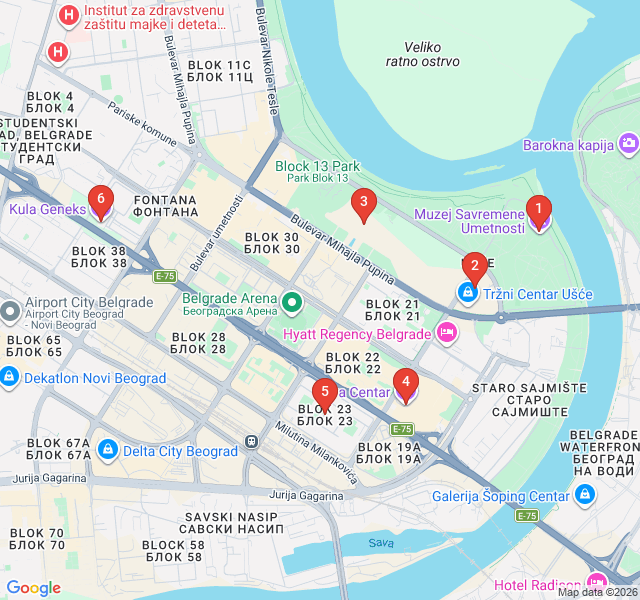
Numbers indicate the order of stops on the tour.
Begin your self-guided adventure at the Museum of Contemporary Art (Muzej savremene umetnosti), a building that looks like a cluster of crystals rising from the riverbank. Designed by Ivan Antić and Ivanka Raspopović and completed in 1965, it is a prime example of Yugoslav Modernism. Notice the unique roofline and the use of white marble and glass. The design was intended to create an open, fluid interior space without traditional walls, symbolizing the openness of the Yugoslav art scene during the Cold War. It remains one of the most prestigious cultural institutions in the region, sitting perfectly at the confluence of the Sava and Danube rivers.
Just a short walk away is the Ušće Tower. Today it is a sleek glass office building, but its history is far more rugged. Originally built in 1964 as the headquarters of the Central Committee of the League of Communists of Yugoslavia, it was once a symbol of party power. In 1999, it survived multiple direct hits during the NATO bombing of Belgrade. While the original concrete skeleton remained intact—a testament to Socialist engineering—the building was later encased in glass during its reconstruction. It serves as a reminder of the city's resilience and the transition from socialism to modern capitalism.
The Palace of Serbia, formerly known as the SIV (Federal Executive Council), is one of the most significant administrative buildings in the Balkans. This H-shaped giant was designed to house the various ministries of the Yugoslav government. Its interior is a treasure trove of 'Socialist Modern' design, with six salons named after the six republics of Yugoslavia. The sheer scale of the building and the surrounding park reflects the ambition of the Tito era. While you can only admire the exterior, the symmetry and the massive driveway evoke the grand state visits and diplomatic history that once took place here.
Continue to the Sava Centar, an enormous international congress and cultural hub. Built in the late 1970s specifically to host the CSCE (Commission on Security and Cooperation in Europe), it became the heart of Belgrade's international life. Architect Stojan Maksimović designed it to look like a spaceship landed in the middle of the city, with its distinctive green glass facade and interconnected walkways. It was here that world leaders from the Non-Aligned Movement gathered, and it remains a symbol of Belgrade's historical role as a bridge between East and West during the 20th century.
Enter the heart of New Belgrade's residential life at Block 23. This is where Brutalism meets everyday life. Designed in the 1970s, these apartment blocks are famous for their exposed concrete, repetitive geometric patterns, and 'megastructure' feel. Unlike Western perceptions of 'concrete jungles,' these blocks were designed with integrated schools, parks, and shops, aiming to create a self-sufficient socialist community. Photographers will love the rhythmic shadows cast by the balconies and the sheer vertical scale of the towers. It is a raw, honest look at the urban planning that defined the lives of hundreds of thousands of Belgraders.
Your walk concludes at the Western City Gate, better known as the Genex Tower. This 35-story Brutalist masterpiece consists of two towers connected by a two-story bridge and topped with a rotating restaurant (currently inactive). One tower was residential, while the other served as the headquarters for the state-owned Genex Group. Architect Mihajlo Mitrović intended it to be a welcoming 'gate' for those entering the city from the airport. Its stark, futuristic appearance has made it a global icon of Brutalist architecture. Standing at its base, you can truly feel the weight and the daring vision of the era's architects.
Start Free on iPhone
Explore “Concrete Giants: The Brutalist Icons of New Belgrade” with your very own Private Tour Guide with Zigway. Start free on iPhone, skip the large group and the fixed routes, and hear the city come alive as you go.
Your Private Tour Guide
Don't miss the good stuff
Explore Freely
 Easy
EasyBelgrade, Serbia
Discover Lower Dorćol, where 18th-century history meets industrial revival and vibrant street art on this self-guided stroll through Belgrade.
 Easy
EasyBelgrade, Serbia
Discover Belgrade’s bohemian heart. Explore the historic Skadarlija quarter and Dorćol’s hidden Ottoman gems on this self-guided audio walk.
 Easy
EasyBelgrade, Serbia
Explore the future of Serbia's capital on this self-guided walk through the modern Belgrade Waterfront and the scenic Sava Promenada.
 Moderate
Belgrade, Serbia
Explore the legacy of Yugoslavia on this self-guided walk from Tito’s tomb to the historic ruins and monuments of central Belgrade.
 Easy
EasyGdansk, Poland
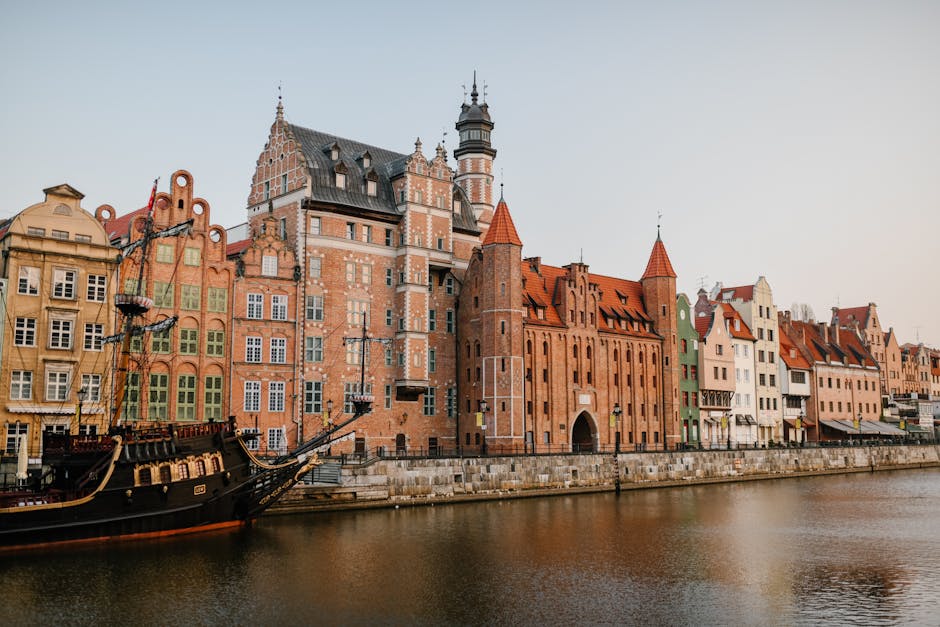
Discover the 'Baltic Gold' on this self-guided walk through Gdansk's historic mills, massive cathedrals, and the magical Mariacka Street.
 Easy
EasyWarsaw, Poland
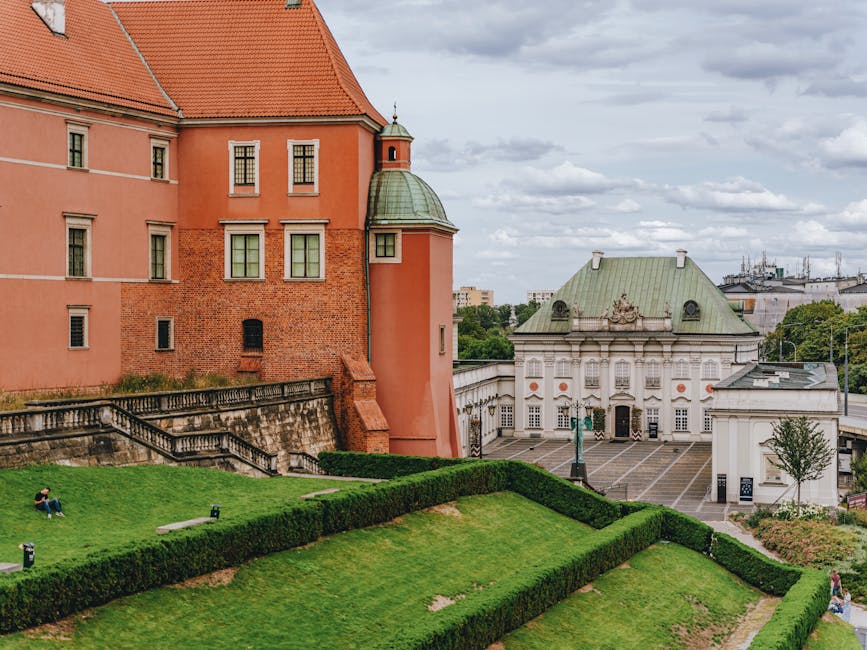
Explore the miracle of Warsaw's reconstructed Old Town on this self-guided walk through royal squares, medieval walls, and heroic monuments.
 Easy
EasyHelsinki, Finland
Discover Helsinki's oldest neighborhood on this self-guided audio walk through Kruununhaka’s historic streets, hidden courtyards, and scenic shores.
 Moderate
Gothenburg, Sweden
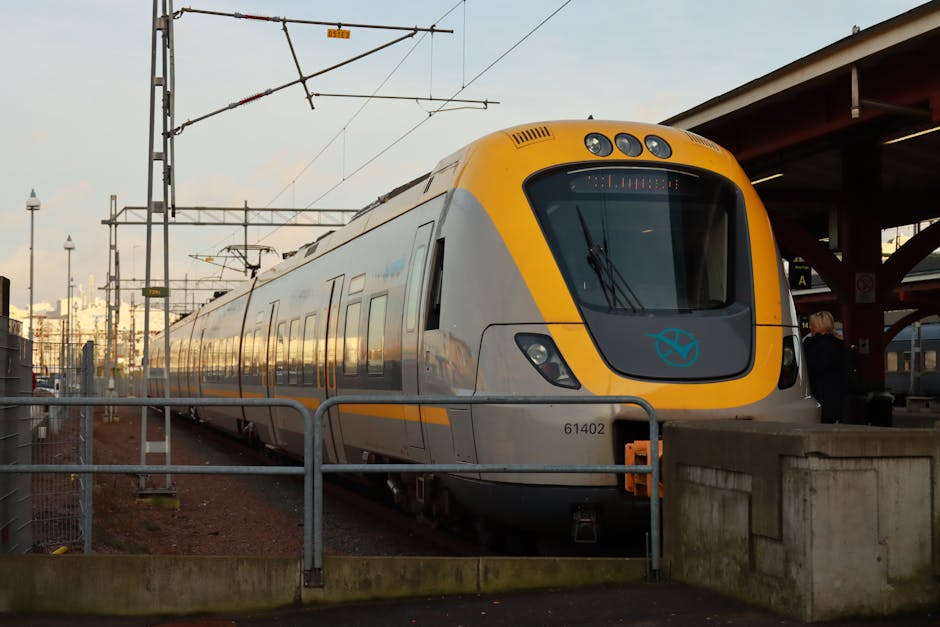
Discover Gothenburg’s maritime soul on this self-guided walk from the historic Central Station to the scenic riverfront at Stenpiren.
 Easy
EasyNovi Sad, Serbia
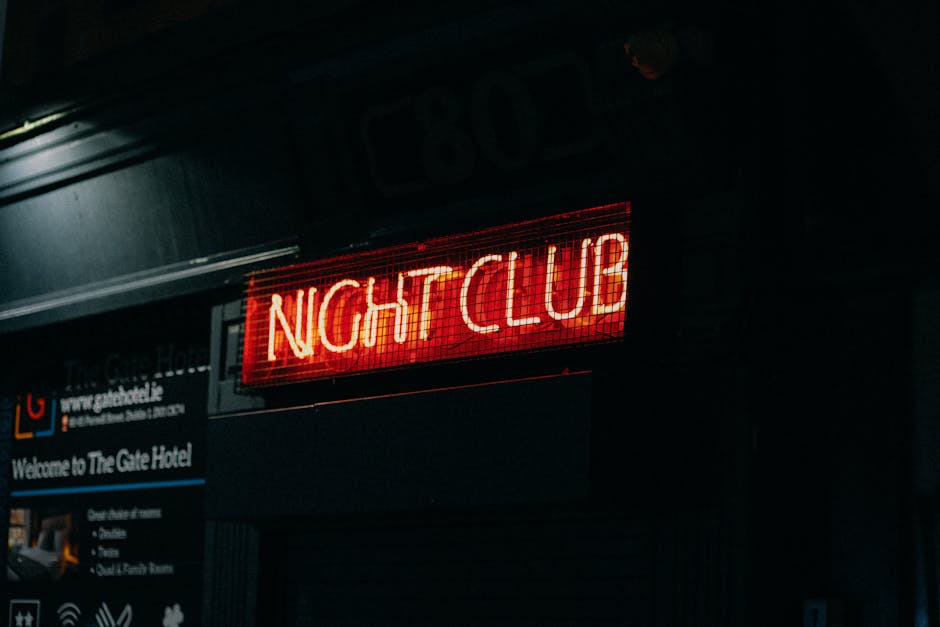
Explore the vibrant soul of Novi Sad's nightlife on this self-guided walk through iconic pubs, craft beer gems, and the famous Laze Telečkog street.
 Easy
EasyNovi Sad, Serbia
Explore the Austro-Hungarian grandeur of Novi Sad's historic center on this self-guided walking route through the elegant streets of Stari Grad.
 Moderate
Novi Sad, Serbia
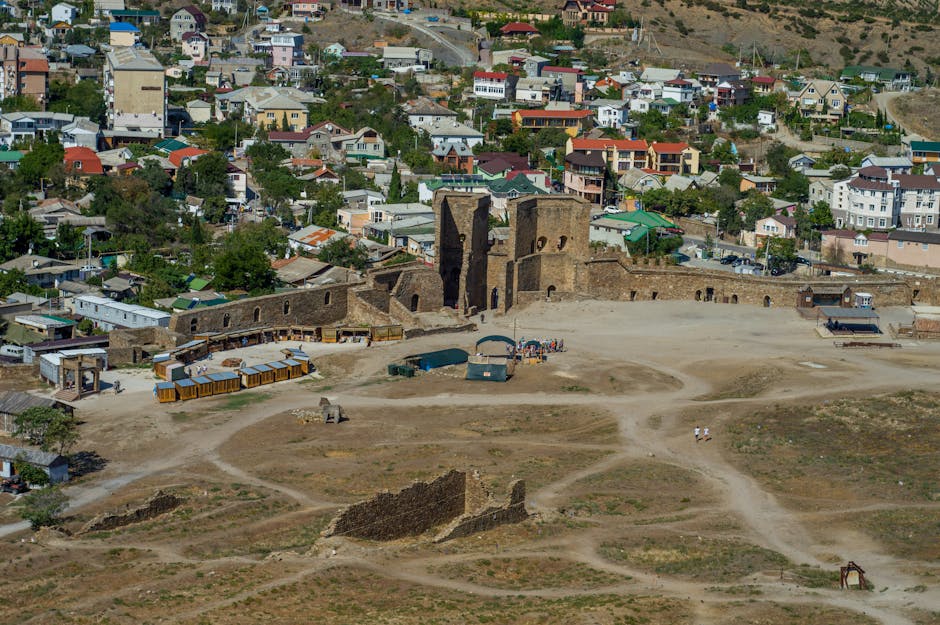
Explore the 'Gibraltar on the Danube' from Novi Sad's elegant city center to the massive underground tunnels of Petrovaradin Fortress.
 Easy
EasyNovi Sad, Serbia
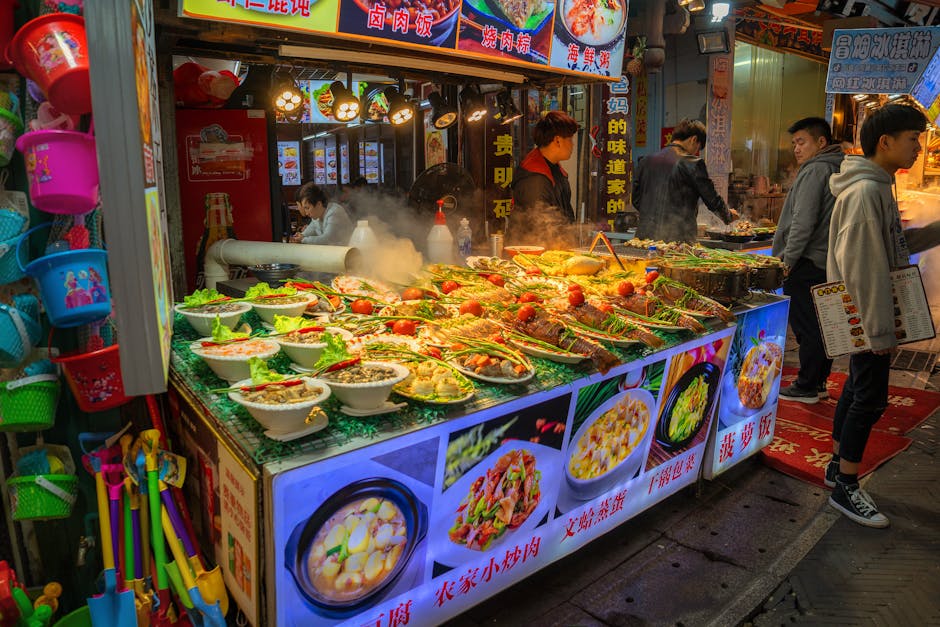
Taste your way through Novi Sad's vibrant markets and iconic street food on this self-guided culinary stroll through the heart of Vojvodina.