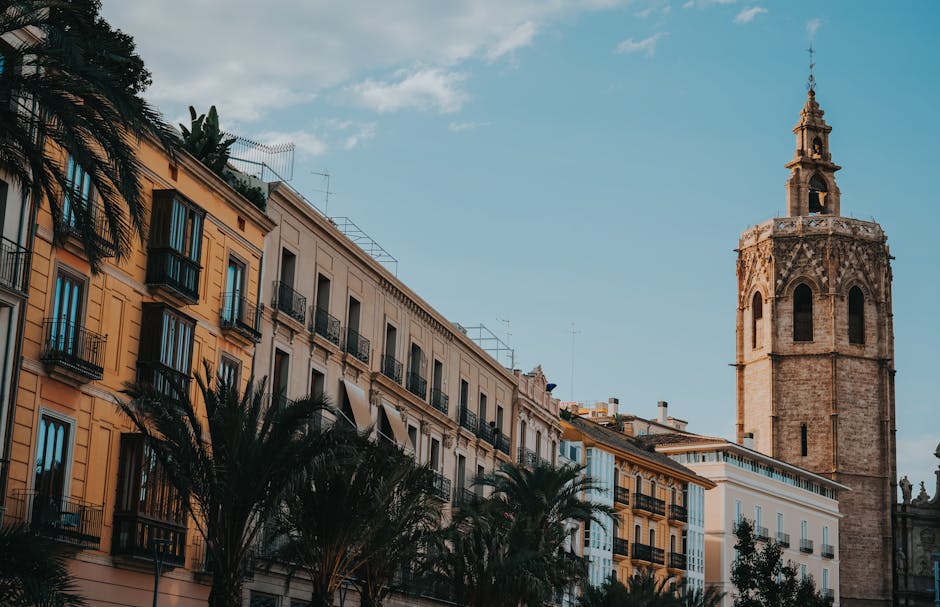
Self-guided audio tour in Valencia
Start Free on iPhone
Start free on iPhone to unlock this self-guided walking tour in Valencia. Hear all the stories that make it amazing, walk at your own pace, and begin whenever you want.
Your Private Tour Guide
Step into the intellectual heart of Spain’s third-largest city with this self-guided walk through Valencia’s storied academic and literary landscape. Long before it was known for its futuristic architecture, Valencia was a powerhouse of the Renaissance, a city of printers, poets, and pioneering scholars. This walking route invites you to explore the legacy of the 'Siglo de Oro'—the Valencian Golden Age—where the first book in the Iberian Peninsula was printed and where one of Europe’s oldest universities still stands today. Your neighborhood stroll begins amidst the Rococo splendor of the Palacio del Marqués de Dos Aguas. While famous for its facade, it serves as an introduction to the private collections and intellectual curiosity of the Valencian nobility. From there, you will transition to the hallowed halls of La Nau, the original 15th-century seat of the University of Valencia. This building remains a beacon of humanism, housing ancient libraries and cloisters that have echoed with the footsteps of scholars for over five centuries. As you continue this walking tour Valencia offers a blend of grand public spaces and quiet sanctuaries of thought. You will visit the Plaza de Alfonso el Magnánimo, named after the king who turned Valencia into a Mediterranean cultural capital, and the Biblioteca Pública de València, uniquely housed in a former medieval hospital. The journey also takes you to the Monestir de Sant Miquel dels Reis, a masterpiece of Renaissance architecture that now guards the literary treasures of the region as the Valencian Library. Finally, the route concludes at a modern local favorite, Librería Railowsky, bridging the gap between historic manuscripts and contemporary book culture. Whether you are a bibliophile, a history enthusiast, or a curious traveler, this audio walk provides the freedom to discover the city’s scholarly soul at your own pace, away from the typical tourist crowds.
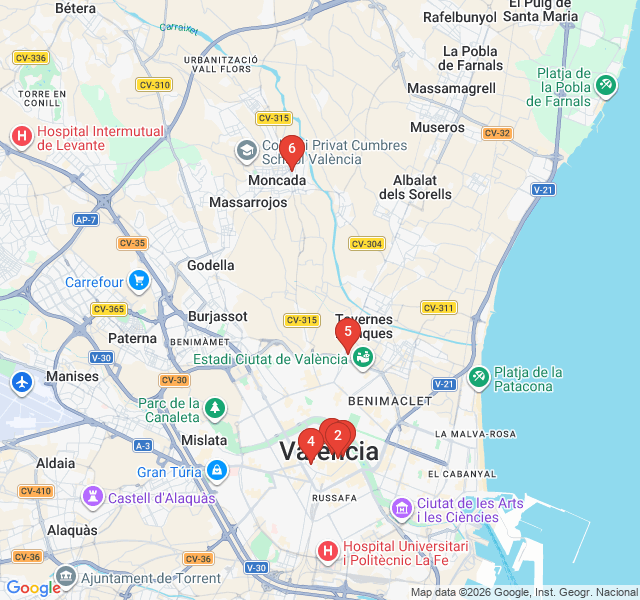
Numbers indicate the order of stops on the tour.
Begin your self-guided adventure at the most impressive facade in Valencia. While this palace is now the National Ceramics Museum, it represents the pinnacle of 18th-century noble life. The intricate alabaster entrance, designed by Hipólito Rovira, surrounds a figure of the Virgin Mary, but look closer at the two flowing rivers—representing the Turia and Júcar—that give the palace its name. For the scholar, the interior holds a magnificent historic library. In an era where knowledge was a status symbol, the Marqués de Dos Aguas curated a collection that reflected the Enlightenment values of the time. This stop sets the stage for a city that has always valued the intersection of art, wealth, and education.
Walk a few minutes to reach La Nau, the soul of Valencian academia. Founded in 1499 as the 'Estudi General,' this building served as the university's only headquarters for centuries. Step into the neoclassical courtyard, where a statue of Luis Vives, the great Valencian humanist and friend of Erasmus, stands watch. The university was a pioneer in teaching medicine and law during the Renaissance. Today, it functions as a cultural center, but the historic library upstairs—accessible for researchers—contains thousands of volumes printed before the 16th century. It is a quiet reminder of Valencia's role as a European capital of printing and humanistic thought.
This leafy square is more than just a transit point; it is a tribute to the 'Magnanimous' King Alfonso V of Aragon. During his reign in the 15th century, Valencia experienced its literary Golden Age. Alfonso was a great patron of the arts and spent much of his time in Naples, bringing Italian Renaissance influences back to Valencia. It was during this era that Joanot Martorell wrote 'Tirant lo Blanch,' often cited as the first modern novel and a book that Miguel de Cervantes himself praised in Don Quixote. The plaza, with its towering ficus trees and central statue, serves as a monument to the period when Valencian was the language of Mediterranean literature.
Housed in the remains of the Hospital de los Pobres Inocentes, this is one of the most unique libraries in Spain. The building dates back to the 15th century and was the first hospital in the world to provide dedicated care for the mentally ill. Its cross-shaped floor plan was designed so that a single altar at the center could be seen by patients in all four wings. Today, the hospital beds have been replaced by bookshelves. As you explore independently, notice how the ancient stone arches contrast with modern glass and steel. It is a living example of how Valencia repurposes its historic heritage for public education and literacy.
Located slightly north of the city center, this monastery is a hidden gem often called the 'Escorial of Valencia.' Built over a former Cistercian monastery and an Islamic farmhouse, it was commissioned in the 16th century by the Duke of Calabria. It was designed to be a royal pantheon and a center of learning. After serving various roles—including a prison during the 19th and 20th centuries—it now houses the Biblioteca Valenciana Nicolau Primitiu. This is the official library of the Valencian government, preserving millions of documents, maps, and rare books. The cloister's architecture is a stunning example of the Herrerian style, embodying the gravity and grandeur of Spanish scholarship.
Conclude your exploration at a modern landmark of Valencian culture. Since 1985, Librería Railowsky has been a sanctuary for bibliophiles and photographers. Named after the man jumping the puddle in Henri Cartier-Bresson’s famous photograph, this independent bookstore combines a curated selection of literature with a dedicated photography gallery. In a world of digital retail, Railowsky remains a physical meeting point for the city’s intellectuals and artists. It represents the contemporary chapter of the Scholars' Path—a testament to the fact that Valencia’s love affair with the written word and the printed image continues to thrive in the 21st century.
Start Free on iPhone
Explore “The Scholars' Path: University and Literature” with your very own Private Tour Guide with Zigway. Start free on iPhone, skip the large group and the fixed routes, and hear the city come alive as you go.
Your Private Tour Guide
Don't miss the good stuff
Explore Freely
 Easy
EasyValencia, Spain
Discover Valencia's 'Sistine Chapel' and ornate Baroque palaces on this self-guided walk through the historic Ciutat Vella.
 Easy
EasyValencia, Spain
Explore Valencia's Roman roots and Gothic masterpieces on this self-guided audio walk through the historic Ciutat Vella district.
 Easy
EasyValencia, Spain
Explore Valencia’s oldest quarter where ancient medieval gates meet world-class street art on this self-guided neighborhood stroll.
 Moderate
Valencia, Spain
Discover Valencia's medieval heritage on a self-guided walk through ancient gates, historic monuments, and the scars of Napoleonic battles.
 Easy
EasyNairobi, Kenya
Discover Nairobi’s literary soul on this self-guided walk through historic libraries, iconic bookshops, and cultural centers in the heart of the CBD.
 Easy
EasyKrakow, Poland
Explore the prestigious Jagiellonian University district, featuring Neo-Gothic architecture, Baroque churches, and Krakow's hidden scholarly gems.
 Easy
EasyKrakow, Poland
Explore the historic heart of Kazimierz on this self-guided walk through synagogues, ancient cemeteries, and vibrant squares.
 Easy
EasyWarsaw, Poland
Follow the life of Fryderyk Chopin through Warsaw’s historic center. See where he lived, studied, and where his heart remains today.
 Moderate
Barcelona, Spain
Explore the elegant 'village' of Sarrià, where Gothic monasteries and Gaudí's hidden gems meet charming local markets and narrow streets.
 Moderate
Barcelona, Spain
Discover the revolutionary history and haunting scars of the Spanish Civil War on this self-guided walk through Barcelona's historic streets.
 Easy
EasyBarcelona, Spain
Discover the architectural wonders of Barcelona's Golden Square on this self-guided stroll through Eixample's most luxurious Modernista streets.
 Challenging
Barcelona, Spain
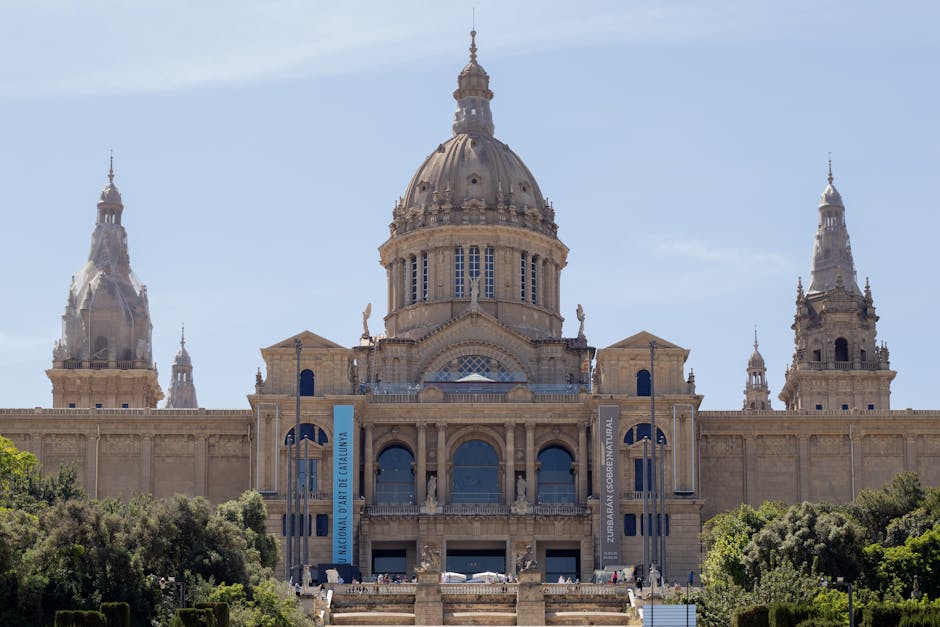
Explore Montjuïc’s lush gardens, historic fortress, and iconic Olympic venues on this scenic self-guided walk with panoramic Mediterranean views.