Self-guided audio tour in Seville
Start Free on iPhone
Start free on iPhone to unlock this self-guided walking tour in Seville. Hear all the stories that make it amazing, walk at your own pace, and begin whenever you want.
Your Private Tour Guide
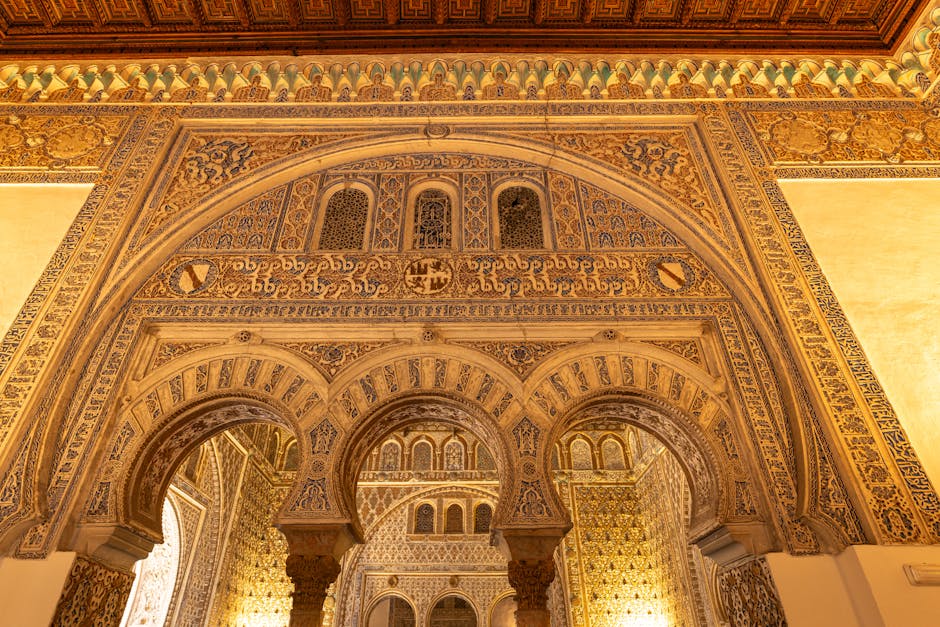
Step into the labyrinthine heart of Seville's historic Jewish quarter with this self-guided walk through the Barrio de Santa Cruz. As the sun begins to set and the shadows lengthen against the whitewashed walls, the neighborhood transforms into a stage for centuries-old legends and whispered secrets. This walking route is designed for those who want to experience the atmospheric soul of Seville beyond the typical tourist paths, focusing on the layers of history that define the Judería. You will navigate narrow alleys where the balconies nearly touch, discover hidden plazas scented with orange blossoms, and uncover the tragic and romantic tales that have inspired poets and playwrights for generations. This self-guided adventure allows you to explore the neighborhood's complex past—from its prosperity as a medieval Jewish community to its eventual transformation into the romantic heart of the city. Along the way, you will encounter the legacy of the great painter Murillo, the myth of the legendary seducer Don Juan Tenorio, and the heartbreaking story of Susona, the girl who betrayed her family for love. While a walking tour Seville often focuses only on the Cathedral, this audio walk delves deeper into the architectural nuances and cultural shifts of Santa Cruz. You will see how former synagogues became ornate Baroque churches and how the city's ancient Roman walls still serve as the backdrop for daily life. Whether you are a history buff or a fan of literary romance, this neighborhood stroll offers a profound connection to the spirits of Seville's past. By choosing a self-guided route, you can pause to admire a secluded patio or enjoy a glass of sherry in a local tavern whenever the mood strikes, ensuring your exploration of the Judería is as personal as it is enlightening. Prepare to get lost in the best possible way as you trace the 'Shadows of the Judería' at your own pace.
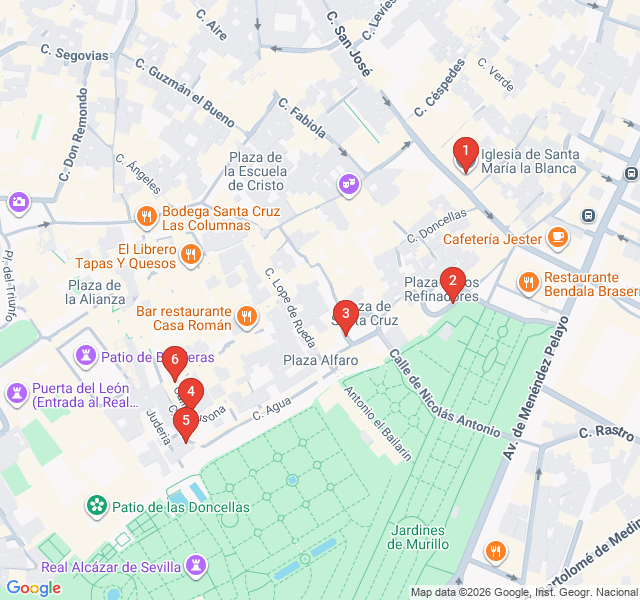
Numbers indicate the order of stops on the tour.
Begin your exploration at one of Seville's most layered religious sites. This church is a physical timeline of the city's history. Originally built as a synagogue in the 13th century, it was later converted into a mosque before becoming the Catholic church you see today. While the exterior is modest, the interior is a masterpiece of Spanish Baroque architecture, featuring stunning plasterwork and paintings by Murillo. It is named 'the White' not just for its walls, but in honor of the Virgin of the Snows. As you stand here, imagine the transition of this space from a center of Jewish life in the Judería to a symbol of the Christian reconquest.
Entering this quiet plaza, you are greeted by the bronze gaze of Don Juan Tenorio. This legendary character, the ultimate Spanish rogue and seducer, was immortalized by José Zorrilla. Although Don Juan is a fictional creation, he is deeply woven into the fabric of Seville. The statue stands here because the surrounding streets of Santa Cruz provided the backdrop for his literary escapades and duels. The plaza itself, with its traditional streetlamps and quiet benches, captures the romantic, slightly dangerous allure of 17th-century Seville. It serves as a reminder of how the city's real history and its literary myths are often inseparable.
This plaza is the spiritual heart of the neighborhood and occupies the site of what was once the most important church in the Jewish quarter. The church was demolished in the early 19th century, but the space remains sacred; it is believed that the famous painter Bartolomé Esteban Murillo was buried beneath what is now the garden. In the center stands the 'Cruz del Cerrajo' or the Cross of the Locksmith, an intricate 17th-century ironwork masterpiece. The square is surrounded by bitter orange trees, which fill the air with fragrance every spring, creating a peaceful sanctuary that belies the neighborhood's often turbulent history.
Tucked away in the labyrinth is a street with a dark name: the 'Calle de la Muerte' or Death Street, now officially Calle Susona. Look for the small tile depicting a skull. This marks the home of Susona Ben Susón, a young Jewish woman in the 15th century who fell in love with a Christian knight. To save him, she betrayed her father's plot for an uprising. The plot was foiled, and her family was executed. Overcome by guilt, Susona requested that upon her death, her head be placed over her door as a warning. The legend says it remained there for centuries. Today, the street is a hauntingly beautiful reminder of the personal tragedies that occurred during the Inquisition.
This narrow passage runs directly alongside the old Almohad city walls. Its name, 'Water Alley,' comes from the pipes that once ran atop the wall, carrying water from the Guadalquivir River to the gardens of the Real Alcázar. On your left, the walls are thick and ancient; on your right, the houses feature some of the most beautiful hidden patios in Seville, visible through wrought-iron gates. Washington Irving, the American author of 'Tales of the Alhambra,' once resided in a house at the end of this street. The mix of bougainvillea spilling over the walls and the cool shade makes this one of the most photographed spots in the city.
Conclude your walk in what many consider Seville's most charming square. Plaza de Doña Elvira is a classic example of Sevillian urban design, with its central fountain, tiled benches (azulejos), and meticulously pruned orange trees. In literary lore, this plaza was the site of the house of Don Gonzalo de Ulloa, the father of Doña Inés in the Don Juan story. Before the 17th century, this area housed a famous 'corral de comedias' or open-air theater. Today, it is the perfect place to sit and soak in the atmosphere of Santa Cruz. The echoes of the past—from theatrical performances to medieval whispers—seem to linger in the quiet rustle of the leaves.
Start Free on iPhone
Explore “Shadows of the Judería: Santa Cruz Legends” with your very own Private Tour Guide with Zigway. Start free on iPhone, skip the large group and the fixed routes, and hear the city come alive as you go.
Your Private Tour Guide
Don't miss the good stuff
Explore Freely
 Challenging
Seville, Spain
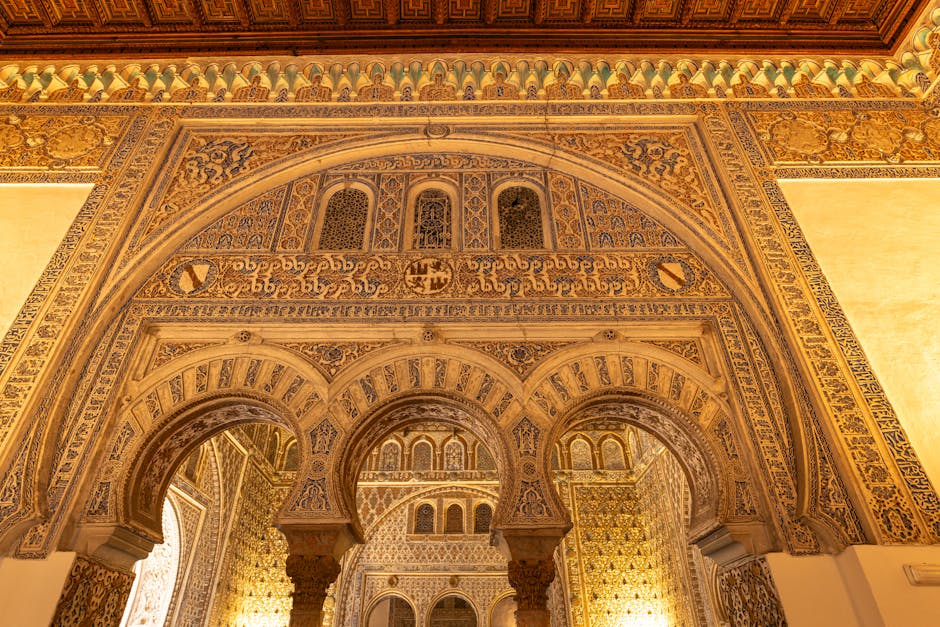
Explore the futuristic legacy of Expo 92 and the ancient secrets of a Carthusian monastery on this self-guided walk through Isla de la Cartuja.
 Moderate
Seville, Spain
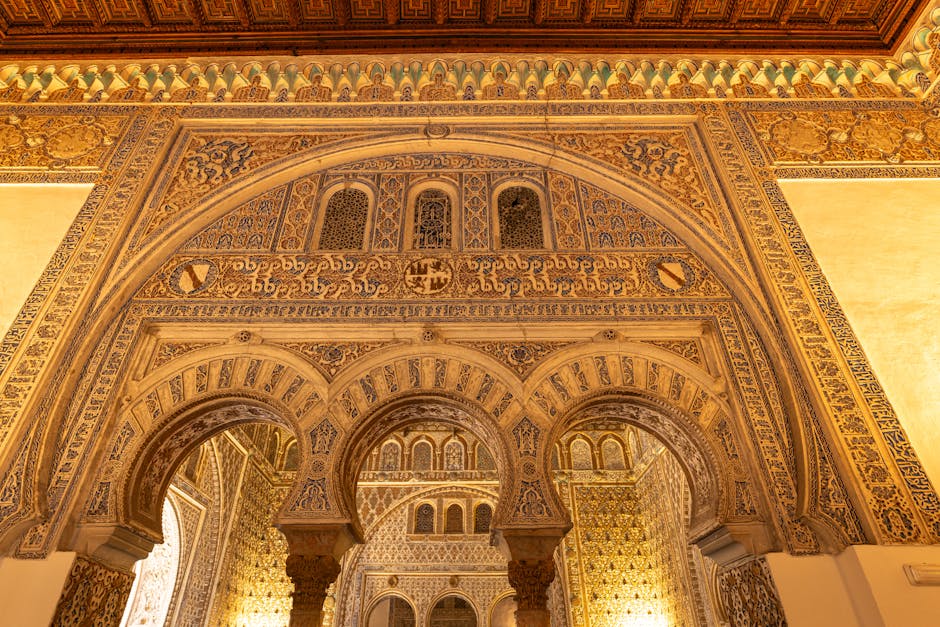
Explore Seville's artistic soul in Macarena, featuring ancient walls, vibrant markets, and bohemian workshops on this independent audio walk.
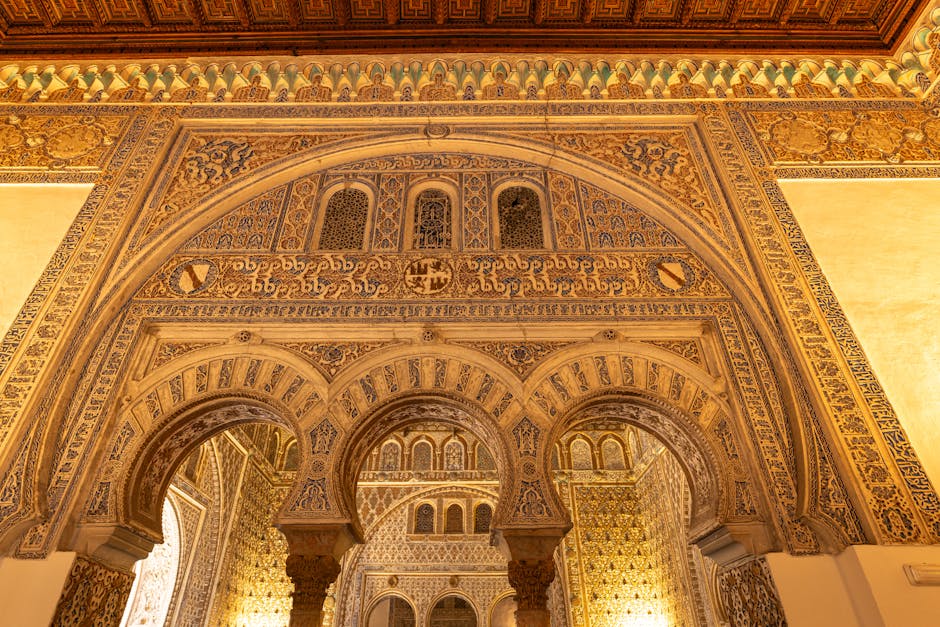 Easy
EasySeville, Spain
Discover the independent spirit of Triana on this self-guided walk through flamenco history, ceramic traditions, and riverside charm.
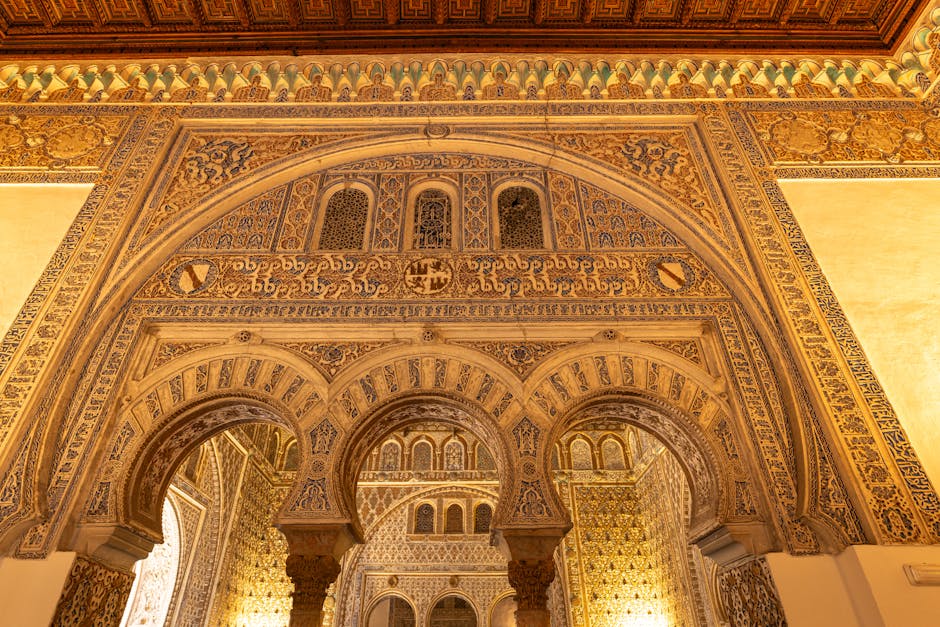 Easy
EasySeville, Spain
Discover Seville's modern side! Explore the iconic Setas, Roman ruins, and trendy boutiques on this self-guided walking route through the city center.
 Easy
EasyWarsaw, Poland
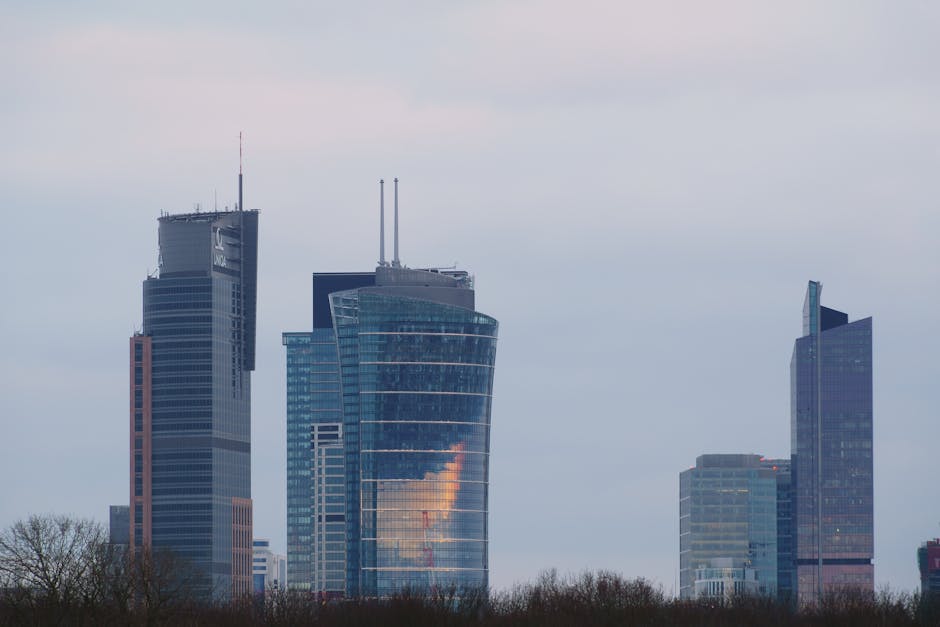
Discover the hidden courtyards and grand pre-war architecture of Warsaw's most atmospheric neighborhood on this self-guided stroll.
 Moderate
Vienna, Austria
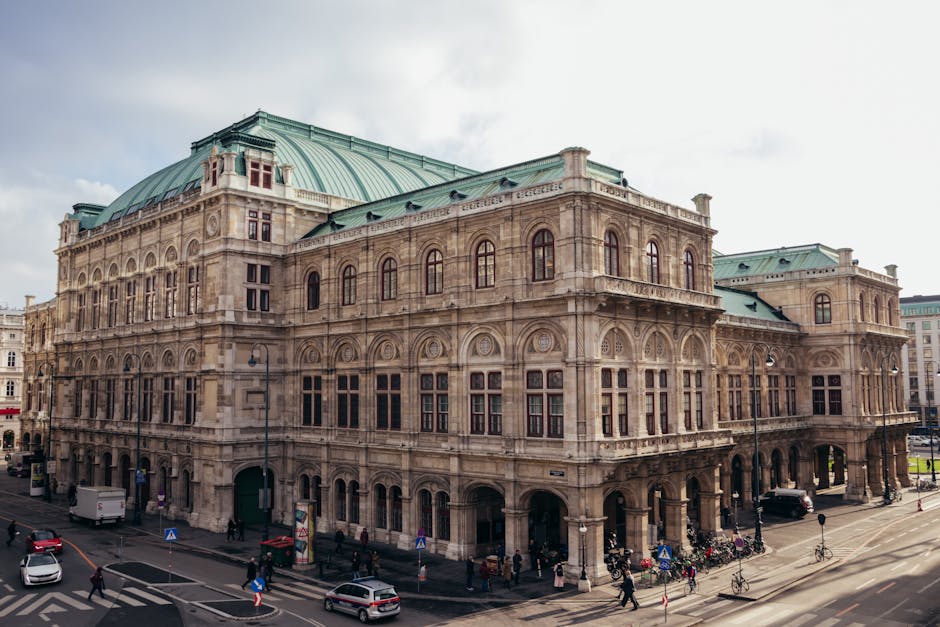
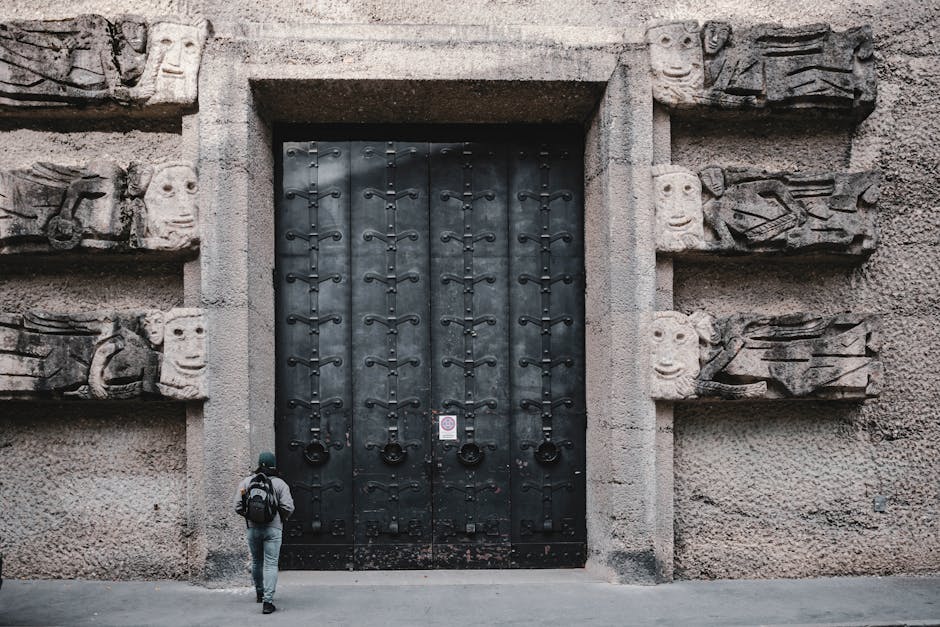
Discover the noir world of The Third Man and Cold War Vienna on this atmospheric self-guided audio walk through the historic Innere Stadt.
 Easy
EasySalzburg, Austria
Discover Salzburg's oldest medieval alley, the birthplace of the 'Silent Night' author, and breathtaking views on this quiet self-guided walk.
 Easy
EasyGothenburg, Sweden
Explore Gothenburg’s historic wooden houses, legendary giant cinnamon buns, and panoramic fortress views on this self-guided neighborhood stroll.
 Moderate
Barcelona, Spain
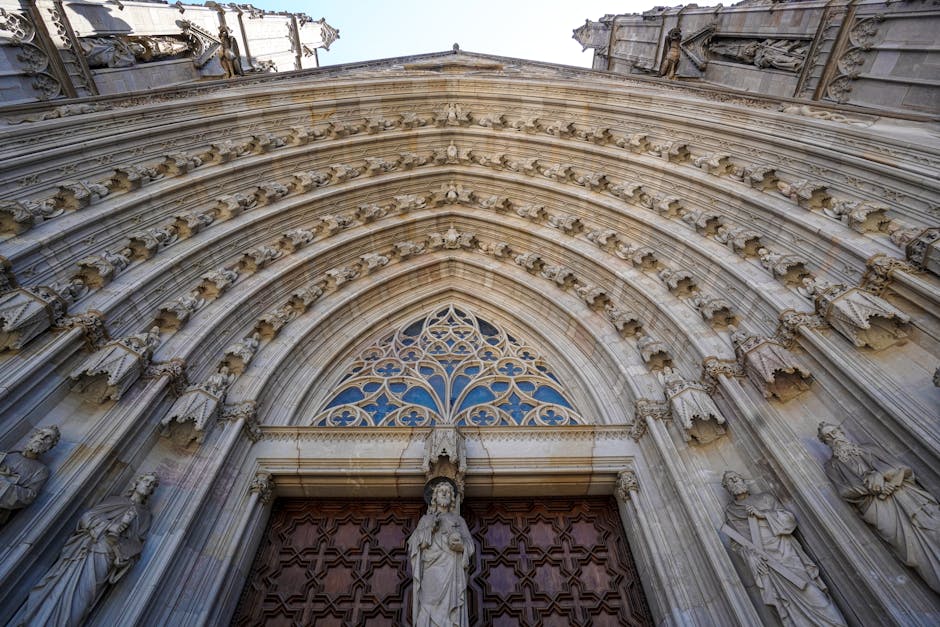
Explore the elegant 'village' of Sarrià, where Gothic monasteries and Gaudí's hidden gems meet charming local markets and narrow streets.
 Moderate
Barcelona, Spain
Discover the revolutionary history and haunting scars of the Spanish Civil War on this self-guided walk through Barcelona's historic streets.
 Easy
EasyBarcelona, Spain
Discover the architectural wonders of Barcelona's Golden Square on this self-guided stroll through Eixample's most luxurious Modernista streets.
 Challenging
Barcelona, Spain
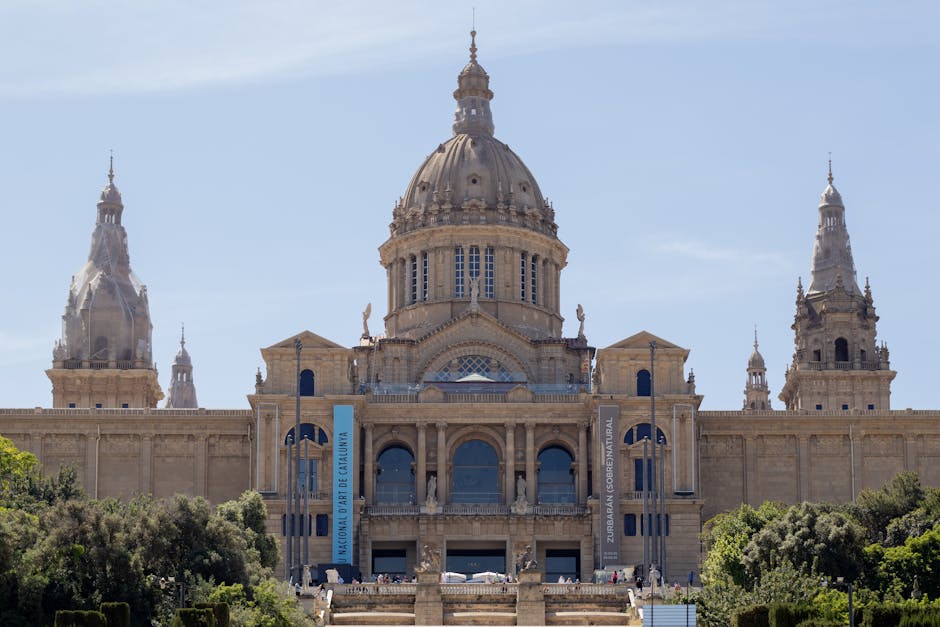
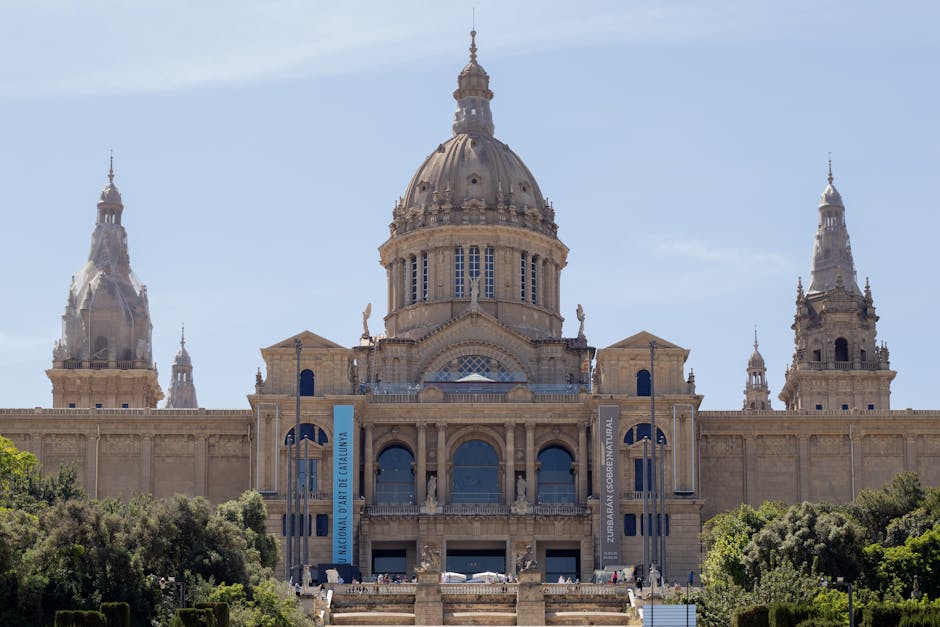
Explore Montjuïc’s lush gardens, historic fortress, and iconic Olympic venues on this scenic self-guided walk with panoramic Mediterranean views.