Self-guided audio tour in St. Augustine
Start Free on iPhone
Start free on iPhone to unlock this self-guided walking tour in St. Augustine. Hear all the stories that make it amazing, walk at your own pace, and begin whenever you want.
Your Private Tour Guide
Step back in time to the dawn of European influence in North America with this self-guided walk through the heart of St. Augustine. As the oldest continuously inhabited European-established settlement in the contiguous United States, this city is a living museum of coquina walls, narrow brick-paved lanes, and Spanish colonial ambition. This walking route focuses on the architectural and social legacy left by the Spanish Empire, exploring how a remote military outpost transformed into a vibrant cultural hub. Along the way, you will discover the unique engineering of the Castillo de San Marcos and the intimate history of colonial medicine at the Spanish Military Hospital. This neighborhood stroll allows you to explore at your own pace, moving through the Historic District's most iconic landmarks. You will begin in the tranquil atmosphere of the colonial medical quarter before venturing into the Plaza de la Constitución, the oldest public space in the United States. From there, the route takes you down Aviles Street, where the echoes of Spanish soldiers and merchants still linger in the architecture. As you head north, you will encounter the charming Oldest Wooden School House and the defensive Old City Gates, which once served as the only entrance to the town from the north. The experience concludes at the majestic Castillo de San Marcos, a fortress that never fell in battle. This audio walk is perfect for those who want to understand the strategic importance of this coastal settlement and the resilience of the people who built it. Whether you are a first-time visitor or a history enthusiast, this walking tour St. Augustine route provides a deep dive into the Spanish roots that define the city's character today. Discover the blend of Mediterranean styles and Florida-specific materials that make this city a unique architectural treasure in the American landscape.
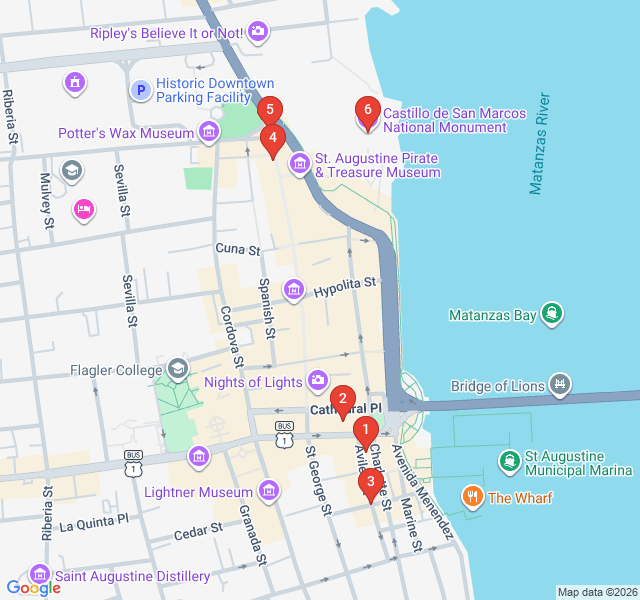
Numbers indicate the order of stops on the tour.
Start exploring with Zigway at this reconstructed site that sits on the foundations of a hospital from the Second Spanish Period. In the late 1700s, this was a place of sophisticated medical care for the time. The Spanish military surgeons here utilized a blend of European medicine and local herbal knowledge. Notice the architecture—the thick walls and layout were designed to keep the interior cool in the humid Florida heat. While the original wooden structures have long since decayed, the research and artifacts found here reveal a world of herbalism, early surgery, and the daily struggles of life in a colonial military outpost.
This central square has been the heart of St. Augustine since 1573, laid out according to the Spanish Law of the Indies which dictated that all colonial towns must center around a plaza. It is named for the Spanish Constitution of 1812. As you walk through, you'll see monuments ranging from the Spanish Constitution Obelisk to the Andrew Young Monument, celebrating the city's role in the Civil Rights Movement. The plaza has served as a marketplace, a parade ground, and a social hub for centuries. Look for the public market building, which once hosted vendors selling fresh seafood and local produce.
Welcome to the oldest street in the United States. Archeological evidence suggests that this narrow passage has been in use since the 16th century. Today, it is the center of St. Augustine's artist district, but look closely at the buildings to see the Spanish influence. The balconies overhanging the street and the use of coquina—a stone made of compressed seashells—are classic colonial features. This street was once the primary thoroughfare for the city's elite and military officials. It captures the intimate, Mediterranean feel that early Spanish settlers tried to replicate in the New World.
This charming structure is a rare surviving example of early colonial architecture, built primarily of red cedar and cypress. Held together by wooden pegs and handmade nails, it predates the American Revolution. Originally a private home, it became a schoolhouse in the 1700s. Notice the large chain wrapped around the building; it was added in the 1930s to help anchor the structure during hurricanes. The schoolhouse offers a glimpse into the humble, rustic side of colonial life, standing in stark contrast to the grand stone fortress you will see later on this route.
These two pillars were once the only entrance into St. Augustine from the north. Constructed in 1808 out of coquina, they were part of the Cubo Line, a defensive wall of earth and palm logs that protected the city's northern border. Before these stone pillars existed, there were wooden gates and a drawbridge over a moat. For residents in the 1800s, these gates represented safety from potential invaders. Today, they mark the transition from the modern city to the historic district, serving as a symbolic threshold into the centuries of history contained within these old city limits.
The final stop on this neighborhood stroll is the crown jewel of Spanish defense: the Castillo de San Marcos. Completed in 1695, this is the oldest masonry fort in the continental United States. Its walls are made of coquina, a unique limestone that proved incredibly effective against cannon fire. Instead of shattering, the porous rock absorbed the cannonballs like a sponge. This fortress protected the Spanish treasure fleets and the residents of St. Augustine through multiple sieges and changes of flags. As you look out over the Matanzas River, imagine the Spanish sentries watching the horizon for British ships.
Start Free on iPhone
Explore “Spanish Roots and Colonial Stones” with your very own Private Tour Guide with Zigway. Start free on iPhone, skip the large group and the fixed routes, and hear the city come alive as you go.
Your Private Tour Guide
Don't miss the good stuff
Explore Freely
 Moderate
St. Augustine, United States
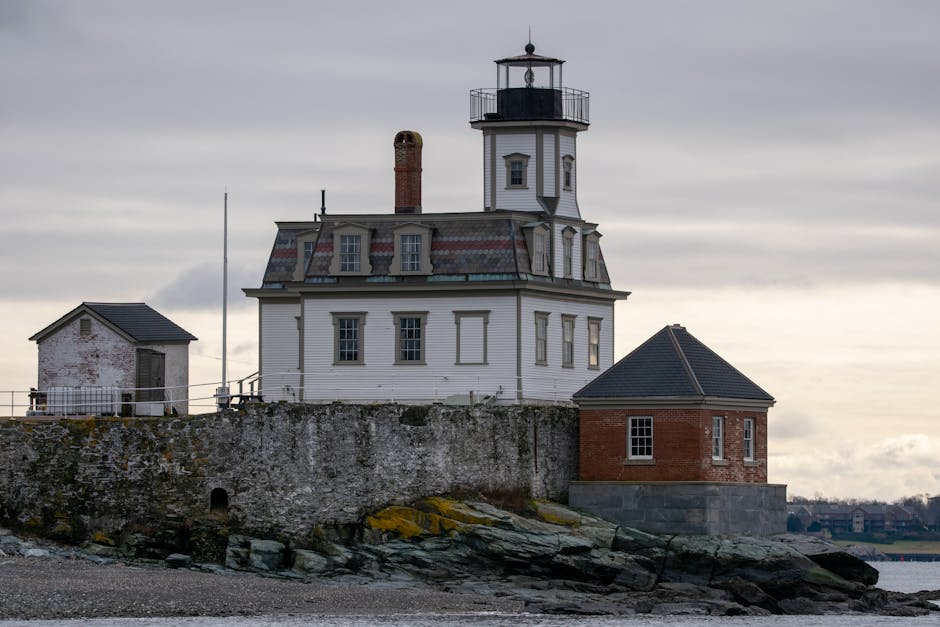
Explore maritime history and coastal nature on this self-guided walk from the Bridge of Lions to the dunes of Anastasia State Park.
 Easy
EasySt. Augustine, United States
Discover the Gilded Age grandeur of St. Augustine's Flagler District on this self-guided walking route through historic hotels and cathedrals.
 Easy
EasySt. Augustine, United States
Explore the oldest street in America through its historic courtyards, military history, and vibrant local art galleries on this self-guided walk.
 Easy
EasySt. Augustine, United States
Explore the Golden Age of Piracy on this self-guided walking route through St. Augustine’s historic waterfront and defensive fortifications.
 Easy
EasyNairobi, Kenya
Explore Nairobi's architectural evolution from colonial-era landmarks to iconic Brutalist skyscrapers on this historic self-guided walking route.
 Easy
EasyNairobi, Kenya
Discover Nairobi's iconic skyline on this self-guided architecture walk through the CBD’s most famous modernist and Brutalist landmarks.
 Easy
EasyGothenburg, Sweden
Discover Gothenburg’s 17th-century Dutch foundations, historic canals, and military fortifications on this self-guided architectural walk.
 Easy
EasyKrakow, Poland
Explore the prestigious Jagiellonian University district, featuring Neo-Gothic architecture, Baroque churches, and Krakow's hidden scholarly gems.
 Easy
EasyNashville, United States
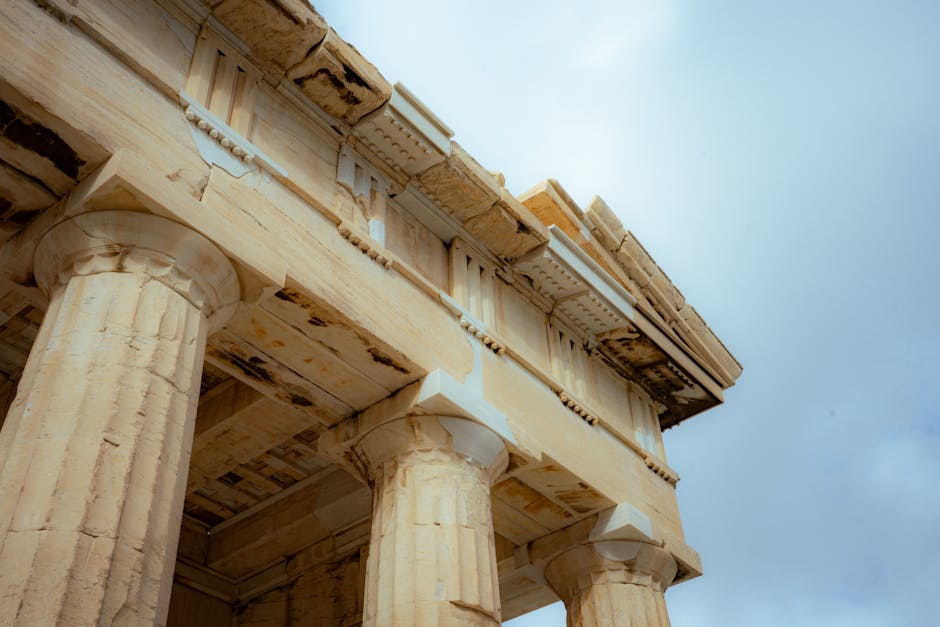
Explore the 'Athens of the South' on this self-guided walk through Centennial Park, featuring the world's only full-scale Parthenon replica.
 Easy
EasyNashville, United States
Explore Nashville's academic heart and Art Deco gems on this self-guided walk through historic Hillsboro Village.
 Easy
EasyNashville, United States
Explore the heart of Nashville's music industry. Discover iconic studios and the history of the legendary Nashville Sound at your own pace.
 Easy
EasyNashville, United States
Explore Nashville's oldest neighborhood! Discover Victorian architecture, Civil War history, and world-class craft beer on this self-guided walk.