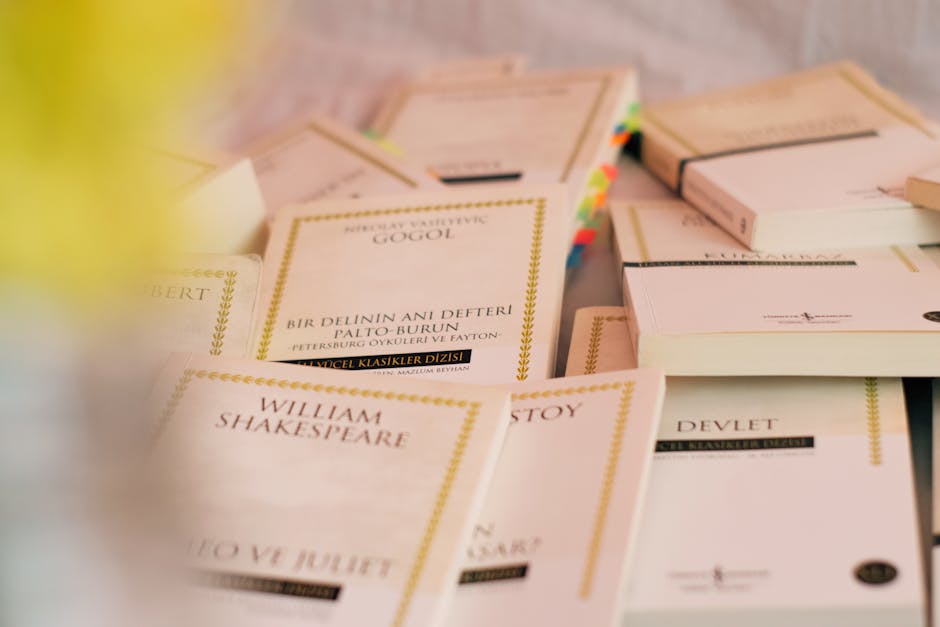
Self-guided audio tour in Zagreb
Start Free on iPhone
Start free on iPhone to unlock this self-guided walking tour in Zagreb. Hear all the stories that make it amazing, walk at your own pace, and begin whenever you want.
Your Private Tour Guide
Zagreb is a city that breathes through its cafes and speaks through its poets. On this self-guided walk, you will dive into the heart of 'špica'—the uniquely Croatian ritual of slow coffee and social observation—while tracing the footsteps of the literary giants who shaped the city's intellectual identity. Unlike a standard walking tour Zagreb visitors might find in brochures, this route prioritizes the atmosphere of the Lower Town (Donji Grad), where the scent of roasted beans mingles with the legacy of bohemian writers. We begin in the vibrant Petar Preradović Square, known locally as the Flower Square, where the statue of a poet-general oversees a sea of cafe tables. From here, you will explore the hidden corners where writers like Tin Ujević once held court over carafes of wine, and where Antun Gustav Matoš remains forever seated on a bench, watching the city change. This walking route is not just about monuments; it is about understanding the pace of life in the Croatian capital. You will see the Art Nouveau elegance of Kino Europa and the bustling terraces of Gundulićeva Street, eventually ending your neighborhood stroll in the contemporary literary hub of Martićeva Street. Whether you are a book lover or a dedicated people-watcher, this explore-at-your-own-pace adventure offers a deep dive into the soul of Zagreb. You will learn why coffee is never 'just a drink' here and how the city's literary history continues to influence its modern, creative districts. This self-guided adventure is perfect for those who want to skip the crowded guided tour Zagreb groups and instead immerse themselves in the local rhythm of the city's most beloved streets and squares. **Note:** This area is known for its ever-changing character. Street art, pop-up venues, and temporary exhibitions may differ from what's described. That's part of the adventure - you might discover something entirely new!
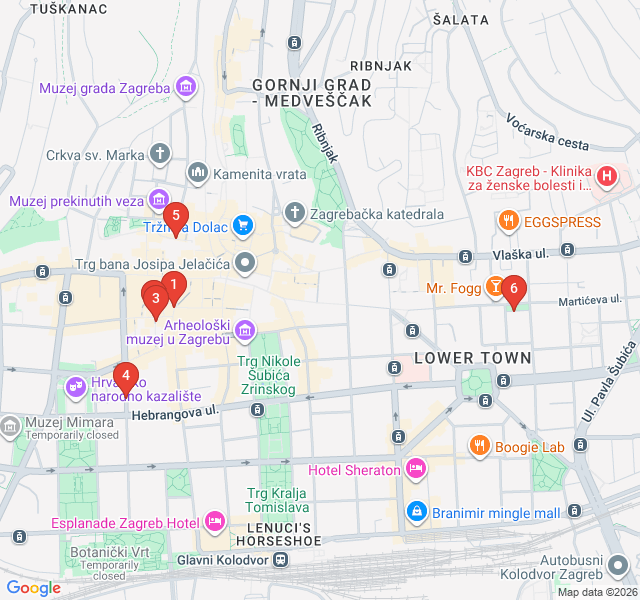
Numbers indicate the order of stops on the tour.
Start your self-guided walk at the heart of Zagreb’s social life. Known to locals as Cvjetni trg, or Flower Square, this space is named after Petar Preradović, a 19th-century general and romantic poet whose statue stands center stage. Observe the surrounding cafes; this is the epicenter of 'špica,' the Saturday morning ritual where Zagrebians dress to impress and spend hours over a single cup of coffee. The square has transitioned from a medieval marketplace to a chic urban living room. While the flowers sold here add a splash of color, the real attraction is the theater of daily life playing out on the terraces. It perfectly encapsulates the city's blend of Austro-Hungarian formality and Mediterranean relaxation.
Just a short walk away, you encounter Tin Ujević, arguably Croatia’s greatest bohemian poet. This bronze statue depicts him in his typical scholarly yet disheveled state. Ujević was a man of the cafes; he famously had no permanent address for years, preferring to write his masterpieces on napkins and marble-topped tables in the surrounding bars. He was a polyglot and a philosopher who rejected material wealth, once saying he was 'a brother to every man.' His presence here serves as a reminder that Zagreb’s intellectual history wasn't made in ivory towers, but in the smoky, wine-scented air of the city’s public houses.
Standing before you is Kino Europa, a masterpiece of Art Nouveau architecture and a cornerstone of Zagreb’s cultural life since 1925. Though its status as a functioning cinema can fluctuate due to restoration projects, its historical significance remains constant. It was built by the wealthy Müller family and has served as the flagship for the Zagreb Film Festival for years. Look up at the intricate facade and the decorative details that reflect the city's early 20th-century prosperity. For decades, the cafe inside was the meeting point for the city’s film critics, writers, and artists, bridging the gap between the literary legends of the past and the modern creative scene.
As you walk down Gundulićeva Street, you are entering the 'Golden Circle' of Zagreb's coffee culture. In Croatia, coffee is a social contract. You don't grab a cup 'to go'; you sit, you talk, and you observe. The cafes lining this street are where business deals are sealed, gossip is traded, and political debates are settled. Each establishment has its own 'tribe' of regulars. This street honors Ivan Gundulić, the great Baroque poet from Dubrovnik, further cementing the link between literature and the public square. Take a moment to notice the pace here—it is intentionally slow, a deliberate pushback against the rush of modern life.
Perched on a bench overlooking the city is Antun Gustav Matoš, one of Croatia’s most beloved writers and a quintessential flâneur. This is perhaps the most photographed statue in Zagreb. Matoš was a rebel, an essayist, and a poet who lived in Paris and Belgrade before returning to his beloved Zagreb. The sculptor, Ivan Kožarić, depicted him in a moment of quiet contemplation, inviting you to sit beside him. From this vantage point on the edge of the Upper Town, you can look down at the Lower Town streets you’ve just traversed. Matoš once wrote that he 'walked the streets of Zagreb like a prayer,' and sitting here, you can feel that same poetic devotion to the city.
Your neighborhood stroll concludes at Booksa, a literary club that represents the modern evolution of Zagreb’s bookish soul. Located in the trendy Martićeva district—often called the 'Design District'—Booksa is part bookstore, part cafe, and part community center. It was founded to provide a space for writers and readers to connect outside of formal institutions. The atmosphere here is different from the traditional cafes of the center; it is quieter, filled with the sound of turning pages and hushed creative discussions. It’s the perfect place to reflect on the literary legends you've encountered and perhaps pick up a translated work by a local author to take home.
Start Free on iPhone
Explore “Literary Legends and Coffee Culture” with your very own Private Tour Guide with Zigway. Start free on iPhone, skip the large group and the fixed routes, and hear the city come alive as you go.
Your Private Tour Guide
Don't miss the good stuff
Explore Freely
 Easy
EasyZagreb, Croatia
Explore Zagreb's grand 'Green Horseshoe' on this self-guided walk through stunning 19th-century parks, iconic museums, and lush gardens.
 Moderate
Zagreb, Croatia
Discover the Brutalist icons of Novi Zagreb on this self-guided walk through massive residential blocks and striking socialist-era architecture.
 Moderate
Zagreb, Croatia
Explore the dark folklore and witch-hunt history of Zagreb's Upper Town on this atmospheric self-guided audio walk through Gornji Grad.
 Easy
EasyZagreb, Croatia
Explore Zagreb's stunning Mirogoj Cemetery and iconic university architecture on this peaceful, self-guided artistic journey.
 Easy
EasyNairobi, Kenya
Discover Nairobi’s literary soul on this self-guided walk through historic libraries, iconic bookshops, and cultural centers in the heart of the CBD.
 Easy
EasyKrakow, Poland
Explore the prestigious Jagiellonian University district, featuring Neo-Gothic architecture, Baroque churches, and Krakow's hidden scholarly gems.
 Easy
EasyWarsaw, Poland
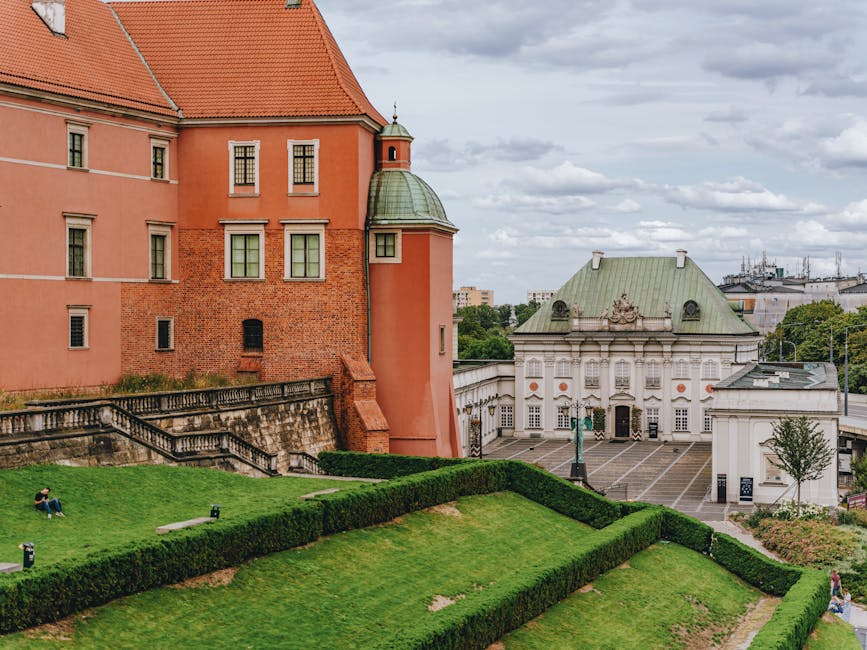
Follow the life of Fryderyk Chopin through Warsaw’s historic center. See where he lived, studied, and where his heart remains today.
 Easy
EasyGothenburg, Sweden
Explore Gothenburg’s historic wooden houses, legendary giant cinnamon buns, and panoramic fortress views on this self-guided neighborhood stroll.
 Easy
EasyDubrovnik, Croatia
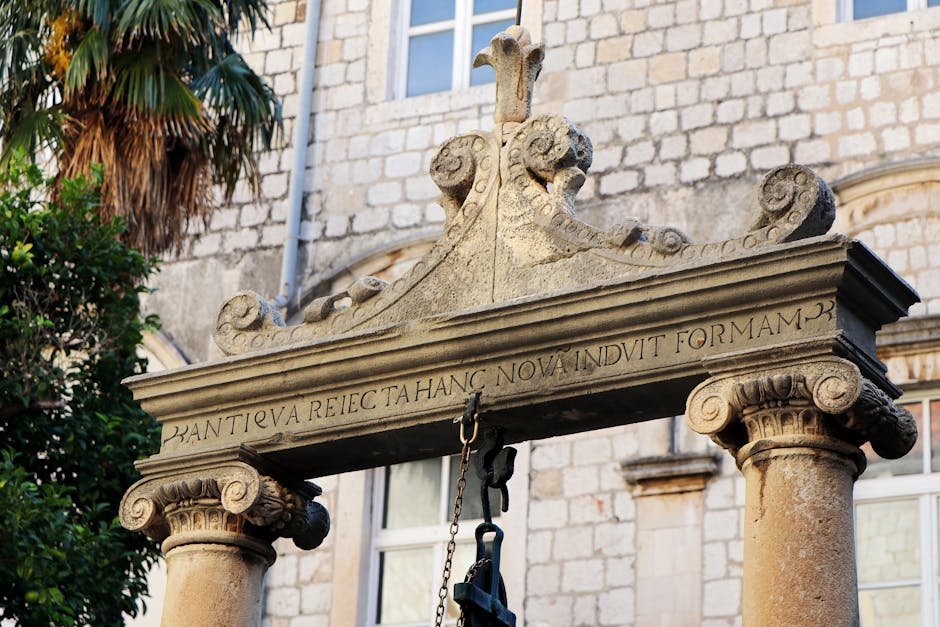
Explore Dubrovnik’s legendary maritime history on this self-guided walk through the Old Port, ancient shipyards, and the historic quarantine station.
 Easy
EasyDubrovnik, Croatia
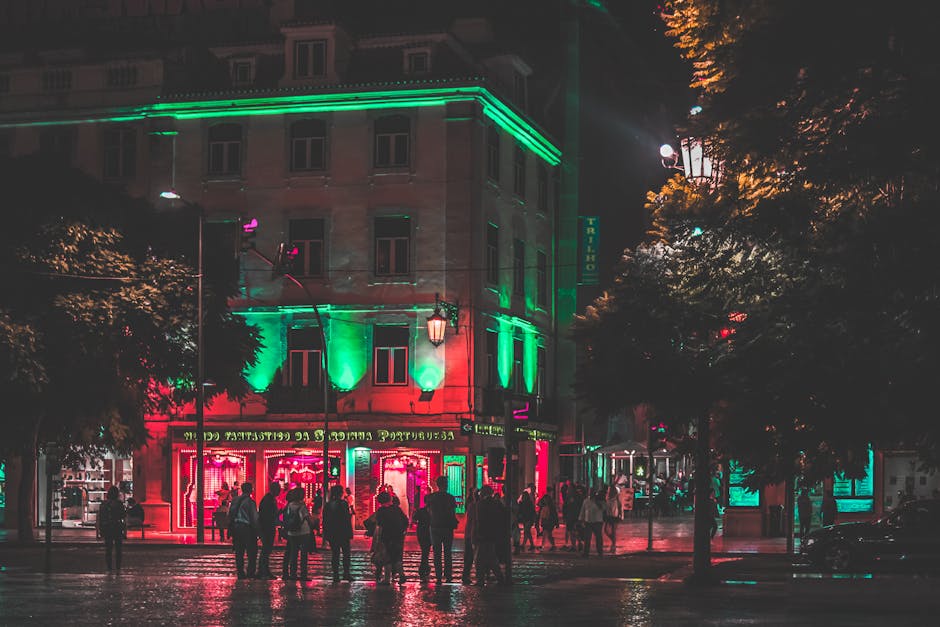
Discover Dubrovnik's nocturnal charm on this self-guided walk through lantern-lit alleys, jazz spots, and hidden cliffside bars.
 Moderate
Dubrovnik, Croatia
Escape the crowds and discover Dubrovnik's wild side on this scenic self-guided coastal walk through Lapad's pine forests and hidden bays.
 Easy
EasyDubrovnik, Croatia
Discover Dubrovnik's intellectual soul on this self-guided walk through ancient libraries, historic pharmacies, and serene monastic cloisters.