Self-guided audio tour in Tallinn
Start Free on iPhone
Start free on iPhone to unlock this self-guided walking tour in Tallinn. Hear all the stories that make it amazing, walk at your own pace, and begin whenever you want.
Your Private Tour Guide
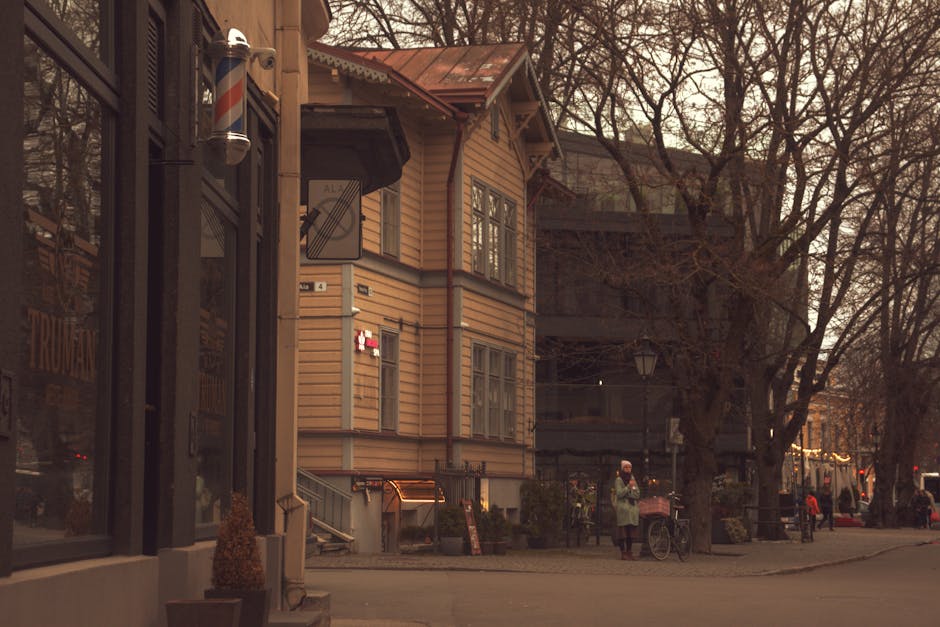
Step into Kalamaja, Tallinn's most vibrant and soul-stirring neighborhood, where the salty breeze of the Baltic Sea meets the scent of fresh coffee and old timber. Once a closed industrial zone and a humble fishing village, Kalamaja has reinvented itself as the creative heartbeat of Estonia. This self-guided walk invites you to explore the fascinating contrast between perfectly preserved 1930s 'Tallinn House' wooden architecture and the gritty, repurposed industrial complexes that now house world-class art and dining. Your journey begins at the bustling Balti Jaam Market, a masterclass in modern renovation where you can sample local delicacies before diving into the colorful streets. As you wander, you will discover the Telliskivi Creative City, a former locomotive repair plant that has become a canvas for international street artists and a home for independent designers. This neighborhood stroll isn't just about the aesthetics; it's about the layers of history, from the tragic Soviet-era destruction of the Kalamaja Cemetery to the high-stakes submarine manufacturing at Noblessner Port. You will experience the maritime legacy of the Seaplane Harbour and conclude your exploration at the hauntingly beautiful Patarei Prison. This route offers the flexibility to linger at a seaside café or dive deep into a museum at your own pace. Whether you are a photography enthusiast looking for the perfect shot of a pastel-colored wooden facade or a history buff eager to learn about Estonia's industrial evolution, this walking route provides a comprehensive look at the city's transformation. This independent travel experience ensures you see the local side of Tallinn, far removed from the medieval crowds of the Old Town, yet just a short walk away. It is the perfect walking tour Tallinn offers for those who want to understand the modern Estonian spirit. **Note:** This area is known for its ever-changing character. Street art, pop-up venues, and temporary exhibitions may differ from what's described. That's part of the adventure - you might discover something entirely new!
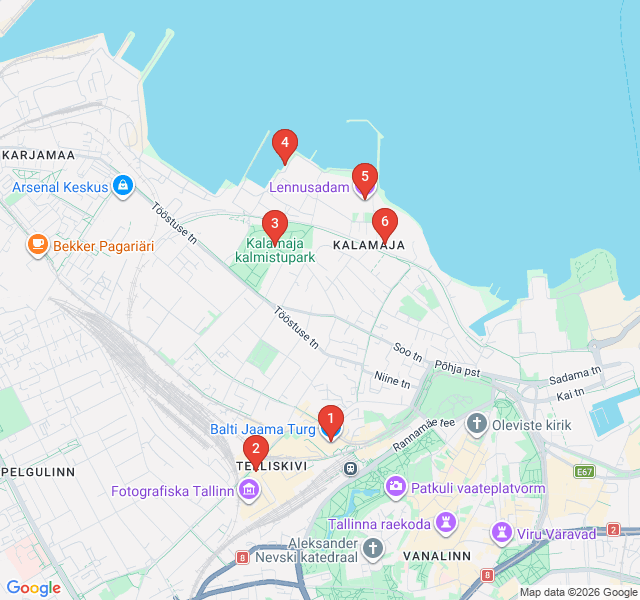
Numbers indicate the order of stops on the tour.
Start your exploration at Balti Jaam Market, a site that perfectly encapsulates Tallinn's ability to blend the old with the new. Originally built in the late 19th century to serve the railway, the market underwent a massive renovation in 2017. Today, it is a three-story hub of activity. On the ground floor, you'll find fresh local produce and street food stalls, while the upper floors are a treasure trove of Estonian design and Soviet-era antiques. Look up at the distinctive sawtooth roof, which preserves the industrial character of the original buildings. It's the perfect place to grab a snack or a coffee before heading deeper into the bohemian heart of the city.
Just a few minutes away lies Telliskivi Creative City, the epicenter of Tallinn's alternative scene. This former industrial complex once hummed with the sound of locomotive repairs; now, it rings with the chatter of locals and travelers. The brick walls serve as a massive outdoor gallery for street art and murals, though these displays change frequently as new artists leave their mark. Telliskivi is home to over 200 independent businesses, including the internationally acclaimed Fotografiska Tallinn. As you walk through the courtyards, notice how the raw industrial aesthetic has been preserved, creating a unique backdrop for the city's most innovative creative community.
Leaving the industrial buzz behind, enter the tranquil Kalamaja Cemetery Park. This green oasis has a bittersweet history. For over 400 years, it was the main burial ground for the local Estonian and Swedish residents. However, in 1964, during the Soviet occupation, the cemetery was completely leveled, and the tombstones were removed to be used as building materials. Today, it has been restored as a public park. The only structural remnants are the restored bell tower and the massive gates. It’s a peaceful spot that serves as a poignant reminder of the neighborhood's resilience and the layers of history beneath your feet.
Head toward the water to reach Noblessner, a district that has seen one of the most dramatic transformations in Tallinn. Founded in 1912 by businessmen Emanuel Nobel (nephew of Alfred Nobel) and Arthur Lessner, this was once a top-secret submarine shipyard for the Russian Imperial Navy. For decades, it was a closed military zone. Today, the massive stone hangars have been converted into high-end apartments, craft breweries, and art centers like the Kai Art Center. The district represents the new face of Tallinn—modern, upscale, and deeply connected to the sea. Take a moment to enjoy the panoramic views of the Gulf of Finland from the promenade.
A short walk along the coast brings you to the Lennusadam Seaplane Harbour. The centerpiece here is the massive seaplane hangar, built between 1916 and 1917. These hangars were the first large-scale reinforced concrete shell structures in the world, a true marvel of engineering for their time. While the museum inside houses incredible maritime artifacts—including a 1930s submarine—the architecture itself is the star. The hangars were built without internal columns to allow seaplanes to maneuver freely. This site highlights Tallinn's strategic importance as a maritime gateway and its long history of naval innovation.
Your final stop is the imposing Patarei Prison. Originally built as a sea fortress in the 1840s by order of Tsar Nicholas I, it was converted into a prison in 1920 and remained in use until 2002. This limestone complex is a stark contrast to the trendy cafes you visited earlier. It stands as a powerful symbol of the various regimes that have ruled Estonia. While parts of the complex are undergoing significant redevelopment into a new museum and cultural space, the exterior and the 'International Museum for the Victims of Communism' section offer a somber look at the 20th-century history of the region. It is a fittingly dramatic end to your journey through Kalamaja.
Start Free on iPhone
Explore “Kalamaja Wooden Houses and Creative Hubs” with your very own Private Tour Guide with Zigway. Start free on iPhone, skip the large group and the fixed routes, and hear the city come alive as you go.
Your Private Tour Guide
Don't miss the good stuff
Explore Freely
 Easy
EasyTallinn, Estonia
Uncover the myths and merchant history of Tallinn's Lower Town on this immersive self-guided stroll through medieval streets.
 Moderate
Tallinn, Estonia
Explore the raw, creative energy of Tallinn's Kopli peninsula on this self-guided walk through industrial ruins and modern art hubs.
 Moderate
Tallinn, Estonia
Uncover the chilling legends and ghostly tales of medieval Tallinn on this atmospheric self-guided audio walk through the Old Town.
 Easy
EasyTallinn, Estonia
Discover imperial palaces and serene gardens on this self-guided walk through Tallinn’s historic Kadriorg district.
 Easy
EasyGothenburg, Sweden
Explore Gothenburg's maritime soul on this self-guided walk from historic shipyards to sleek modern piers and iconic industrial landmarks.
 Moderate
Gdansk, Poland
Discover Zaspa, a massive open-air gallery where grey housing blocks are transformed by over 60 monumental murals. Explore at your own pace.
 Easy
EasyHelsinki, Finland
Discover Helsinki's oldest neighborhood on this self-guided audio walk through Kruununhaka’s historic streets, hidden courtyards, and scenic shores.
 Easy
EasyKrakow, Poland
Discover Krakow’s creative soul in Zabłocie, exploring industrial heritage, contemporary art museums, and avant-garde architecture at your own pace.