Self-guided audio tour in Tallinn
Start Free on iPhone
Start free on iPhone to unlock this self-guided walking tour in Tallinn. Hear all the stories that make it amazing, walk at your own pace, and begin whenever you want.
Your Private Tour Guide
Kadriorg is the crown jewel of Tallinn’s green spaces, a district where imperial history and modern Estonian culture meet under a canopy of ancient lime and chestnut trees. This self-guided walk invites you to step into a world of Baroque elegance and contemporary artistic expression. While many visitors stick to the medieval cobblestones of the Old Town, exploring this neighborhood stroll reveals a different side of the Estonian capital—one of expansive parks, grand summer residences, and significant national landmarks. Whether you are looking for a relaxing walking tour Tallinn offers plenty of history beyond the medieval walls, and Kadriorg is the perfect place to start. The route begins at the KUMU Art Museum, a striking limestone structure carved into the side of a cliff, representing Estonia’s forward-looking spirit. From there, you will transition into the regal atmosphere of the 18th century. You will encounter the Presidential Palace, the official residence of the Head of State, and the magnificent Kadriorg Palace, commissioned by Peter the Great for his wife, Catherine I. The surrounding park, with its meticulously manicured flowerbeds and serene Swan Pond, offers a peaceful escape from the urban bustle. As you move toward the coastline, the mood shifts at the Russalka Memorial, a poignant tribute to maritime history overlooking the Gulf of Finland. The journey concludes at the Tallinn Song Festival Grounds, a site of immense national pride where the Singing Revolution helped pave the way for Estonia’s independence. This audio walk is designed for those who appreciate architecture, nature, and the deep layers of history that define a nation. While some might look for a traditional guided tour Tallinn is best explored at your own pace, allowing you to linger in the gardens or spend extra time admiring the art. Discover the imperial legacy and the modern soul of Estonia on this comprehensive walking route through one of the Baltic's most beautiful urban parks.
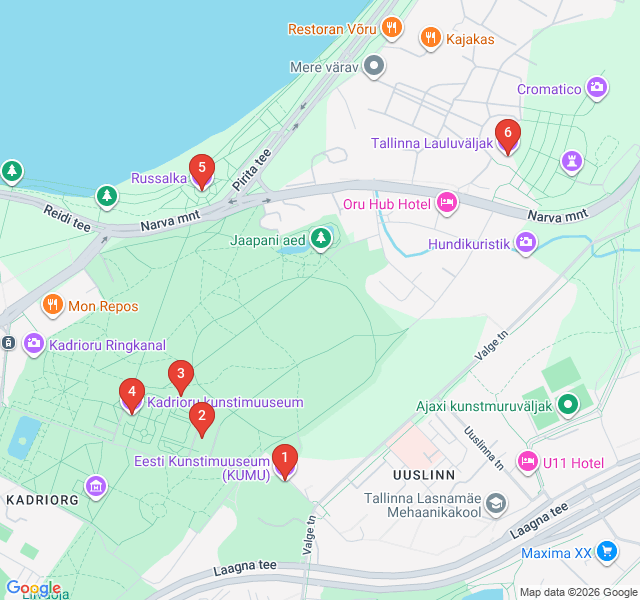
Numbers indicate the order of stops on the tour.
Begin your exploration at KUMU, the main building of the Art Museum of Estonia and a masterpiece of modern architecture. Designed by Finnish architect Pekka Vapaavuori and opened in 2006, the building is ingeniously carved into a limestone cliff. It serves both as a national gallery and a contemporary art center. As you stand before its sweeping curved walls, notice how the green copper and gray limestone mirror the natural elements of the surrounding park. The museum houses Estonian art from the 18th century to the present day, including works from the Soviet occupation era and contemporary installations. It represents the bridge between Estonia’s complex history and its modern, tech-forward identity. Even if you do not step inside, the exterior courtyard and the integration into the landscape are worth a moment of quiet appreciation.
A short walk through the park brings you to the Presidential Palace, a striking pink Neo-Baroque building that serves as the official residence of the President of Estonia. Completed in 1938, just before the Soviet occupation, it was designed by architect Alar Kotli. Notice the two honor guards standing at the entrance; they represent the continuity of the Estonian state. Unlike many world capitals, the atmosphere here is remarkably open and peaceful, reflecting the Estonian values of accessibility and modesty. The palace is situated directly behind the older Kadriorg Palace, creating a symbolic link between the imperial past and the modern republic. The surrounding oaks and quiet paths make this one of the most prestigious yet understated addresses in the country.
Continue your stroll to the Swan Pond, the heart of Kadriorg Park’s social life. This artificial pond, with its central fountain and elegant gazebo, has been a favorite spot for locals since the 18th century. In the center of the pond stands a small island reachable by a bridge, often home to the swans that give the pond its name. Look for the statue of Friedrich Reinhold Kreutzwald, the author of the Estonian national epic, Kalevipoeg, watching over the water. The pond is surrounded by carefully manicured paths and historic trees, many of which were planted during the reign of Peter the Great. It is a perfect place to observe the local pace of life, where families and couples enjoy the tranquil environment regardless of the season.
You are now standing before the magnificent Kadriorg Palace, a jewel of Northern Baroque architecture. Built in 1718 by Peter the Great for his wife Catherine I, the palace was designed by the Italian architect Nicola Michetti. The name 'Kadriorg' translates to 'Catherine's Valley.' Take a moment to admire the vibrant red and white facade and the symmetrical beauty of the Upper Garden behind it. The palace now houses the Kadriorg Art Museum, displaying foreign art from the 16th to 20th centuries. The interior features a stunning two-story Great Hall with elaborate stucco work and ceiling paintings that are among the finest examples of Baroque art in Northern Europe. The surrounding flowerbeds are restored according to the original 18th-century plans, offering a glimpse into the regal lifestyle of the Russian tsars.
Follow the promenade toward the sea to find the Russalka Memorial. This powerful bronze monument, created by sculptor Amandus Adamson in 1902, depicts an angel holding an Orthodox cross toward the sea. It commemorates the 177 sailors who perished when the Russian imperial armored ship 'Russalka' sank in a storm in 1893. The angel stands on a granite pedestal shaped like the prow of a ship breaking through the waves. This site is significant not only for its historical weight but also for its location, marking the point where the park meets the Gulf of Finland. Many locals come here to look out over the water toward the Tallinn skyline and the busy shipping lanes of the Baltic Sea.
The final stop on your route is the Tallinn Song Festival Grounds, a site of profound emotional and political importance for Estonians. The massive arched stage, built in 1959, can hold up to 30,000 singers, while the slope in front of it can accommodate audiences of over 100,000. This was the birthplace of the 'Singing Revolution' in the late 1980s, when hundreds of thousands of Estonians gathered here to sing national songs in a peaceful protest against Soviet rule. Today, it remains the venue for the Estonian Song Festival, a UNESCO-listed event held every five years. As you stand on the slope, imagine the power of tens of thousands of voices joined in harmony, a testament to the resilience and cultural identity of the Estonian people.
Start Free on iPhone
Explore “Imperial Kadriorg: Palaces and Parks” with your very own Private Tour Guide with Zigway. Start free on iPhone, skip the large group and the fixed routes, and hear the city come alive as you go.
Your Private Tour Guide
Don't miss the good stuff
Explore Freely
 Easy
EasyTallinn, Estonia
Uncover the myths and merchant history of Tallinn's Lower Town on this immersive self-guided stroll through medieval streets.
 Moderate
Tallinn, Estonia
Explore the raw, creative energy of Tallinn's Kopli peninsula on this self-guided walk through industrial ruins and modern art hubs.
 Moderate
Tallinn, Estonia
Uncover the chilling legends and ghostly tales of medieval Tallinn on this atmospheric self-guided audio walk through the Old Town.
 Easy
EasyTallinn, Estonia
Discover Tallinn's industrial-chic heart. Explore daring architecture, cinematic history, and trendy boutiques in the award-winning Rotermann Quarter.
 Easy
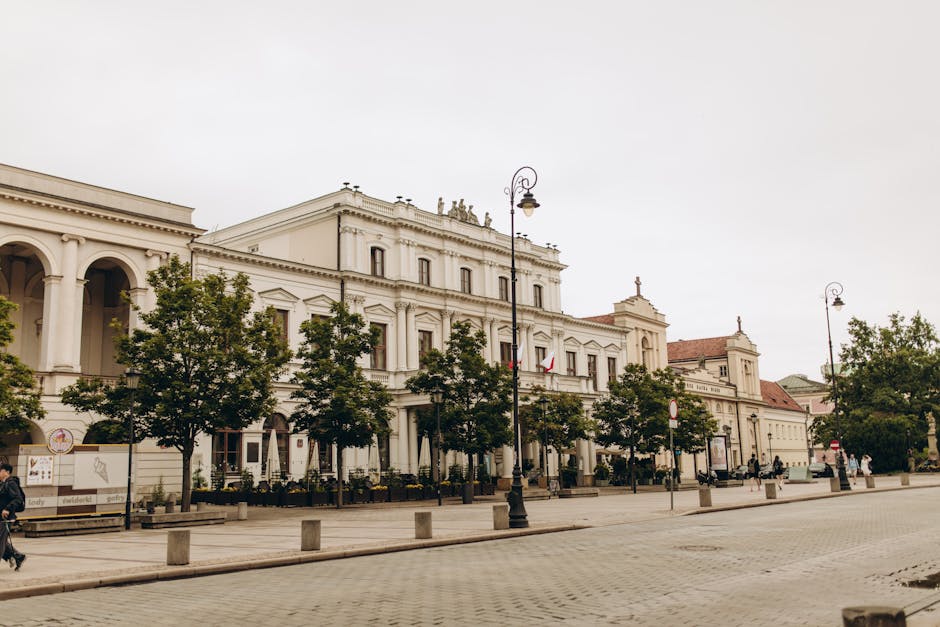
EasyWarsaw, Poland
Explore the 'Polish Versailles' at your own pace. Discover Baroque architecture, royal history, and stunning gardens on this self-guided walk.
 Easy
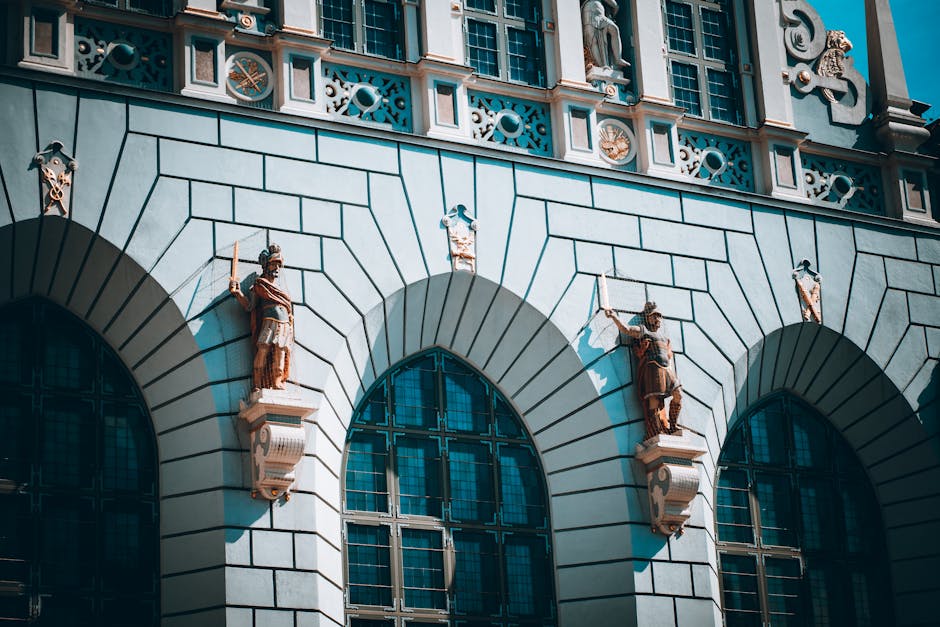
EasyGdansk, Poland
Discover the opulent Royal Way of Gdansk at your own pace. Explore Hanseatic history, gilded architecture, and the iconic Neptune's Fountain.
 Moderate
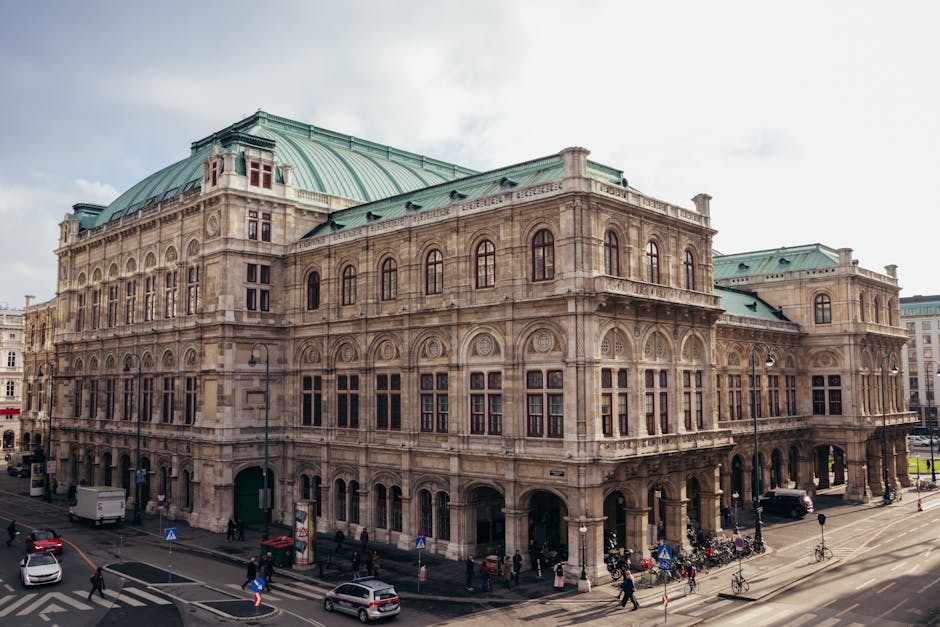
Vienna, Austria
Follow the footsteps of Mozart and Strauss through Vienna’s historic center on this self-guided walk through the city's rich musical history.
 Easy
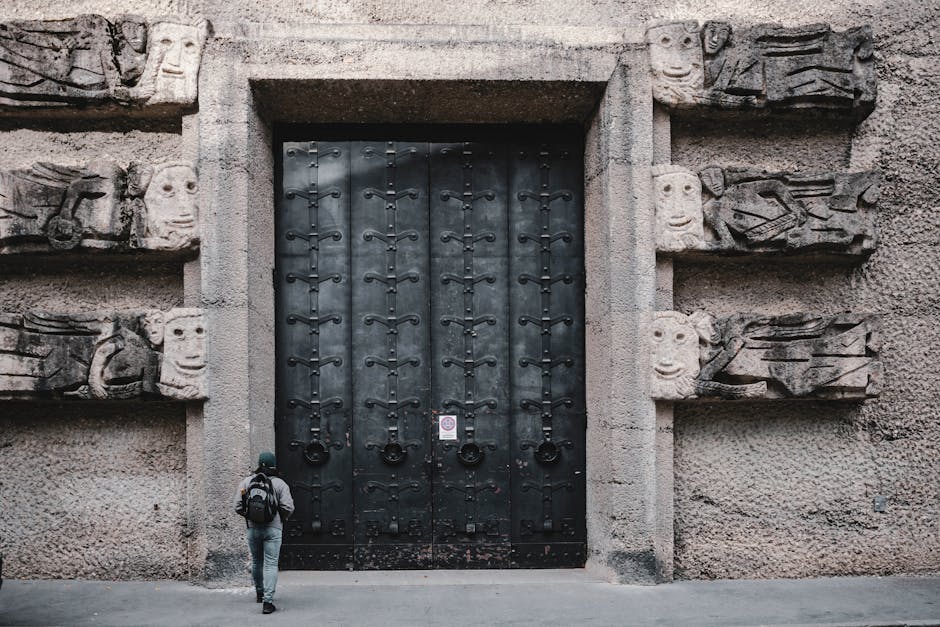
EasySalzburg, Austria
Discover the 'Rome of the North' on this self-guided walk through the Baroque squares and monumental legacy of Salzburg’s Prince-Archbishops.