Self-guided audio tour in Malacca
Start Free on iPhone
Start free on iPhone to unlock this self-guided walking tour in Malacca. Hear all the stories that make it amazing, walk at your own pace, and begin whenever you want.
Your Private Tour Guide
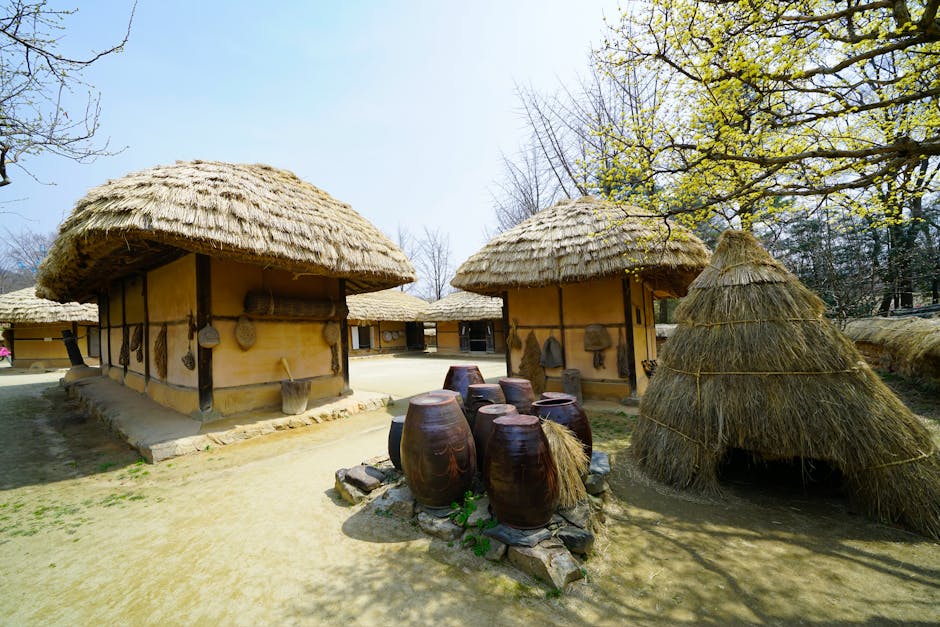
Step into a world where time seems to stand still. This self-guided walk through Malacca offers a deep dive into the city's multifaceted identity, transitioning from the bustling maritime history of the spice trade to the tranquil, traditional atmosphere of a living Malay village. Malacca is often celebrated for its colonial ruins, but this walking route reveals the enduring cultural threads that weave together Malay, Chinese, and European influences. Begin your journey at the Cheng Ho Cultural Museum, where you will learn about the legendary Admiral Zheng He and the dawn of Malacca’s international importance. As you explore independently, you will witness the architectural transition from the ornate Peranakan townhouses of the Baba & Nyonya Heritage Museum to the stark, crimson-painted Dutch structures of the Stadthuys. The route then leads you up St. Paul's Hill for panoramic views before descending to the iconic A Famosa fort, a silent witness to centuries of conquest. The highlight of this neighborhood stroll is Kampong Morten. Known as a 'living museum,' this village remains a bastion of traditional Malay life amidst the modern city. Walking along the Malacca River, you will see the beautifully preserved wooden houses with their signature colorful staircases and tiled roofs. The crown jewel here is Villa Sentosa, a private home that invites travelers to see the interior of a traditional Malay residence. This route is perfect for those who want to experience the authentic rhythm of Malacca at their own pace, away from the typical tourist crowds. By the time you reach the Malaysia Prison Museum, you will have traversed the full spectrum of the city’s history—from royal splendor to colonial struggle and local resilience.
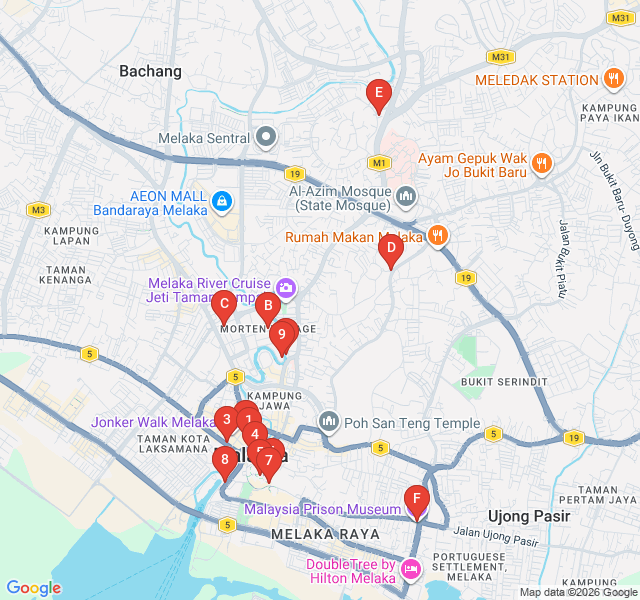
Numbers indicate the order of stops on the tour.
Start your journey at the site believed to be the warehouse complex built by Admiral Zheng He. This museum commemorates the seven voyages of the Ming Dynasty admiral who turned Malacca into a vital global port. As you look at the exhibits, consider how these early diplomatic missions laid the groundwork for the city's unique multicultural identity. The architecture here reflects the Ming style, a reminder of the deep-rooted Chinese influence that predates European arrival by nearly a century.
Located near the river, this museum highlights the diverse traditions that emerged from the Straits of Malacca. It’s a great spot to understand the 'melting pot' concept. The items on display show the intersection of Malay, Indian, and Chinese cultures. This stop sets the stage for the architecture you’ll see later, illustrating how different communities adapted their lifestyle to the tropical climate of the peninsula.
Walk toward Jalan Tun Tan Cheng Lock to find these magnificent townhouses. This museum is a preserved home of a wealthy Peranakan family. The Peranakans, or Straits Chinese, are descendants of Chinese immigrants who married local Malays. Notice the intricate wood carvings, Victorian floor tiles, and Dutch-style furniture. It’s a physical representation of Malacca’s hybrid culture—lavish, eclectic, and deeply historical.
Cross the bridge to the iconic Red Square. The Stadthuys, built in 1650, is believed to be the oldest Dutch building in the East. Its thick crimson walls and heavy wooden doors were once the administrative center for Dutch governors. Today, it stands as a symbol of the city's colonial history. Take a moment to admire the Clock Tower and the Queen Victoria Fountain nearby, which reflect the subsequent British influence on this historic square.
Climb the steps of St. Paul's Hill. At the summit, you’ll find the ruins of the oldest church building in Southeast Asia, originally built by a Portuguese captain in 1521. St. Francis Xavier was once buried here before his remains were moved to Goa. The roofless stone walls and the weathered Dutch tombstones inside create a hauntingly beautiful atmosphere. From this vantage point, you can look out over the Malacca Strait, just as watchmen did five centuries ago.
At the base of the hill sits a stunning wooden palace. While this is a modern reconstruction based on descriptions in the 15th-century 'Malay Annals,' it was built using traditional construction techniques without a single nail. It represents the height of the Malacca Sultanate’s power. Inside, you can explore the legends of the Malay warriors Hang Tuah and Hang Jebat, who represent the classic Malay virtues of loyalty and justice.
Just a short walk away is the Porta de Santiago, the only surviving gate of the Portuguese fortress known as A Famosa. Built in 1511, it is one of the oldest European architectural remains in Southeast Asia. After the Dutch defeated the Portuguese, they renovated the gate, which is why you see the Dutch East India Company (VOC) coat of arms carved above the arch. It is a small but powerful monument to the shifts in global empire.
Look for the massive wooden ship on the riverside. This is a full-scale replica of the Flor de la Mar, a Portuguese vessel that sank off the coast of Malacca while carrying looted treasure. The museum inside details the maritime history of the region. Even from the outside, the scale of the ship gives you a sense of the perilous and ambitious nature of the 16th-century spice trade that made Malacca the 'Venice of the East.'
Enter Kampong Morten to find Villa Sentosa. This private residence functions as a living museum, and the family often welcomes visitors to see their ancestral home. Built in the 1920s, the house features traditional Malay architecture designed for ventilation and flood protection. Notice the 'pelamin' (wedding dais) and the collection of ceramics and furniture that have been in the family for generations. It offers a rare, intimate look at Malay domestic life.
Cross this bridge for the best view of the village against the modern city skyline. From here, you can see how the Malacca River loops around the village, acting as a natural boundary that has helped preserve its traditional character. At night, the bridge and the village are often illuminated, making it a favorite spot for photographers capturing the reflection of the colorful houses in the water.
Stroll along the riverbank path. This area was named after Frederick Joseph Morten, a British land commissioner who helped the villagers settle here in the early 20th century. The riverside is lined with well-maintained gardens and traditional houses. It’s a peaceful contrast to the tourist-heavy Jonker Street. Observe the unique roof shapes and the intricate tiles on the staircases, which are a hallmark of the Malacca Malay style.
As you walk toward the city campus, notice how modern education is integrated into this historic district. This university campus serves as a bridge between the heritage of the past and the future of Malacca’s youth. The presence of students keeps the neighborhood vibrant and ensures that the history of the area is studied and respected by the next generation of Malaysians.
This campus is part of a long-standing tradition of teacher training in Malaysia, specifically focusing on Malay women. The institution has played a significant role in the social development of the country. While the interior is for students, the surrounding area reflects the educational legacy that was established during the colonial and post-independence eras to empower local communities.
This memorial is dedicated to the former Deputy Prime Minister of Malaysia, who was a son of Malacca. The house exhibits his personal belongings and documents his journey from a humble teacher to one of the nation’s top leaders. It serves as an inspiration and a reminder of the political history that shaped modern Malaysia after the colonial period ended.
Your walk concludes at the Malaysia Prison Museum. Housed in a former prison built during the British era, this site offers a sobering look at the history of crime, punishment, and the penal system in Malaysia. The architecture itself—thick walls and iron bars—contrasts sharply with the airy wooden houses of Kampong Morten. It provides a final, thought-provoking perspective on the city's complex social history.
Start Free on iPhone
Explore “The Living Museum: Kampong Morten’s Malay Heritage” with your very own Private Tour Guide with Zigway. Start free on iPhone, skip the large group and the fixed routes, and hear the city come alive as you go.
Your Private Tour Guide
Don't miss the good stuff
Explore Freely
 Moderate
Malacca, Malaysia
Discover the European heart of Melaka on this self-guided walk through Portuguese ruins, Dutch landmarks, and historic squares at your own pace.
 Easy
EasyMalacca, Malaysia
Explore the soul of Old Melaka on this self-guided walk through workshops of master craftsmen and centuries-old vanishing traditions.
 Easy
EasyMalacca, Malaysia
Discover the legends of the spice trade and sunken treasures on this self-guided maritime walk through Malacca’s historic Quayside.
 Easy
EasyMalacca, Malaysia
Explore Malaysia's oldest houses of worship on a single street. A self-guided stroll through Malacca's multicultural history and religious harmony.
 Easy
EasyWarsaw, Poland
Discover the hidden courtyards and grand pre-war architecture of Warsaw's most atmospheric neighborhood on this self-guided stroll.
 Easy
EasyGothenburg, Sweden
Explore Gothenburg's elegant academic district, featuring grand 19th-century stone architecture and the iconic cultural hub of Götaplatsen.
 Easy
EasyGothenburg, Sweden
Explore Gothenburg's maritime soul on this self-guided walk from historic shipyards to sleek modern piers and iconic industrial landmarks.
 Easy
EasyNairobi, Kenya
Discover Nairobi’s literary soul on this self-guided walk through historic libraries, iconic bookshops, and cultural centers in the heart of the CBD.
 Easy
EasyKuala Lumpur, Malaysia
Discover the futuristic architecture and lush parklands of KLCC on this photography-focused self-guided walk through Kuala Lumpur's iconic center.
 Moderate
Kuala Lumpur, Malaysia
Discover Kuala Lumpur's rainforest heart on this self-guided walk through the Bukit Nanas canopy, historic markets, and iconic green spaces.
 Easy
EasyKuala Lumpur, Malaysia
Explore the vibrant colors, scents, and diverse spiritual landmarks of Kuala Lumpur's Little India on this sensory self-guided audio walk.
 Moderate
Kuala Lumpur, Malaysia
Explore Kuala Lumpur’s most iconic bookstores and creative hubs on this half-day self-guided literary adventure.