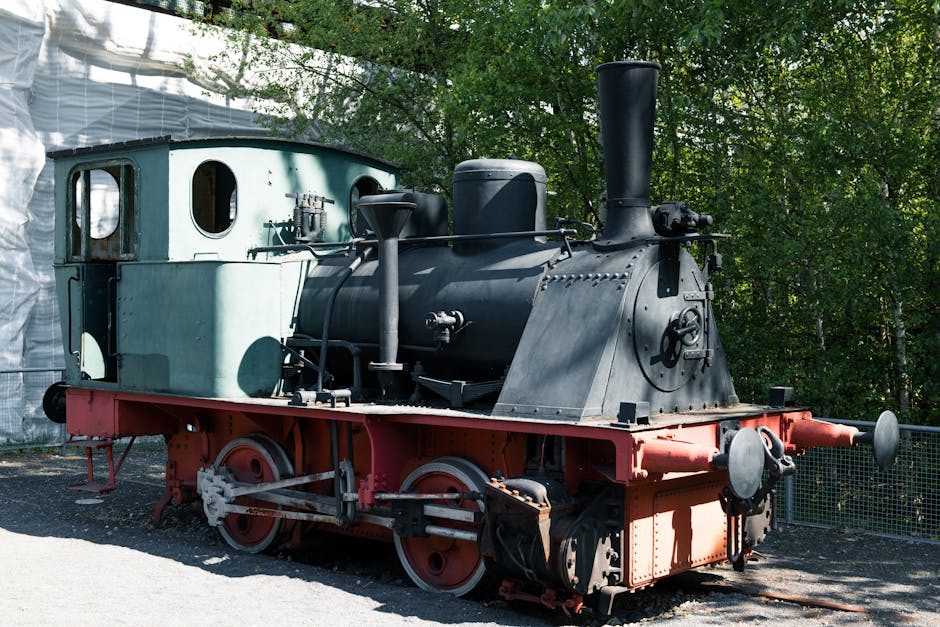
Self-guided audio tour in Luxembourg City
Start Free on iPhone
Start free on iPhone to unlock this self-guided walking tour in Luxembourg City. Hear all the stories that make it amazing, walk at your own pace, and begin whenever you want.
Your Private Tour Guide
Nestled in the deep valley of the Alzette River, the Pfaffenthal district offers a fascinating glimpse into Luxembourg City's evolution from a medieval stronghold to an industrial powerhouse. This self-guided walk invites you to descend from the heights of the modern city into a neighborhood where time seems to have slowed down. As you follow this walking route, you will encounter the stark contrast between 17th-century military engineering and 21st-century architectural innovation. The journey highlights the district's unique character as a village within a city, characterized by narrow streets, historic mills, and the towering presence of the Red Bridge overhead. This neighborhood stroll is perfect for those looking to escape the crowded upper city and discover a more authentic, local side of Luxembourg. You will explore the legacy of the legendary military engineer Vauban, whose fortifications earned the city its reputation as the Gibraltar of the North. The route also features the Panoramic Elevator, a glass-walled marvel that provides breathtaking views of the valley floor and the surrounding plateaus. Beyond the engineering feats, you will discover the industrial heartbeat of the past at locations like the Muerbelsmillen, an old mustard mill that speaks to the district's working-class roots. Whether you are a history buff, an architecture enthusiast, or a photographer seeking the perfect shot, this audio walk provides the context and stories needed to appreciate Pfaffenthal’s hidden layers. Explore independently and at your own pace, stopping to admire the riverside views or to learn about the families who once powered the city's economy from these very streets. This walking route Luxembourg City offers is a bridge between eras, connecting the medieval past with a high-tech future.
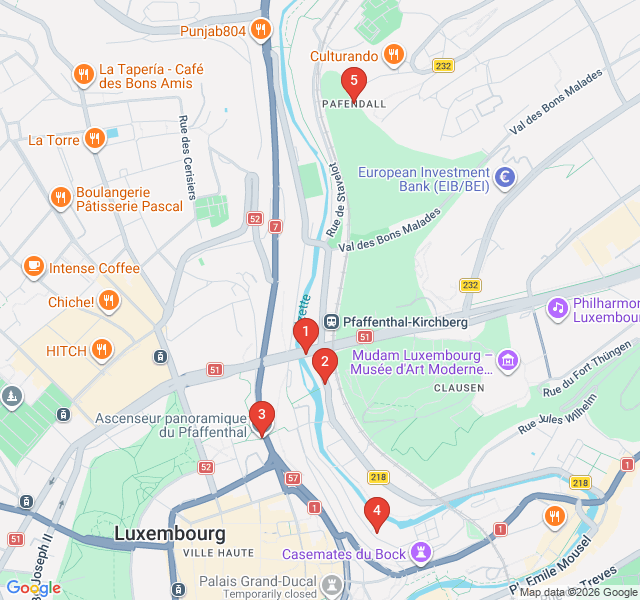
Numbers indicate the order of stops on the tour.
The Great Bridge of Pfaffenthal, officially known as the Pont Grande-Duchesse Charlotte or the 'Red Bridge,' is an iconic steel structure that dominates the valley's skyline. Completed in 1966, it connects the historic city center with the Kirchberg plateau, the heart of Europe’s financial and judicial institutions. While it represents modern connectivity, looking up from the valley floor provides a sense of the immense scale of Luxembourg's topography. The bridge stands 74 meters above the Alzette River, and its vibrant red color was chosen to contrast against the green valley and the grey stone of the traditional buildings. As you stand beneath this feat of engineering, consider how it transformed the city's layout, allowing for the rapid expansion of the European Quarter. It serves as a literal and figurative link between the historic core and the modern international hub.
The Vauban Towers, known as the Porte d’Eich and Porte des Bons-Malades, are remnants of the massive fortification system designed by the French military engineer Sébastien Le Prestre de Vauban in the late 17th century. Following the French siege of 1684, Vauban integrated the Pfaffenthal valley into the city's defensive perimeter. These towers were part of a lock system that could flood the valley to deter invaders, making the city a nearly impregnable fortress. Today, they stand as silent sentinels of a time when Luxembourg was one of the most contested military sites in Europe. Walking through these gates, you can imagine the clatter of horse-drawn carriages and the watch of soldiers. They represent the 'Gibraltar of the North' era, where every cliff and valley floor was part of a complex military machine.
The Panoramic Elevator of Pfaffenthal is a masterpiece of modern public design. Opened in 2016, this glass lift connects the lower valley to the Pescatore Park in the Upper City, traversing 65 meters in just 30 seconds. While it serves a practical purpose for residents, it offers one of the most stunning vistas in the country. As the lift rises, the floor-to-ceiling glass provides an unobstructed view of the Alzette valley, the Kirchberg plateau, and the historic fortifications. It is a moment where the industrial past and the high-tech present of Luxembourg collide. The elevator symbolizes the city's commitment to accessibility and sustainable urban mobility, making the steep valley floor easily reachable for everyone while providing a unique perspective for those who appreciate contemporary architecture.
Muerbelsmillen, also known as the Mohrfels Mill, is a cornerstone of Luxembourg’s industrial heritage. Dating back to at least the 11th century, this site has served various purposes over the millennium, from a flour mill to a cloth factory. However, it is most famous for its long history as a mustard factory, which operated here until 1985. The mill utilized the power of the Alzette River, a common practice in Pfaffenthal that fueled the local economy for centuries. Today, the building serves as a cultural site and social housing project, preserving the memory of the working-class community that lived and labored in the valley. It stands as a reminder that before Luxembourg became a global financial center, its prosperity was built by the hands of millers and craftsmen along these riverbanks.
Odendahl's House represents the residential and social fabric of historic Pfaffenthal. This area was traditionally home to tanners, brewers, and millers, and the architecture reflects a more modest, functional style compared to the grand mansions of the Upper City. Many of these houses were built close to the water for industrial access, creating a tight-knit community atmosphere. As you observe the facades in this area, look for the small details that indicate the building’s age and former use, such as high doorways or specific stonework. Odendahl's House is a fine example of how historic structures have been preserved and adapted for modern living, maintaining the village-like feel that makes Pfaffenthal so unique. It is a perfect spot to reflect on the daily lives of the people who called this valley home long before the glass elevators arrived.
Start Free on iPhone
Explore “Pfaffenthal: Industrial Heritage and the Glass Lift” with your very own Private Tour Guide with Zigway. Start free on iPhone, skip the large group and the fixed routes, and hear the city come alive as you go.
Your Private Tour Guide
Don't miss the good stuff
Explore Freely
 Easy
EasyLuxembourg City, Luxembourg
Explore the vibrant transformation of Luxembourg's brewery district into a nightlife hub on this scenic self-guided audio walk through Clausen.
 Moderate
Luxembourg City, Luxembourg
Discover the legends of Melusina and the echoes of Victor Hugo on this independent literary and historical stroll through Luxembourg's Ville Haute.
 Challenging
Luxembourg City, Luxembourg
Explore Luxembourg City's lush ravines. Discover dramatic bridges, hidden chapels, and peaceful gardens on this self-guided nature escape.
 Moderate
Luxembourg City, Luxembourg
Uncover the military secrets of Luxembourg City on this self-guided audio walk through historic forts, hidden tunnels, and cliffside ramparts.
 Easy
EasySalzburg, Austria
Discover Salzburg's oldest medieval alley, the birthplace of the 'Silent Night' author, and breathtaking views on this quiet self-guided walk.
 Moderate
Gdansk, Poland
Discover the raw beauty of Gdansk’s Lower Town. Explore industrial ruins, hidden sluices, and riverside bastions on this self-guided walk.
 Easy
EasyWarsaw, Poland
Discover the hidden courtyards and grand pre-war architecture of Warsaw's most atmospheric neighborhood on this self-guided stroll.
 Easy
EasyNairobi, Kenya
Discover Nairobi's iconic skyline on this self-guided architecture walk through the CBD’s most famous modernist and Brutalist landmarks.