Self-guided audio tour in Luxembourg City
Start Free on iPhone
Start free on iPhone to unlock this self-guided walking tour in Luxembourg City. Hear all the stories that make it amazing, walk at your own pace, and begin whenever you want.
Your Private Tour Guide
Step into a world where stone and strategy shaped the fate of Europe. Luxembourg City was once one of the most formidable fortified sites on the continent, earning it the nickname 'Gibraltar of the North.' This self-guided walk invites you to explore the remnants of this massive military machine, from the subterranean secrets of the Bock Casemates to the soaring heights of the Chemin de la Corniche. As you follow this walking route, you will see how the city transitioned from a strategic military prize into a peaceful, cosmopolitan capital. The layers of history are visible in every bastion and gatehouse, representing centuries of occupation by Burgundian, Spanish, French, Austrian, and Prussian forces. This walking tour Luxembourg City focuses on the architectural ingenuity required to build a city atop sheer cliffs and deep valleys. You will start on the modern Kirchberg plateau, where the historic Fort Thüngen stands in contrast to the glass-and-steel structures of the European Union district. From there, the path leads you across the Alzette valley to the ancient heart of the city. You will discover the 'most beautiful balcony in Europe' and stand where soldiers once guarded the rocky promontories. Whether you are a fan of military history or simply love dramatic urban landscapes, this self-guided adventure offers a deep dive into the UNESCO World Heritage fortifications. It is more than just a stroll; it is a journey through a thousand years of European history. This walking tour Luxembourg City ensures you don't miss the hidden details of the fortifications that were so strong, the Great Powers of Europe once agreed they had to be dismantled to maintain peace.
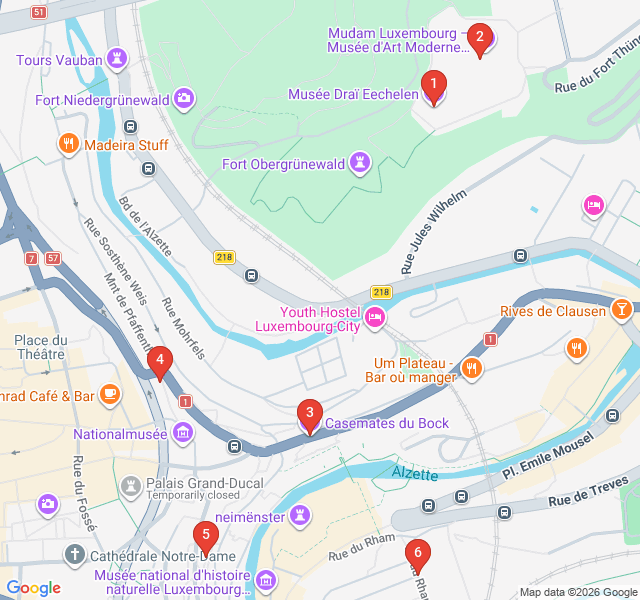
Numbers indicate the order of stops on the tour.
Start your journey at the Musée Dräi Eechelen, or the Three Acorns Museum. This building is a masterclass in historical preservation, housed within the restored keep of Fort Thüngen. Look up at the three towers—each is topped with a stone acorn, which gave the fort its nickname. These acorns weren't just decorative; they were symbols of the strength and endurance of the fortifications. The museum inside tells the story of Luxembourg’s fortress history from 1443 to 1903. Even from the outside, you can appreciate the massive stone blocks and the strategic positioning, designed to defend the city against any army approaching from the north. This site marks the beginning of the city's outer defensive ring.
Just outside the museum, you are standing within the grounds of Fort Thüngen. Built in 1732 by the Austrians, it was later expanded by the Prussians. Much of the fort was demolished after the 1867 Treaty of London, which declared Luxembourg a neutral territory and mandated the destruction of its defenses. What you see today was meticulously reconstructed in the 1990s. Walk around the perimeter to see the deep dry moats and the arrow-slit windows. From this vantage point, look across the valley toward the old city center. You can see why this location was so vital; any enemy would have to navigate the steep gorge under constant fire from these very ramparts.
Cross the valley to the Bock Cliff, the literal foundation of Luxembourg. In 963, Count Siegfried built his castle here, but the real marvel lies beneath your feet. The Bock Casemates are a 23-kilometer network of subterranean tunnels carved directly into the rock. These tunnels could shelter thousands of soldiers, horses, and even equipment during sieges. While much of the network was sealed, the sections remaining provide a window into the 'Gibraltar of the North.' From the surface, you have a 360-degree view of the Grund and the Neumünster Abbey below. It is here that the legend of Melusina, the mermaid wife of Count Siegfried, is said to haunt the Alzette River.
A short walk from the Bock brings you to the Three Towers. This gatehouse is a rare survivor of the city's second defensive wall, dating back to the 13th and 14th centuries. The central square tower is the oldest part, while the two outer circular towers were added later to bolster defenses. As you walk through the archway, you are literally stepping through the old city gates. Notice the thickness of the walls and the narrow windows designed for archers. Over the centuries, these towers served as a prison and even a residence for the city's executioner. They stand as a silent witness to the city's medieval past and its transition into a modern fortress.
Welcome to the Chemin de la Corniche, famously described by writer Batty Weber as 'the most beautiful balcony in Europe.' This pedestrian promenade follows the course of the 17th-century city walls built by the Spanish and French. As you stroll along, the view opens up to the Alzette valley, the picturesque Grund district, and the Neumünster Abbey. To your left, the sheer rock faces show where the natural defenses of the city were augmented by human engineering. This path wasn't always so scenic; it was a strictly military walkway used by sentries to monitor the valley below. Today, it offers the most iconic photo opportunities in the Grand Duchy.
Your final stop is the Plateau du Rham, located on a rocky outcrop opposite the Bock. This area was integrated into the city's third defensive perimeter by the famous French military engineer Vauban in the late 17th century. The large buildings you see here were originally military barracks, designed to house hundreds of soldiers. Today, they have been converted into a modern senior living facility, blending historic preservation with social utility. From the edge of the plateau, you get a unique perspective of the Wenceslas Wall and the various levels of the city's defense. It’s the perfect place to reflect on how a city once defined by war has become a symbol of European unity.
Start Free on iPhone
Explore “Fortress Secrets: The Gibraltar of the North” with your very own Private Tour Guide with Zigway. Start free on iPhone, skip the large group and the fixed routes, and hear the city come alive as you go.
Your Private Tour Guide
Don't miss the good stuff
Explore Freely
 Easy
EasyLuxembourg City, Luxembourg
Explore the vibrant transformation of Luxembourg's brewery district into a nightlife hub on this scenic self-guided audio walk through Clausen.
 Moderate
Luxembourg City, Luxembourg
Discover the legends of Melusina and the echoes of Victor Hugo on this independent literary and historical stroll through Luxembourg's Ville Haute.
 Challenging
Luxembourg City, Luxembourg
Explore Luxembourg City's lush ravines. Discover dramatic bridges, hidden chapels, and peaceful gardens on this self-guided nature escape.
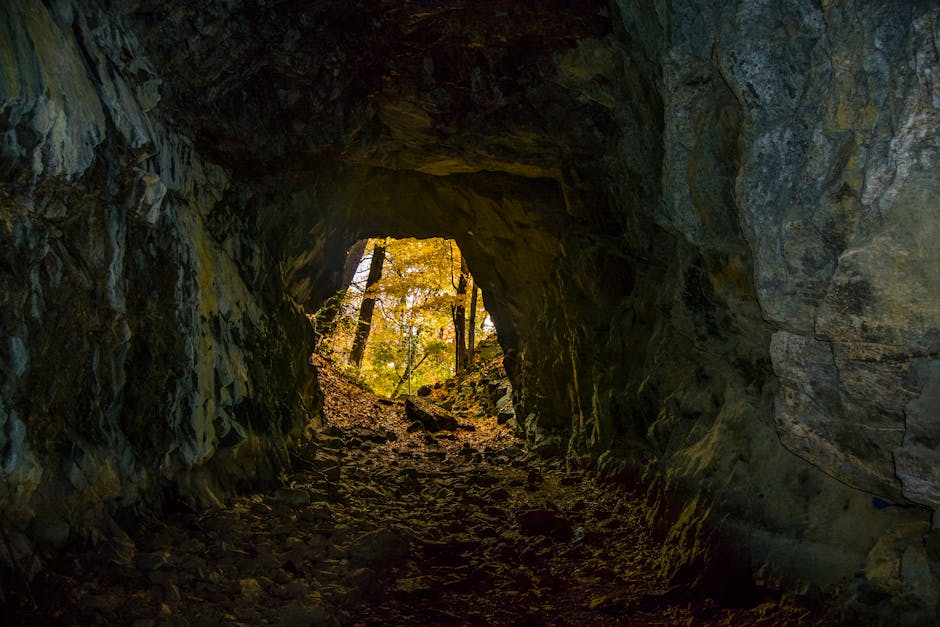 Moderate
Luxembourg City, Luxembourg
Discover the mystical charm of the Grund. Explore medieval ruins, riverside myths, and the legend of Melusina on this self-guided audio walk.
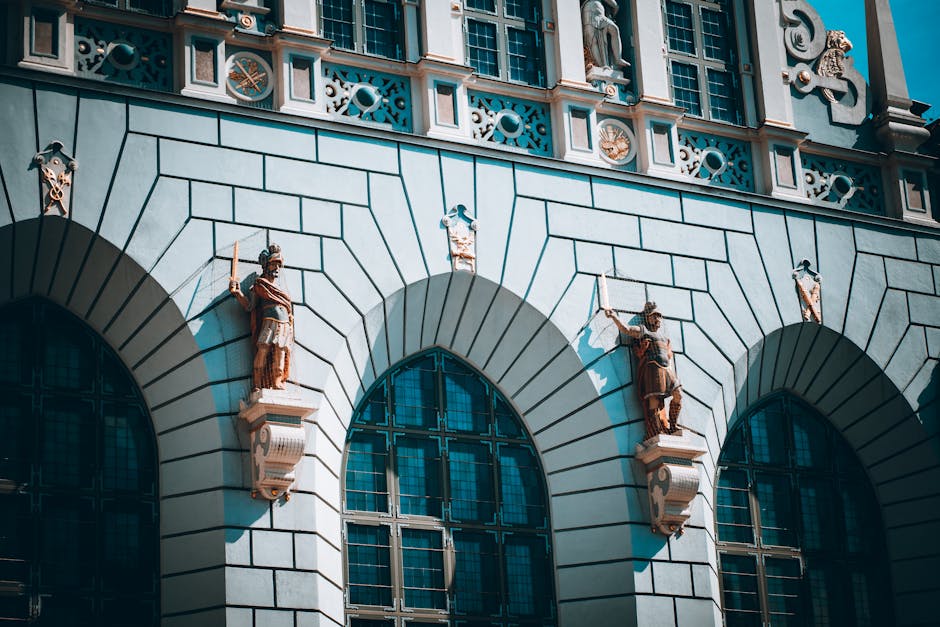 Easy
EasyGdansk, Poland
Discover the opulent Royal Way of Gdansk at your own pace. Explore Hanseatic history, gilded architecture, and the iconic Neptune's Fountain.
 Moderate
Gothenburg, Sweden
Discover Gothenburg’s maritime soul on this self-guided walk from the historic Central Station to the scenic riverfront at Stenpiren.
 Easy
EasyGothenburg, Sweden
Explore Gothenburg's elegant academic district, featuring grand 19th-century stone architecture and the iconic cultural hub of Götaplatsen.
 Easy
EasyNairobi, Kenya
Discover Nairobi's iconic skyline on this self-guided architecture walk through the CBD’s most famous modernist and Brutalist landmarks.