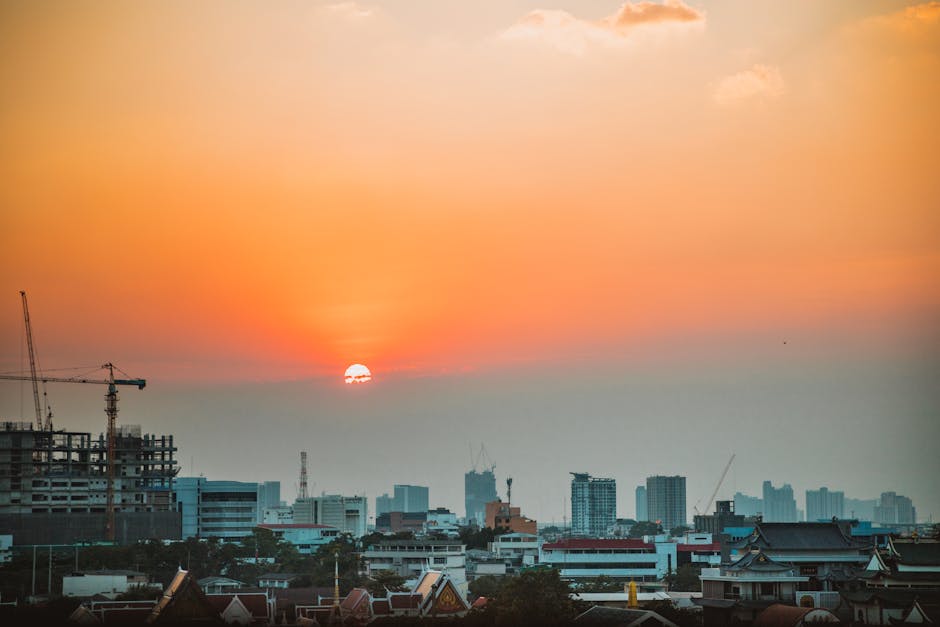
Self-guided audio tour in Bangkok
Start Free on iPhone
Start free on iPhone to unlock this self-guided walking tour in Bangkok. Hear all the stories that make it amazing, walk at your own pace, and begin whenever you want.
Your Private Tour Guide
Step away from the neon lights and into the rhythmic heart of old Bangkok. This self-guided walk invites you to explore the Pom Prap Sattru Phai district, a neighborhood where the clang of hammers against steel has echoed for centuries. The journey begins at the historic Phan Fa Lilat Bridge, a gateway to the city's royal past, before leading you to the hidden community of Ban Bat. Here, you will discover the last remaining artisans who hand-forge alms bowls for Buddhist monks using traditional methods passed down through generations. This walking route offers a rare glimpse into a disappearing world, tucked away in narrow alleys just steps from the city's most famous landmarks. As you navigate this neighborhood stroll, you will encounter the towering Golden Mount (Wat Saket), offering panoramic views of the capital, and the King Prajadhipok Museum, housed in a stunning Neoclassical building. The route then expands to cover the intellectual and political backbone of Thailand, passing through the historic campuses of Thammasat and Silpakorn Universities and the iconic Democracy Monument. You will also cross into the Thonburi side to visit Wongwian Yai before heading toward the modern academic hubs like Chulalongkorn University. This exploration is not just about the sites; it is about the stories of the people who shaped Thailand's modern identity, from the craftsmen of Ban Bat to the students and revolutionaries of the 20th century. Whether you are a photography enthusiast looking for the perfect shot of the Grand Palace from a distance or a history buff eager to understand the evolution of Thai governance, this audio walk provides the context and freedom to discover Bangkok at your own pace.
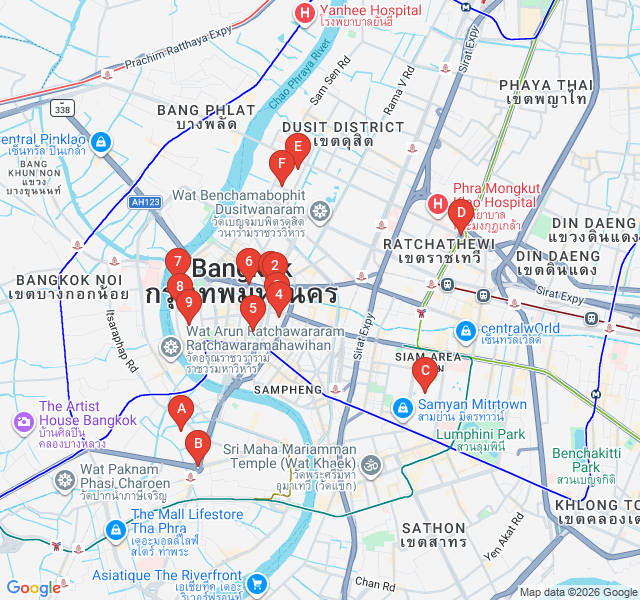
Numbers indicate the order of stops on the tour.
Welcome to Phan Fa Lilat Bridge, one of Bangkok's most significant historic crossings. Built during the reign of King Rama V, this bridge connects the old royal city with the expanding districts of the early 20th century. Take a moment to look at the ornate ironwork and the white towers—they reflect the European influence that was popular in Thai architecture at the time. Below you flows Khlong Bang Lamphu, a canal that once served as a primary transport artery. From here, you can see the Mahakan Fort, one of the few remaining octagonal forts that once guarded the city walls. This spot marks the transition from the regal Rattanakosin Island into the bustling artisan neighborhoods you are about to explore.
Standing before you is a masterpiece of Neoclassical architecture. Originally built as a department store, this building now serves as a museum dedicated to King Rama VII, Thailand's last absolute monarch and first constitutional one. The museum tells the story of a pivotal era in Thai history—the transition to democracy in 1932. Even if you don't head inside, notice the elegant yellow facade and the intricate plasterwork. It stands as a symbol of 'Siam' modernizing while trying to maintain its unique identity. This location was once the center of Bangkok's high-end social life, where the elite would come to shop for imported goods from Europe.
Before you is the 'Phu Khao Thong' or the Golden Mount. This artificial hill was started by King Rama III and completed under King Rama V after the original structure collapsed into the soft soil. As you walk up the 344 steps, you'll pass through lush gardens and misting fans. The climb is designed to be a meditative experience. At the top, the golden chedi houses a relic of the Buddha. The real reward, however, is the 360-degree view of Bangkok. You can see the contrast between the low-slung rooftops of the old city and the gleaming skyscrapers of the modern business district in the distance. It is the perfect place to orient yourself before diving into the alleys below.
Listen closely as you enter these narrow alleys. The rhythmic 'tap-tap-tap' you hear is the sound of history. Ban Bat is the last village in Thailand that still hand-forges 'bat' or alms bowls for Buddhist monks. Traditionally, these bowls are made from eight pieces of steel, representing the Eightfold Path of Buddhism. You might see artisans sitting in their doorways, meticulously hammering the metal into a perfect sphere. This craft almost went extinct with the introduction of factory-made bowls, but a few families here have kept the tradition alive. Feel free to observe respectfully; this is a living workshop where the spiritual and the manual are inextricably linked.
This peaceful green space has a surprisingly dark history. Before it was a park, this was the site of the Bangkok Special Penitentiary. If you look at the perimeter, you can still see the old guard towers and sections of the prison wall that were preserved during its conversion in the 1990s. Today, it serves as a vital 'lung' for the crowded Phra Nakhon district. You'll likely see locals practicing Tai Chi, jogging, or playing 'takraw' (kick volleyball). It’s a wonderful example of urban renewal, where a place of confinement was transformed into a place of community and health.
Located in the center of a busy traffic circle, the Democracy Monument is one of Bangkok's most iconic political landmarks. Commissioned to commemorate the 1932 revolution that changed Thailand from an absolute monarchy to a constitutional one, every element here is symbolic. The four wing-like structures are 24 meters tall, representing June 24th, the day of the revolution. The central pedestal holds a representation of the 1932 Constitution. This site has been the focal point for numerous political gatherings throughout Thai history, making it a powerful symbol of the people's voice in the heart of the capital.
You are now at the Tha Phra Chan campus of Thammasat University, Thailand's second-oldest university and a bastion of political activism. Founded in 1934 as the 'University of Moral and Political Sciences,' it has played a central role in nearly every major democratic movement in the country. The campus is nestled right against the Chao Phraya River. Walk through the gates to feel the intellectual energy that has defined generations of Thai leaders, lawyers, and activists. The university's history is deeply intertwined with the struggle for civil liberties, making it a sacred site for Thai students.
Directly across from the Grand Palace sits Silpakorn University, the premier institution for fine arts in Thailand. It was founded by Corrado Feroci, an Italian sculptor known as Silpa Bhirasri, who is considered the father of modern Thai art. The campus is actually situated within the former palace grounds of princes, which explains its beautiful, traditional architecture. As you stroll past, you might see art students sketching in the courtyards or working on sculptures. It is the creative heartbeat of the old city, where traditional Thai aesthetics meet contemporary artistic expression.
Though you are viewing it from the exterior, the scale of the Grand Palace is breathtaking. Established in 1782 by King Rama I, this complex was the official residence of the Kings of Siam for over 150 years. The white walls surrounding the complex protect the Temple of the Emerald Buddha, the most sacred site in Thailand. Notice the distinct 'Chofah'—the bird-like ornaments on the roof corners—which represent the Garuda. Even from the street, the glittering mosaics and golden spires offer a glimpse into the incredible craftsmanship of the Rattanakosin era. This is the spiritual and symbolic center of the Thai nation.
Crossing over to the Thonburi side of the river, we find Bansomdejchaopraya Rajabhat University. This institution is named after a powerful noble family that served the monarchy during the mid-19th century. Thonburi has a different feel than the palace side; it was the capital of Thailand for a brief period after the fall of Ayutthaya. This university is a hub for teacher training and music, continuing the legacy of the aristocratic families who once lived in this area and sponsored the arts. It represents the educational expansion that took place as Bangkok grew beyond its original city walls.
At the center of this massive traffic circle stands the statue of King Taksin the Great, mounted on his horse. King Taksin is a national hero who liberated Siam from Burmese occupation and established Thonburi as the capital in 1767. This landmark is the heart of Thonburi. The area around Wongwian Yai is famous for its local markets and leather goods. It’s a place where you can see the 'real' Bangkok, away from the main tourist trail, where commuters and local vendors create a constant hum of activity around the base of their warrior king.
We now move toward the modern center of Bangkok to Chulalongkorn University, Thailand's oldest and most prestigious university. Named after King Chulalongkorn (Rama V) and established by his son, King Vajiravudh (Rama VI), the campus is famous for its beautiful 'Thai-style' Neoclassical buildings with their distinctive pink accents—pink being the color associated with Tuesday, the day Rama V was born. The university grounds are expansive and serve as a cultural hub for the city, hosting everything from academic conferences to major sporting events. It represents the modernization of Thai education and the grooming of the nation's future thinkers.
Victory Monument is one of the busiest transit hubs in Bangkok, but at its center is a monument with a complex history. Built in 1941, it commemorates the Thai victory in the Franco-Thai War. The five statues at the base represent the army, navy, air force, police, and civilian volunteers. The shape of the monument is meant to resemble a bayonet. Today, it is best known as the place where hundreds of bus routes and the BTS Skytrain converge. It is a perfect spot to observe the organized chaos of Bangkok life as thousands of people pass through this circle every hour.
Located in the leafy Dusit district, Suan Dusit University was originally a finishing school for ladies of the royal court. Today, it is world-renowned for its culinary arts and hospitality programs. The university is located on the grounds of what was once part of the Dusit Palace complex. This area of Bangkok is characterized by wide, tree-lined avenues and European-style villas, reflecting King Rama V's desire to create a modern, garden-city district. The university keeps this heritage alive through its focus on traditional Thai crafts and high-level service education.
Our final stop is Suan Sunandha Rajabhat University, which shares a boundary with Suan Dusit. This campus was once the 'Inner Court' for the consorts and daughters of the King. It was a place of high culture, where the arts of floral arrangement, traditional cooking, and etiquette were perfected. As you conclude your walk here, you are standing in a place that transitioned from a secluded royal garden to a public institution of learning. The peaceful atmosphere here in the Dusit district is a fitting end to a journey that has taken you from the hammered metal of Ban Bat to the refined halls of Thailand's royal academic history.
Start Free on iPhone
Explore “Ban Bat: The Alleys of the Monk Bowl Makers” with your very own Private Tour Guide with Zigway. Start free on iPhone, skip the large group and the fixed routes, and hear the city come alive as you go.
Your Private Tour Guide
Don't miss the good stuff
Explore Freely
 Easy
EasyBangkok, Thailand
Discover a labyrinth of industrial scrap yards, vibrant street art, and centuries-old mansions in Bangkok's most atmospheric neighborhood.
 Easy
EasyBangkok, Thailand
Discover Ari's blend of retro architecture, Michelin-rated street food, and vibrant cafe culture on this self-guided neighborhood stroll.
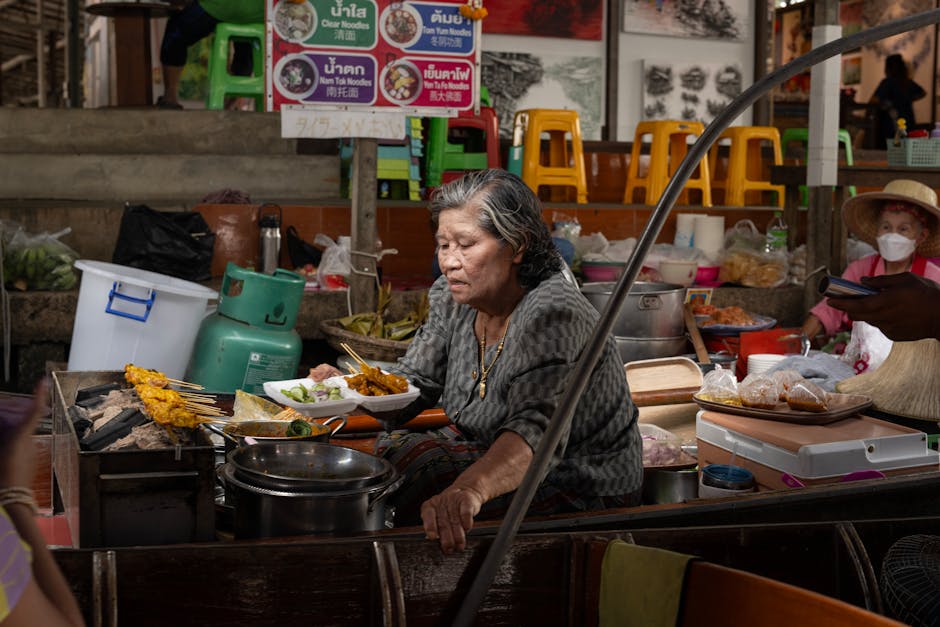 Moderate
Bangkok, Thailand
Discover the golden spires and royal history of Bangkok's Old City on this self-guided audio walk through the majestic Rattanakosin Island.
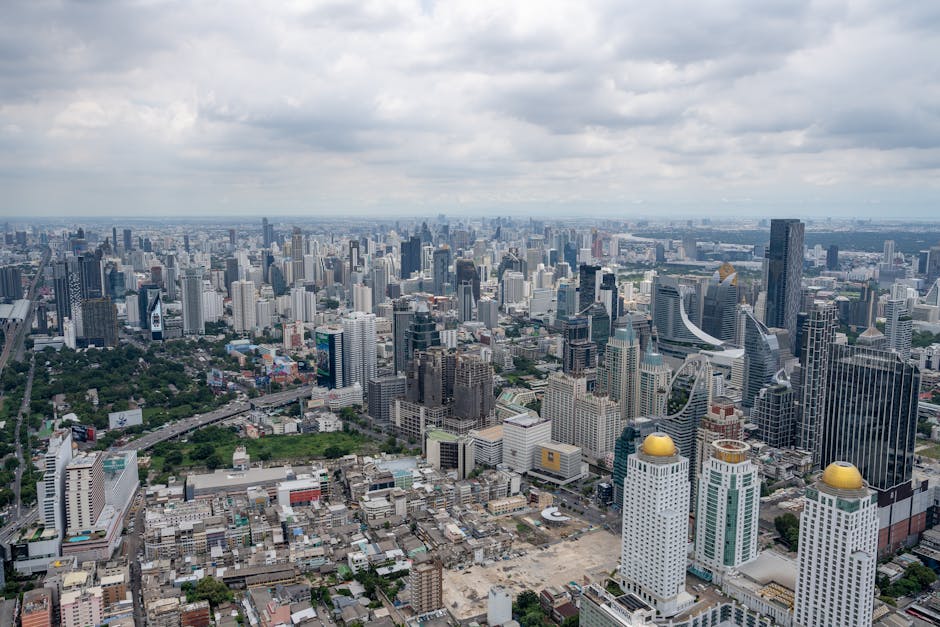 Easy
EasyBangkok, Thailand
Discover the European-inspired grandeur of Bangkok's Dusit district on this self-guided royal architectural walk.
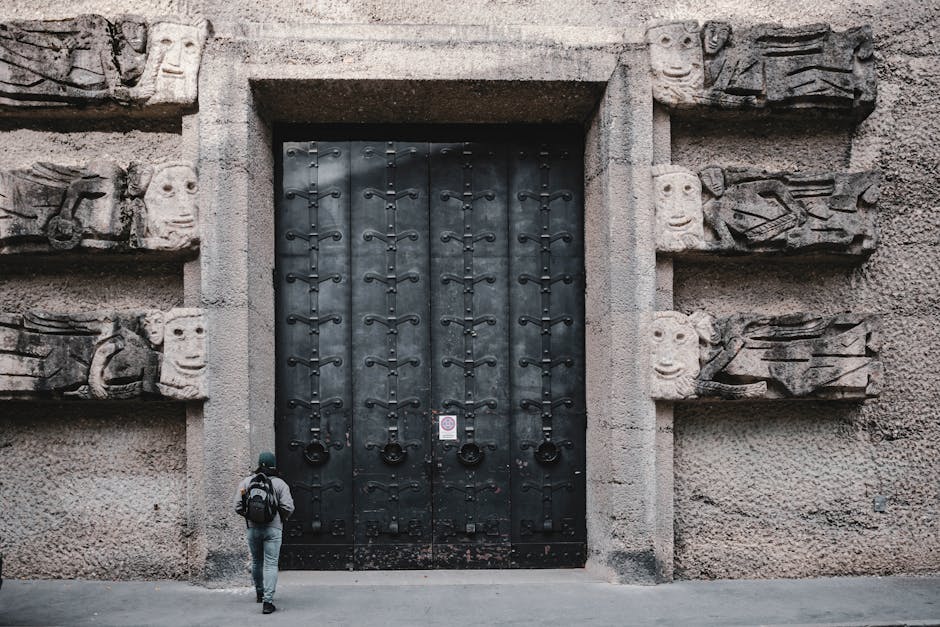 Easy
EasySalzburg, Austria
Discover Salzburg's oldest medieval alley, the birthplace of the 'Silent Night' author, and breathtaking views on this quiet self-guided walk.
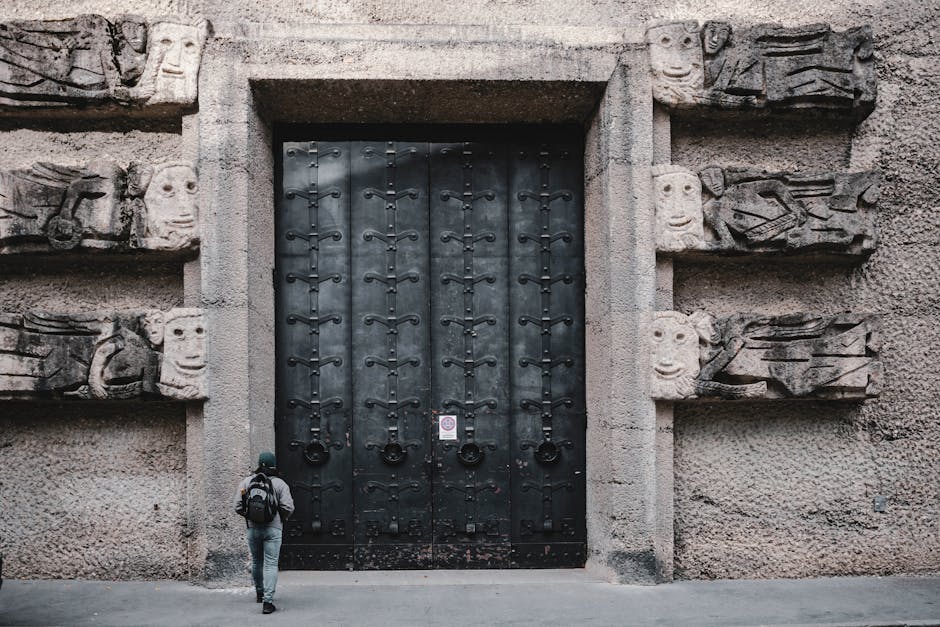 Easy
EasySalzburg, Austria
Discover the 'Rome of the North' on this self-guided walk through the Baroque squares and monumental legacy of Salzburg’s Prince-Archbishops.
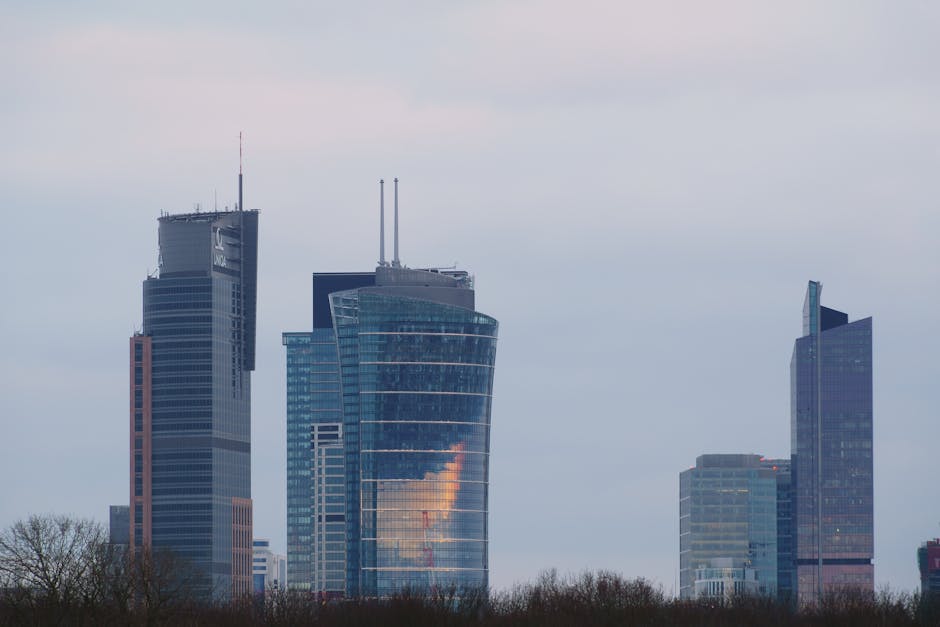 Easy
EasyWarsaw, Poland
Discover the hidden courtyards and grand pre-war architecture of Warsaw's most atmospheric neighborhood on this self-guided stroll.
 Easy
EasyHelsinki, Finland
Discover Helsinki's oldest neighborhood on this self-guided audio walk through Kruununhaka’s historic streets, hidden courtyards, and scenic shores.
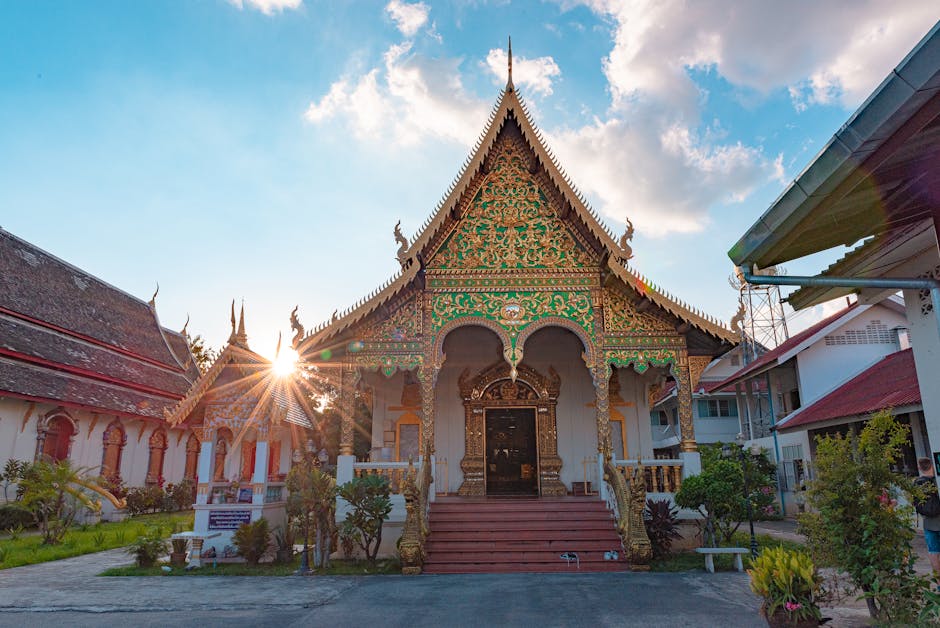 Easy
EasyChiang Mai, Thailand
Explore Chiang Mai's trendiest district at your own pace. Discover contemporary art galleries, local design shops, and iconic modern architecture.
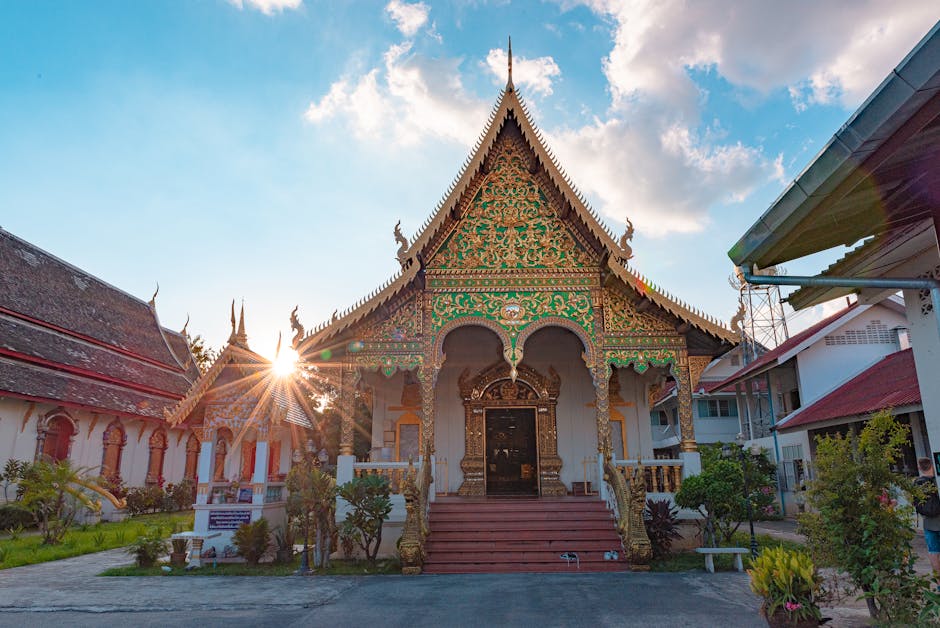 Moderate
Chiang Mai, Thailand
Explore Chiang Mai's creative soul, from Nimman’s boutique bookshops to the mystical tunnels of Wat Umong and the scenic Angkaew Reservoir.
 Moderate
Chiang Mai, Thailand
Discover Chiang Mai’s soul through its markets and flavors. A self-guided route from the historic Kad Luang to the city’s best street food gems.
 Easy
EasyChiang Mai, Thailand
Discover hidden temples, traditional brass-smith workshops, and local markets on this serene self-guided walk through Chiang Mai's southern district.