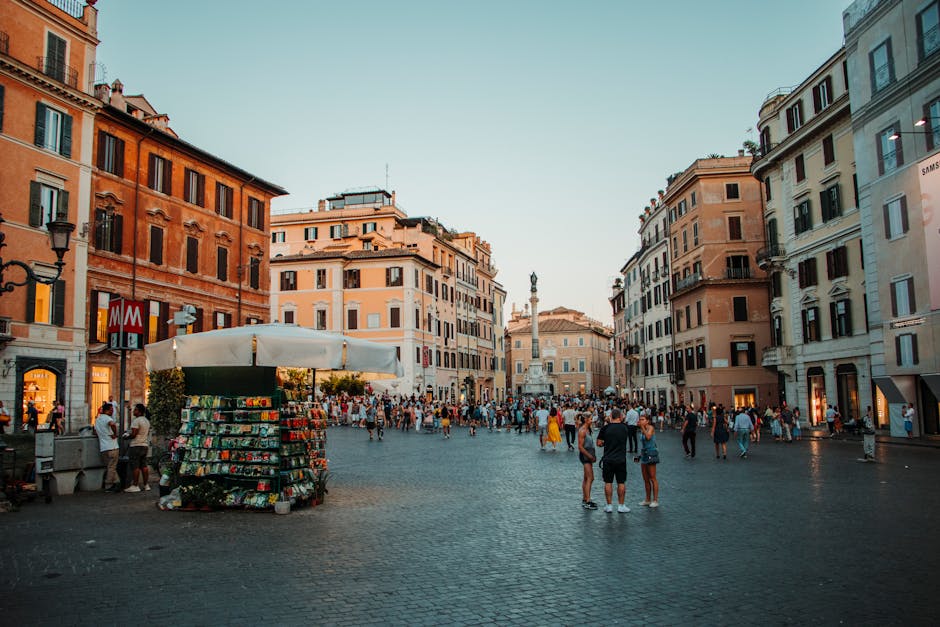
Self-guided audio tour in Rome
Start Free on iPhone
Start free on iPhone to unlock this self-guided walking tour in Rome. Hear all the stories that make it amazing, walk at your own pace, and begin whenever you want.
Your Private Tour Guide
Step away from the typical tourist trails and immerse yourself in the elegant, creative heart of Rome. This self-guided walk invites you to explore the 'Tridente' and 'Ponte' neighborhoods, where the city’s artistic soul and antique heritage remain vibrantly alive. Your journey begins on the ivy-draped Via Margutta, a quiet sanctuary famously known as the street of artists and the former home of Federico Fellini. From here, you will navigate through a labyrinth of narrow lanes that have served as the backdrop for cinematic masterpieces and centuries of creative craftsmanship. This neighborhood stroll is designed for those who appreciate the finer details of Roman life, from the glint of a restored Renaissance mirror to the smell of freshly tanned leather in a traditional workshop. As you move away from the bustling Piazza del Popolo toward the Tiber River, the atmosphere shifts from high-fashion energy to the contemplative charm of medieval alleys. You will discover the legendary Via dei Coronari, often cited as one of the most beautiful streets in the world, where the air is thick with history and the windows are filled with curiosities from centuries past. Along this walking route, you will encounter hidden gems like the ancient relief of a sow on Via della Scrofa and the storied Hostaria dell’Orso. This walking tour Rome experience isn't just about sightseeing; it's about feeling the pulse of a city that has always valued the hand-made and the historic. Whether you are a collector of fine antiques, a lover of Roman architecture, or simply looking for a peaceful escape from the crowds of the Colosseum, this audio walk provides the context and stories to make every cobblestone come alive. Experience the timeless allure of Rome at your own pace, ending your exploration just steps away from the iconic Piazza Navona and the bridge to Castel Sant’Angelo. **Note:** This area is known for its ever-changing character. Street art, pop-up venues, and temporary exhibitions may differ from what's described. That's part of the adventure - you might discover something entirely new!
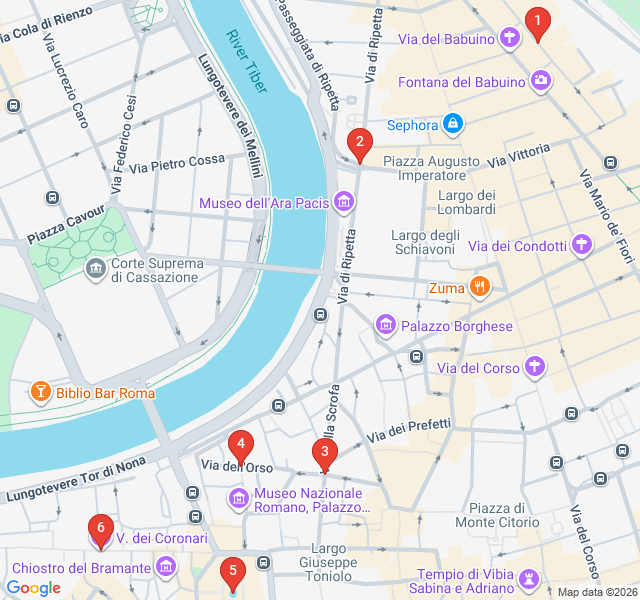
Numbers indicate the order of stops on the tour.
Welcome to Via Margutta, a peaceful haven tucked away behind the busy shops of Via del Babuino. This street is legendary for its artistic heritage; once a collection of stables and workshops, it transformed into an artist's colony in the 19th century. As you walk past the ivy-draped facades, look for the 'Fountain of the Arts,' which features carved palettes and brushes. This street gained international fame as the home of Joe Bradley, played by Gregory Peck, in the film 'Roman Holiday.' It was also the residence of the great director Federico Fellini. Today, it remains home to high-end galleries and quiet ateliers where the tradition of Roman painting and sculpture continues away from the city's noise.
As you transition onto Via di Ripetta, you are walking one of the three 'prongs' of the Tridente, the famous urban planning project of the Renaissance. This street historically led to the Port of Ripetta on the Tiber River, which was once a bustling hub for goods arriving in the city. While the port was demolished in the late 19th century to make way for the river embankments, the street retains an aristocratic charm. Look up at the elegant palazzi and notice the blend of Baroque and Neoclassical architecture. This route connects the grand Piazza del Popolo with the Mausoleum of Augustus, serving as a vital artery for Roman life for centuries.
Via della Scrofa is named after a small, weathered stone relief of a sow (scrofa) embedded in a wall near the intersection with Via dei Portoghesi. This street is a perfect example of Rome's 'lived-in' history. It is famous for its traditional shops, including historic stationery stores and leather workshops that have served Roman families for generations. As you walk, keep an eye out for the historic facades that hide stunning inner courtyards. This area is also a culinary hotspot, home to some of the city's most respected traditional delis. The atmosphere here is distinctly local, providing a glimpse into the everyday elegance of the Roman middle class.
Step into the medieval heart of the Ponte district on Via dell'Orso. This street’s name, 'Street of the Bear,' likely comes from ancient Roman statues of bears once found nearby. It is most famous for the Hostaria dell'Orso, a 14th-century building that is one of the oldest inns in Rome. Local legend suggests that the poet Dante Alighieri stayed here during the Jubilee of 1300. The architecture along this lane is notably different from the grand piazzas, with lower ceilings and narrow doorways that evoke the city's Middle Ages. Today, the street is known for its specialized artisans, including bookbinders and furniture restorers who keep ancient techniques alive.
You are now standing at the northern entrance of Piazza Navona, near the Fountain of Neptune. While most visitors flock to the center of the square to see Bernini's Four Rivers Fountain, this northern end offers a more tranquil perspective. You can clearly see the curved shape of the piazza, which follows the footprint of the ancient Stadium of Domitian. Below your feet lie the ruins of the 1st-century athletic arena. This exit serves as the gateway to the artisan quarter of Ponte. The contrast between the grand, theatrical Baroque piazza and the narrow, winding lanes you are about to enter is one of the most magical transitions in Rome.
Welcome to Via dei Coronari, arguably Rome's most beautiful street. Its name comes from the 'Coronari' or rosary sellers who lined this path during the Middle Ages to sell religious items to pilgrims heading toward St. Peter's Basilica. In the 15th and 16th centuries, it became a fashionable residential street for the papal elite, leading to the construction of the beautiful Renaissance palazzi you see today. Since the mid-20th century, Via dei Coronari has been the undisputed center of Rome's antique trade. Even if you aren't in the market for a 17th-century bust or a vintage timepiece, the window displays are like miniature museums. Take your time to explore the side alleys, which often hide tiny piazzas and some of the city's best gelato shops.
Start Free on iPhone
Explore “Artisans and Antiques of Via dei Coronari” with your very own Private Tour Guide with Zigway. Start free on iPhone, skip the large group and the fixed routes, and hear the city come alive as you go.
Your Private Tour Guide
Don't miss the good stuff
Explore Freely
 Easy
EasyRome, Italy
Explore Rome’s industrial heart on this self-guided walk featuring massive murals, the 'Iron Colosseum,' and unique industrial archaeology.
 Easy
EasyRome, Italy
Explore Rome’s whimsical Fairytale District. A self-guided walk through Art Nouveau palaces, mythical fountains, and the magical Coppedè architecture.
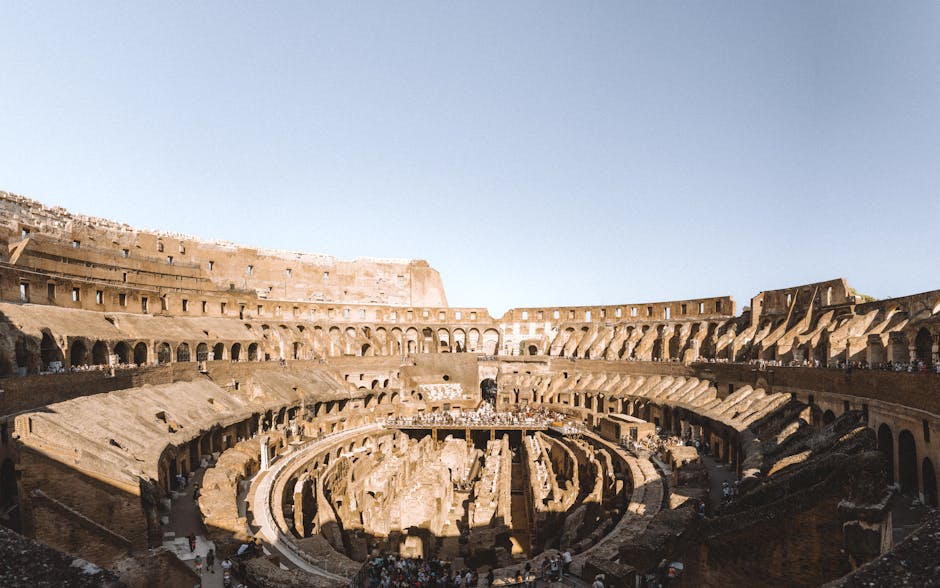 Moderate
Rome, Italy
Uncover Rome's hidden history on this self-guided walk through ancient gladiator pits, subterranean temples, and buried Roman houses.
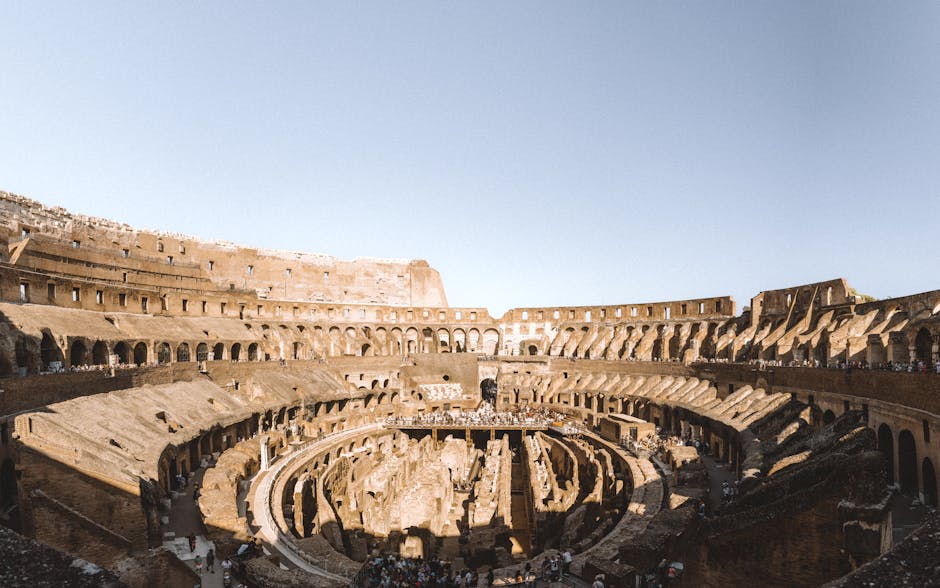 Challenging
Rome, Italy
Walk the 'Queen of Roads.' Explore ancient catacombs, imperial villas, and historic basalt stones on this scenic self-guided Roman adventure.
 Easy
EasyKrakow, Poland
Explore the prestigious Jagiellonian University district, featuring Neo-Gothic architecture, Baroque churches, and Krakow's hidden scholarly gems.
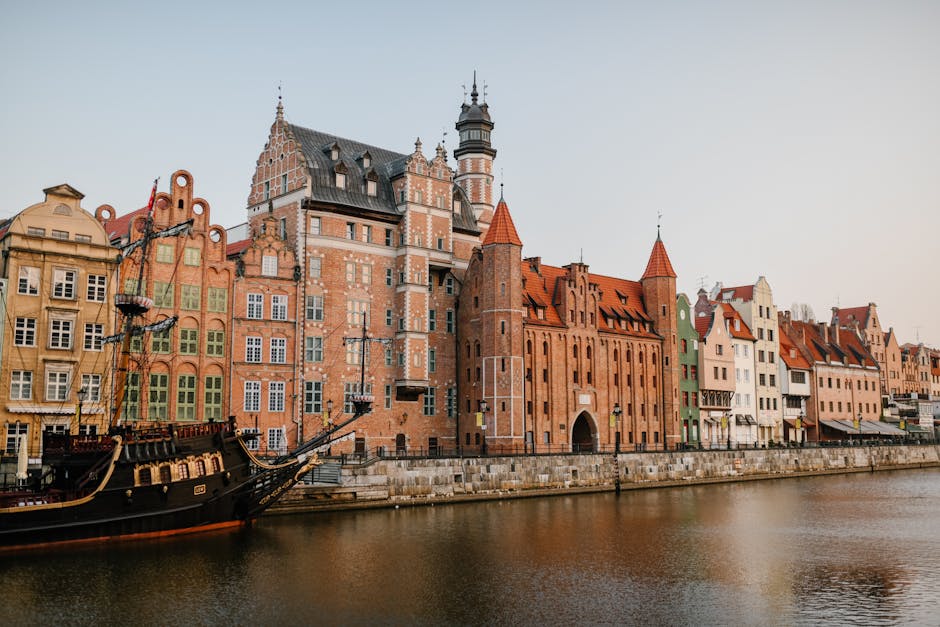 Easy
EasyGdansk, Poland
Discover the 'Baltic Gold' on this self-guided walk through Gdansk's historic mills, massive cathedrals, and the magical Mariacka Street.
 Easy
EasyWarsaw, Poland
Discover the hidden courtyards and grand pre-war architecture of Warsaw's most atmospheric neighborhood on this self-guided stroll.
 Easy
EasySalzburg, Austria
Discover Salzburg's oldest medieval alley, the birthplace of the 'Silent Night' author, and breathtaking views on this quiet self-guided walk.
 Easy
EasyFlorence, Italy
Discover the intersection of Renaissance architecture and modern luxury on this self-guided walk through Florence’s high-fashion districts.
 Easy
EasyFlorence, Italy
Explore the medieval streets of Florence through the eyes of Dante Alighieri on this self-guided literary and historical walking route.
 Easy
EasyFlorence, Italy
Experience the magic of Florence at sunset. Discover iconic bridges and breathtaking river views on this romantic self-guided audio walk.
 Easy
EasyFlorence, Italy
Discover the 'buchette del vino'—Florence's unique Renaissance wine windows—on this self-guided walk through the city's historic streets.