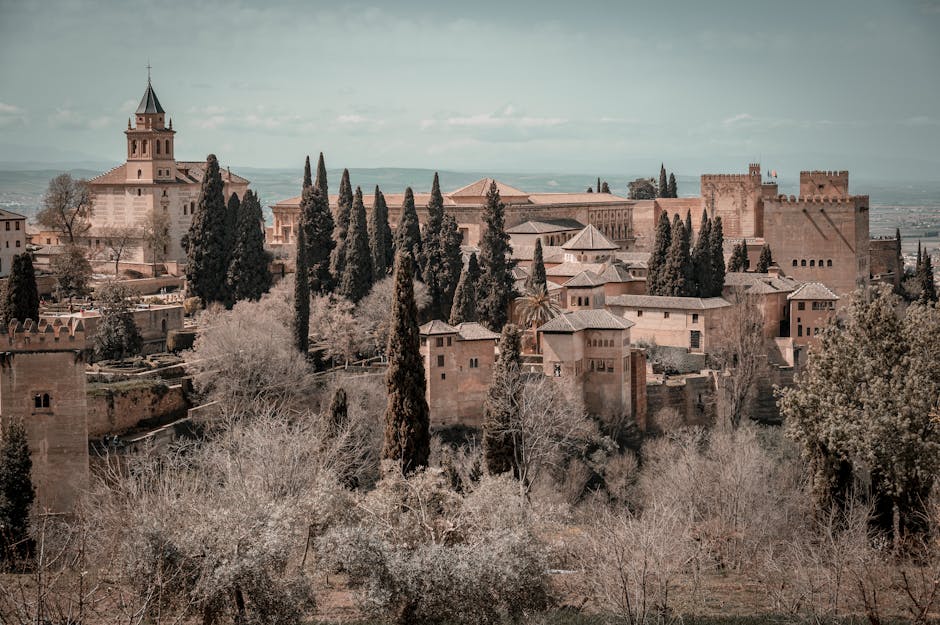
Self-guided audio tour in Granada
Start Free on iPhone
Start free on iPhone to unlock this self-guided walking tour in Granada. Hear all the stories that make it amazing, walk at your own pace, and begin whenever you want.
Your Private Tour Guide
Embark on a captivating self-guided walk through Granada, designed specifically for curious minds and families who love to explore the intersection of nature, history, and innovation. This walking route takes you from the centuries-old academic gardens of the city center to the cutting-edge interactive exhibits of the Zaidín district. Granada is often celebrated for its Moorish palaces, but this journey reveals a different side of the city: its legacy as a hub of botanical research and scientific discovery. Your exploration begins at the historic Botanical Garden of the University of Granada, a hidden oasis of biodiversity that has served students and researchers since the 18th century. As you move through the city, you will transition from the lush, romantic landscapes of the Carmen de los Mártires to the high-tech environments of the Biodomo and the Parque de las Ciencias. This neighborhood stroll offers a perfect balance of outdoor activity and educational stops. You will discover how the Nasrid dynasty mastered irrigation in the Generalife Gardens and how modern Granada continues to lead in environmental education. The route is flexible, allowing families to linger at the science museum's observation tower or enjoy a picnic at the Llano de la Perdiz. Whether you are mesmerized by the panoramic vistas from San Miguel Alto or the interactive physics experiments at the Science Park, this walking tour Granada provides a comprehensive look at the city's green lungs and intellectual heart. It is an ideal way to travel through Granada’s history while keeping younger explorers engaged with hands-on learning and plenty of space to run. By the time you reach the final stop at Parque de las Alquerías, you will have experienced the full spectrum of Granada’s natural and scientific heritage, far beyond the typical tourist path.
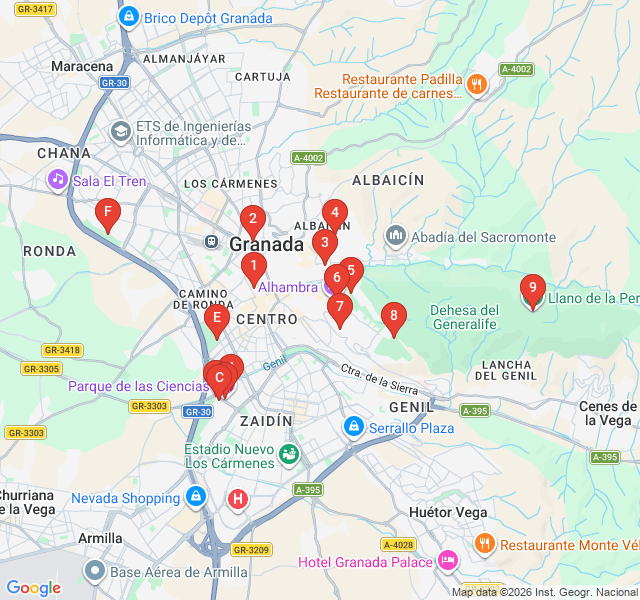
Numbers indicate the order of stops on the tour.
Welcome to your self-guided walk! You are standing in a historic enclave founded in 1783. This garden was originally created to provide medicinal plants for the university's pharmacy students. As you wander through the rectangular plots, notice the majestic Ginkgo Biloba tree, one of the oldest in Spain. This site represents the Enlightenment's push for scientific classification and study. It is a quiet sanctuary where academic tradition meets botanical diversity, setting the stage for our journey into Granada's scientific soul.
These gardens sit on a site with a layered history. Once an Arab cemetery and later a site of public executions during the 19th century, it was transformed into a place of beauty and reflection. The central fountain is particularly famous for its nightly light and water displays. For families, the wide paths and open spaces provide a moment of relief from the narrow streets of the city center. It serves as a green gateway between the old university district and the northern parts of the city.
Located in the heart of the Albayzín, this 'Carmen' (a traditional Granada house with a garden) demonstrates how the city's residents have integrated nature into their private living spaces for centuries. While it is a restaurant today, the site is steeped in legend, named after the wife of Boabdil, the last Moorish king. The garden here uses traditional Nasrid planting techniques, focusing on cypress trees, fruit trees, and the soothing sound of running water, which we will see scaled up later at the Alhambra.
Prepare for the best classroom view in the city. From this high point, you can observe the geography of Granada. Notice how the city is nestled at the foot of the Sierra Nevada mountains and at the confluence of the Darro and Genil rivers. This strategic location was chosen by the Zirid and Nasrid dynasties for its natural defenses and water access. Look down at the white-washed Albayzín and the red walls of the Alhambra; you are seeing a living map of medieval urban planning.
The Generalife was the leisure palace and vegetable garden of the Nasrid kings. Scientifically, it is a masterpiece of hydraulic engineering. The 'Acequia Real' (Royal Canal) brought water from kilometers away in the mountains to create these lush retreats. As you walk, observe how the gardens are divided into 'solanas' (sunny spots) and 'umbrías' (shaded spots), a sophisticated way to manage the microclimate of the palace. It remains one of the oldest surviving Moorish gardens in the world.
This is the administrative center for the preservation of Granada's most famous monument. The work done here involves archaeologists, botanists, and historians who use modern technology to preserve the ancient structures. They manage the delicate balance between high tourism and the conservation of fragile 14th-century plasterwork and tile. It’s a reminder that science plays a crucial role in keeping history alive for future generations.
This 19th-century estate features a diverse range of garden styles. You can explore the French garden with its symmetry, the English garden with its more natural, wild feel, and the Nasrid-style patio. For families, the highlight is often the large pond with its stone tower and the peacocks that roam the grounds. It’s a perfect example of how 19th-century 'romantic' science sought to collect and display various international styles of landscape architecture in one place.
While a cemetery might seem an unusual stop, San José is one of the most beautiful and historically significant in Spain. It is part of the European Cemeteries Route. From a scientific and architectural perspective, it showcases incredible 19th-century funerary art and provides a unique vantage point of the Sierra Nevada. It reflects the city's demographic and social history through its monuments and is a place of immense botanical and sculptural value.
Rising above the Alhambra, this plateau is the 'green lung' where locals come to exercise and connect with nature. It is a limestone formation that offers a rugged, natural contrast to the manicured gardens we've seen. The flora here is typical of the Mediterranean scrubland. It’s an excellent spot to discuss the local ecosystem and the importance of preserving natural spaces on the edge of urban environments. On clear days, the views of the snow-capped Sierra Nevada are unparalleled.
Stepping into the Biodomo is like traveling to the tropics. This immersive space is part of the Science Park and focuses on the biodiversity of the Earth's 'hotspots'—the Amazon, Indo-Pacific, and African coast. It houses over 250 species of animals and plants. The facility is designed for conservation and education, allowing you to see lemurs, toucans, and sharks while learning about the fragile interconnectedness of global ecosystems. It is a highlight for any family-friendly walking route.
This is Andalusia's first interactive science museum. Spread over 70,000 square meters, it’s a paradise for curious minds. You can explore the 'Journey into the Human Body,' visit the Planetarium, or climb the 50-meter-high Observation Tower for a 360-degree view of Granada. The museum’s philosophy is 'forbidden NOT to touch,' making it the ultimate educational stop. It bridges the gap between complex scientific theories and everyday life through hands-on experimentation.
Located right next to the Science Park, this museum uses cutting-edge audiovisual technology to tell the story of the Andalusian people. It explores how the region's geography, climate, and diverse cultures have shaped its identity over millennia. The architecture itself is a modern marvel, featuring a striking 'building-screen' and a grand spiral ramp. It’s a lesson in how modern design can be used to archive and present cultural memory.
This expansive modern park is a favorite for local families. Named after a famous Granada journalist, it offers large green lawns, cycling paths, and play areas. It represents the modern urban development of the Zaidín district, prioritizing open public space for health and recreation. It’s a great place to observe the local lifestyle, away from the historic tourist center, and perhaps spot some of the local birdlife that frequents the park's trees.
This park surrounds the Huerta de San Vicente, the summer home of the poet Federico García Lorca. While famous for its literary connections, the park is also a botanical delight, featuring one of the largest rose gardens in Europe. The layout honors the agricultural heritage of the 'Vega de Granada'—the fertile plain that surrounds the city. Walking through the orchards and rose beds, you can feel the connection between the land’s fertility and the artistic inspiration it provided to Spain's most famous poet.
Our final stop brings us to a space that celebrates Granada's agricultural roots. An 'alquería' was a small rural settlement in the Al-Andalus period. This park preserves several traditional farmhouses and focuses on the 'Huerta' (orchard) culture that has fed the city for centuries. It’s a peaceful end to our journey, reminding us that all scientific and urban progress in Granada began with the simple, effective management of the land and its water.
Start Free on iPhone
Explore “Science & Discovery Family Walk” with your very own Private Tour Guide with Zigway. Start free on iPhone, skip the large group and the fixed routes, and hear the city come alive as you go.
Your Private Tour Guide
Don't miss the good stuff
Explore Freely
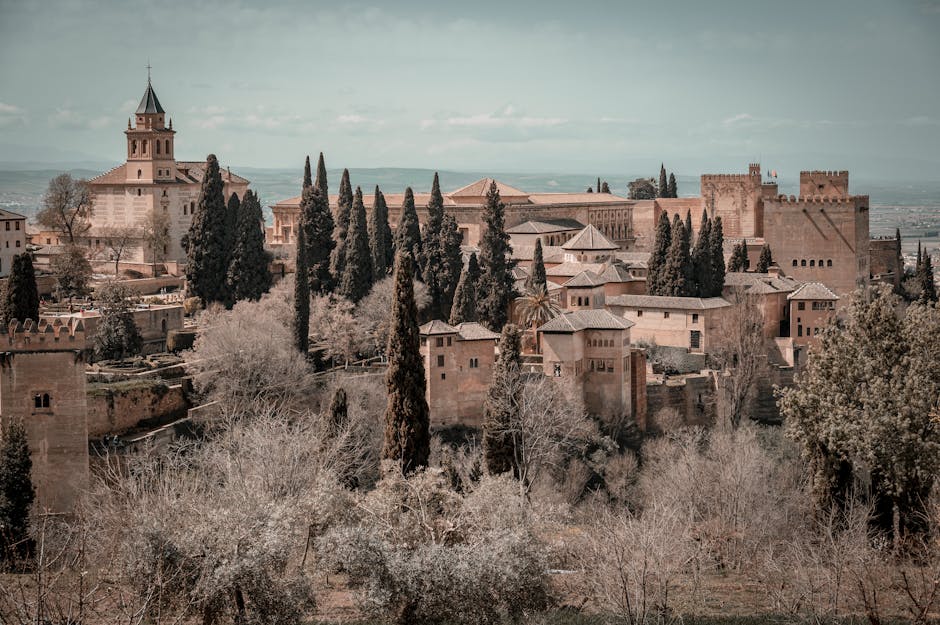 Moderate
Granada, Spain
Explore the bohemian heart of Granada's oldest district on this self-guided walking route through the hidden gems of the Upper Albaicín.
 Easy
EasyGranada, Spain
Discover the legacy of the Nasrid silk trade and the vibrant evolution of Granada's historic center on this atmospheric self-guided walk.
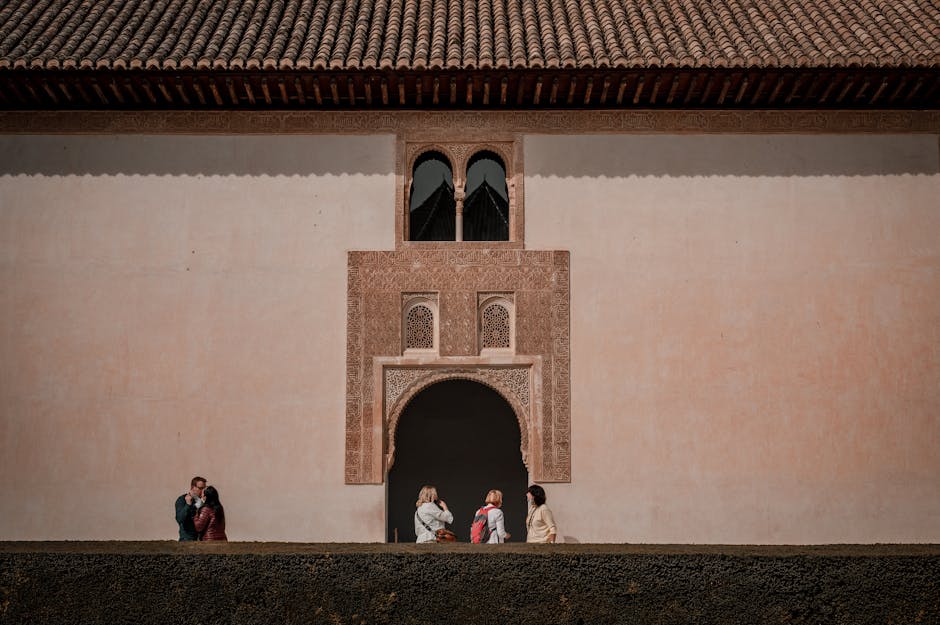 Moderate
Granada, Spain
Explore Granada's historic Jewish Quarter and discover world-class street art on this self-guided walk through the vibrant Realejo neighborhood.
 Moderate
Granada, Spain
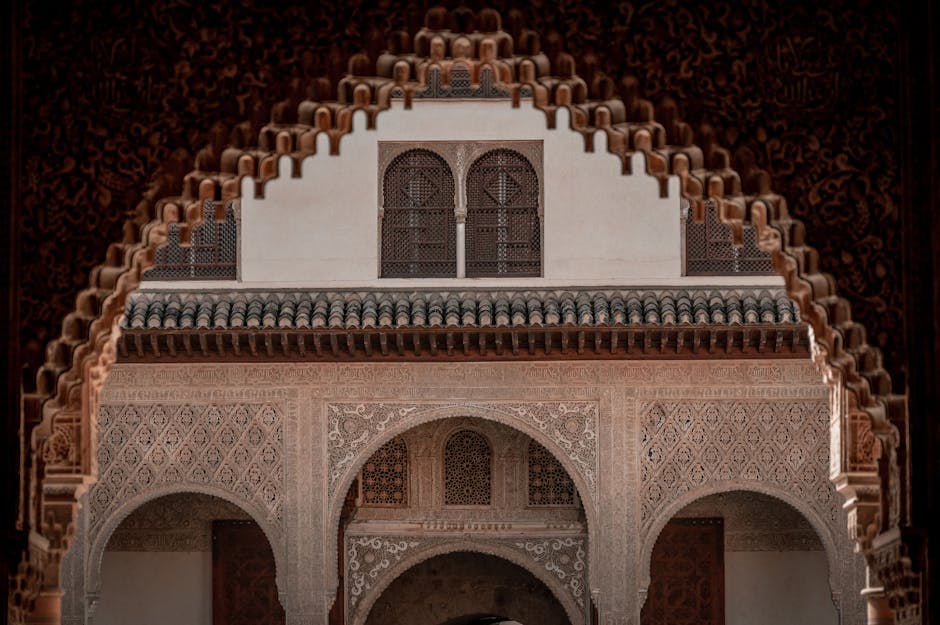
Discover the Moorish soul of Granada on this self-guided walk through the Albaicín’s winding streets, historic palaces, and iconic viewpoints.
 Easy
EasyGdansk, Poland
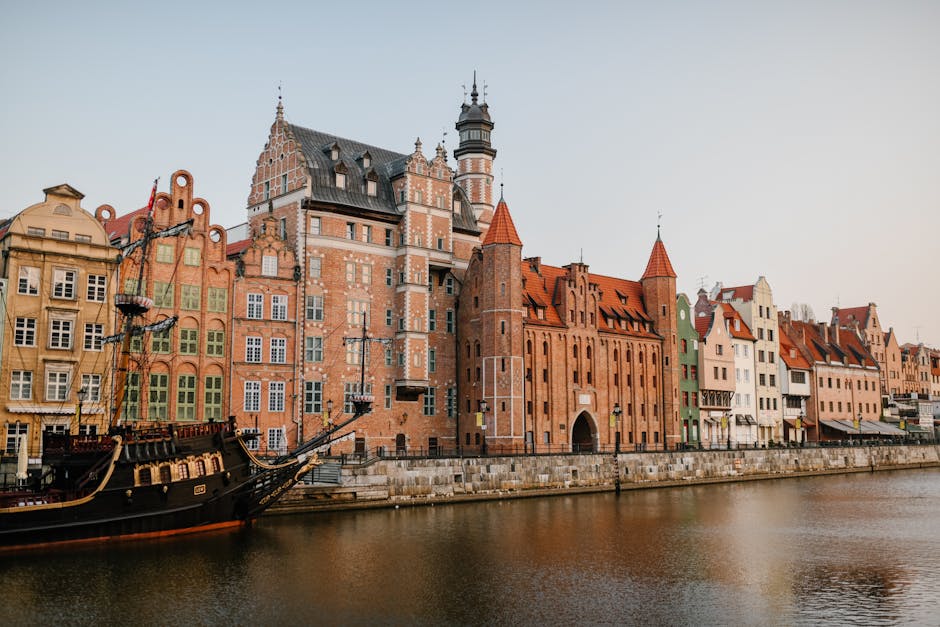
Discover the monastic heritage, world-famous organs, and lush botanical gardens of Oliwa on this peaceful self-guided neighborhood stroll.
 Moderate
Gothenburg, Sweden
Explore Gothenburg’s lush "Green Lung" on this self-guided walk through the Botanical Garden, Slottsskogen park, and rugged Änggård Mountains.
 Easy
EasyWarsaw, Poland
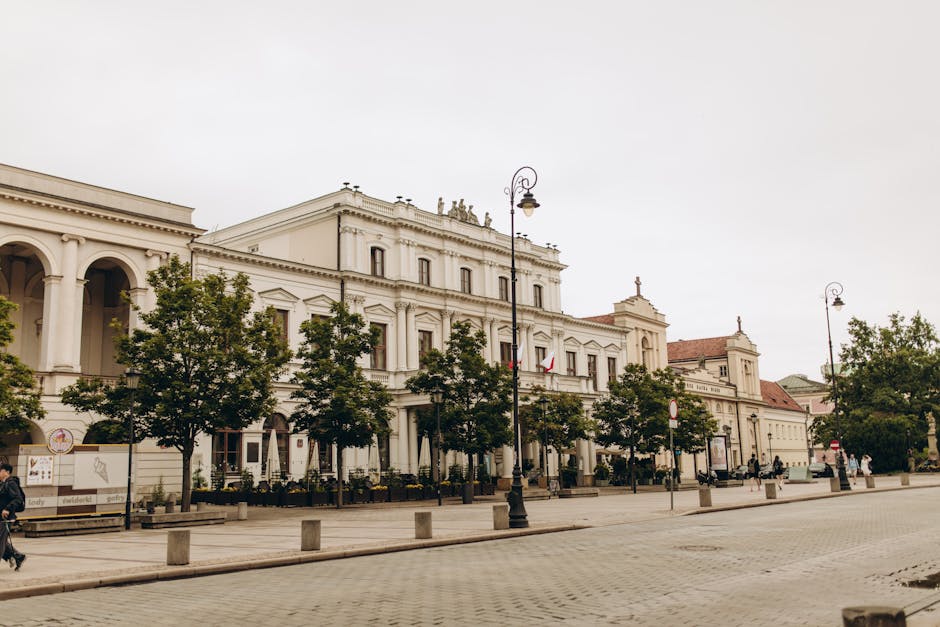
Explore the 'Polish Versailles' at your own pace. Discover Baroque architecture, royal history, and stunning gardens on this self-guided walk.
 Easy
EasyWarsaw, Poland
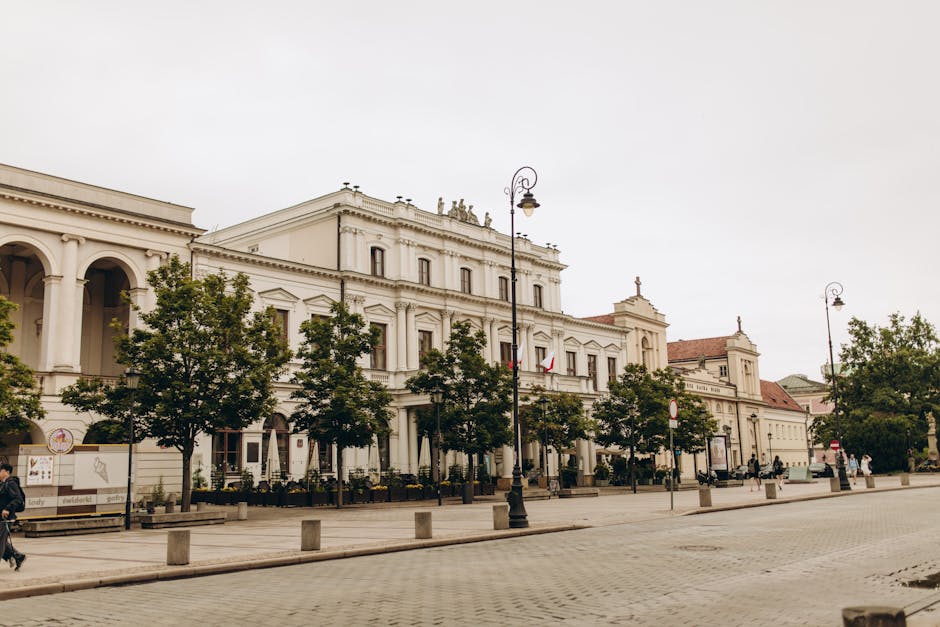
Explore Warsaw's scenic riverfront, rooftop gardens, and industrial-chic architecture on this self-guided stroll through the Powiśle district.
 Moderate
Barcelona, Spain
Explore the elegant 'village' of Sarrià, where Gothic monasteries and Gaudí's hidden gems meet charming local markets and narrow streets.
 Moderate
Barcelona, Spain
Discover the revolutionary history and haunting scars of the Spanish Civil War on this self-guided walk through Barcelona's historic streets.
 Easy
EasyBarcelona, Spain
Discover the architectural wonders of Barcelona's Golden Square on this self-guided stroll through Eixample's most luxurious Modernista streets.
 Challenging
Barcelona, Spain
Explore Montjuïc’s lush gardens, historic fortress, and iconic Olympic venues on this scenic self-guided walk with panoramic Mediterranean views.