Self-guided audio tour in Marseille
Start Free on iPhone
Start free on iPhone to unlock this self-guided walking tour in Marseille. Hear all the stories that make it amazing, walk at your own pace, and begin whenever you want.
Your Private Tour Guide
Step away from the bustling Old Port and discover the refined side of Marseille in the 4th arrondissement. This neighborhood stroll takes you through the heart of the Cinq-Avenues district, a place where 19th-century ambition meets tranquil green spaces. The centerpiece of this self-guided walk is the magnificent Palais Longchamp, a monument that is not actually a palace but a 'water castle' built to celebrate the arrival of the Canal de Marseille. As you explore independently, you will uncover the story of a city that once struggled with thirst and transformed its fortune into architectural grandeur. Beginning at the Muséum d'Histoire Naturelle, you will experience the symmetry and scale of Henri-Jacques Espérandieu’s masterpiece. This walking route highlights the dual nature of the 4th arrondissement: the monumental prestige of the Palais and the scientific legacy of the historic Observatory, contrasted with the whimsical charm of 'Le Funny Zoo.' You will wander through the Jardin des Plantes, one of the city's oldest botanical havens, before concluding your journey at the vibrant Place Sébastopol. This square serves as the social heart of the neighborhood, surrounded by Haussmannian architecture and local life that feels a world away from the typical tourist trails. Whether you are an architecture enthusiast or simply looking for a peaceful escape, this audio walk provides the context needed to appreciate Marseille's 'Golden Age.' You can set your own pace, stopping for a coffee at a local bistro or spending extra time admiring the intricate sculptures of the fountain. This Marseille walking tour offers a unique perspective on how the city reinvented itself during the industrial era, creating a legacy of beauty and utility that continues to define the Cinq-Avenues district today.
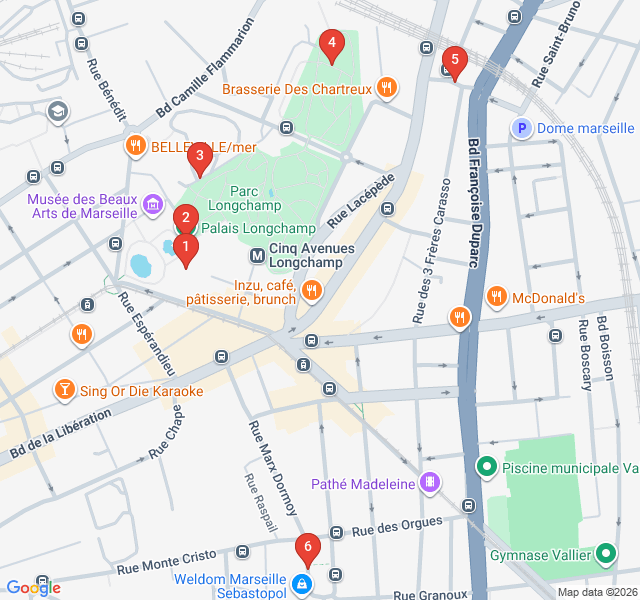
Numbers indicate the order of stops on the tour.
Welcome to the right wing of the Palais Longchamp. Established in 1819, this museum found its permanent home here in 1869. Notice the intricate stone carvings on the facade that celebrate the natural world. This site was designed to showcase the scientific prowess of Marseille during the Second Empire. The museum's location within the Palais complex signifies the era's belief that art, science, and public utility—represented by the water fountain—were the pillars of a civilized city. As you stand before this grand entrance, imagine the 19th-century citizens marveling at the exotic specimens brought back from France's maritime expeditions, all housed within this temple of knowledge.
The Palais Longchamp is perhaps Marseille's most impressive architectural feat. Designed by Henri-Jacques Espérandieu, it was built to celebrate the completion of the Canal de Marseille, which brought fresh water from the Durance River to a city previously plagued by drought and cholera. The central fountain, or 'Château d'Eau,' features a chariot pulled by Camargue bulls, symbolizing fertility and the life-giving power of water. Take a moment to walk up the colonnades; the view looking back toward the city reveals the scale of the 19th-century urban planning that transformed this once-rural area into a prestigious residential district.
Tucked away behind the Palais is the Marseille Observatory. Moving here from the city center in the 1860s to escape light pollution, this site became a hub for astronomical discovery. It once housed one of the largest telescopes in the world, the Foucault telescope, which featured a 31-inch silvered glass mirror—a revolutionary technology at the time. The observatory grounds represent a time when Marseille was not just a port of trade, but a port of scientific inquiry. While the research has moved to modern facilities outside the city, this historic site remains a testament to the city's contribution to our understanding of the cosmos.
As you wander through the park, you might be surprised to see colorful, life-sized statues of elephants, giraffes, and bears. These are not modern art pieces without context; they are a tribute to the Zoo de Marseille, which occupied these grounds from 1854 until 1987. For over a century, this was where locals came to see exotic animals. Today, 'Le Funny Zoo' serves as a whimsical memorial to the former inhabitants. The old cages and pavilions, some of which are still visible, have been repurposed, blending the somewhat melancholy history of the zoo with a playful, family-friendly atmosphere that keeps the memory of the gardens alive.
The Jardin des Plantes is the lower section of the Longchamp park system. Originally created as a botanical garden for study, it is now a peaceful retreat for residents. The layout follows the English landscape style, with winding paths, diverse tree species, and a sense of controlled wilderness. It offers a sharp contrast to the formal, symmetrical gardens found at the front of the Palais. This area was essential for the acclimatization of exotic plants brought through the port. Today, it remains a 'green lung' for the 4th arrondissement, providing a quiet space for reflection amidst the urban sprawl of Marseille.
Leaving the park behind, you arrive at Place Sébastopol, the beating heart of local life in the 4th arrondissement. This square is famous for its daily market and its ring of classic cafes and brasseries. The architecture here is quintessentially Haussmannian, characterized by limestone facades and wrought-iron balconies. Unlike the monumental Palais Longchamp, Sébastopol is where you see the real Marseille: neighbors chatting over espresso and shoppers hunting for fresh produce. It is the perfect place to end your self-guided adventure, offering a taste of the authentic, everyday elegance that makes this neighborhood so beloved by those who live here.
Start Free on iPhone
Explore “Grandeur of the 4th: Longchamp to the Observatory” with your very own Private Tour Guide with Zigway. Start free on iPhone, skip the large group and the fixed routes, and hear the city come alive as you go.
Your Private Tour Guide
Don't miss the good stuff
Explore Freely
 Easy
EasyMarseille, France
Explore Marseille's green heart at Parc Borély and discover Le Corbusier's iconic Unité d'Habitation on this self-guided architecture walk.
 Moderate
Marseille, France
Discover Marseille's historic spine from the Old Port to the majestic Palais Longchamp on this self-guided architectural walking route.
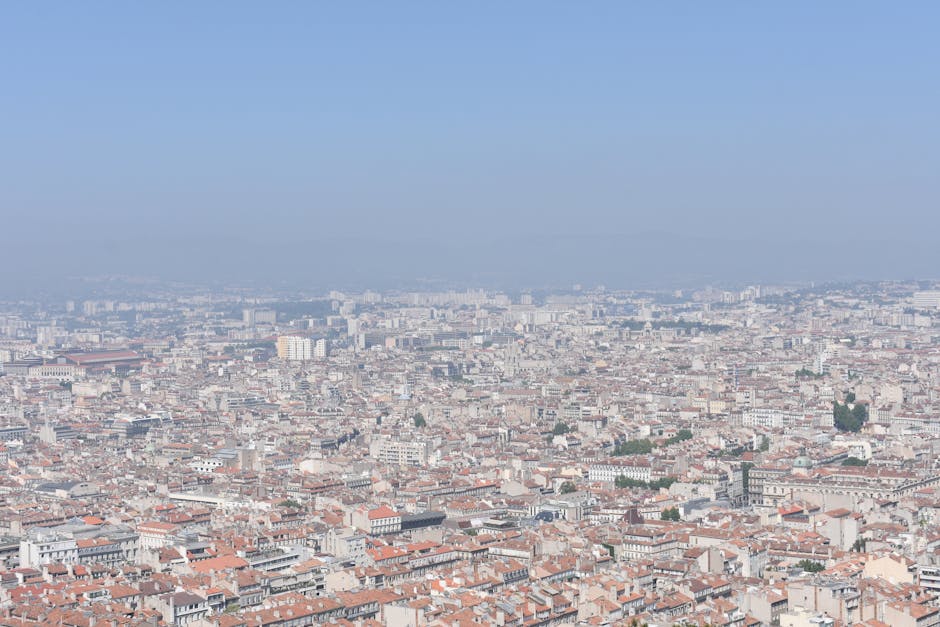 Moderate
Marseille, France
Explore the vertical gardens and hidden villas of Endoume on this self-guided walk through Marseille’s most charming coastal neighborhood.
 Easy
EasyMarseille, France
Discover the cinematic soul of Marseille on this self-guided walk through the historic Vieux Port, inspired by the works of Marcel Pagnol.
 Easy
EasyKrakow, Poland
Explore the prestigious Jagiellonian University district, featuring Neo-Gothic architecture, Baroque churches, and Krakow's hidden scholarly gems.
 Easy
EasyInnsbruck, Austria
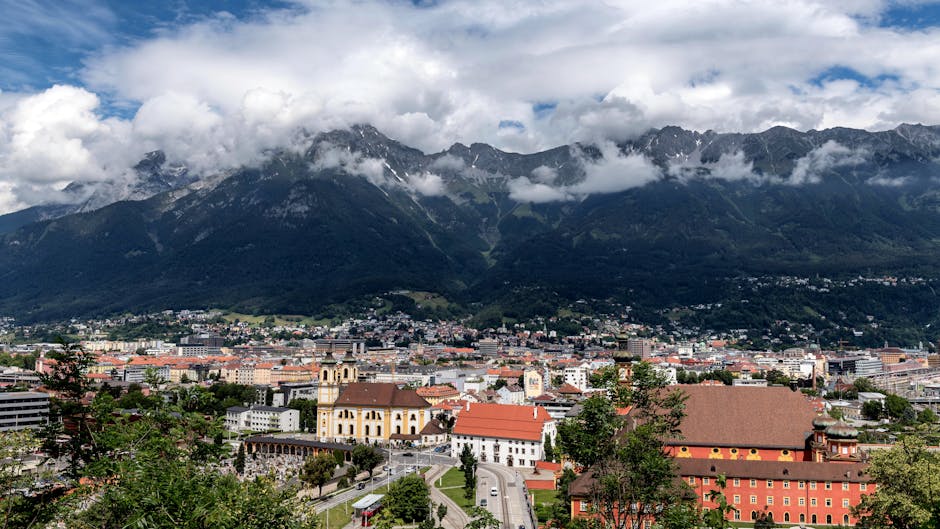
Uncover the myths and legends of Innsbruck on this self-guided walk through the historic Altstadt and beyond.
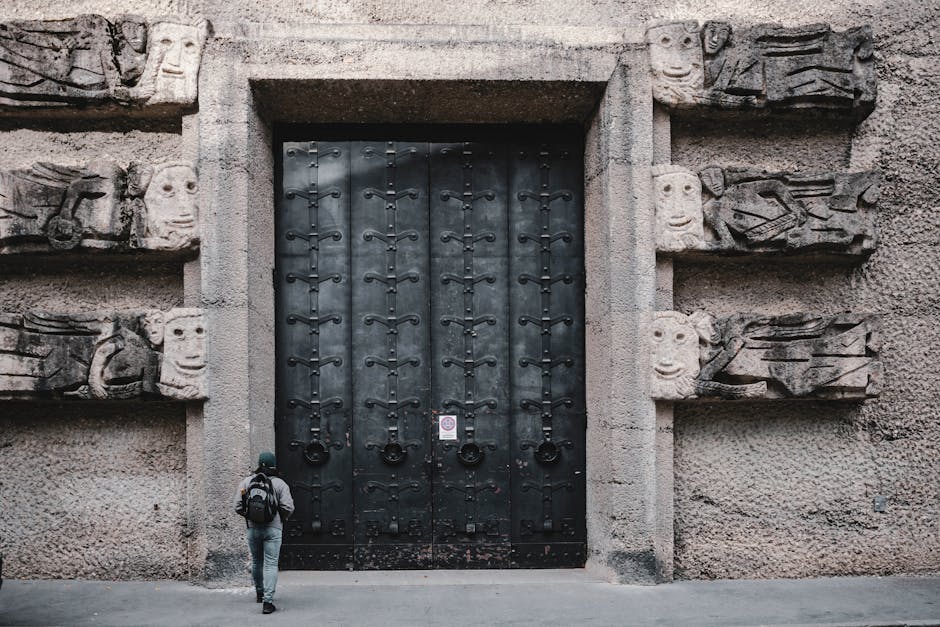 Easy
EasySalzburg, Austria
Discover the 'Rome of the North' on this self-guided walk through the Baroque squares and monumental legacy of Salzburg’s Prince-Archbishops.
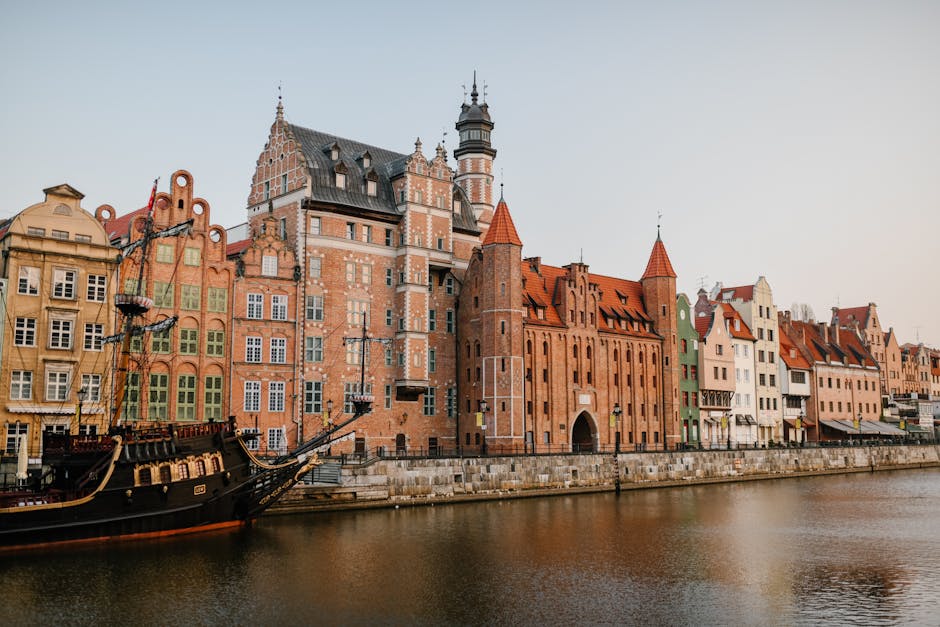 Easy
EasyGdansk, Poland
Discover the 'Baltic Gold' on this self-guided walk through Gdansk's historic mills, massive cathedrals, and the magical Mariacka Street.
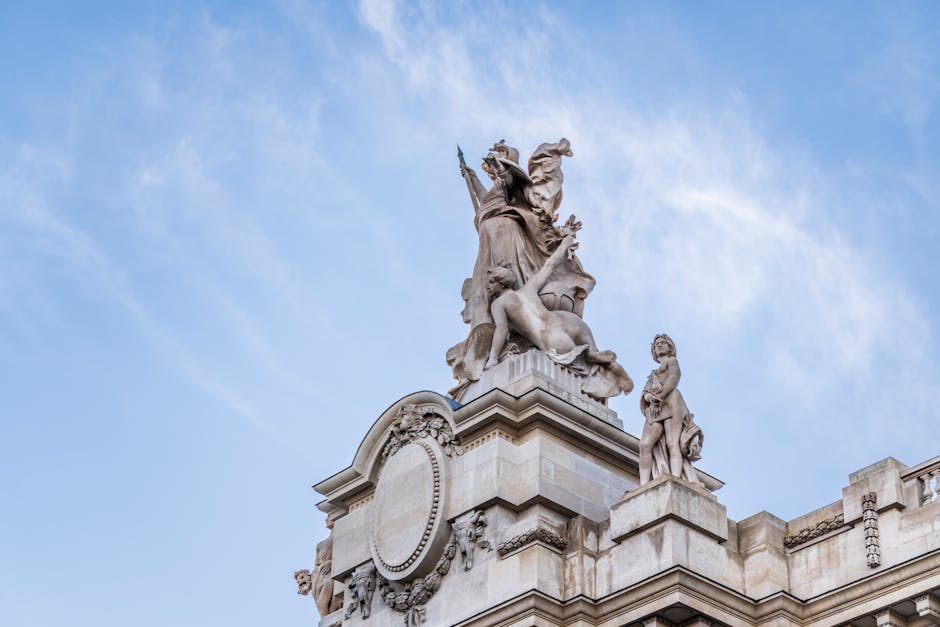 Challenging
Paris, France
Explore the secret vineyards, legendary artist studios, and hidden squares of Paris's iconic hilltop on this self-guided bohemian walking route.
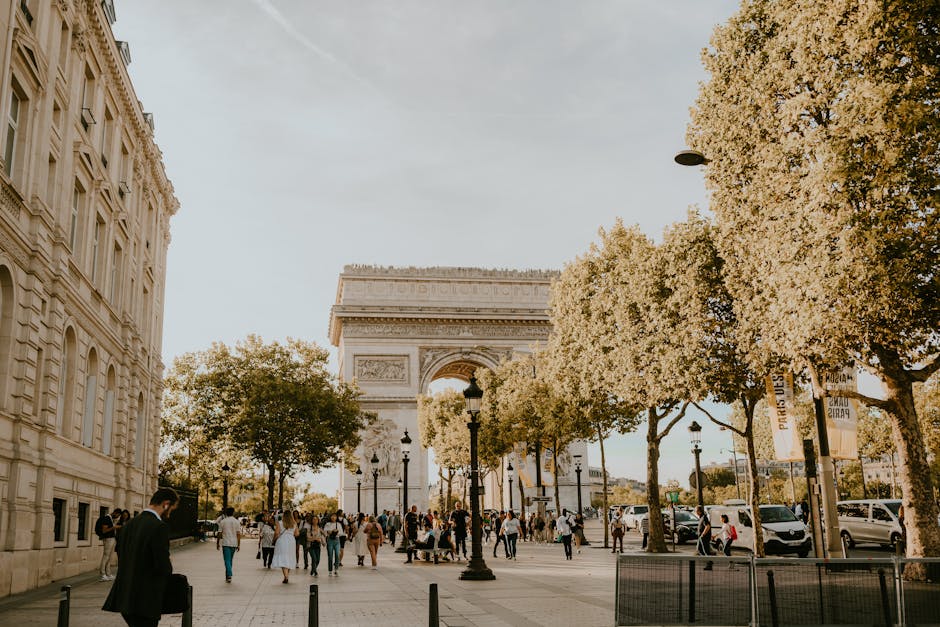 Easy
EasyParis, France
Explore the evolution of Parisian design from Art Nouveau whimsy to Le Corbusier's Modernist masterpieces on this self-guided architectural walk.
 Easy
EasyParis, France
Explore the flavors and history of Bastille on this self-guided walk through the legendary Aligre Market and the scenic Coulée Verte.
 Easy
EasyParis, France
Discover aristocratic mansions, secret medieval courtyards, and royal history on this self-guided walk through the enchanting Marais district.