Self-guided audio tour in Jaipur
Start Free on iPhone
Start free on iPhone to unlock this self-guided walking tour in Jaipur. Hear all the stories that make it amazing, walk at your own pace, and begin whenever you want.
Your Private Tour Guide
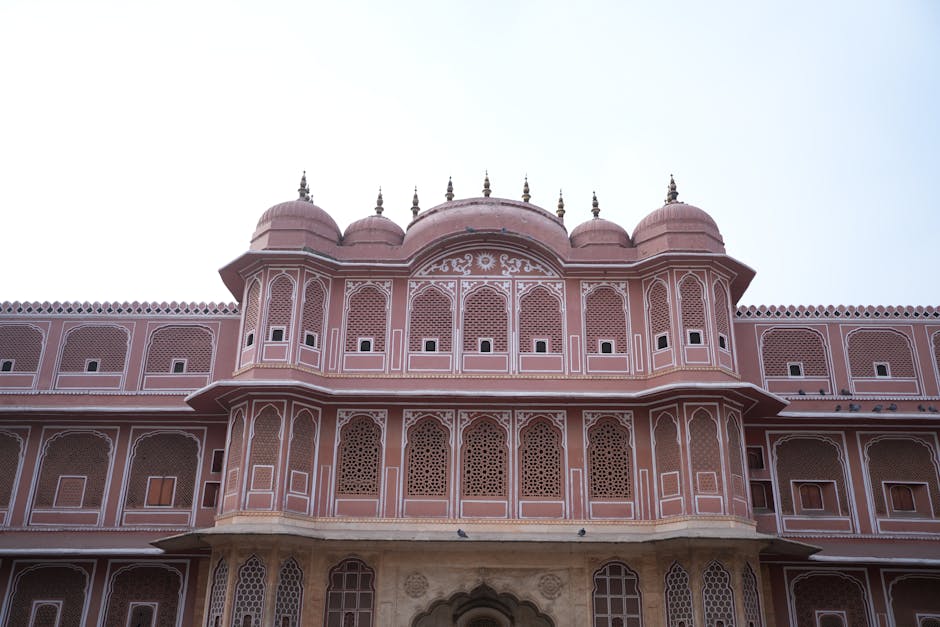
Perched atop the rugged Aravalli Hills, the golden sandstone of Amer Fort tells a story of Rajput valor and Mughal artistic influence. This self-guided walk invites you to explore the transition from the quiet, artisanal streets of Amer village to the opulent heights of the royal palace. Unlike a standard walking tour Jaipur visitors often take, this route focuses on the 'Elephant Path'—the historic ascent used by royalty—while uncovering hidden gems like geometric stepwells and textile museums before reaching the iconic ramparts. The journey begins in the shadow of the fort at the Anokhi Museum, where the ancient art of hand-block printing is preserved in a restored haveli. From there, you will encounter the mesmerizing symmetry of Panna Meena ka Kund, one of Rajasthan's most photogenic stepwells. As you begin the climb toward the palace complex, the scale of the fortification becomes clear. Entering through the Surajpol, or Sun Gate, you follow the footsteps of Maharajas returning from battle. The route leads through the ceremonial courtyard to the Ganesh Pol, a gateway so beautiful it once sparked jealousy in the Mughal court. Inside the palace, the architecture reveals ingenious ancient cooling systems at Sukh Niwas and the breathtaking celestial reflections of the Sheesh Mahal. This neighborhood stroll offers a deep dive into the history of the Kachwaha clan and the architectural evolution of Jaipur. By choosing this walking route, you experience the grandeur of the fort at your own pace, away from the constraints of a traditional guided tour Jaipur travelers might find restrictive. Whether you are capturing the perfect light on the ramparts or marveling at the intricate marble carvings, this self-guided adventure provides an intimate connection to India's royal past.
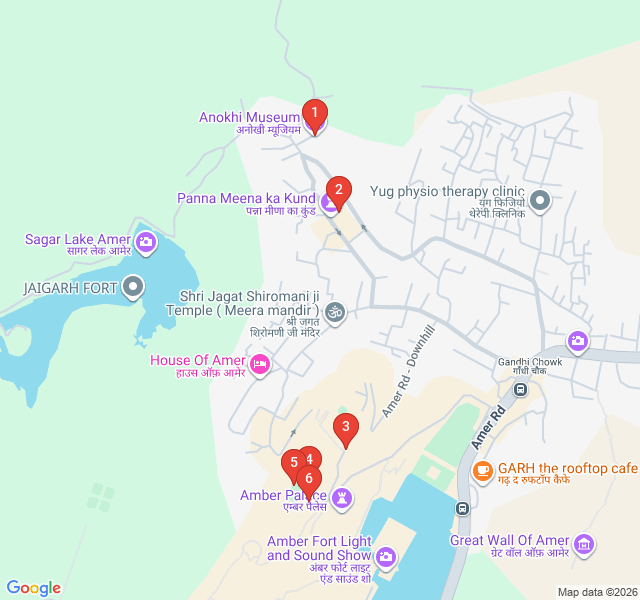
Numbers indicate the order of stops on the tour.
Begin your journey at the Anokhi Museum of Hand Printing, housed in a beautifully restored 16th-century haveli. This museum is dedicated to the traditional Rajasthani craft of woodblock printing. As you wander through the galleries, you'll see how intricate patterns are hand-carved into wooden blocks and then stamped onto fabric using natural dyes. The building itself is a masterpiece of conservation, having won a UNESCO award. It sets the stage for our walk by highlighting the artisanal heritage that supported the royal court of Amer for centuries. Take a moment to watch the live demonstrations on the top floor before we head toward the village's most famous water feature.
Just a short walk from the museum lies Panna Meena ka Kund, an 16th-century stepwell that served as both a water source and a community gathering spot. Notice the stunning criss-cross arrangement of stairs; it is said that it's nearly impossible for a person to use the same set of stairs to go down and come back up. These 'baoris' were essential in the arid landscape of Rajasthan, designed to catch every drop of monsoon rain. The yellow-painted walls and the play of shadows on the steps make this one of the most photographed spots in the region. It reflects the Rajput philosophy of blending utility with immense aesthetic beauty.
As we begin the ascent toward the fort, we enter through Surajpol, or the Sun Gate. This was the main entrance for the Maharajas and their royal cavalcades returning from victorious battles. Facing east to greet the rising sun—the deity from whom the Rajput kings claimed descent—the gate opens into the Jaleb Chowk, the main courtyard. Imagine the spectacle of hundreds of soldiers and decorated elephants passing through these massive wooden doors. This gate represents the transition from the public village life below to the private, fortified world of the Jaipur royalty.
Standing before you is the Ganesh Pol, arguably the most beautiful gateway in India. Built by Mirza Raja Jai Singh in the 1630s, it is adorned with intricate frescoes and delicate lattice screens known as jalis. At the center is an image of Lord Ganesh, the remover of obstacles, painted with vegetable dyes that have remained vibrant for nearly 400 years. Legend has it that the Mughal Emperor was so jealous of this gate's beauty that Raja Jai Singh had to cover it with plaster to hide it from the Emperor's officials. It serves as the grand entrance to the private inner apartments of the palace.
Opposite the Hall of Private Audience lies the Sukh Niwas, or the 'Hall of Pleasure.' In the sweltering heat of the Rajasthani summer, this was the royal family's sanctuary. Look closely at the floor; you’ll see a marble channel through which cold water once flowed. As the breeze blew over this water, it created an early form of air conditioning. The sandalwood doors, once inlaid with ivory, add to the atmosphere of luxury. This space demonstrates the sophisticated understanding of hydraulics and climate control possessed by the architects of the 17th century.
We conclude our walk at the crown jewel of Amer Fort: the Sheesh Mahal, or Palace of Mirrors. The walls and ceilings are entirely covered in thousands of tiny mirror fragments and colored glass imported from Belgium. In the era before electricity, a single candle lit in this room would reflect across the mirrors, creating the illusion of a thousand stars shining in the night sky. The intricate floral carvings in the marble panels below—look for the 'magic flower' carving—showcase the pinnacle of Mughal-inspired Rajput art. It is a glittering finale to our exploration of the ramparts.
Start Free on iPhone
Explore “The Elephant Path: Walking Amer Fort’s Ramparts” with your very own Private Tour Guide with Zigway. Start free on iPhone, skip the large group and the fixed routes, and hear the city come alive as you go.
Your Private Tour Guide
Don't miss the good stuff
Explore Freely
 Moderate
Jaipur, India
Discover Jaipur’s secret courtyards and stunning frescoes on this self-guided walk through the historic havelis and alleys of Purani Basti.
 Easy
EasyJaipur, India
Explore the rose-hued gates and vibrant markets of Jaipur on this self-guided architectural walk from Albert Hall to the historic Ajmeri Gate.
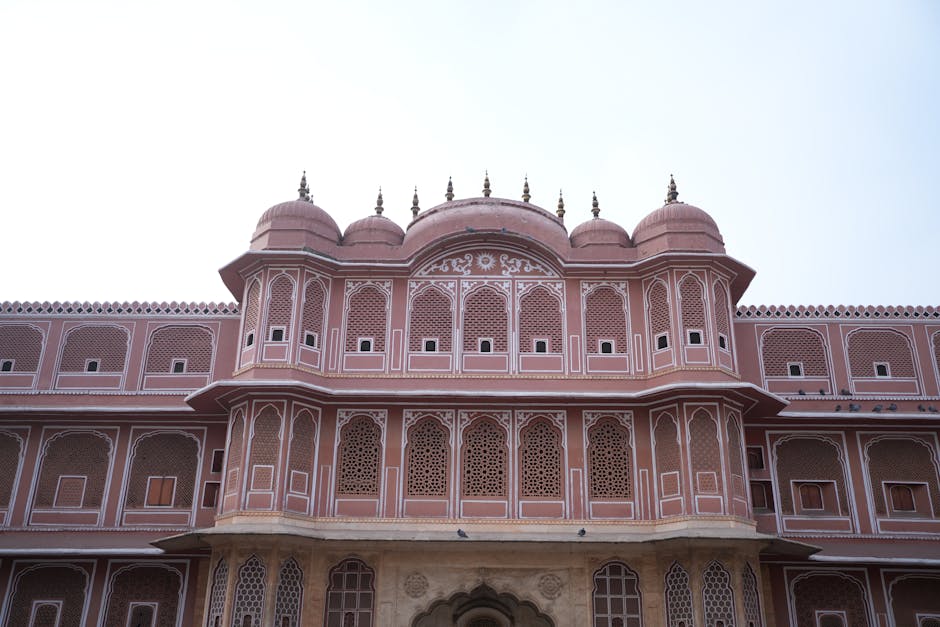 Moderate
Jaipur, India
Explore Jaipur’s royal history at your own pace with this self-guided audio walk through the Pink City’s most iconic palaces and monuments.
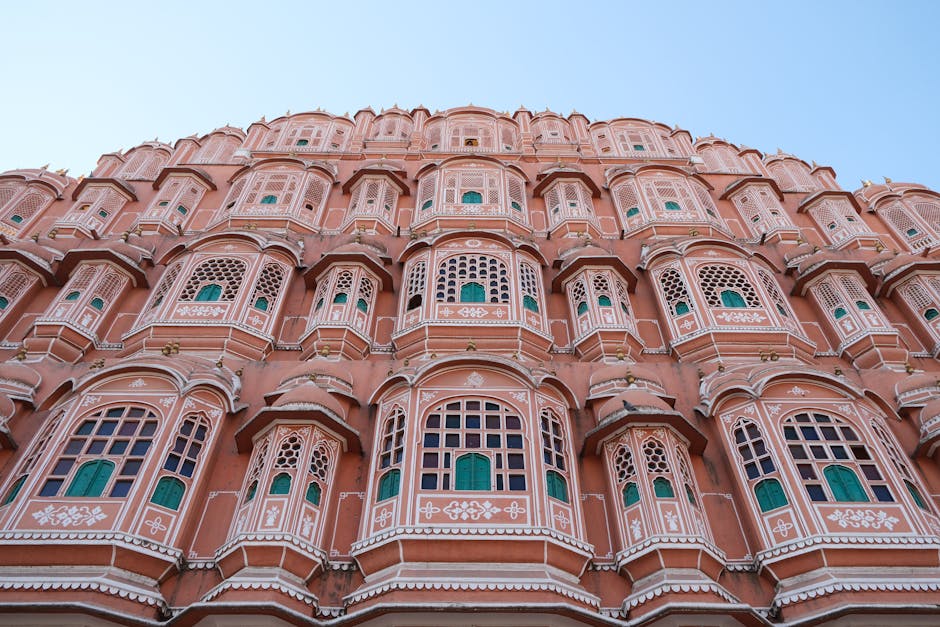 Easy
EasyJaipur, India
Explore Jaipur’s intellectual heart on this self-guided literary walk from historic libraries to iconic cultural hubs and legendary tea stalls.
 Easy
EasyNairobi, Kenya
Discover Nairobi's iconic skyline on this self-guided architecture walk through the CBD’s most famous modernist and Brutalist landmarks.
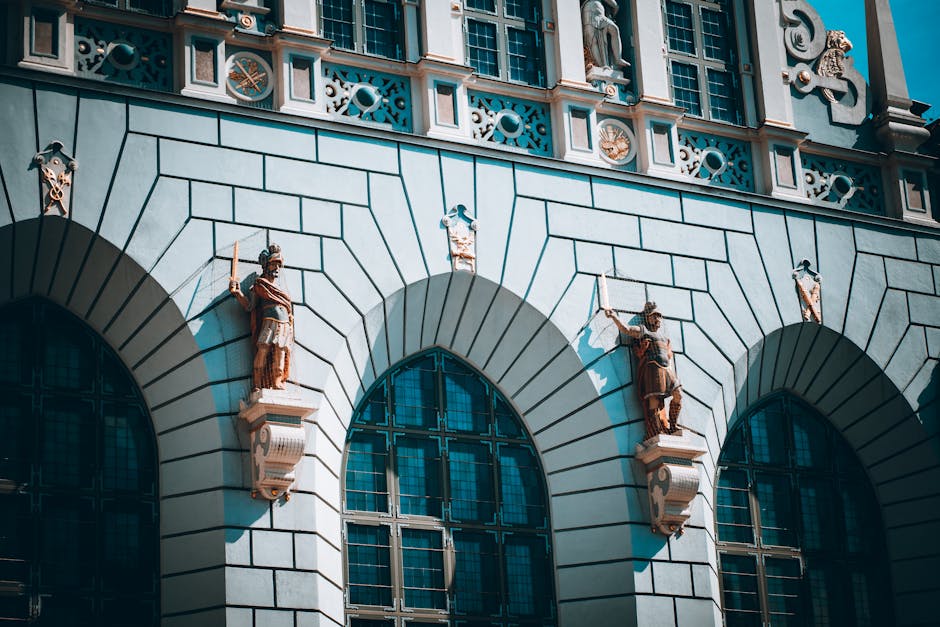 Easy
EasyGdansk, Poland
Discover the opulent Royal Way of Gdansk at your own pace. Explore Hanseatic history, gilded architecture, and the iconic Neptune's Fountain.
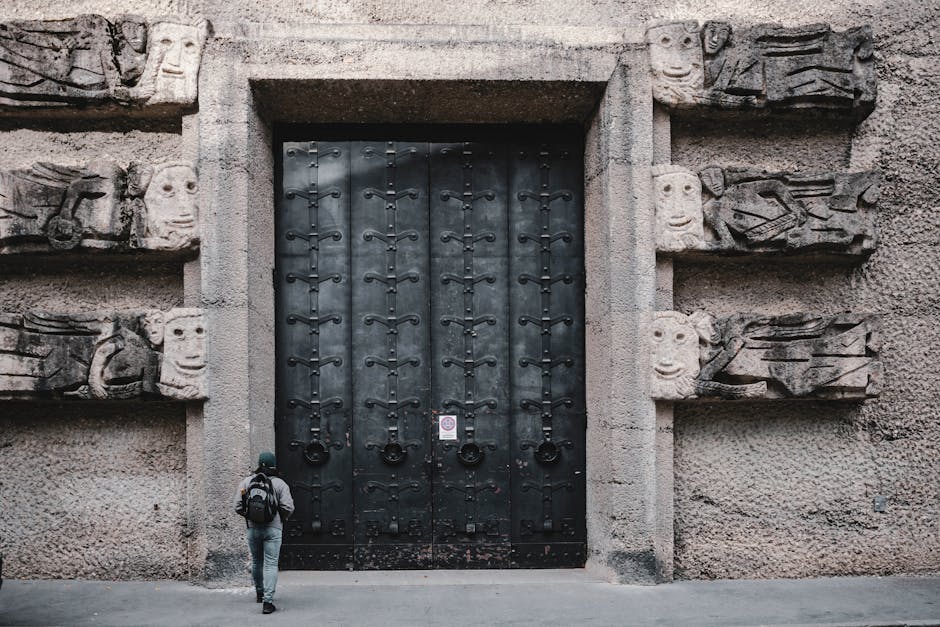 Easy
EasySalzburg, Austria
Discover the 'Rome of the North' on this self-guided walk through the Baroque squares and monumental legacy of Salzburg’s Prince-Archbishops.
 Easy
EasyWarsaw, Poland
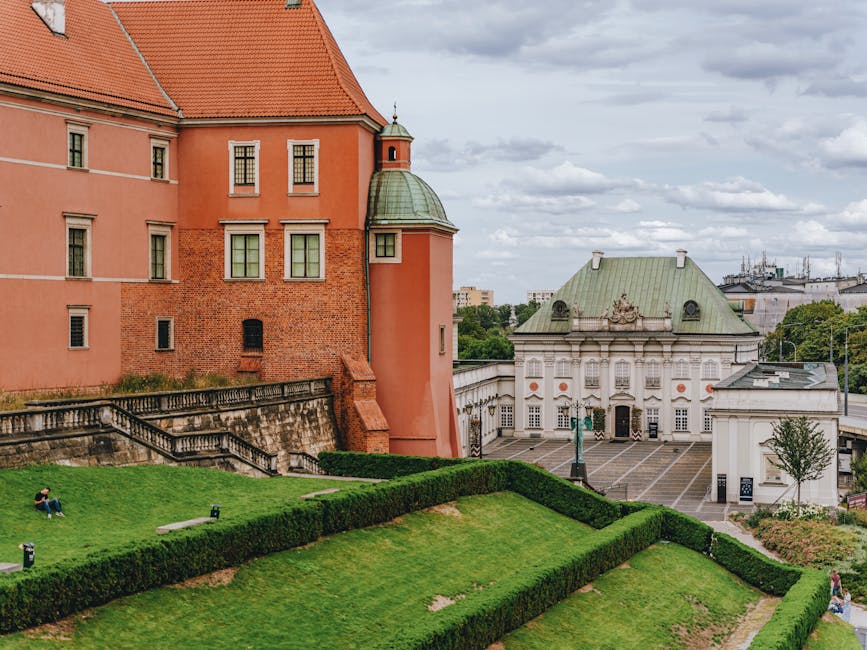
Explore the miracle of Warsaw's reconstructed Old Town on this self-guided walk through royal squares, medieval walls, and heroic monuments.
 Easy
EasyMumbai, India
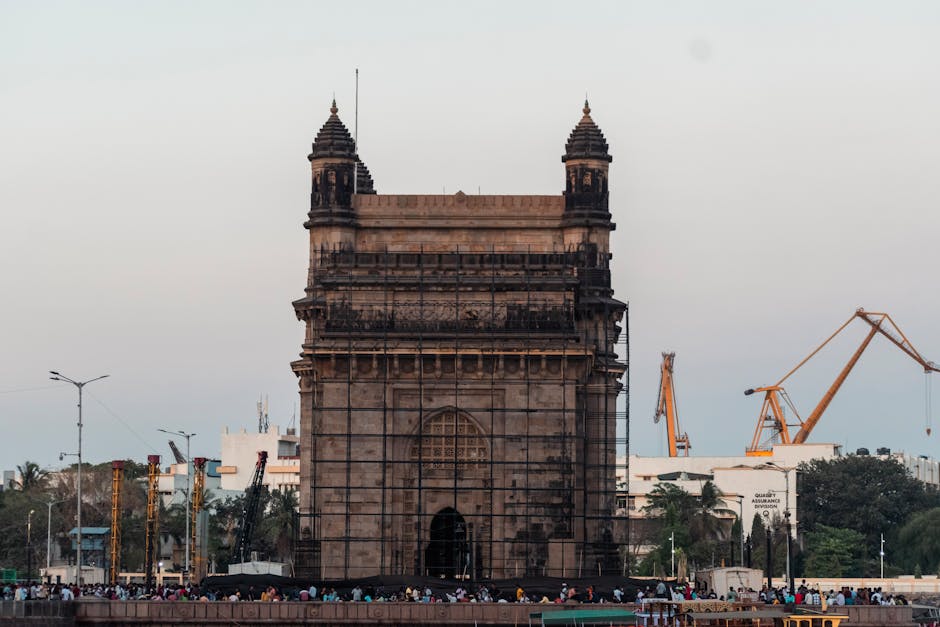
Explore Mumbai's stunning UNESCO Art Deco heritage on this self-guided walking route along the iconic Marine Drive promenade.
 Challenging
Mumbai, India
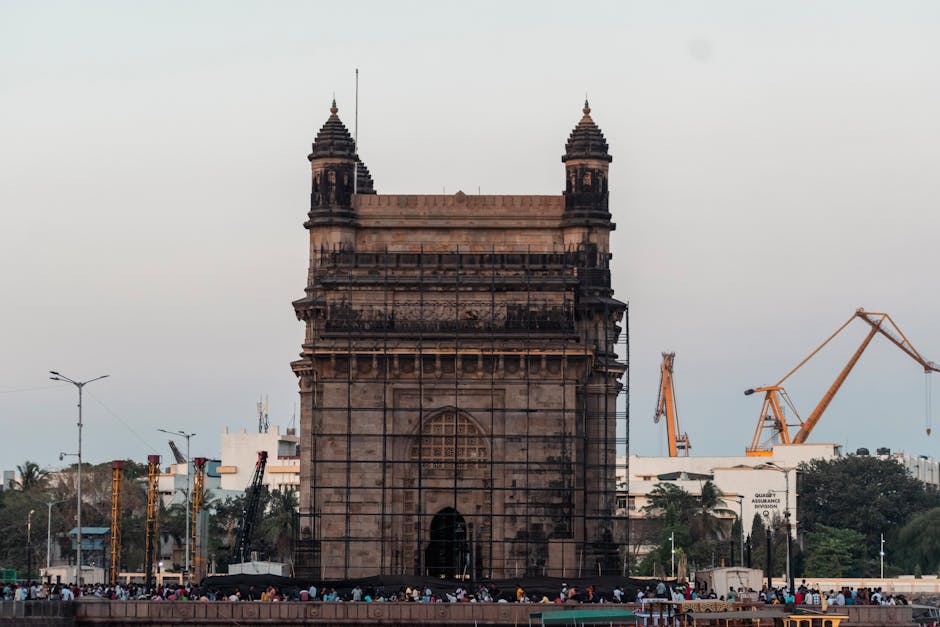
Experience the sensory explosion of Mumbai's historic markets on this challenging self-guided walk through Kalbadevi and Crawford Market.
 Easy
EasyMumbai, India
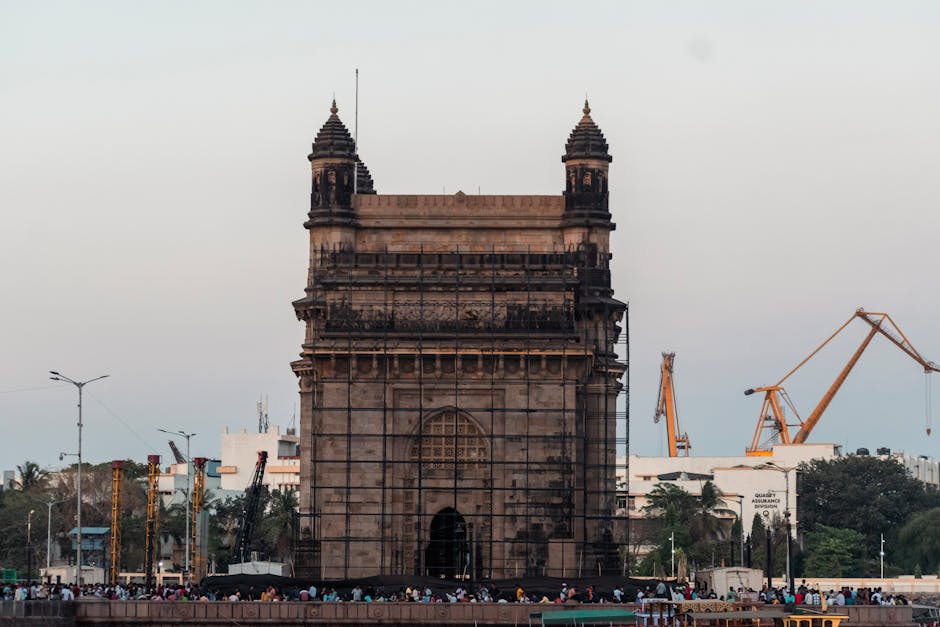
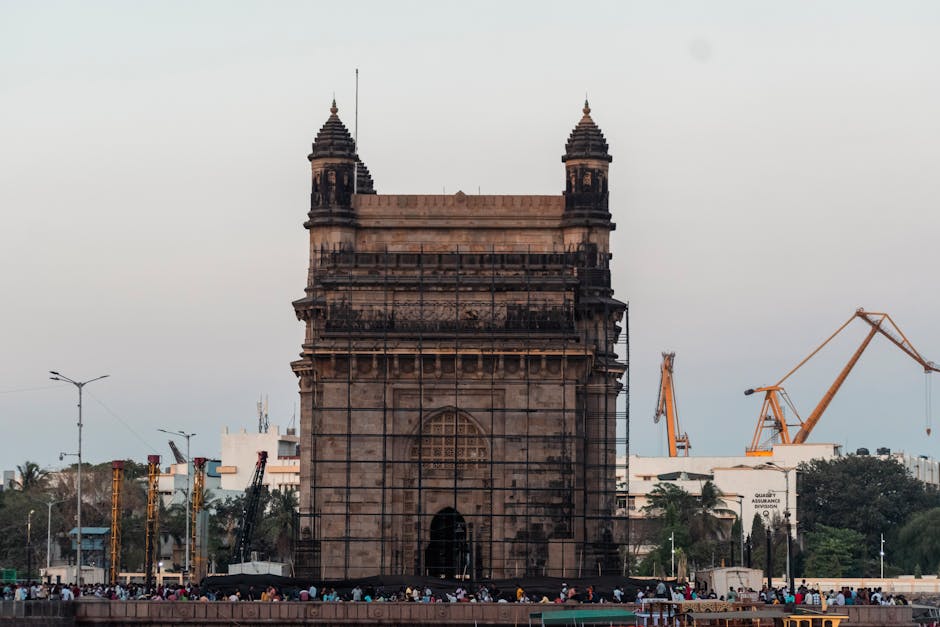
Explore Mumbai's colonial legacy on this self-guided walk through Colaba's iconic landmarks, from the Gateway of India to grand Art Deco palaces.
 Moderate
Mumbai, India
Explore the ancient fishing village of Worli Koliwada, historic forts, and stunning sea views on this self-guided cultural walking route.