Self-guided audio tour in Cartagena
Start Free on iPhone
Start free on iPhone to unlock this self-guided walking tour in Cartagena. Hear all the stories that make it amazing, walk at your own pace, and begin whenever you want.
Your Private Tour Guide
Cartagena de Indias, often called the 'Heroic City,' is defined by the massive stone walls that encircle its historic heart. This self-guided walk invites you to traverse the 'Corralito de Piedra' (the Little Stone Corral), exploring one of the most complete systems of military fortifications in South America. Built over two centuries to protect the Spanish Empire's most vital Caribbean port from pirates and rival navies, these walls are now a UNESCO World Heritage site that offers a unique perspective on the city's colonial past. As you explore independently, you will encounter the heavy coral-stone bastions that stood firm against the likes of Sir Francis Drake and Admiral Edward Vernon. The route begins at the iconic Clock Tower, the gateway to the city, and winds along the ramparts where the sea breeze provides a welcome relief from the tropical heat. This walking route is more than just a military history lesson; it is a journey through two distinct neighborhoods, Centro and San Diego. On one side, you will see the turquoise Caribbean Sea and the modern skyline of Bocagrande; on the other, a tapestry of terracotta roofs, bougainvillea-draped balconies, and narrow cobblestone streets. While many visitors seek a walking tour Cartagena experience, choosing a neighborhood stroll at your own pace allows you to linger at the viewpoints that catch your eye or pause for a refreshing 'limonada de coco' at a rampart cafe. From the oldest sections of the wall at Santo Domingo to the former dungeons of Las Bóvedas, this self-guided adventure highlights the genius of Italian and Spanish military engineering. You will learn about the 'scarp' and 'counter-scarp' designs and the strategic placement of cannons that made Cartagena nearly impregnable. Whether you are a photography enthusiast looking for the perfect golden hour shot or a history buff eager to touch the weathered stones of the 17th century, this route provides the ultimate introduction to the city's enduring spirit.
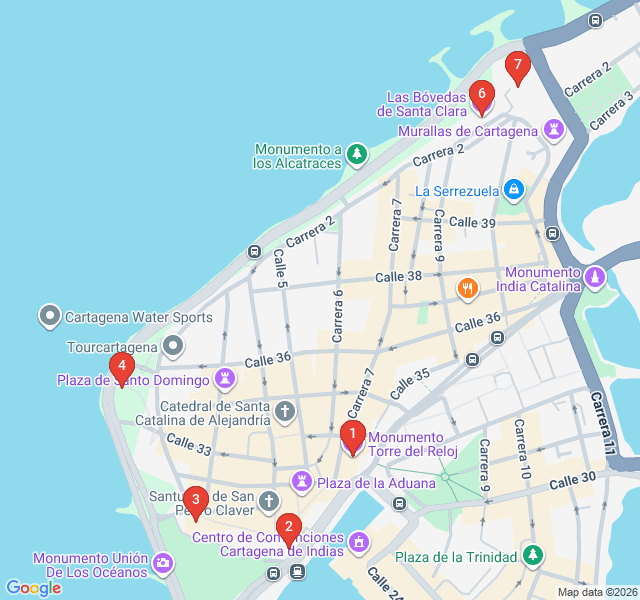
Numbers indicate the order of stops on the tour.
Welcome to the symbolic heart of Cartagena. This bright yellow gateway, known as the Clock Tower, was originally the only entrance to the walled city. Looking at the structure, you can see three arches; however, for centuries, only the central one existed, equipped with a drawbridge over a moat. The side arches were added in the 19th century to accommodate growing traffic. The tower itself has undergone several transformations, with the current neo-Gothic spire and clock being added in 1888. This spot was historically the 'Boca del Puente' (Mouth of the Bridge), connecting the walled city to the Getsemaní neighborhood. Imagine the chaos of merchants and soldiers passing through this very gate hundreds of years ago.
As you begin your walk along the wall, you reach the Bastion of San Ignacio. Built in the early 1600s, its primary purpose was to defend the nearby San Pedro Claver church and the Jesuit college from naval attacks. The Jesuits actually requested this bastion be built to protect their property, but they also used it as a private terrace for prayer and reflection. From this vantage point, you can look out over the Bay of Souls (Bahía de las Ánimas). Notice the thick, sloping walls made of coral stone and limestone, designed to deflect cannonballs rather than absorb the full force of their impact.
This expansive bastion is one of the most impressive along the southern flank. It was designed to provide a wide platform for heavy artillery to cover the entrance to the inner harbor. In the late 20th century, extensive restoration work uncovered the original floors and ramps used to move cannons. Today, it serves as a peaceful spot to watch the ships in the distance. The bastion is named after the Jesuit missionary Saint Francis Xavier. Take a moment to look back at the San Pedro Claver dome; this is one of the most photographed angles in the city, showcasing the blend of religious and military architecture.
You are now standing at the oldest part of the city's fortifications. Construction here began in 1602. This bastion was a critical defensive point because it faces the open sea, where pirate ships would often anchor. It is famously wide, allowing for multiple rows of cannons. Today, it is the most popular spot in Cartagena to watch the sunset. As the sun dips below the Caribbean horizon, the coral stones turn a warm orange hue. Look toward the modern skyscrapers of Bocagrande in the distance—the contrast between the 400-year-old walls and the glass towers of the new city is a hallmark of the Cartagena experience.
Continuing north along the curtain wall, you reach the Bulwark of La Merced. This section of the wall protected the San Diego neighborhood. It is named after the nearby Convent of La Merced. This area feels slightly more secluded and peaceful than the southern bastions. From here, you can see the Teatro Adolfo Mejía, one of the city's most beautiful buildings, with its distinctive yellow facade. The wall here is a great place to observe the daily life of the city residents below, from street vendors to students walking through the colorful plazas of San Diego.
These 23 massive vaults were built between 1792 and 1798 and represent the final major colonial construction project on the walls. Designed by engineer Antonio de Arévalo, they were originally intended as bomb-proof storage for munitions and provisions for the Spanish army. However, during the civil wars of the 19th century, they were used as dungeons; at high tide, prisoners would be knee-deep in seawater. Today, the atmosphere is far more cheerful. Each vault now houses an artisan shop selling traditional Colombian crafts, emeralds, and hammocks. It is the perfect place to step into the shade and admire the sturdy arches.
The final stop on this route is the Bastion of Santa Catalina, located at the northern tip of the walled city. This bastion, along with its twin, Santa Clara, formed the main defense against land-based attacks from the north. The walls here are particularly thick and high. If you explore the lower levels, you can find the 'garitas' or sentry boxes where Spanish soldiers once kept watch. From this point, you have a commanding view of the Caribbean and the Cabrero neighborhood. This area marks the end of the main fortifications and offers a quiet space to reflect on the massive engineering feat required to build this 11-kilometer shield around the city.
Start Free on iPhone
Explore “Bastions and Bulwarks: The Great Walls of Cartagena” with your very own Private Tour Guide with Zigway. Start free on iPhone, skip the large group and the fixed routes, and hear the city come alive as you go.
Your Private Tour Guide
Don't miss the good stuff
Explore Freely
 Moderate
Cartagena, Colombia
Follow the footsteps of Gabriel García Márquez on a self-guided walk through the magical realism of Cartagena’s historic walled city.
 Easy
EasyCartagena, Colombia
Taste the heart of Cartagena on this self-guided street food walk through the vibrant alleys of Getsemaní and the historic Walled City.
 Easy
EasyCartagena, Colombia
Discover the tranquil charm, colorful streets, and hidden architectural gems of Cartagena’s most bohemian neighborhood on this self-guided walk.
 Moderate
Cartagena, Colombia
Trace the footsteps of revolutionaries on this self-guided walk through Getsemaní and the historic walled city of Cartagena.
 Easy
EasyNairobi, Kenya
Discover Nairobi's iconic skyline on this self-guided architecture walk through the CBD’s most famous modernist and Brutalist landmarks.
 Easy
EasyWarsaw, Poland
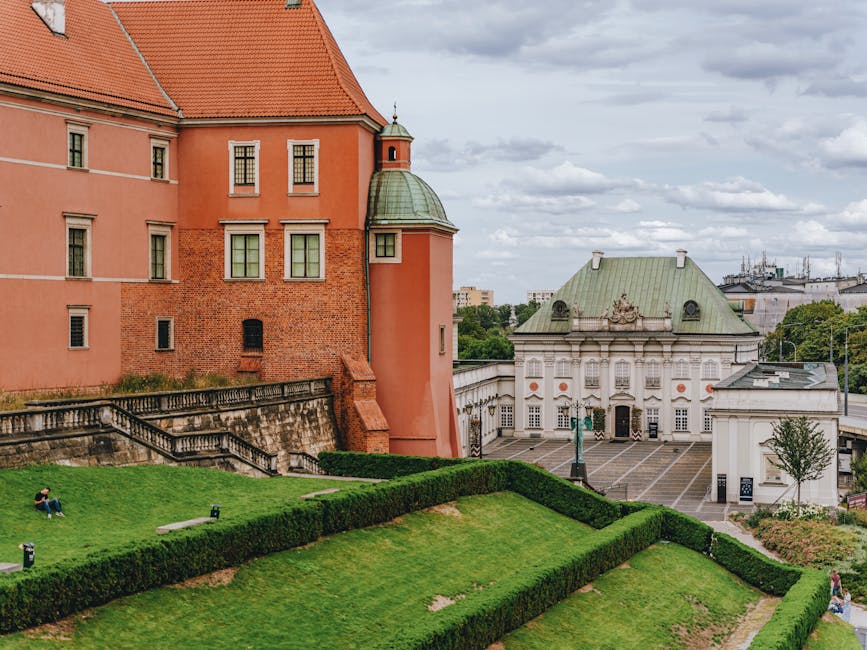
Explore the miracle of Warsaw's reconstructed Old Town on this self-guided walk through royal squares, medieval walls, and heroic monuments.
 Easy
EasyGothenburg, Sweden
Discover Gothenburg’s 17th-century Dutch foundations, historic canals, and military fortifications on this self-guided architectural walk.
 Easy
EasyNairobi, Kenya
Explore Nairobi's architectural evolution from colonial-era landmarks to iconic Brutalist skyscrapers on this historic self-guided walking route.
 Moderate
Bogota, Colombia
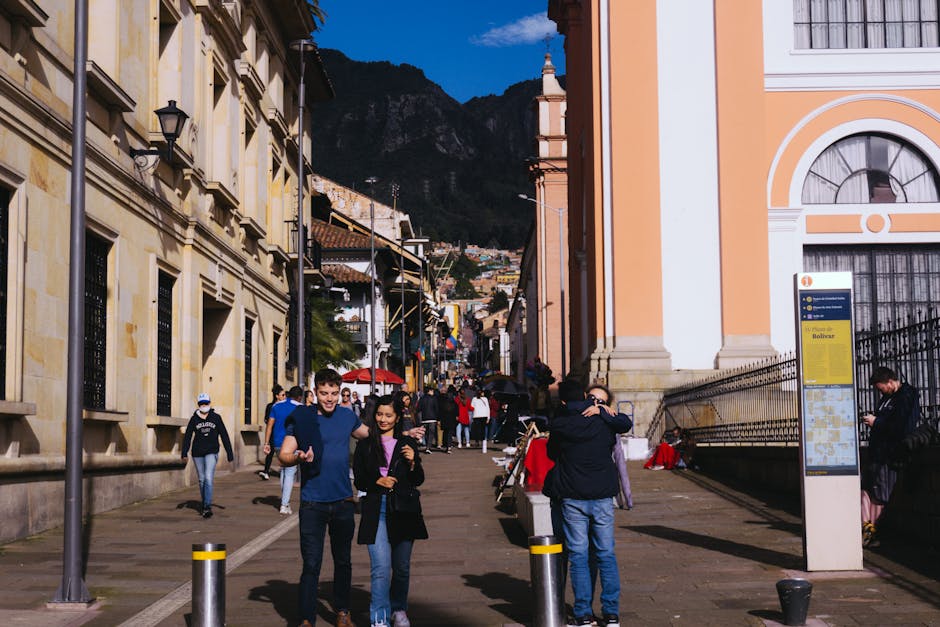
Explore the historic base of Monserrate, from Bolivar's colonial villa to the legendary founding spot of Bogota on this self-guided walking route.
 Easy
EasyBogota, Colombia
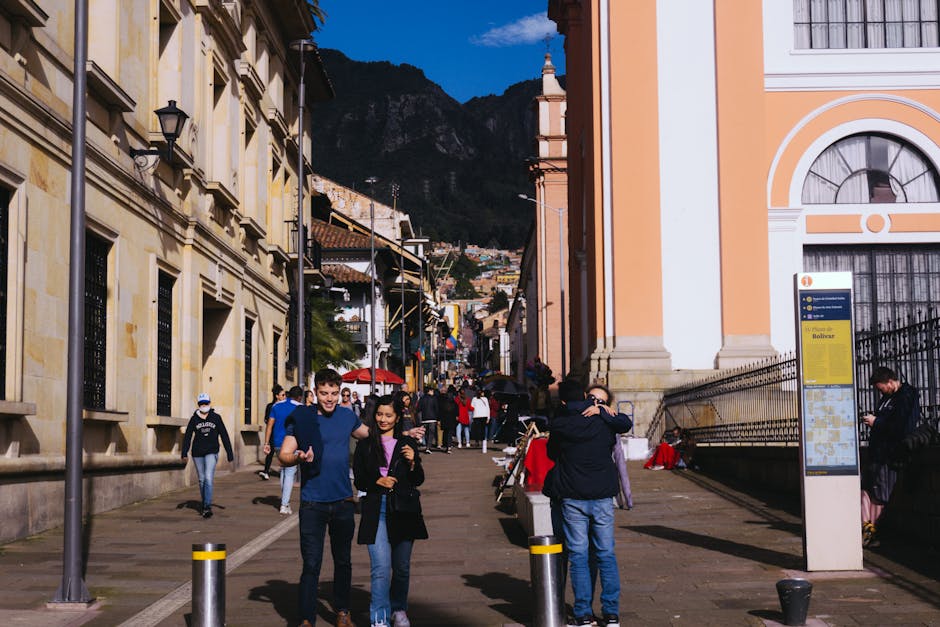
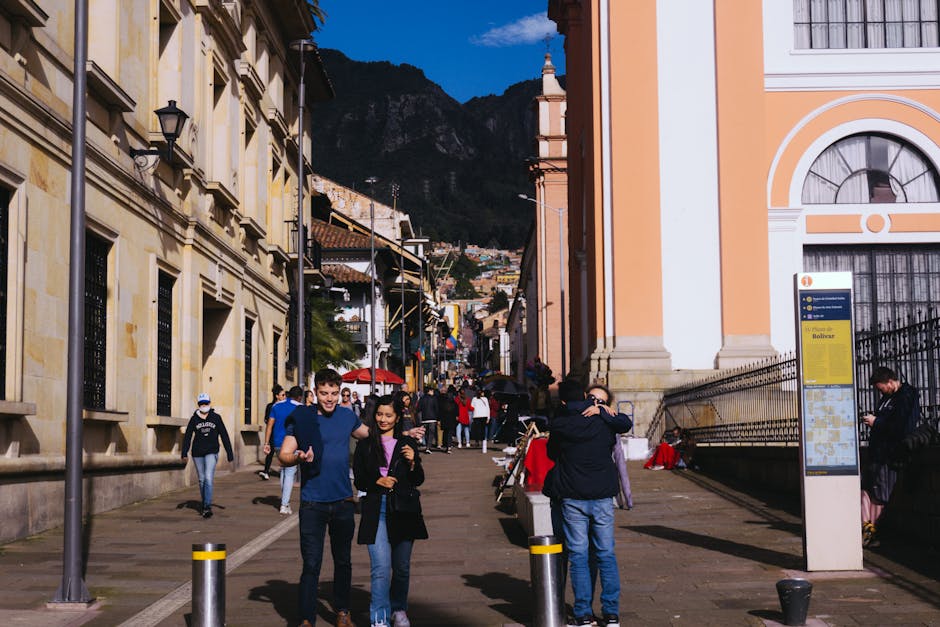
Discover the colonial charm and artistic soul of Bogota's oldest neighborhood on this self-guided audio walking route through La Candelaria.
 Easy
EasyBogota, Colombia
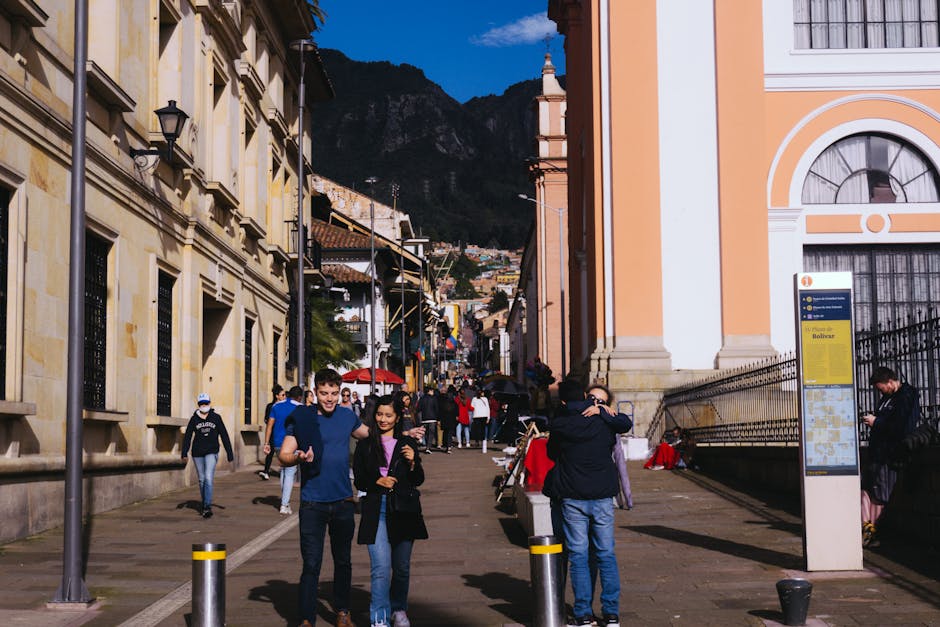
Discover the 'Green Fire' of Colombia on this self-guided walk through Bogota's legendary emerald district and informal street markets.
 Easy
EasyBogota, Colombia
Trace the footsteps of Jorge Eliécer Gaitán and explore the sites of the 1948 riots that reshaped modern Colombia on this self-guided audio walk.