Self-guided audio tour in Cartagena
Start Free on iPhone
Start free on iPhone to unlock this self-guided walking tour in Cartagena. Hear all the stories that make it amazing, walk at your own pace, and begin whenever you want.
Your Private Tour Guide
Step back into 1811 and experience the pulse of the 'Heroic City' on this self-guided walk through Cartagena’s most defiant neighborhoods. This journey takes you from the rebellious streets of Getsemaní to the grand administrative heart of the Walled City, tracing the exact path where local blacksmiths, artisans, and revolutionaries challenged the Spanish Empire. While many visitors see Cartagena as a postcard-perfect colonial relic, this walking route reveals the grit and glory of its liberation. You will begin in the vibrant Plaza de la Trinidad, the very spot where the cry for independence first echoed, led by the legendary Lanceros de Getsemaní. As you move through the route, the narrative shifts from the grassroots uprising in the outskirts to the formal halls of power within the city walls. Along this neighborhood stroll, you will encounter significant landmarks like the Camellón de los Mártires, a somber tribute to those who paid the ultimate price for freedom during the Spanish reconquest. You will also see the grand Palacio de la Proclamación, where the formal declaration of independence was signed, marking a turning point in South American history. This is more than a simple walking tour in Cartagena; it is an immersion into the identity of a city that refused to be silenced. Discover the stories of heroes like Pedro Romero, an Afro-descendant leader whose influence was pivotal in the movement. Whether you are a history buff or a curious traveler, this audio walk provides a deep context to the statues and squares you pass, allowing you to explore independently at your own pace. By the time you reach the Plaza de la Aduana, the oldest square in the city, you will have a profound understanding of why Cartagena is known as 'La Heroica.' Prepare for a moderate walk through sun-drenched plazas and shaded colonial corridors that bring the 19th-century struggle to life.
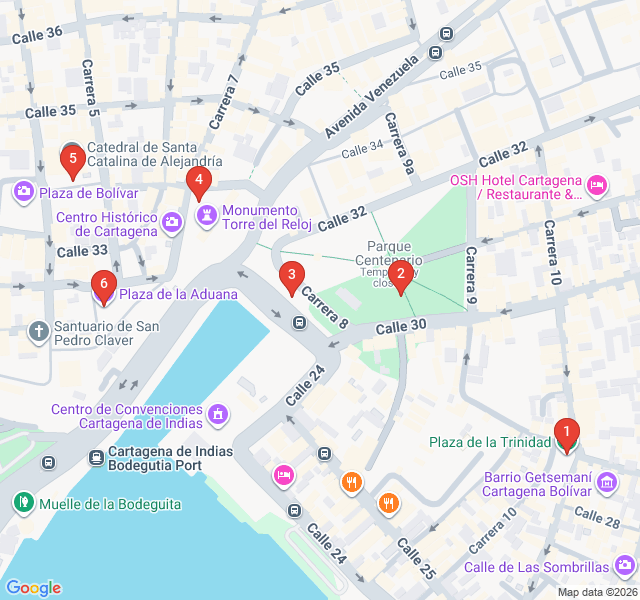
Numbers indicate the order of stops on the tour.
Welcome to the heart of Getsemaní. In 1811, this square was not just a place for social gathering; it was the epicenter of a revolution. It was here that Pedro Romero, a local blacksmith of African descent, organized the 'Lanceros de Getsemaní.' These were the common people—artisans and laborers—who marched on the city council to demand immediate independence from Spain. Today, the plaza maintains its community spirit, but as you look at the Church of the Holy Trinity, imagine the tension of that November morning. This neighborhood was the first to defy the crown, making it the soul of Cartagena's freedom. Notice the murals and the local life that still thrives here, representing the enduring spirit of the people who changed the course of Colombian history.
As you transition from the narrow streets of Getsemaní toward the old city, you enter Parque del Centenario. Established in 1911 to commemorate the first century of independence, this park serves as a bridge between the 'common' suburbs and the 'noble' city center. While the monuments here honor the heroes of 1811, the park is also a sanctuary for local wildlife. If you look closely into the canopy of the large trees, you might spot sloths, iguanas, or even small monkeys living right in the middle of the city. This space symbolizes the growth of Cartagena over a century of freedom, turning former defensive grounds into a public space for all citizens to enjoy.
This wide promenade is one of the most sacred spots in Cartagena. The white busts lining the path commemorate the 'Martyrs of Cartagena'—leaders of the independence movement who were executed by the Spanish General Pablo Morillo in 1816 during the 'Reconquista.' After the city had successfully declared independence, the Spanish returned with a massive fleet, besieging the city for 105 days. When the city finally fell due to starvation and disease, the Spanish executed the intellectual and political elite of the movement right here. It is a place of reflection, honoring the heavy price paid for the liberty that Cartagena eventually reclaimed in 1821. The statues look toward the bay, a reminder of the maritime history that defined this struggle.
Standing before the Torre del Reloj (Clock Tower) is the statue of Pedro de Heredia, the Spanish conqueror who founded Cartagena in 1533. This location is the main gateway to the inner walled city. It represents the colonial origins that the heroes of 1811 sought to transform. For centuries, this gate was the only land entrance to the city, protected by heavy portcullis and guards. The square behind the statue was once a bustling slave market, a dark chapter of the city's history that fueled the later desire for social and political liberation. As you pass through the arches of the Clock Tower, you are moving from the revolutionary suburbs into the former seat of colonial power.
This grand building was once the seat of the Government of the Province of Cartagena. On November 11, 1811, the city's board of directors met here under immense pressure from the crowds gathered outside in the Plaza de la Proclamación. Influenced by the uprising in Getsemaní, the leaders finally signed the Act of Absolute Independence, making Cartagena the first city in what is now Colombia to declare total separation from the Spanish Crown. The architecture you see today reflects the late 19th-century renovations, but the site remains the symbolic birthplace of the sovereign state of Cartagena. It stands as a testament to the moment when political theory met popular action.
Our route concludes in the Plaza de la Aduana, the largest and oldest square in the city. During the colonial era, this was the administrative heart of Cartagena, where the Customs House managed all the wealth entering and leaving the Spanish Empire. The square is dominated by a statue of Christopher Columbus, but for our story of independence, its significance lies in its role as the center of trade and communication. By seizing control of this square and its surrounding administrative buildings, the revolutionaries effectively dismantled the colonial machinery. Today, it serves as a grand open space that connects the city's history of commerce, conquest, and eventual self-governance.
Start Free on iPhone
Explore “The Independence Trail: Heroes of 1811” with your very own Private Tour Guide with Zigway. Start free on iPhone, skip the large group and the fixed routes, and hear the city come alive as you go.
Your Private Tour Guide
Don't miss the good stuff
Explore Freely
 Moderate
Cartagena, Colombia
Follow the footsteps of Gabriel García Márquez on a self-guided walk through the magical realism of Cartagena’s historic walled city.
 Easy
EasyCartagena, Colombia
Taste the heart of Cartagena on this self-guided street food walk through the vibrant alleys of Getsemaní and the historic Walled City.
 Easy
EasyCartagena, Colombia
Explore Cartagena's legendary defensive walls and historic bastions on this self-guided walk through colonial history and Caribbean views.
 Easy
EasyCartagena, Colombia
Discover the tranquil charm, colorful streets, and hidden architectural gems of Cartagena’s most bohemian neighborhood on this self-guided walk.
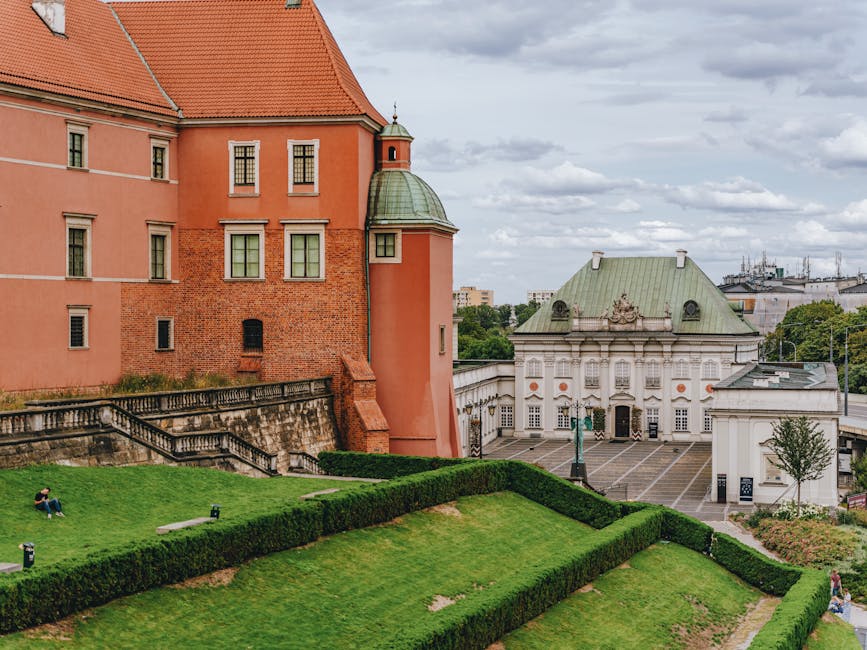 Moderate
Warsaw, Poland
Explore the resilient spirit of Warsaw's Muranów district on this self-guided walk through the history and landmarks of the former Jewish Ghetto.
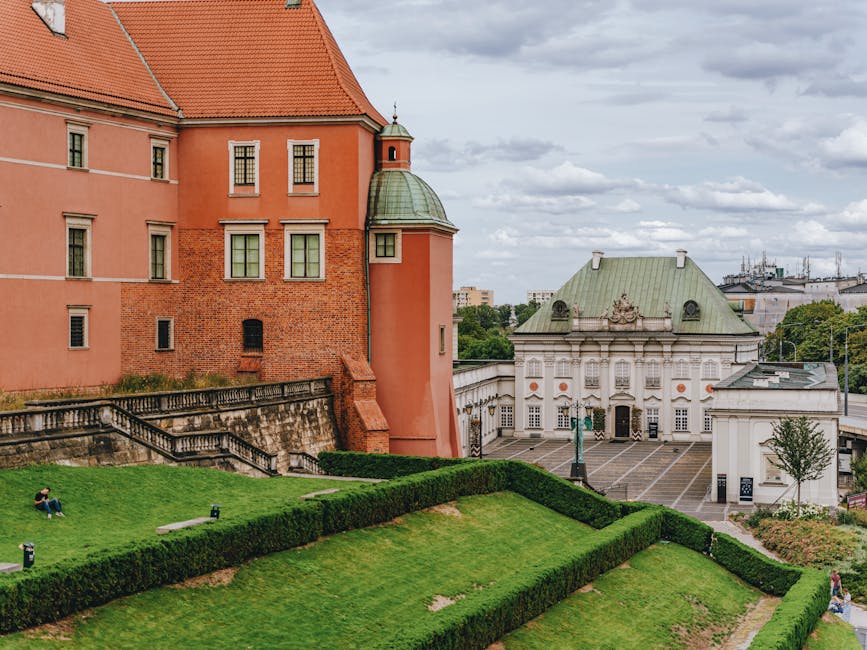 Moderate
Warsaw, Poland
A powerful self-guided walk through Warsaw's WWII history, tracking the 1944 Uprising from ruined skyscrapers to solemn memorials.
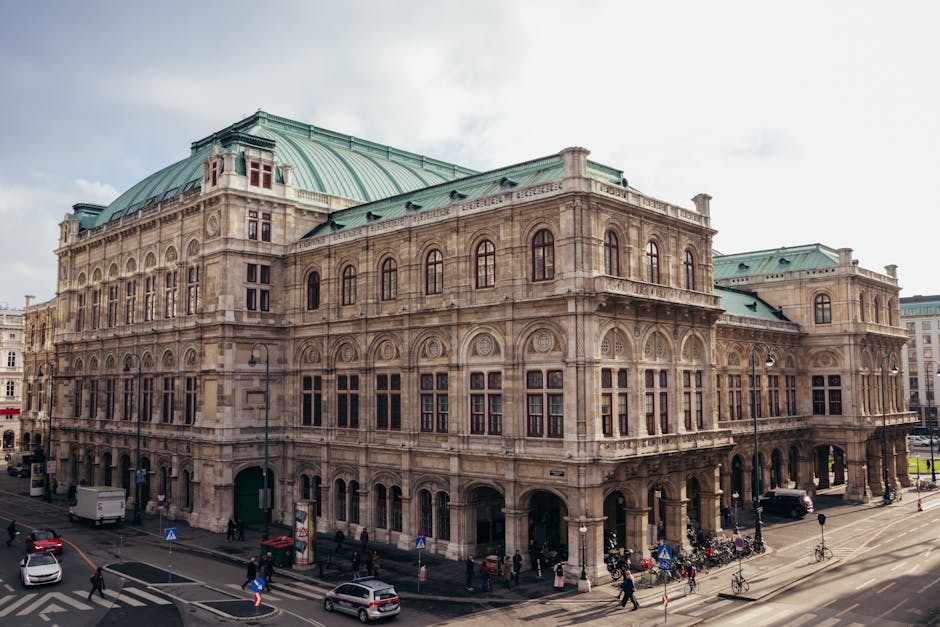 Moderate
Vienna, Austria
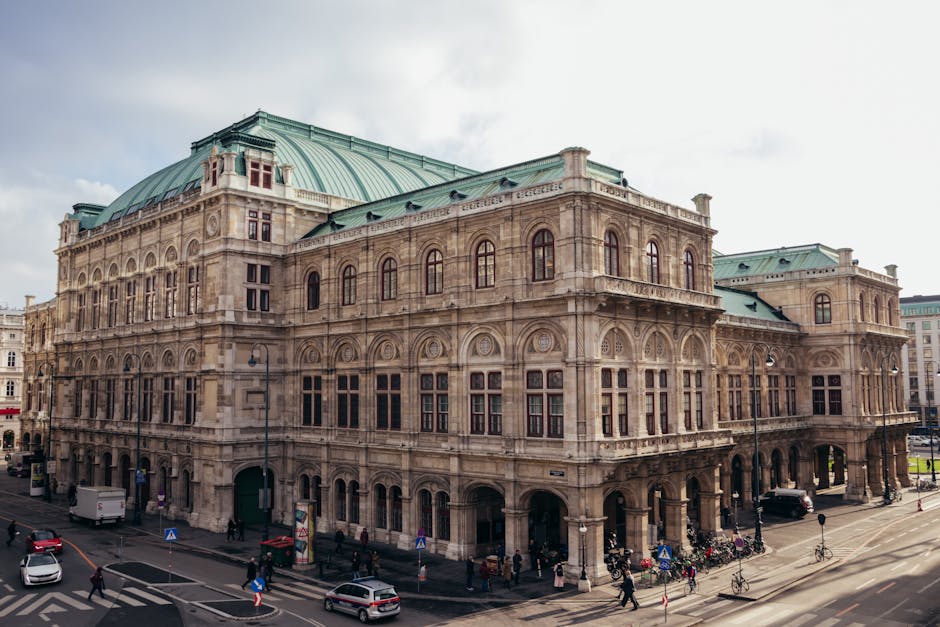
Follow the footsteps of Mozart and Strauss through Vienna’s historic center on this self-guided walk through the city's rich musical history.
 Moderate
Vienna, Austria
Discover the noir world of The Third Man and Cold War Vienna on this atmospheric self-guided audio walk through the historic Innere Stadt.
 Moderate
Bogota, Colombia
Explore the historic base of Monserrate, from Bolivar's colonial villa to the legendary founding spot of Bogota on this self-guided walking route.
 Easy
EasyBogota, Colombia
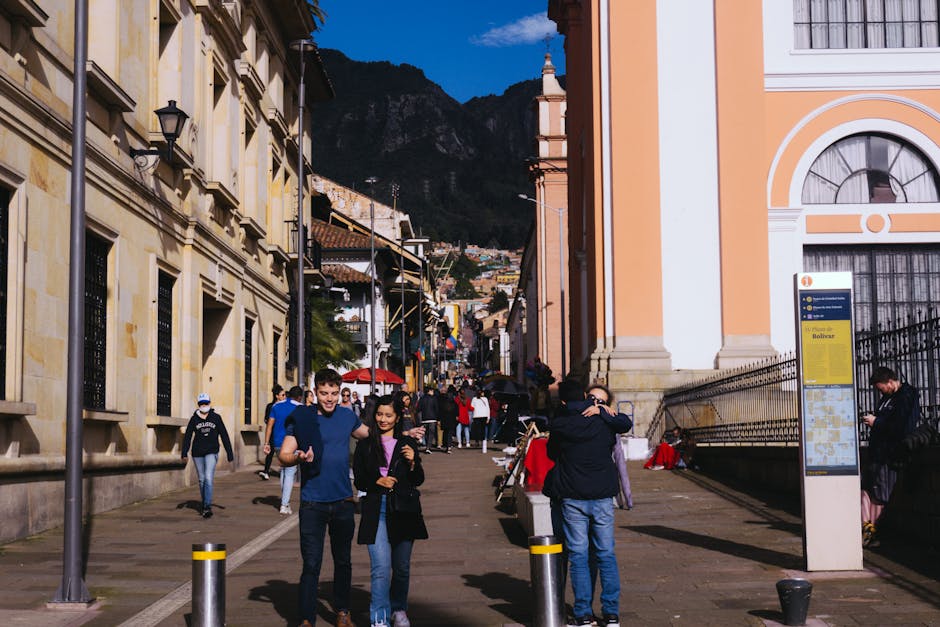
Discover the colonial charm and artistic soul of Bogota's oldest neighborhood on this self-guided audio walking route through La Candelaria.
 Easy
EasyBogota, Colombia
Discover the 'Green Fire' of Colombia on this self-guided walk through Bogota's legendary emerald district and informal street markets.
 Easy
EasyBogota, Colombia
Trace the footsteps of Jorge Eliécer Gaitán and explore the sites of the 1948 riots that reshaped modern Colombia on this self-guided audio walk.