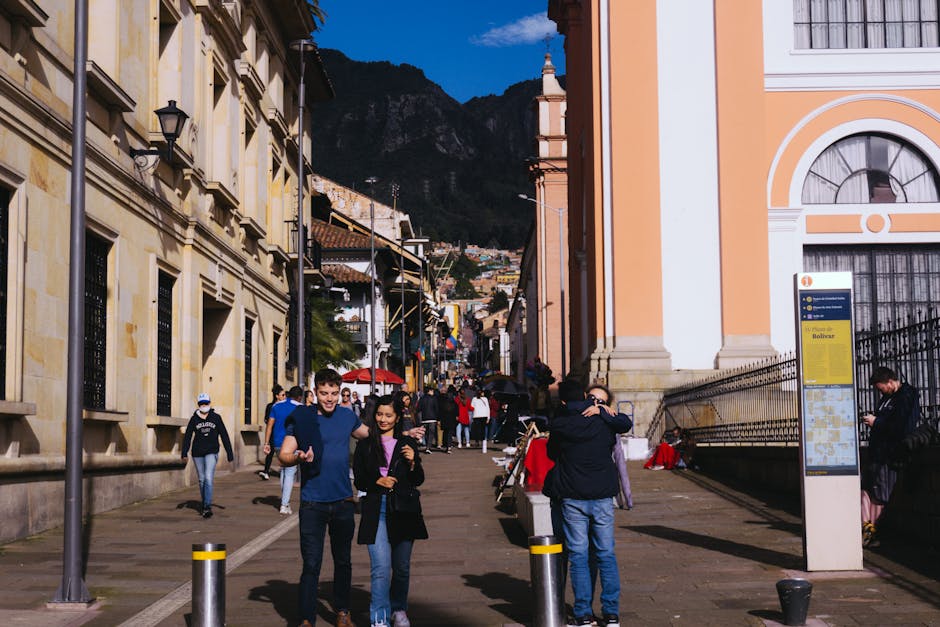
Self-guided audio tour in Bogota
Start Free on iPhone
Start free on iPhone to unlock this self-guided walking tour in Bogota. Hear all the stories that make it amazing, walk at your own pace, and begin whenever you want.
Your Private Tour Guide
Rising sharply above the skyline of Bogota, the emerald peaks of Monserrate have served as a spiritual and geographical compass for centuries. This neighborhood stroll through the Santa Fe district invites you to explore the threshold where the wild Andean slopes meet the city's colonial heart. Beginning at the base of the city's most famous mountain, this walking route traces the history of Colombia from its indigenous roots to its revolutionary triumphs. You will traverse the very ground where Simon Bolivar sought refuge and where the first stones of the city were allegedly laid in 1538. As you descend from the high-altitude air of the Monserrate cable car station, the path leads you through a landscape of botanical beauty and academic prestige. You will encounter the Quinta de Bolívar, a colonial villa that offers a window into the private life of the Liberator, surrounded by lush gardens that feel worlds away from the urban bustle. This self-guided walk also navigates the campus of the University of the Andes, where industrial history has been repurposed into modern learning spaces, showcasing Bogota's ability to reinvent itself while honoring its heritage. Further along, the route transitions into the spiritual and literary, passing through the historic Las Aguas neighborhood. Here, the sound of the San Francisco River once dominated the atmosphere, and 17th-century churches still stand as silent witnesses to the city's evolution. The journey concludes in the bohemian atmosphere of the Chorro de Quevedo, the legendary site of Bogota’s foundation. This walking tour Bogota experience is perfect for those who want to understand the city's soul without a fixed schedule. Whether you are interested in the colonial architecture of the Parish of Our Lady of the Waters or the literary legacy of Gabriel García Márquez at Journalists' Park, this route provides a comprehensive overview of the capital's cultural bedrock. It is a moderate walking tour Bogota offers, blending natural scenery with deep historical narratives that are best explored independently at your own pace.
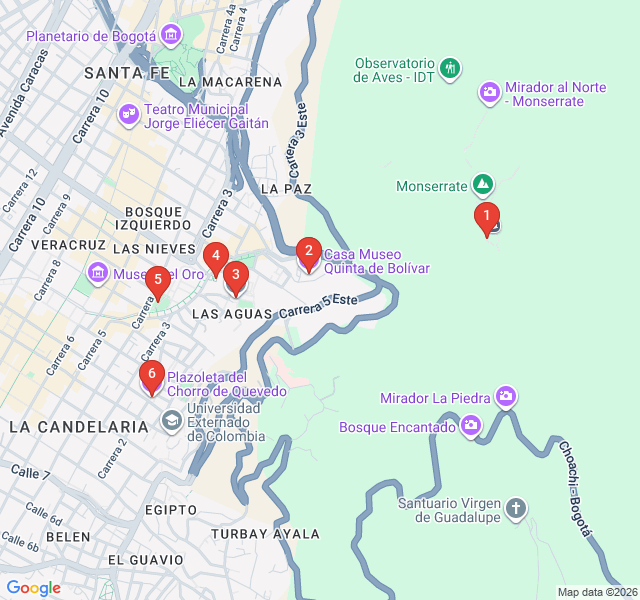
Numbers indicate the order of stops on the tour.
You are standing at the gateway to Bogota's most sacred peak. Monserrate has been a place of pilgrimage since the 1600s, but it is also a feat of engineering. The funicular, which climbs a nearly 45-degree incline, opened in 1929, while the aerial cable car followed in 1955. While many visitors head straight to the summit, take a moment to appreciate the thin air and the lush vegetation of the high Andean forest that begins right here. The mountain is named after the Montserrat monastery in Spain, reflecting the deep religious roots that define the city's skyline.
This elegant colonial villa was once the country retreat of Simon Bolivar, the man who led the liberation of much of South America from Spanish rule. Gifted to him in 1820 after the Battle of Boyaca, Bolivar spent some of his most peaceful moments here amidst the gardens. The house has survived various transformations—at times a brewery, a tannery, and even a girls' school—before becoming a museum. Notice the botanical gardens surrounding the house; they contain species that Bolivar himself might have walked past while contemplating the future of the new republic.
As you walk through this area, you are entering one of Latin America's top-ranked academic institutions. The University of the Andes, founded in 1948, is unique because its campus is integrated into the fabric of the city. Look closely at some of the older brick buildings; many of these were originally part of the Fenicia brewery and textile factories. This area represents Bogota’s transition into the industrial age. The university’s presence has transformed this corner of Santa Fe into a vibrant hub of intellectual life, blending colonial history with cutting-edge modern architecture.
This church and its adjacent convent date back to the mid-1600s. The name 'Las Aguas' (The Waters) refers to the San Francisco River that once flowed openly nearby, providing the lifeblood for the colonial city. This was a place where artisans and laborers lived, far from the aristocratic mansions of the central plaza. The architecture is a classic example of the Spanish colonial style, with thick whitewashed walls and a simple but elegant bell tower. It serves as a quiet sanctuary that feels unchanged by the centuries of urban development surrounding it.
This park is a tribute to the power of the written word. Named after Colombia's Nobel laureate, Gabriel García Márquez, it has long been a gathering spot for writers, intellectuals, and journalists. In the center stands the 'Templete del Libertador,' a small neoclassical dome inspired by the Temple of Vesta in Rome. It was built in 1883 to commemorate the centenary of Bolivar's birth. Today, the park is a bridge between the historic Candelaria district and the modern city center, often filled with students and street performers.
Your journey ends at what many believe to be the birthplace of Bogota. Legend has it that in 1538, Gonzalo Jiménez de Quesada established a military garrison here with twelve huts and a small chapel. While historians debate the exact location of the city's founding, the Chorro de Quevedo remains the spiritual heart of the bohemian Candelaria. Today, it is famous for its vibrant street art, its youthful energy, and 'chicha'—a fermented corn drink that dates back to the Muisca indigenous people. It is the perfect place to sit, reflect, and soak in the layers of history.
Start Free on iPhone
Explore “Sacred Slopes: The Foot of Monserrate” with your very own Private Tour Guide with Zigway. Start free on iPhone, skip the large group and the fixed routes, and hear the city come alive as you go.
Your Private Tour Guide
Don't miss the good stuff
Explore Freely
 Easy
EasyBogota, Colombia
Discover the colonial charm and artistic soul of Bogota's oldest neighborhood on this self-guided audio walking route through La Candelaria.
 Easy
EasyBogota, Colombia
Discover the 'Green Fire' of Colombia on this self-guided walk through Bogota's legendary emerald district and informal street markets.
 Easy
EasyBogota, Colombia
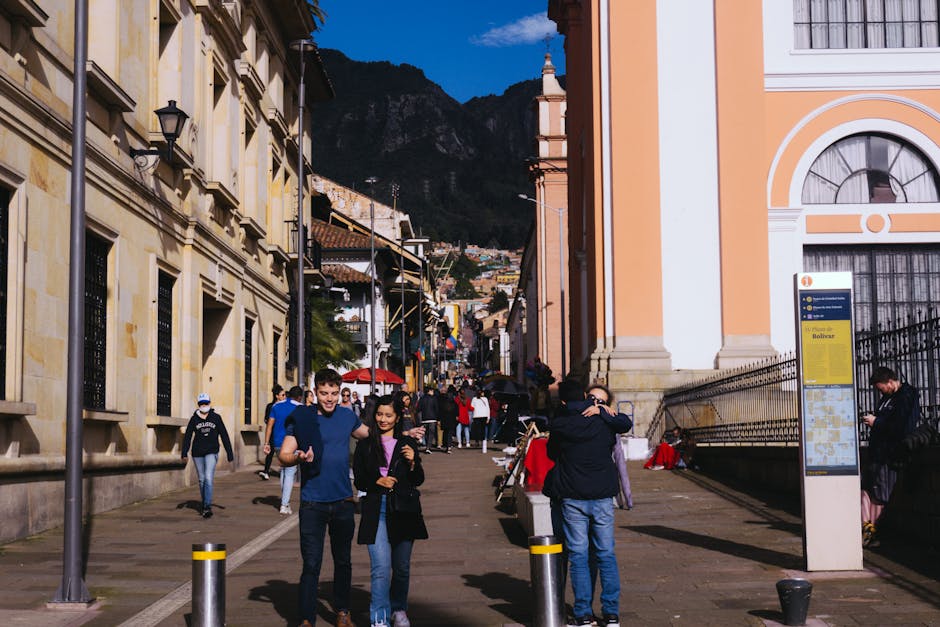
Trace the footsteps of Jorge Eliécer Gaitán and explore the sites of the 1948 riots that reshaped modern Colombia on this self-guided audio walk.
 Easy
EasyBogota, Colombia
Explore Bogota’s specialty coffee revolution on this self-guided walk through the stylish neighborhoods of Quinta Camacho and Chapinero.
 Easy
EasyNairobi, Kenya
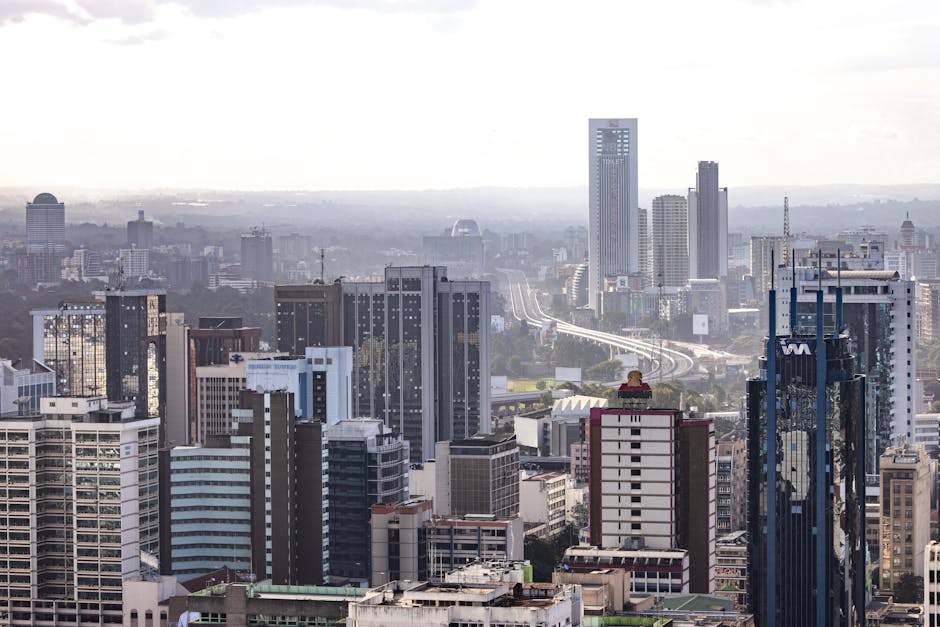
Explore the history of Kenya’s independence through the statues, monuments, and parks that define Nairobi’s political heart on this self-guided walk.
 Easy
EasyNairobi, Kenya
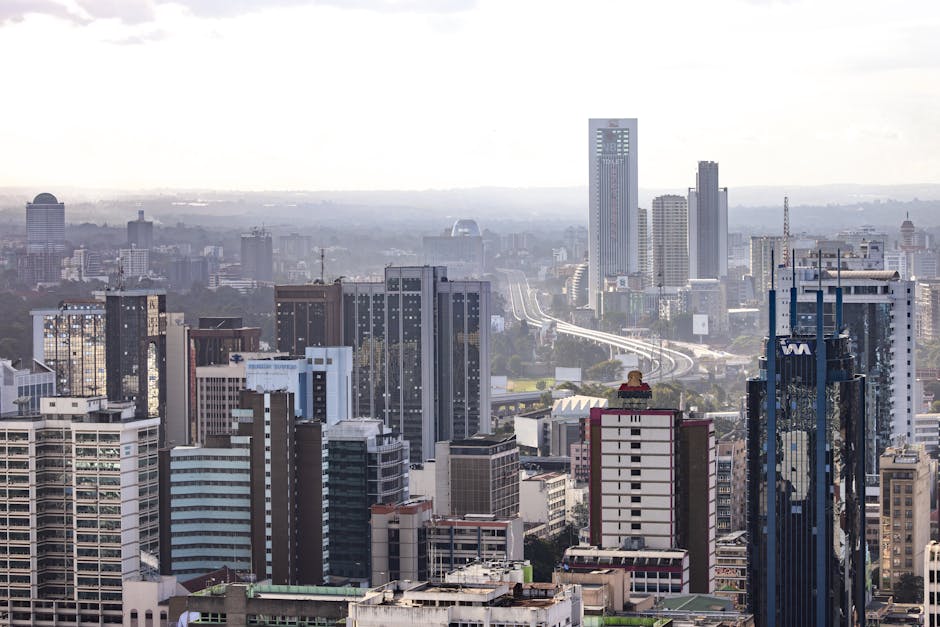
Discover Nairobi's iconic skyline on this self-guided architecture walk through the CBD’s most famous modernist and Brutalist landmarks.
 Moderate
Vienna, Austria
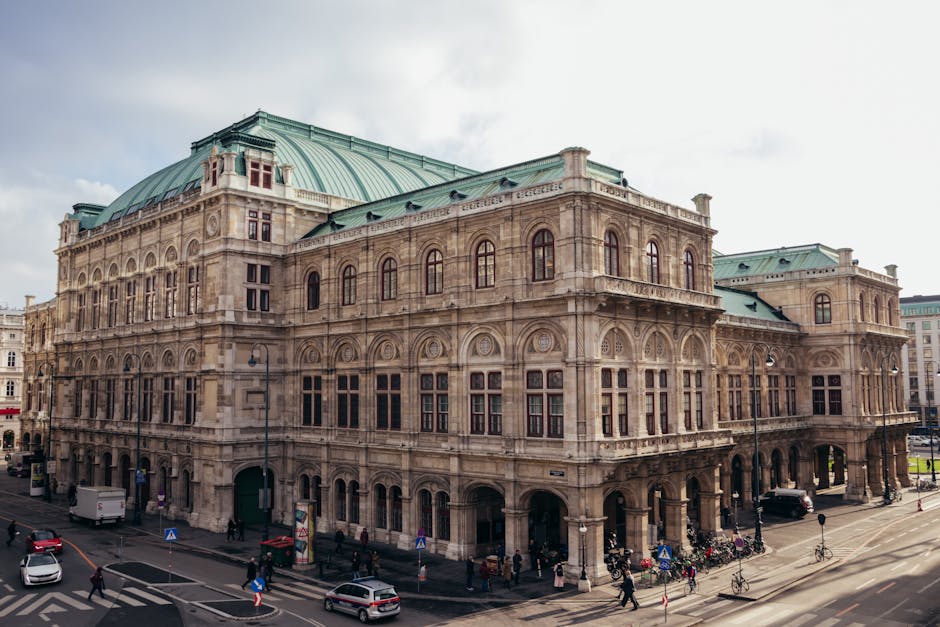
Discover the noir world of The Third Man and Cold War Vienna on this atmospheric self-guided audio walk through the historic Innere Stadt.
 Moderate
Krakow, Poland
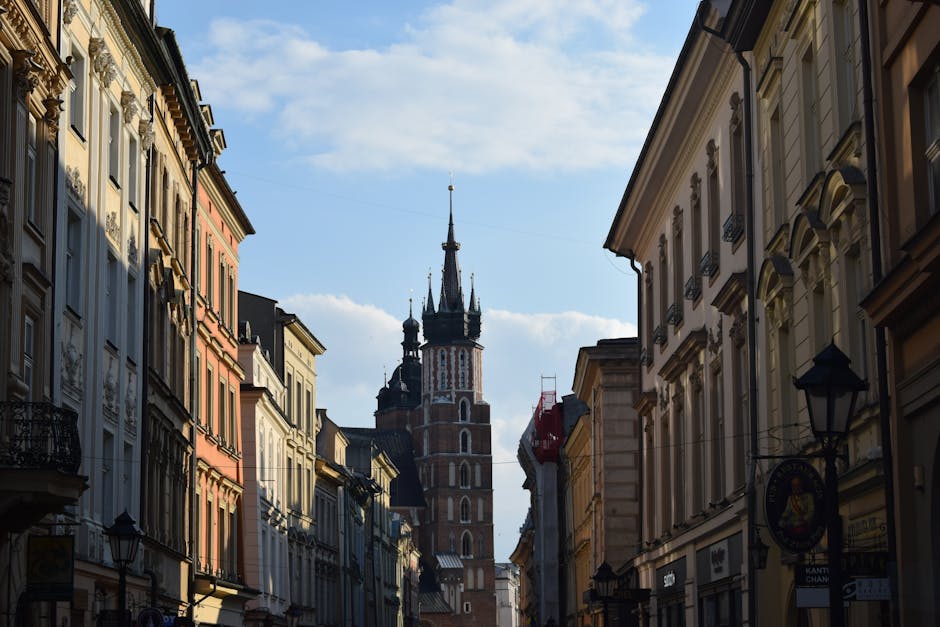
Discover Krakow’s stunning skyline and riverside charm on this self-guided audio walk through scenic viewpoints and historic mounds.
 Moderate
Cartagena, Colombia
Follow the footsteps of Gabriel García Márquez on a self-guided walk through the magical realism of Cartagena’s historic walled city.
 Easy
EasyCartagena, Colombia
Taste the heart of Cartagena on this self-guided street food walk through the vibrant alleys of Getsemaní and the historic Walled City.
 Easy
EasyCartagena, Colombia
Explore Cartagena's legendary defensive walls and historic bastions on this self-guided walk through colonial history and Caribbean views.
 Easy
EasyCartagena, Colombia
Discover the tranquil charm, colorful streets, and hidden architectural gems of Cartagena’s most bohemian neighborhood on this self-guided walk.