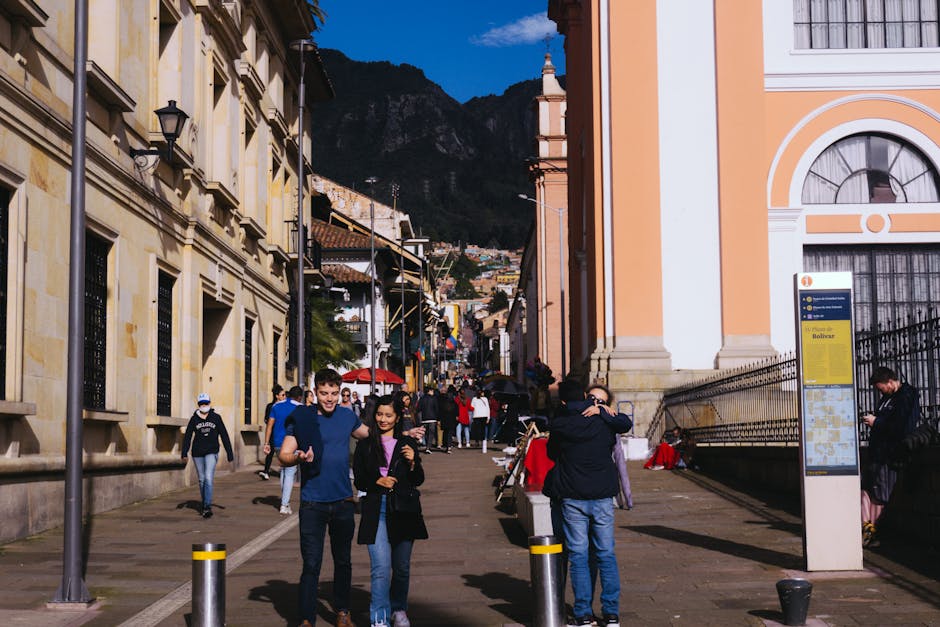
Self-guided audio tour in Bogota
Start Free on iPhone
Start free on iPhone to unlock this self-guided walking tour in Bogota. Hear all the stories that make it amazing, walk at your own pace, and begin whenever you want.
Your Private Tour Guide
On April 9, 1948, three gunshots changed the course of Colombian history forever. This self-guided walk takes you through the heart of Bogota to trace the events of 'El Bogotazo,' a massive riot triggered by the assassination of the charismatic Liberal leader Jorge Eliécer Gaitán. As you follow this walking route, you will transition from the personal life of the 'Tribune of the People' at his former residence to the chaotic streets of the city center where the fires once reached the sky. This history-heavy journey explores how a single afternoon of violence reshaped the urban landscape and political destiny of a nation. Your independent exploration begins at the Jorge Eliécer Gaitán Museum, the very house where the leader lived. From there, the route moves toward the historic center, passing through areas that witnessed the immediate, visceral reaction of a grieving population. You will visit the exact corner where Gaitán was struck down and stand in the Plaza de Bolívar, the epicenter of the subsequent uprising that left much of the city in ruins. Along the way, you’ll see how the architecture of Bogota was permanently altered, as colonial buildings were replaced by the modern structures that rose from the ashes of the 1948 conflagration. This walking tour Bogota experience is designed for history buffs and those curious about the deep-seated political tensions that have defined modern Colombia. By walking these streets independently, you can take the time to reflect on the symbols of power and the scars of the past. Beyond the tragedy, this neighborhood stroll highlights the resilience of Bogota, showing how the city rebuilt itself while never forgetting the day it burned. Whether you are interested in the political intrigue of the 1940s or the architectural evolution of the capital, this route offers a profound look at the soul of the city.
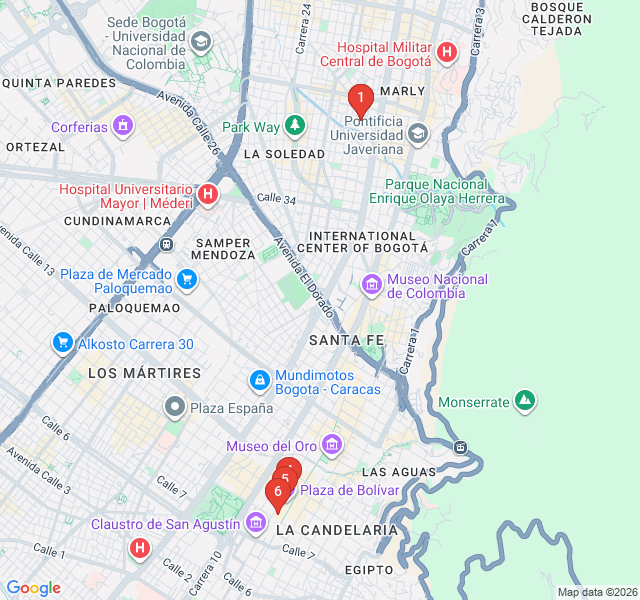
Numbers indicate the order of stops on the tour.
Welcome to the former home of Jorge Eliécer Gaitán, a man whose voice once commanded the hopes of millions. This house, now a museum, remains exactly as it was on the morning of April 9, 1948. Gaitán was a populist lawyer who championed the cause of the poor and challenged the ruling elite. As you explore the rooms, notice his personal library and the simple furniture, reflecting his connection to the common people. Most significantly, Gaitán is buried here in the garden, as his family refused a state funeral in protest against the government they blamed for his death. This site serves as the emotional starting point for our walk, representing the life that was cut short and the spark that ignited the city.
As we move toward the city center, we pass through the transition zone between the residential Teusaquillo neighborhood and the commercial heart of Bogota. During the hours following the assassination, these streets became a corridor for angry crowds rushing toward the Plaza de Bolívar. The news of Gaitán’s death spread like wildfire via radio—a relatively new technology at the time—inciting a level of mass mobilization never before seen in Colombia. From this vantage point, imagine the sound of sirens and the smell of smoke as the first buildings began to burn. The 'Bogotazo' wasn't just a riot; it was a spontaneous explosion of class frustration and political grief that flowed through these very avenues.
We are standing at one of the most significant corners in Colombian history. On this spot, at approximately 1:05 PM on April 9, 1948, Juan Roa Sierra fired three shots at Jorge Eliécer Gaitán as he walked out of his office. The leader collapsed and died shortly after at a nearby hospital. The assassin was immediately cornered by a mob, beaten to death, and his body was dragged all the way to the Presidential Palace. The Edificio Agustín Nieto, where Gaitán’s office was located, was later destroyed by the fires, but the memory of the event is etched into the pavement of Carrera Séptima. This intersection marks the moment Bogota’s peace was shattered, leading to a decade of civil war known as 'La Violencia.'
The building you see today is a modern reconstruction, but its location is steeped in layers of conflict. During the Bogotazo, the original courthouse in this vicinity was attacked and set ablaze, leading to the loss of countless legal records. Decades later, in 1985, this site was again the scene of a horrific siege by M-19 guerrillas, which once more ended in fire and destruction. The Palace of Justice stands as a somber reminder of the recurring cycle of political violence in Colombia. It represents the struggle for law and order in a nation that has spent much of the last century grappling with the aftermath of that fateful day in 1948 when the institutional heart of the city was first challenged.
This is the heart of Colombia. Every major political shift in the country's history has played out in this square. On the day of the Bogotazo, the Plaza de Bolívar was a scene of absolute carnage. Streetcars were overturned and burned, and the air was thick with the smoke of the surrounding government buildings. Snipers fired from rooftops as the army struggled to maintain control. Today, the plaza is a place for peaceful protest and pigeon-feeding, but if you look closely at the older facades surrounding the square, you are seeing the survivors of a fire that consumed over 140 buildings in the downtown area. It is the silent witness to the death of the 'Old Bogota' and the birth of the modern republic.
Our walk concludes at the National Capitol, the seat of the Colombian Congress. Interestingly, on the day Gaitán was killed, the Ninth International Conference of American States was being held in Bogota, which would eventually lead to the creation of the Organization of American States (OAS). The international delegates watched in horror from nearby buildings as the city descended into anarchy. The Capitol itself was a primary target for the rioters, who viewed it as the ultimate symbol of the oligarchy Gaitán had fought against. As you look at its neoclassical columns, consider how the events of 1948 forced the government to confront the deep social inequalities of the country—a process that continues to this day.
Start Free on iPhone
Explore “El Bogotazo: The Day the City Burned” with your very own Private Tour Guide with Zigway. Start free on iPhone, skip the large group and the fixed routes, and hear the city come alive as you go.
Your Private Tour Guide
Don't miss the good stuff
Explore Freely
 Moderate
Bogota, Colombia
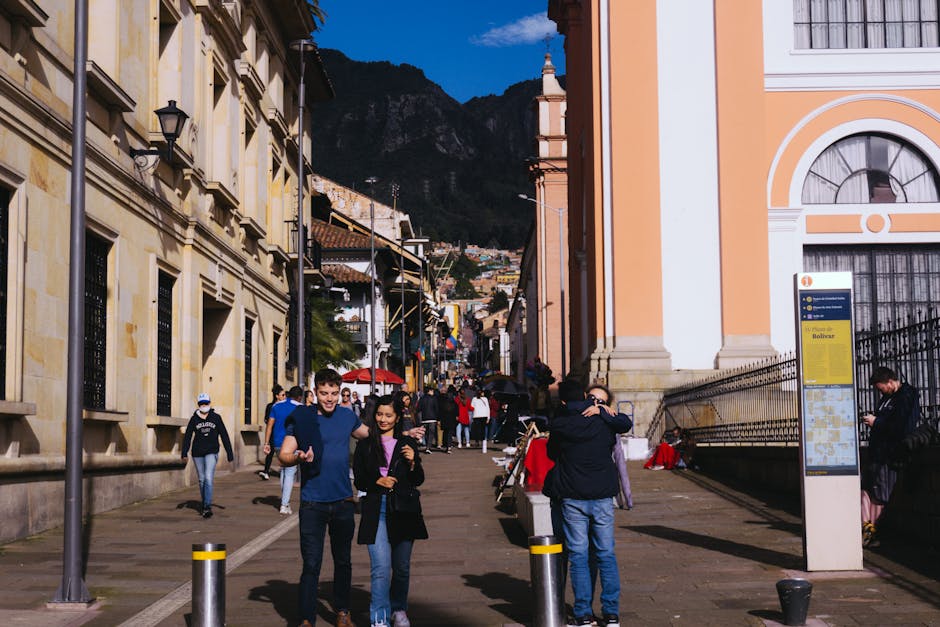
Explore the historic base of Monserrate, from Bolivar's colonial villa to the legendary founding spot of Bogota on this self-guided walking route.
 Easy
EasyBogota, Colombia
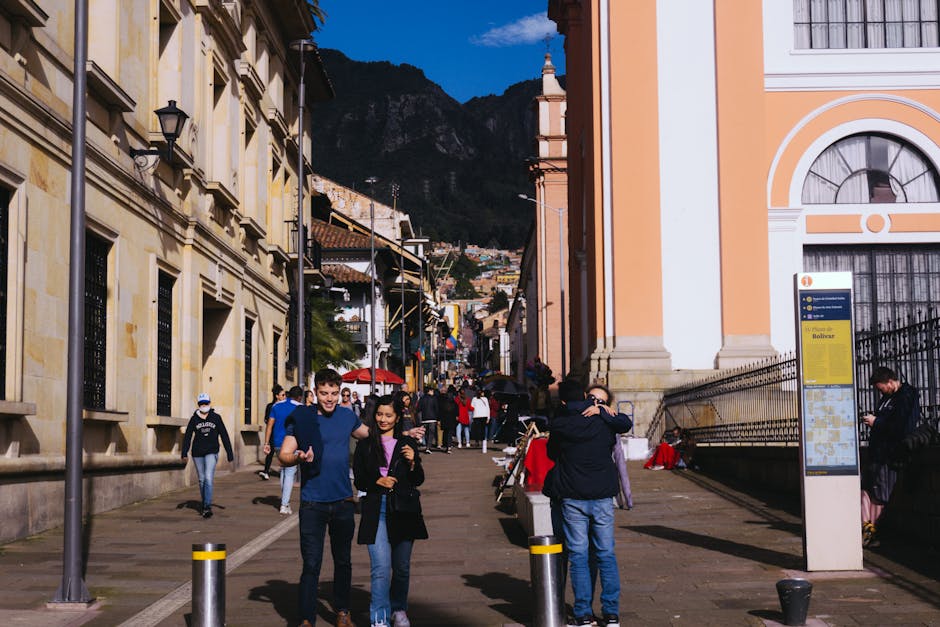
Discover the colonial charm and artistic soul of Bogota's oldest neighborhood on this self-guided audio walking route through La Candelaria.
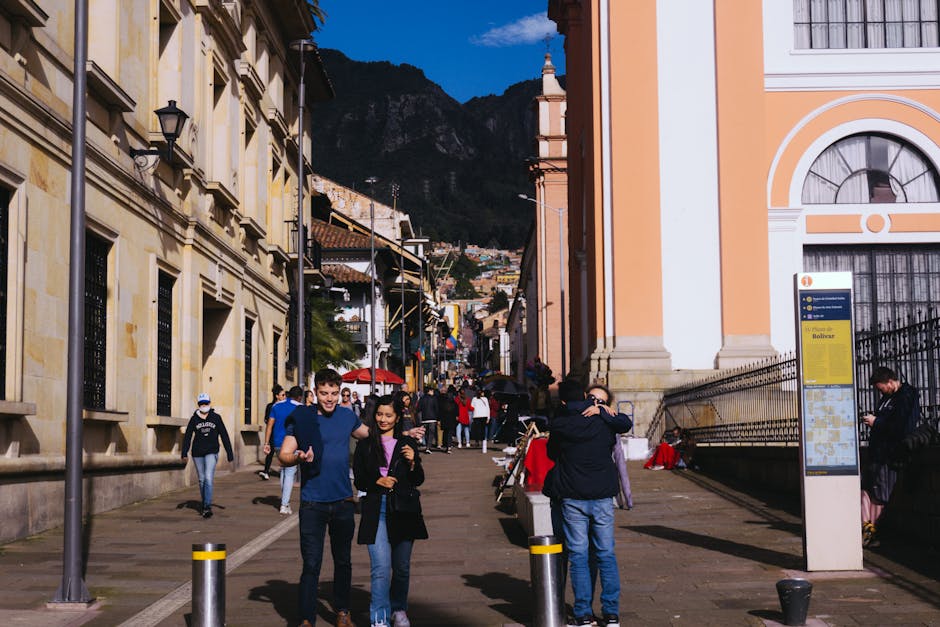 Easy
EasyBogota, Colombia
Discover the 'Green Fire' of Colombia on this self-guided walk through Bogota's legendary emerald district and informal street markets.
 Easy
EasyBogota, Colombia
Explore Bogota’s specialty coffee revolution on this self-guided walk through the stylish neighborhoods of Quinta Camacho and Chapinero.
 Easy
EasyNairobi, Kenya
Explore Nairobi's architectural evolution from colonial-era landmarks to iconic Brutalist skyscrapers on this historic self-guided walking route.
 Easy
EasyNairobi, Kenya
Discover Nairobi's iconic skyline on this self-guided architecture walk through the CBD’s most famous modernist and Brutalist landmarks.
 Easy
EasyKrakow, Poland
Uncover Krakow's legendary past on this self-guided walk from literary monuments to the fire-breathing Wawel Dragon.
 Easy
EasyInnsbruck, Austria
Uncover the myths and legends of Innsbruck on this self-guided walk through the historic Altstadt and beyond.
 Moderate
Cartagena, Colombia
Follow the footsteps of Gabriel García Márquez on a self-guided walk through the magical realism of Cartagena’s historic walled city.
 Easy
EasyCartagena, Colombia
Taste the heart of Cartagena on this self-guided street food walk through the vibrant alleys of Getsemaní and the historic Walled City.
 Easy
EasyCartagena, Colombia
Explore Cartagena's legendary defensive walls and historic bastions on this self-guided walk through colonial history and Caribbean views.
 Easy
EasyCartagena, Colombia
Discover the tranquil charm, colorful streets, and hidden architectural gems of Cartagena’s most bohemian neighborhood on this self-guided walk.