Self-guided audio tour in Osaka
Start Free on iPhone
Start free on iPhone to unlock this self-guided walking tour in Osaka. Hear all the stories that make it amazing, walk at your own pace, and begin whenever you want.
Your Private Tour Guide
Step into the heart of Japan's feudal past with this self-guided walk through the grand grounds of Osaka Castle and its surrounding treasures. This neighborhood stroll in Chuo-ku offers a deep dive into the legacy of Toyotomi Hideyoshi, the 'Great Unifier' who built the original fortress in 1583. As you navigate the massive stone walls and wide moats, you will encounter a fascinating blend of 16th-century fortification, 19th-century military history, and modern urban design. The route is meticulously designed to showcase the architectural evolution of the site, from the imposing Ōte-mon Gate to the surprising Western-style facade of Miraiza Osaka-Jo. Beyond the stone and mortar, this walking route invites you to experience the natural beauty that softens the castle's formidable presence. You will wander through the expansive Nishinomaru Garden, famous for its hundreds of cherry trees, and the tranquil Plum Grove, which offers a burst of color during the late winter months. This self-guided adventure is not just a history lesson; it is an exploration of how Osaka honors its Shogun heritage while remaining a vibrant, modern metropolis. Whether you are captivated by the intricate details of Shinto shrines at Hokoku or the sheer scale of the castle's granite blocks—some weighing over 100 tons—this walking tour Osaka provides a comprehensive look at one of Japan's most iconic landmarks at your own pace. Discover the hidden stories of sieges, reconstructions, and cultural renaissances that have shaped this landscape for over four centuries.
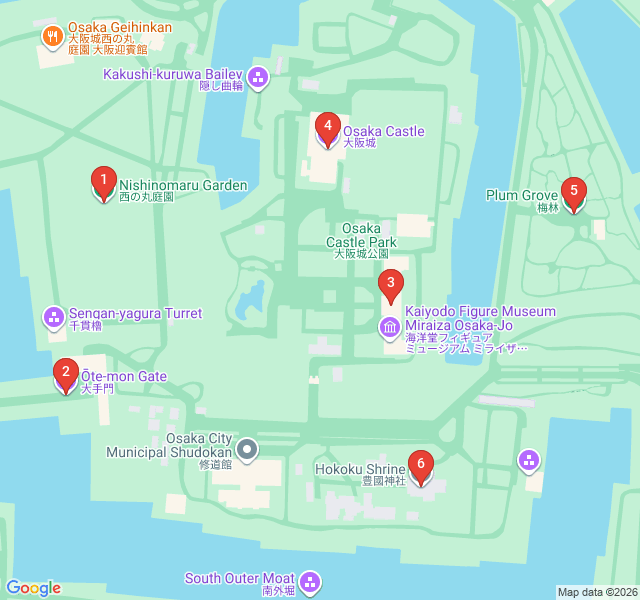
Numbers indicate the order of stops on the tour.
Start your self-guided adventure in the Nishinomaru Garden, located in the western citadel of the castle grounds. This expansive lawn offers one of the most celebrated views of the Osaka Castle keep, framed by roughly 600 cherry trees. Historically, this area served as the residence for Kita-no-Mandokoro, the wife of Toyotomi Hideyoshi. As you walk the perimeter, notice how the garden is protected by high stone walls and a moat. It is a place of quiet reflection, especially compared to the bustling main keep area. During the spring, it becomes a sea of pink blossoms, but in any season, it provides a sense of the scale and grandeur that the Shoguns intended for their primary residences.
Approach the Ōte-mon Gate, the primary entrance to the castle grounds. Rebuilt in 1620 during the early Edo period, this gate was designed to intimidate and defend. Notice the 'Masugata' or box-shaped entrance; this was a tactical design to trap invading forces in a small square where they could be fired upon from all sides. The masonry here is legendary. Look for the massive stones—the largest of which are wider than a modern bus—transported from distant islands to showcase the Shogun's power and wealth. The gate remains a testament to the incredible engineering skills of the 17th-century craftsmen who fitted these stones together without mortar.
Standing in stark contrast to the traditional Japanese architecture is Miraiza Osaka-Jo. This Western-style brick building was constructed in 1931 as the headquarters for the Fourth Division of the Imperial Japanese Army. Its design reflects the early 20th-century trend of blending European aesthetics with Japanese military functionality. After the war, it served as a police headquarters and later a city museum. Today, it has been revitalized into a cultural hub with shops and cafes. It serves as a reminder of the castle's varied history, showing how the grounds transitioned from a feudal fortress to a modern military installation and, finally, to a public park for all to enjoy.
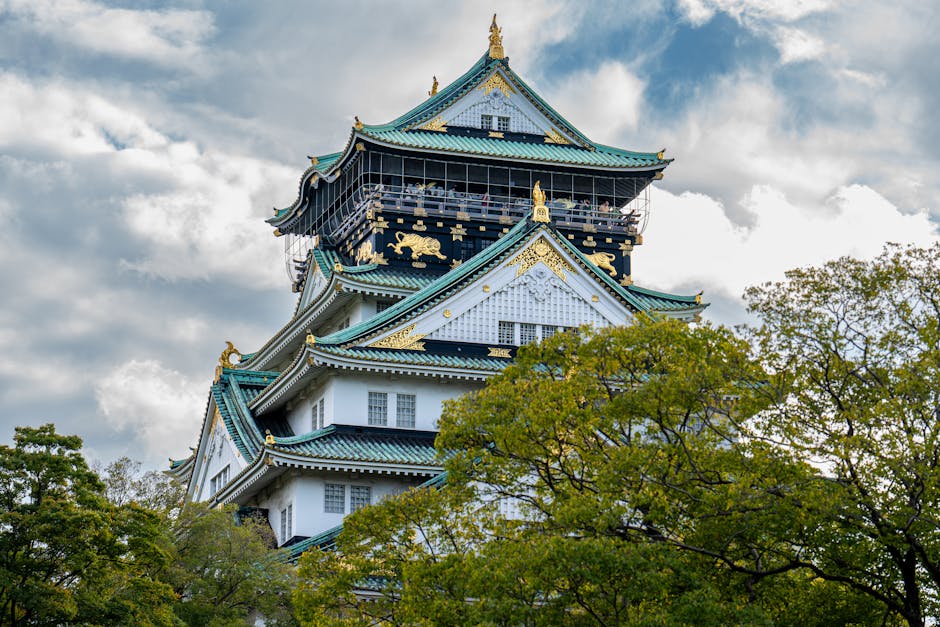
You are now standing before the iconic Main Keep of Osaka Castle. While the original was destroyed and rebuilt several times, this current structure dates to 1931, with a major renovation in the 1990s. It stands on a tall stone foundation that protects it from attackers. The gold-leaf accents and dolphin-shaped 'shachihoko' on the roof are hallmarks of the Azuchi-Momoyama style favored by Hideyoshi. Inside, the castle houses a comprehensive museum detailing the Siege of Osaka and the life of its founder. Even if you choose not to go inside, the exterior architecture tells a story of resilience and the enduring spirit of the people of Osaka who funded its reconstruction.
Head toward the eastern side of the park to find the Plum Grove, or Ume-bayashi. Featuring over 1,200 trees and roughly 100 different varieties, this is one of the most significant plum groves in Japan. Unlike cherry blossoms which bloom briefly in spring, plum blossoms appear in late winter, often peaking in February. Each variety has a unique scent and color, ranging from deep crimson to pale white. The grove is organized with winding paths that allow you to immerse yourself in the fragrance. This stop highlights the Japanese appreciation for the changing seasons and the subtle beauty of nature that persists even in the coldest months.
Conclude your walking route at Hokoku Shrine, dedicated to Toyotomi Hideyoshi, his son, and his brother. Hideyoshi is a legendary figure who rose from a humble peasant background to become the most powerful man in Japan. Because of his meteoric rise, he is often associated with good fortune and career success, making this a popular spot for locals to pray for professional advancement. The bronze statue of Hideyoshi at the entrance is a prominent landmark. The shrine's architecture is elegant and understated, providing a peaceful conclusion to your journey through the history of the Shoguns and the city they helped build.
Start Free on iPhone
Explore “Castles and Canals: Shogun Heritage Route” with your very own Private Tour Guide with Zigway. Start free on iPhone, skip the large group and the fixed routes, and hear the city come alive as you go.
Your Private Tour Guide
Don't miss the good stuff
Explore Freely
 Moderate
Osaka, Japan
Discover the soul of Osaka on this self-guided walk through the hidden markets of Tsuruhashi, the neon of Namba, and the scale of Umeda.
 Easy
EasyOsaka, Japan
Explore Osaka's futuristic skyline, from the iconic Umeda Sky Building to hidden shrines, on this self-guided architectural walking route.
 Easy
EasyOsaka, Japan
Explore Osaka's 'American Village' on this self-guided walk through street art, vintage fashion, and the heart of Japanese youth culture.
 Easy
EasyOsaka, Japan
Explore the retro charm and neon-lit alleys of Shinsekai on this self-guided walk through Osaka's most nostalgic district.
 Moderate
Gothenburg, Sweden
Discover Gothenburg’s maritime soul on this self-guided walk from the historic Central Station to the scenic riverfront at Stenpiren.
 Easy
EasyNairobi, Kenya
Discover Nairobi's iconic skyline on this self-guided architecture walk through the CBD’s most famous modernist and Brutalist landmarks.
 Moderate
Nairobi, Kenya
Discover Nairobi's lush side on this self-guided walk through botanical gardens, historic memorials, and vibrant local markets.
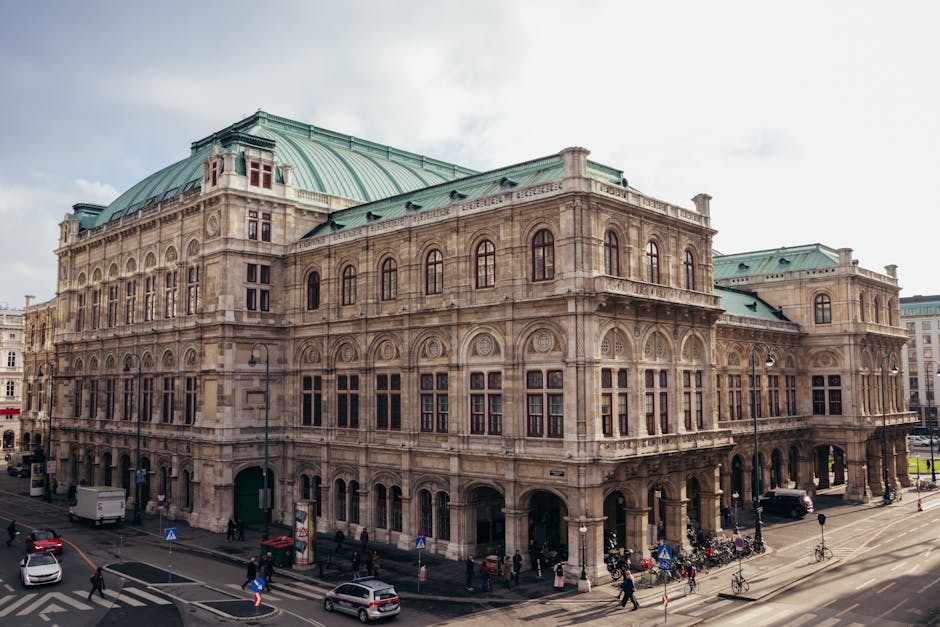 Moderate
Vienna, Austria
Follow the footsteps of Mozart and Strauss through Vienna’s historic center on this self-guided walk through the city's rich musical history.
 Moderate
Tokyo, Japan
Discover Tokyo's premier creative district on this self-guided walk through Roppongi’s world-class museums and striking modern architecture.
 Easy
EasyTokyo, Japan
Discover the 'Old Tokyo' charm of Yanaka on this self-guided walk through historic temples, artisan alleys, and a stunning torii gate shrine.
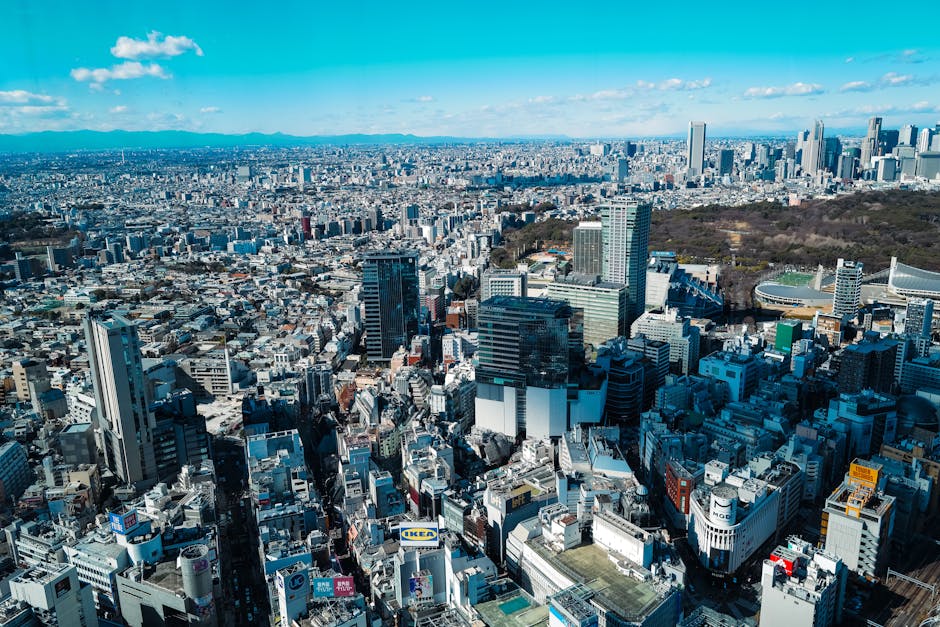 Easy
EasyTokyo, Japan
Experience Shibuya's electric energy on this self-guided walk from the iconic Scramble Crossing to the panoramic views of Shibuya Sky.
 Easy
EasyTokyo, Japan
Explore Tokyo's indie heart. From vintage fashion in Shimokitazawa to world-class art in Shinjuku, discover the city's creative soul independently.