Self-guided audio tour in Nara
Start Free on iPhone
Start free on iPhone to unlock this self-guided walking tour in Nara. Hear all the stories that make it amazing, walk at your own pace, and begin whenever you want.
Your Private Tour Guide
Step away from the famous deer park and into the winding, atmospheric alleys of Naramachi, the 'Town of Nara.' This self-guided walk invites you to explore the former merchant district, where the spirits of the Edo period still linger among beautifully preserved 'machiya' (traditional townhouses). Unlike the grand, open spaces of Nara Park, this neighborhood stroll offers an intimate look at the daily lives of the artisans, brewers, and traders who built this city's commercial legacy. This walking route highlights the unique architecture of the region, specifically the narrow-fronted houses designed to minimize property taxes based on street width. You will encounter the curious 'Migawari-zaru'—bright red cloth monkeys hanging from the eaves of homes—which act as charms to ward off bad luck and illness. The journey begins in the heart of the merchant district at the Naramachi Shiryo-kan, where the history of local commerce comes alive. From there, the path leads to Gango-ji, a UNESCO World Heritage site that was once one of the seven great temples of Nara. As you navigate the quiet lanes, you will reach the Naramachi Koshi-no-Ie, a faithfully restored lattice house that allows you to step inside and experience the spatial ingenuity of 19th-century Japanese architecture. The final leg of this self-guided adventure transitions from the domestic to the divine, leading you to the scenic Sarusawa Pond and the towering Five-Storied Pagoda of Kofukuji. This walking tour Nara experience is perfect for those who want to see the city through a historical lens, balancing the charm of a residential neighborhood with the majesty of ancient Buddhist monuments. Whether you are a fan of traditional craftsmanship or simply seeking a peaceful escape from the crowds, this neighborhood route provides a deep dive into the merchant secrets of historic Nara.
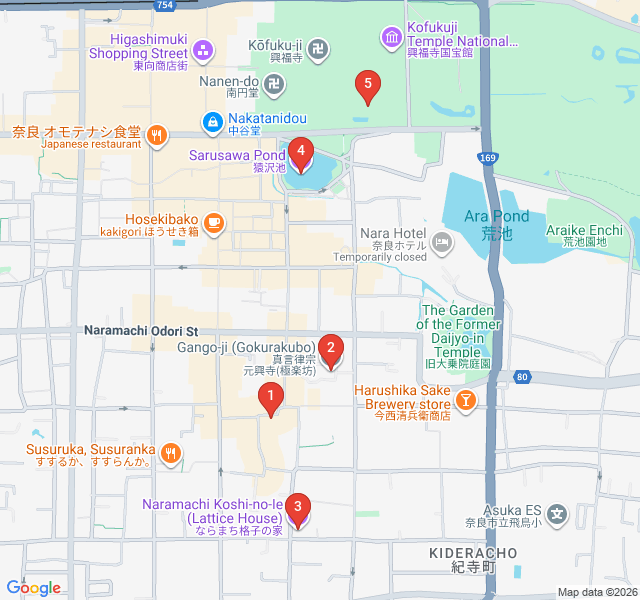
Numbers indicate the order of stops on the tour.
Welcome to the heart of the old merchant district. This small, privately-run museum is the perfect introduction to Naramachi’s unique culture. As you look around, you will notice the 'Migawari-zaru' or 'substitute monkeys.' These red cloth charms are iconic to this neighborhood. Local legend says these monkeys take the place of residents when bad luck or illness strikes. Inside the museum, you can see artifacts of daily life from the Edo and Meiji periods, including traditional signboards and household items. The museum building itself is a converted warehouse, showcasing the sturdy construction required by the merchant class who once dominated this bustling trade hub.
Gango-ji is a place where history is physically layered. This UNESCO World Heritage site was originally Asuka-dera, the first true Buddhist temple in Japan, before it was moved here in the 8th century. What makes Gango-ji fascinating is how it transformed; as the temple lost its imperial patronage, the local community essentially built the Naramachi neighborhood around it. Look closely at the roof of the Zen-room and Main Hall—some of the tiles are over 1,300 years old, recognizable by their distinct reddish-brown hue and slightly irregular shapes. It is a rare survivor of the ancient capital's grandeur, now tucked quietly into a residential street.
Step inside this 'Koshi-no-Ie' to experience the cleverness of Nara’s merchant architecture. During the Edo period, property taxes were calculated based on the width of the house facing the street. This led to the creation of 'unagi no nedoko' or 'eel’s beds'—houses that are very narrow but stretch far back into the block. The 'koshi' or lattice windows were not just for show; they allowed residents to see out while preventing passersby from looking in, and they provided essential ventilation. Explore the three distinct sections: the shop at the front, the living quarters in the middle, and the storehouse at the back, separated by small, serene courtyards.
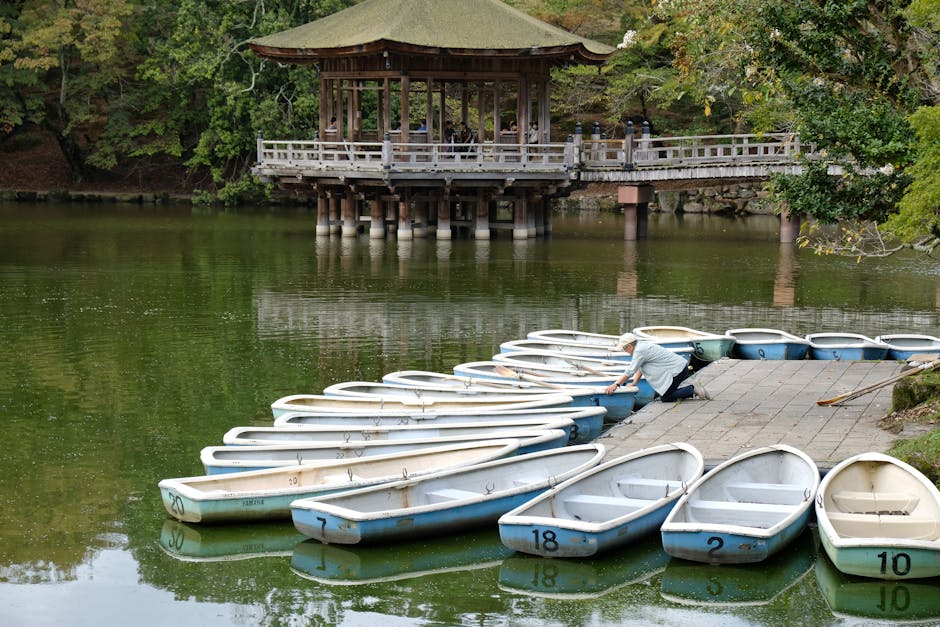
As you leave the narrow streets, you emerge at Sarusawa Pond. This artificial pond, created in 749, is steeped in local folklore. The most famous tale is that of the Uneme, a beautiful lady-in-waiting who supposedly drowned herself here after losing the Emperor's favor. On a clear day, the pond provides a perfect mirror image of the Kofukuji Pagoda. It is a favorite spot for locals to sit and watch the turtles sunbathe on the rocks. This area serves as a physical bridge between the merchant world of Naramachi and the sacred temple grounds of the Kofukuji complex just above the stairs.
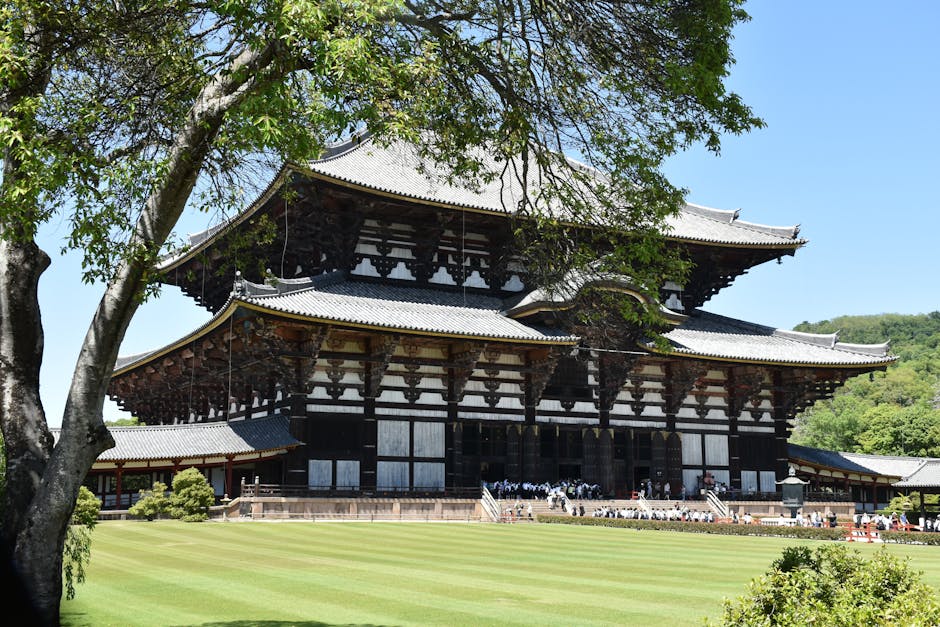
Standing at 50.1 meters, this is the second-tallest wooden pagoda in Japan. The current structure dates to 1426, though it has been rebuilt five times following various fires. It serves as the landmark of Nara and a symbol of the Fujiwara clan's immense power during the Nara period. The pagoda was built without nails, using a complex wood-joining system that allows it to sway and absorb the energy of earthquakes—a testament to ancient engineering. While the interior is rarely open to the public, the exterior’s graceful proportions and the surrounding temple grounds offer a grand conclusion to your walk through the city's layers of history.
Start Free on iPhone
Explore “Merchant Secrets of Historic Naramachi” with your very own Private Tour Guide with Zigway. Start free on iPhone, skip the large group and the fixed routes, and hear the city come alive as you go.
Your Private Tour Guide
Don't miss the good stuff
Explore Freely
 Moderate
Nara, Japan
Discover a mystical path through Nara's ancient forest, lined with 3,000 lanterns and sacred deer on this serene self-guided walk.
 Challenging
Nara, Japan
Journey from Nara's imperial ruins and refined gardens into the ancient, sacred silence of the UNESCO-protected Mount Kasuga Primeval Forest.
 Moderate
Nara, Japan
Discover Nara’s literary soul on this self-guided walk through historic Takabatake’s temples, writer residences, and poetic gardens.
 Easy
EasyNara, Japan
Explore Nara's evening charm on this self-guided walk through illuminated pagodas, historic shopping streets, and world-class hidden bars.
 Easy
EasyNairobi, Kenya
Discover Nairobi's iconic skyline on this self-guided architecture walk through the CBD’s most famous modernist and Brutalist landmarks.
 Easy
EasyGdansk, Poland
Discover the opulent Royal Way of Gdansk at your own pace. Explore Hanseatic history, gilded architecture, and the iconic Neptune's Fountain.
 Easy
EasySalzburg, Austria
Discover the 'Rome of the North' on this self-guided walk through the Baroque squares and monumental legacy of Salzburg’s Prince-Archbishops.
 Easy
EasySalzburg, Austria
Discover Salzburg's oldest medieval alley, the birthplace of the 'Silent Night' author, and breathtaking views on this quiet self-guided walk.
 Moderate
Tokyo, Japan
Discover Tokyo's premier creative district on this self-guided walk through Roppongi’s world-class museums and striking modern architecture.
 Easy
EasyTokyo, Japan
Discover the 'Old Tokyo' charm of Yanaka on this self-guided walk through historic temples, artisan alleys, and a stunning torii gate shrine.
 Easy
EasyTokyo, Japan
Experience Shibuya's electric energy on this self-guided walk from the iconic Scramble Crossing to the panoramic views of Shibuya Sky.
 Easy
EasyTokyo, Japan
Explore Tokyo's indie heart. From vintage fashion in Shimokitazawa to world-class art in Shinjuku, discover the city's creative soul independently.