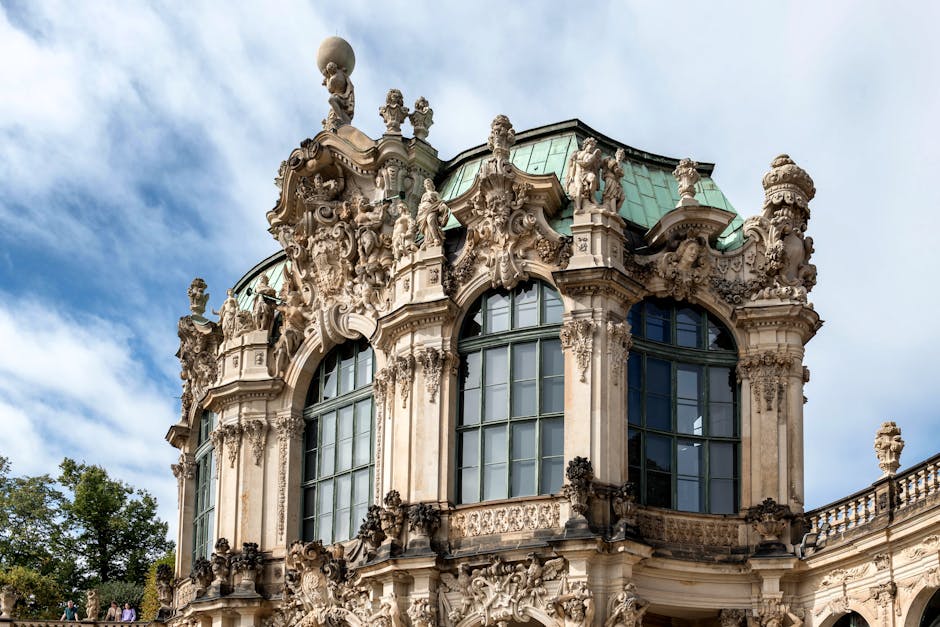
Self-guided audio tour in Dresden
Start Free on iPhone
Start free on iPhone to unlock this self-guided walking tour in Dresden. Hear all the stories that make it amazing, walk at your own pace, and begin whenever you want.
Your Private Tour Guide
Dresden was once known as the 'Florence on the Elbe,' a treasure trove of Baroque architecture that was almost entirely erased during the Allied bombing raids of February 1945. This self-guided walk through the Altstadt offers a profound look at how a city mourns, remembers, and rebuilds. Rather than a standard walking tour Dresden visitors might expect, this route serves as a chronological and emotional journey through the ruins of the past and the triumphs of the present. You will explore how different eras—from the Socialist period to the post-reunification years—approached the monumental task of reconstruction. The route begins at the Palace of Culture, a striking example of East German modernism, before moving into the historic Altmarkt, where the scars of the 20th century are most visible. You will encounter the 'Rubble Women' who literally rebuilt the city with their bare hands and stand before the Kurländer Palais, one of the final pieces of the architectural puzzle to be restored. The journey concludes at the world-renowned Frauenkirche, a church that stood as a heap of blackened stones for decades before being painstakingly reassembled using original fragments. This history-focused neighborhood stroll is designed for those who want to understand the resilience of the human spirit and the architectural evolution of a city that refused to disappear. Whether you are a history buff or a first-time visitor, this walking route provides the context needed to see beyond the beautiful facades to the story of survival beneath.
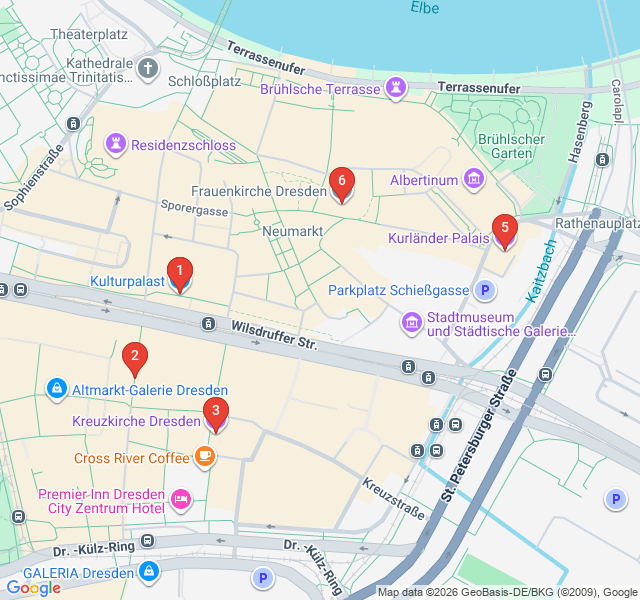
Numbers indicate the order of stops on the tour.
Start your self-guided adventure at the Kulturpalast, a building that represents a very different era of Dresden's reconstruction. Opened in 1969 during the GDR era, its sharp, modernist lines contrast sharply with the surrounding Baroque styles. Look up at the 'Path of the Red Flag' mural on the side of the building; it is a massive piece of socialist realism made from glass tiles. This building was the 'living room' of the city during the socialist years, hosting everything from concerts to political rallies. While controversial after the fall of the Berlin Wall, it was eventually heritage-listed and remains a vital cultural hub today, housing the city’s philharmonic orchestra and central library.
Step into the Altmarkt, Dresden's oldest square and the site of both its greatest tragedies and most festive celebrations. This wide-open space was the epicenter of the firestorm during the 1945 bombings. Thousands sought refuge here, and for years after the war, it was used as a mass cremation site for the victims. As you walk across the cobblestones, notice the blend of architecture. The buildings on the east and west sides were rebuilt in the 1950s in a style known as Socialist Classicism—an attempt to honor traditional Dresden forms while serving the new ideology. Today, it is best known for hosting the Striezelmarkt, Germany’s oldest Christmas market.
The Kreuzkirche is the main Protestant church of the city and home to the world-famous Dresdner Kreuzchor boys' choir. While the exterior was restored to its historic look, the interior tells a more somber story. Unlike the Frauenkirche, which was rebuilt to its original splendor, the interior of the Holy Cross Church was left intentionally simple and somewhat raw after the war. This 'noble poverty' serves as a permanent memorial to the destruction of the city. It is a place of quiet reflection, where the rough-hewn walls remind visitors of the fire that gutted the building in 1945. If the tower is open, the climb offers a panoramic view of the rebuilt Altstadt.
Near the New Town Hall, you will find a statue of a woman holding a pickaxe. This is the Trümmerfrau, or 'Rubble Woman.' After the 1945 bombings, with most men away at war or in prisoner-of-war camps, the monumental task of clearing the millions of tons of debris fell to the women of Dresden. They worked in human chains, passing bricks from hand to hand, cleaning them, and stacking them for future use in reconstruction. This monument is a tribute to their strength and the fact that the city's rebirth was literally built by their hands. Without their labor, the restoration of the landmarks you see today would have been impossible.
The Kurländer Palais is a symbol of the 'late' reconstruction of Dresden. For over 60 years, this 18th-century Baroque palace stood as a ruin, a jagged shell of stone that served as a haunting reminder of the war. It wasn't until the mid-2000s that private investment allowed it to be restored to its former glory. The reconstruction used a method called 'anastylosis,' where original stones found in the rubble are integrated back into the new structure. You can often see the difference between the weathered, dark original stones and the lighter, newer sandstone. It now houses elegant event spaces and a restaurant, representing the final stages of the city’s architectural healing.
Your walking route concludes at the Frauenkirche, perhaps the most significant reconstruction project in modern history. After the 1945 bombing, the church collapsed into a 13-meter-high pile of rubble. For 45 years, the East German government left the ruins as a war memorial. Following reunification, a grassroots movement raised over 100 million Euros to rebuild it. Look closely at the facade; the dark, blackened stones are original pieces salvaged from the ruins, fitted like a giant 3D jigsaw puzzle into the new, pale sandstone. This 'scarred' look is intentional, ensuring the memory of the destruction is never lost even as the city celebrates its resurrection. Inside, the vibrant Baroque altar and the towering dome stand as a testament to peace and reconciliation.
Start Free on iPhone
Explore “Dresden's WWII Resurrection Trail” with your very own Private Tour Guide with Zigway. Start free on iPhone, skip the large group and the fixed routes, and hear the city come alive as you go.
Your Private Tour Guide
Don't miss the good stuff
Explore Freely
 Easy
EasyDresden, Germany
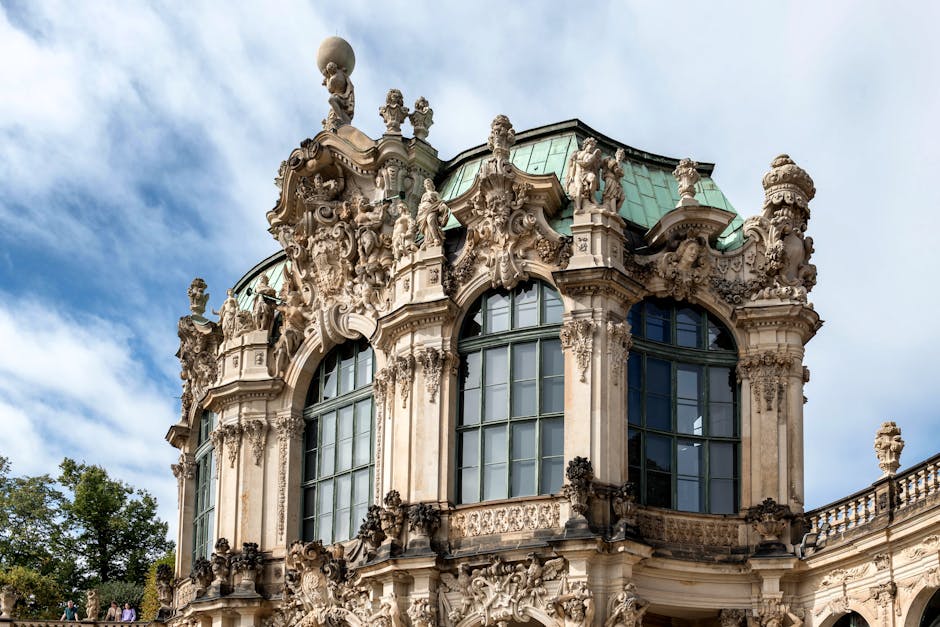
Discover the 'Florence on the Elbe' on this self-guided walk through Dresden’s reconstructed Baroque heart, from royal palaces to iconic domes.
 Moderate
Dresden, Germany
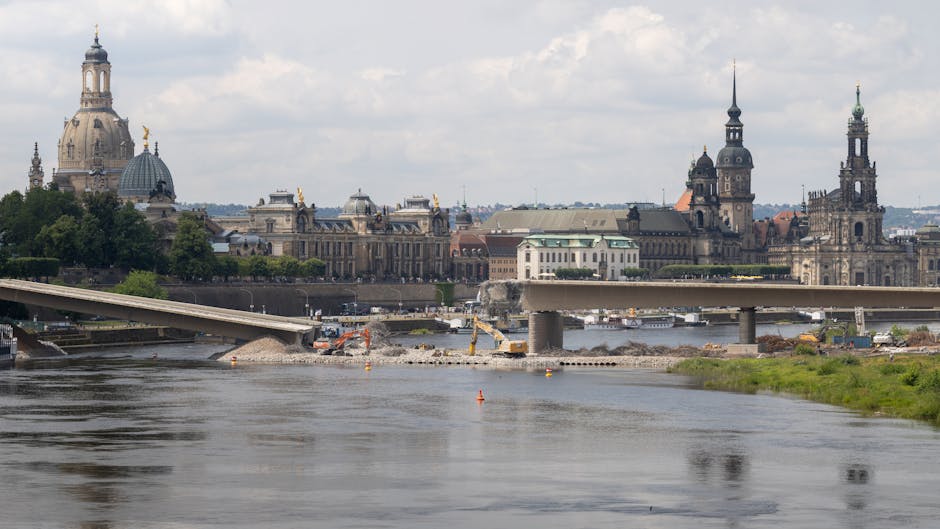
Experience Dresden's most iconic skyline views and Baroque landmarks on this scenic self-guided photography walk along the Elbe River.
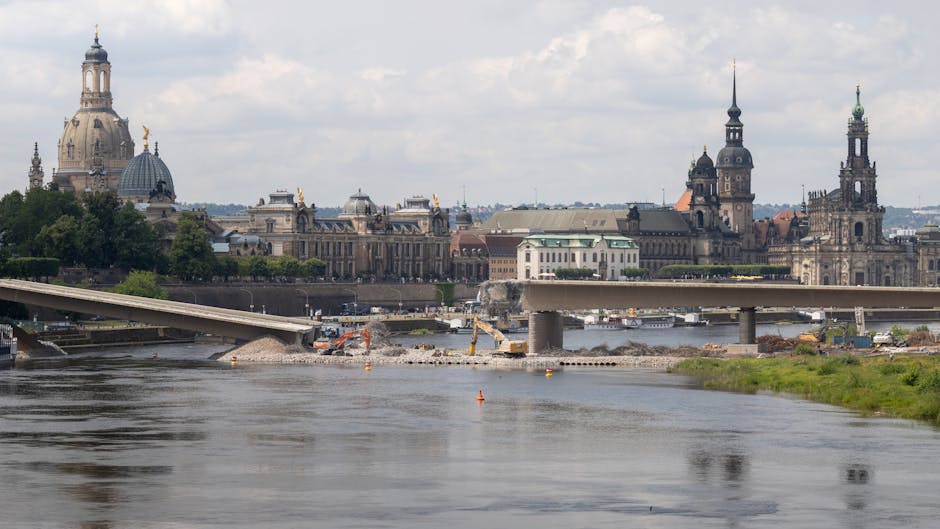 Easy
EasyDresden, Germany
Explore a stunning 19th-century power plant transformed into a vibrant cultural hub of theaters and art in this self-guided walking route.
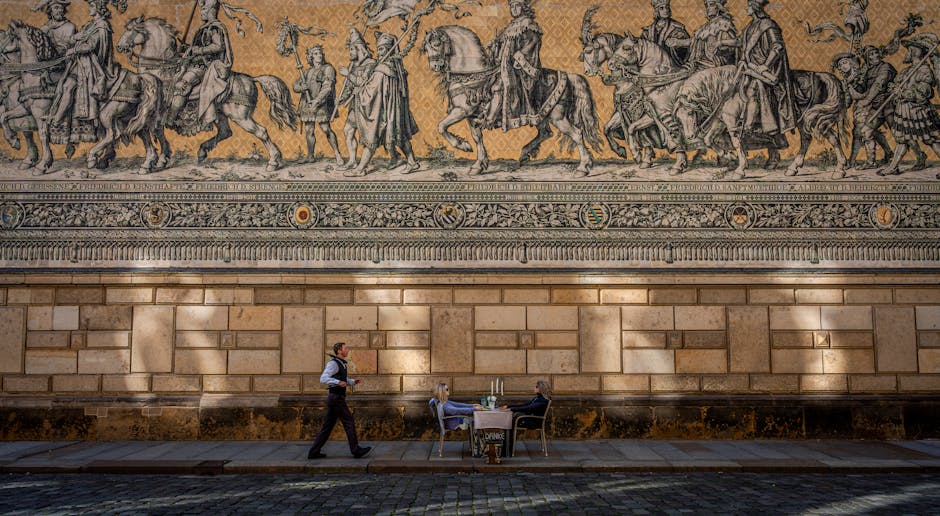 Easy
EasyDresden, Germany
Discover Dresden's vibrant soul on this self-guided walk through the street art, quirky courtyards, and bohemian spirit of the Äußere Neustadt.
 Easy
EasyNairobi, Kenya
Explore Nairobi's architectural evolution from colonial-era landmarks to iconic Brutalist skyscrapers on this historic self-guided walking route.
 Easy
EasyNairobi, Kenya
Discover Nairobi's iconic skyline on this self-guided architecture walk through the CBD’s most famous modernist and Brutalist landmarks.
 Easy
EasyKrakow, Poland
Explore the historic heart of Kazimierz on this self-guided walk through synagogues, ancient cemeteries, and vibrant squares.
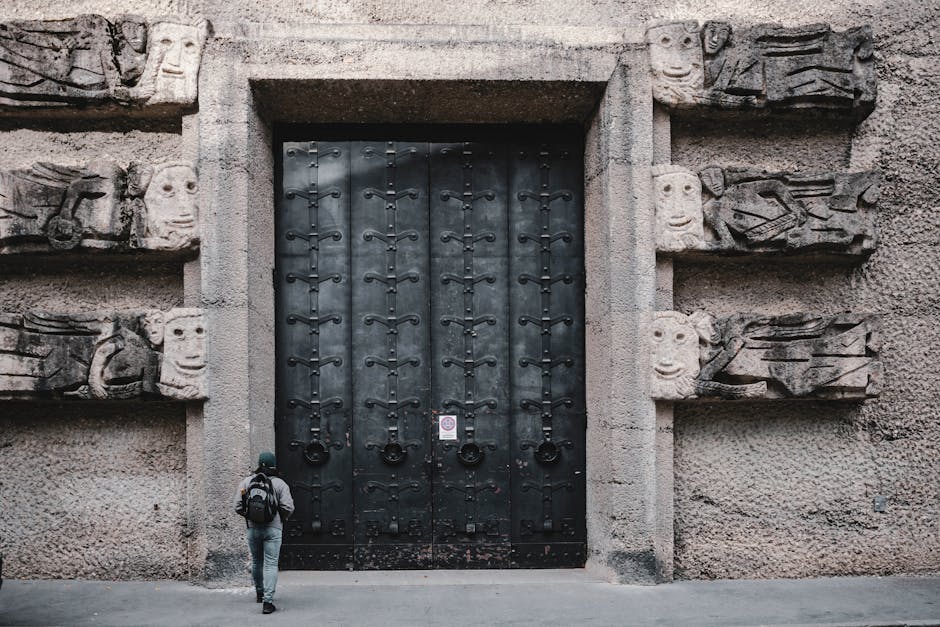 Easy
EasySalzburg, Austria
Discover the 'Rome of the North' on this self-guided walk through the Baroque squares and monumental legacy of Salzburg’s Prince-Archbishops.
 Easy
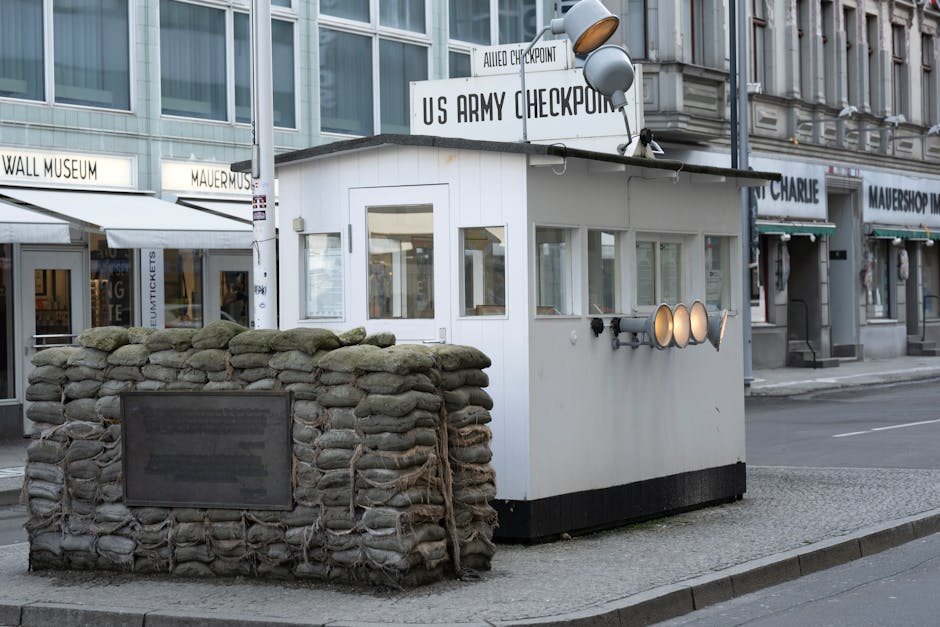
EasyBerlin, Germany
Explore the sites of Nazi power and the memorials that honor its victims on this self-guided walk through Berlin's historic Wilhelmstraße district.
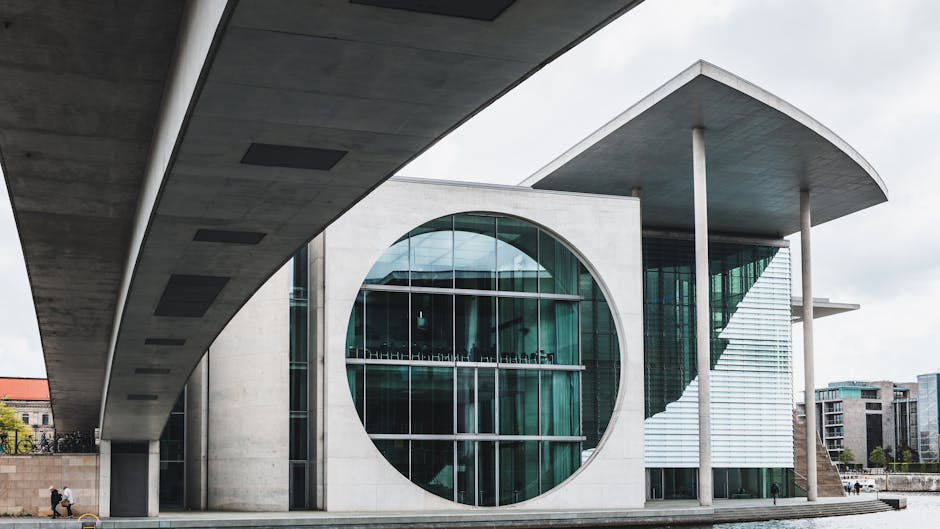 Moderate
Berlin, Germany
Explore Berlin’s 'Green Heart' on a self-guided walk through royal history, Cold War memorials, and serene lakeside gardens.
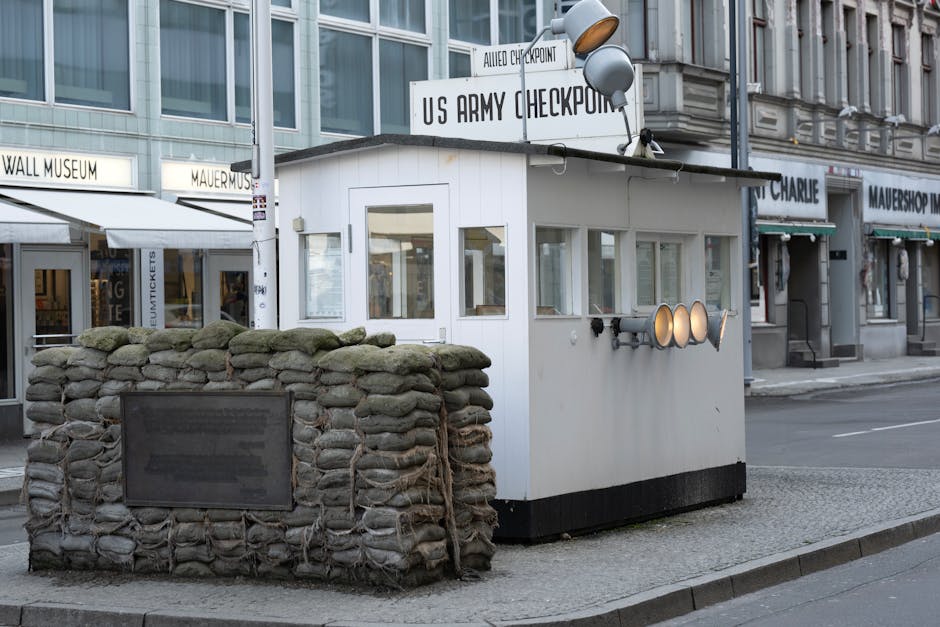 Moderate
Berlin, Germany
Discover the legacy of the Berlin Wall on this self-guided walk from historic ghost stations to the vibrant street art and cafes of Mauerpark.
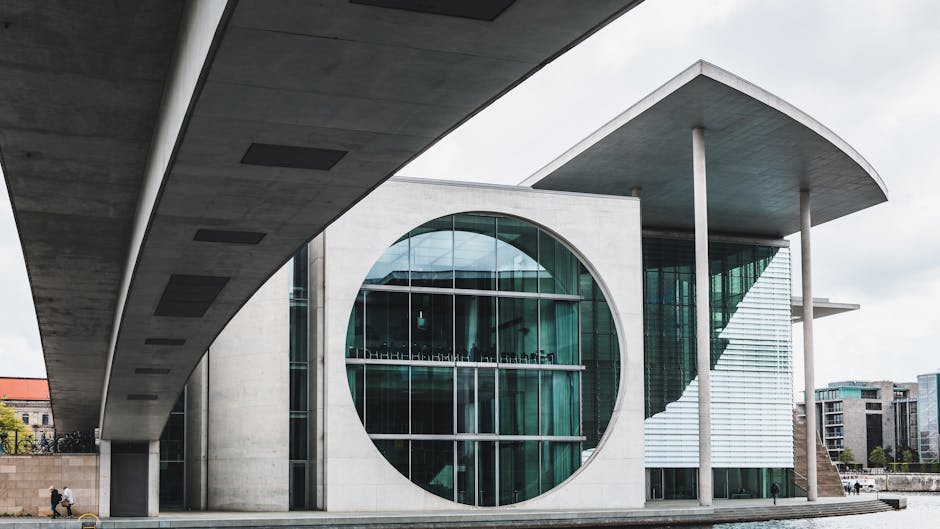 Easy
EasyBerlin, Germany
Discover the soul of 1920s Berlin on a self-guided walk through Charlottenburg’s iconic literary cafes, historic theaters, and artistic landmarks.